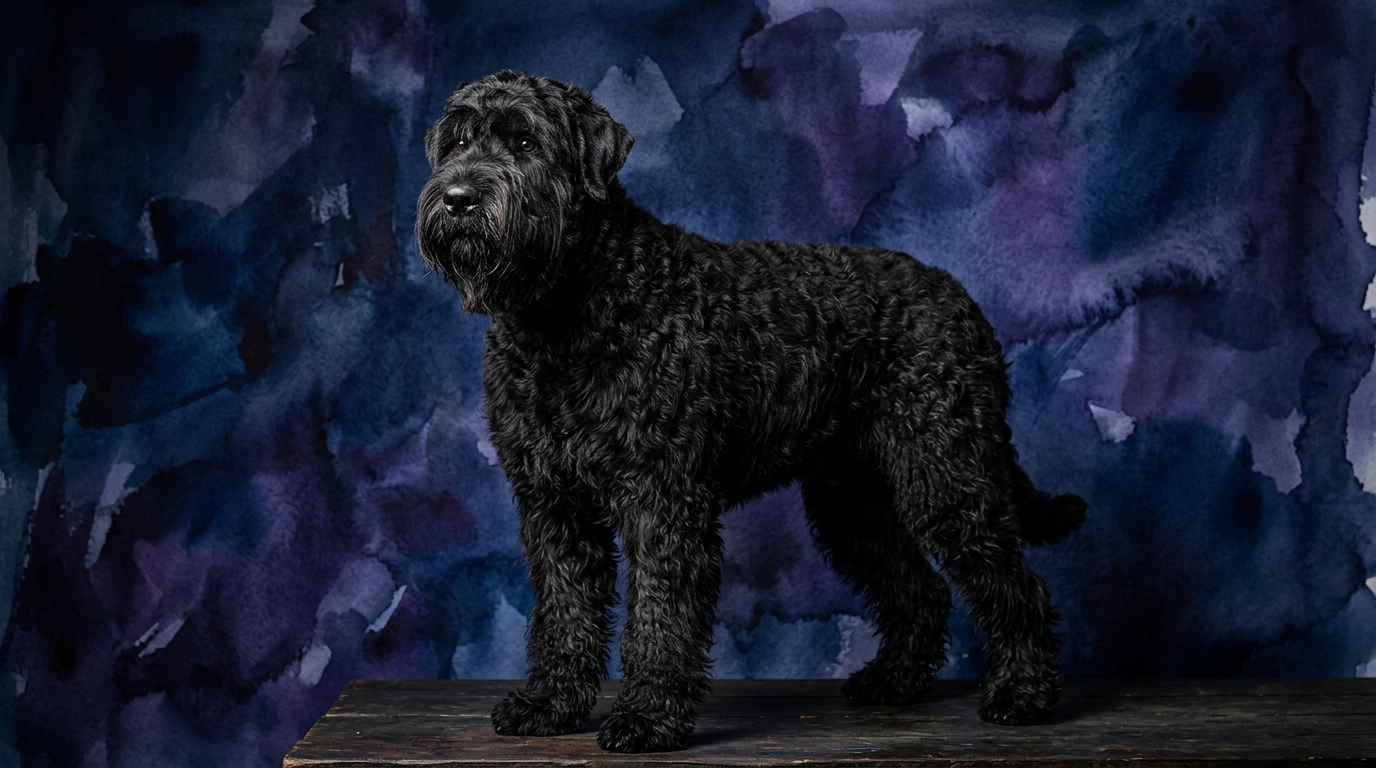
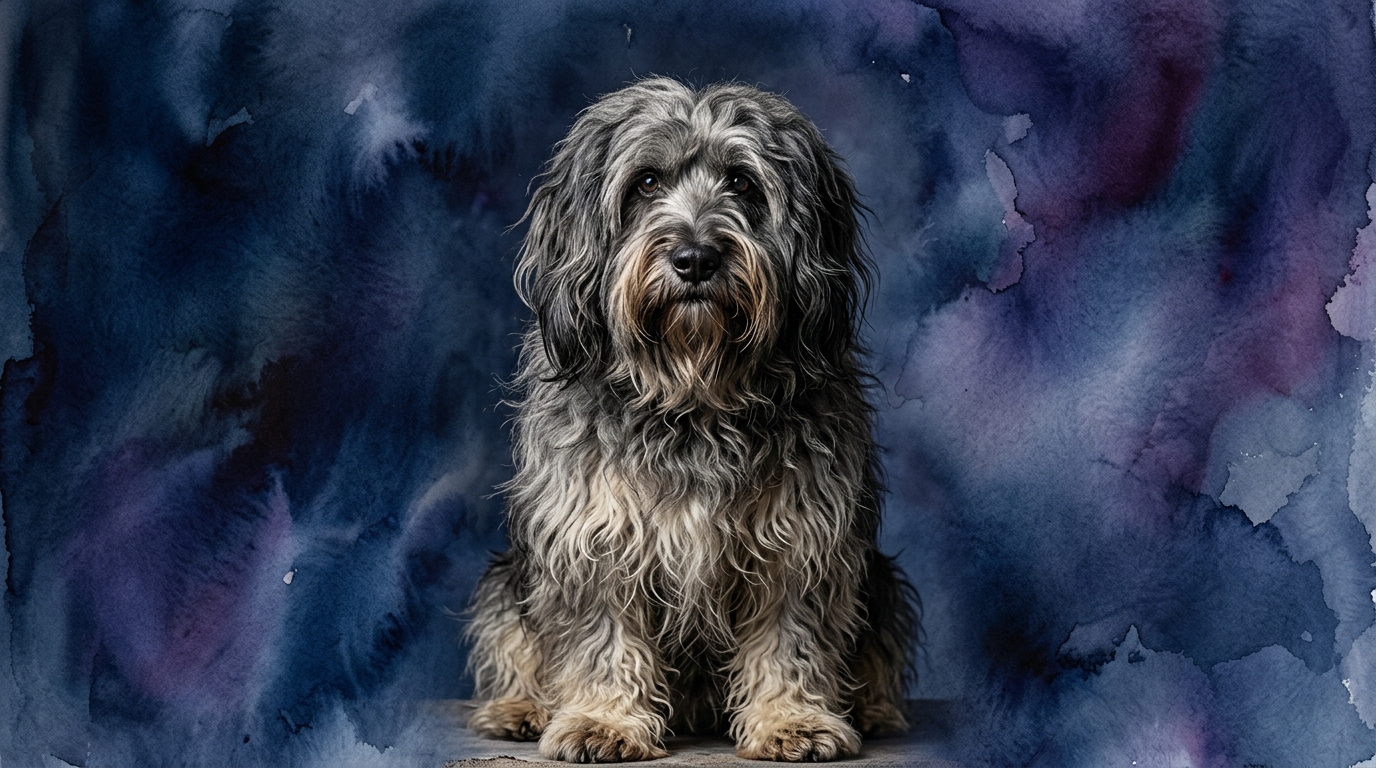
Side-by-Side Cognitive Profiles
The Cosmic Pet Pet IQ Lab rates both the Black Russian Terrier (BRT) and the Polish Lowland Sheepdog (POLS) at 3/5 across all five cognitive dimensions: Problem Solving, Training Speed, Social Intelligence, Instinctive Drive, and Memory. A 3/5 rating signifies a solid, functional level of cognitive ability, indicating these breeds are capable learners and adapters, though perhaps not with the instantaneous grasp or complex abstract reasoning associated with a 5/5 score. Their intelligence is practical and purpose-driven, shaped by centuries of selective breeding for specific tasks.
For Problem Solving (3/5), the BRT, a working breed, often applies this skill to environmental assessment, threat identification, and strategic protection within its territory. This might involve figuring out the most efficient patrol route or how to deter an unfamiliar presence. The POLS, a herding breed, typically uses its problem-solving for dynamic tasks like managing livestock, navigating varied terrain, and anticipating animal movements, perhaps devising a path to reunite a stray from the flock.
In Training Speed (3/5), both breeds demonstrate a capacity for efficient learning of commands, especially those relevant to their inherent roles. The BRT benefits from consistency and clear, confident direction, internalizing commands that reinforce its protective nature. The POLS learns at a commendable pace, particularly when tasks involve cooperation or directional control, responding well to positive reinforcement and clear communication, though they might require more varied engagement to maintain focus than some lightning-fast learners.
Social Intelligence (3/5) in the BRT manifests as strong loyalty to its immediate family, coupled with a discerning and often reserved approach to strangers. Their social cognition is geared towards understanding the dynamics within their 'pack' and identifying potential external threats. The POLS, in contrast, often displays a keen attunement to their human handler's signals and the subtleties of group dynamics within their 'flock' (family), observing social hierarchies and emotional states to maintain harmony or prompt action, yet can also be wary of the unfamiliar.
Regarding Instinctive Drive (3/5), the BRT possesses powerful protective and territorial instincts, driving it to guard, alert, and potentially confront perceived dangers. This ingrained drive is a fundamental aspect of its temperament, necessitating structured outlets. The POLS exhibits strong herding instincts, impelling it to gather, control, and protect, which can translate into attempts to 'herd' family members or other pets. This drive, too, requires appropriate physical and mental engagement to be channeled constructively.
Finally, Memory (3/5) in both breeds is robust and practical. The BRT demonstrates good recall of commands, established routines, and the identity of those who belong versus those who are unfamiliar, remembering past training sessions and experiences. The POLS also exhibits good memory for commands, complex routes, and the precise location and behavior patterns of its 'flock,' recalling intricate sequences of herding movements or past interactions with remarkable accuracy.
Cognitive Strengths of the Black Russian Terrier
While sharing identical IQ scores, the Black Russian Terrier's cognitive strengths are deeply rooted in its working breed heritage, particularly in its application of problem-solving and instinctive drive. Their 3/5 in Problem Solving often manifests as a superior ability to assess and manage environmental security. This breed can excel at understanding complex spatial boundaries for guarding, identifying nuances in unfamiliar situations, and making independent decisions to protect its territory or family unit. For instance, a BRT might strategically block a perceived entry point or position itself to observe a suspicious activity with discerning judgment.
Their 3/5 Instinctive Drive for protection, combined with their 3/5 Memory, means they develop a robust recall for distinguishing 'safe' individuals and 'unsafe' scenarios. This translates into a highly specialized, vigilant form of awareness. A BRT's cognitive advantage lies in its capacity for consistent, unwavering application of its intelligence toward security tasks, making it particularly adept at roles requiring steadfast loyalty and protective ingenuity in a stable environment. They might not solve complex abstract puzzles, but they will consistently interpret and respond to security-related cues.
Cognitive Strengths of the Polish Lowland Sheepdog
The Polish Lowland Sheepdog, despite its matching IQ scores, reveals its cognitive strengths through its herding lineage, particularly in its nuanced application of problem-solving and social intelligence. Their 3/5 Problem Solving often shines in dynamic, open environments, where they must adapt quickly to changing circumstances, such as guiding livestock through varied terrain or navigating around obstacles. They excel at reading the subtle body language of both animals and humans, anticipating movements, and finding non-confrontational solutions to steer or gather.
Their 3/5 Social Intelligence, while not indicating overt friendliness to all, translates into a keen observational capacity for group dynamics. A POLS might subtly mediate interactions between family members or guide a hesitant individual, utilizing its memory (3/5) for complex routes and patterns to anticipate needs. This breed's cognitive edge is in its adaptable, perceptive nature, allowing it to excel in roles requiring fluid decision-making, spatial reasoning, and a gentle yet firm influence over its 'flock' without resorting to overt aggression, making them masters of subtle influence and environmental navigation.
Training Dynamics: Which Breed is More Amenable?
Given both breeds are rated 3/5 in Training Speed, neither is inherently 'easier' or 'more difficult' to train in a general sense; rather, their training requires different approaches. The Black Russian Terrier demands a confident, consistent, and experienced handler. Their powerful physique and strong guarding instincts mean that training must establish the handler as the undisputed leader, channeling their 3/5 problem-solving and instinctive drive effectively. Without clear direction and early socialization, their protective nature can become overwhelming for a novice handler. They respond best to firm, fair methods that reinforce their role as a guardian under human guidance.
The Polish Lowland Sheepdog, while also needing consistency, can often appear more cooperative and eager to please, which might make initial training sessions feel smoother. However, their 3/5 herding instincts can lead to distractions or attempts to 'manage' the handler or other household members, requiring patience and redirection. Their independent problem-solving can sometimes lead to creative interpretations of commands if not consistently reinforced. While their 3/5 social intelligence makes them receptive to handler feedback, their inherent drive requires an owner who can consistently engage their mind and body, providing appropriate outlets for their herding tendencies to prevent undesirable behaviors.
Lifestyle Match: Active vs. Relaxed Owners
Neither the Black Russian Terrier nor the Polish Lowland Sheepdog is suited for a relaxed owner who prefers minimal engagement. Both are active breeds with significant physical and mental exercise requirements that stem from their 3/5 Instinctive Drive and Problem Solving. A BRT requires structured activity that taps into its guarding instincts and physical prowess. This includes long, purposeful walks, advanced obedience training, protection sports, or a 'job' around the home to provide mental stimulation. Without sufficient engagement, their powerful protective drive can lead to boredom and potential behavioral challenges.
Similarly, the POLS demands substantial mental stimulation and physical exercise. Activities like agility, herding trials, long hikes, and interactive puzzle toys are crucial for this breed. They need to regularly engage their 3/5 problem-solving and instinctive drive. A POLS that is not adequately exercised or mentally challenged can become bored, potentially leading to undesirable herding behaviors toward family members, excessive barking, or destructive tendencies. Both breeds thrive with owners who are committed to daily training, exercise, and consistent interaction, understanding that their intelligence is best utilized through active partnership.
The Verdict
Choose the Black Russian Terrier if you are an experienced owner seeking a formidable guardian and devoted companion who can apply their cognitive abilities to protective tasks, and are prepared for consistent, firm training and socialization.
Choose the Polish Lowland Sheepdog if you appreciate a clever, adaptable companion with a keen sense of observation, suited for engaging in activities that challenge their herding instincts and social intelligence, and can provide consistent mental and physical outlets.
🧠 Find Your Pet's IQ Score
Our Pet IQ Lab assessment covers 25+ tests across 5 cognitive dimensions — personalized to your breed.
Take the Full IQ Test →Frequently Asked Questions
Do Black Russian Terriers learn faster than Polish Lowland Sheepdogs?
Both breeds are rated 3/5 for training speed, indicating they learn at a solid, functional pace. The specific type of task, the individual dog's temperament, and the handler's consistency will primarily influence how quickly each dog grasps new concepts.
How do their problem-solving skills differ with the same 3/5 rating?
While both are rated 3/5, the Black Russian Terrier's problem-solving often manifests in spatial awareness and strategic thinking for guarding and protection. The Polish Lowland Sheepdog, conversely, applies its skills to navigating dynamic environments, managing group movements, and subtle guidance related to herding tasks.
Is one breed more socially adaptable than the other?
Both breeds have a 3/5 social intelligence rating, but it manifests differently. The Black Russian Terrier tends to be more reserved with strangers, focusing its social acumen on its immediate family. The Polish Lowland Sheepdog is generally attuned to group dynamics and can be more openly observant, though still discerning and sometimes cautious with new people.