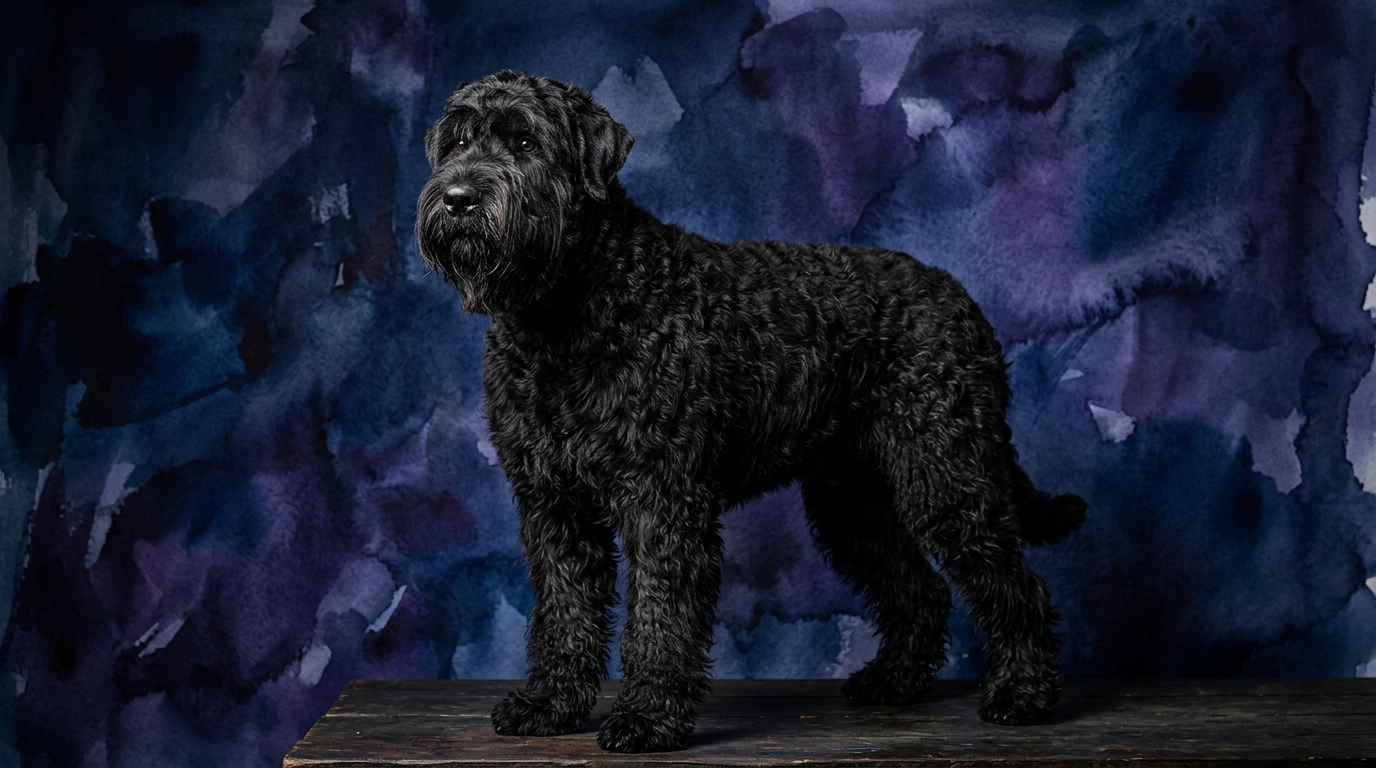
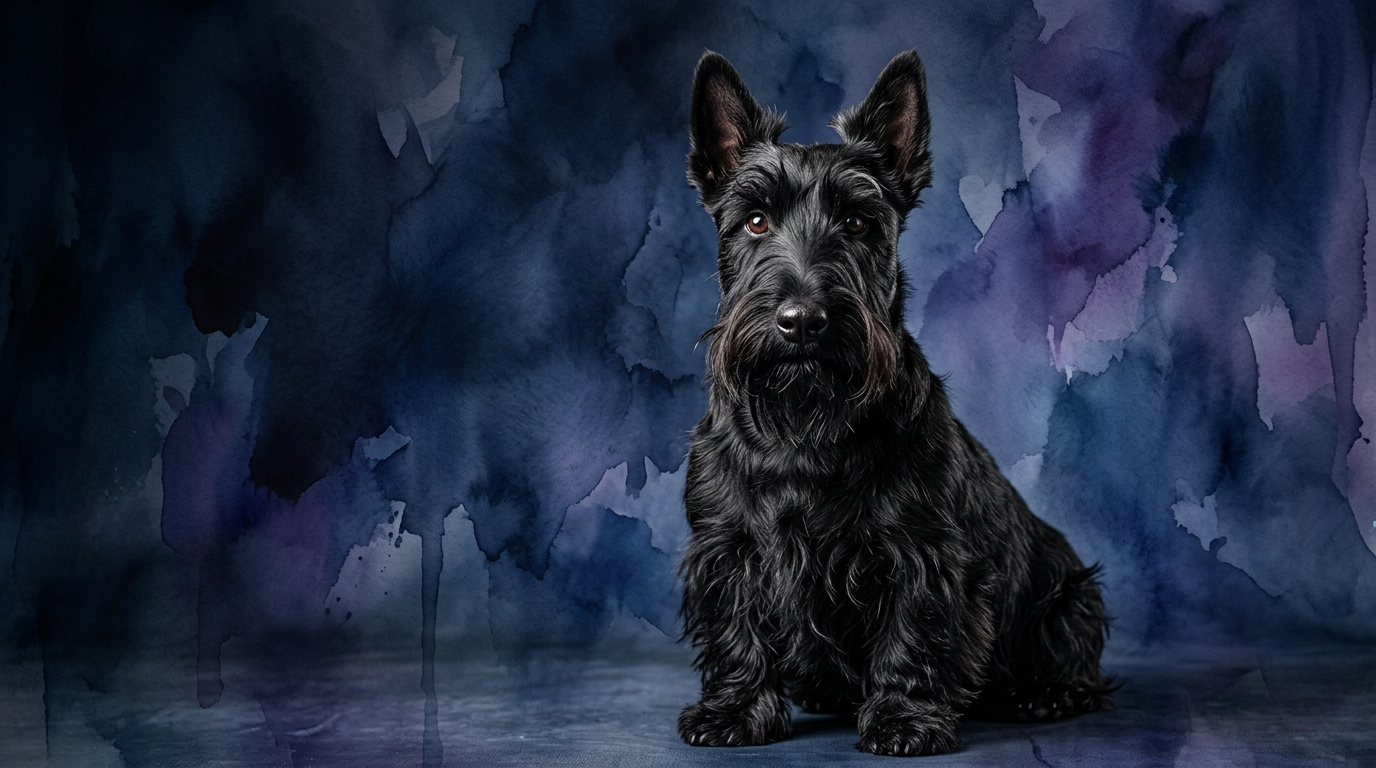
Side-by-Side Cognitive Profiles
The Cosmic Pet Pet IQ Lab evaluates canine intelligence across five critical dimensions, providing a granular view of how breeds process information and interact with their world. For both the Black Russian Terrier and the Scottish Terrier, each dimension registers a score of 3 out of 5, indicating a moderate but distinct expression of these cognitive traits.
The Black Russian Terrier, a formidable Working breed, exhibits a Problem Solving score of 3/5, suggesting a capacity to navigate complex situations, particularly those involving protection or task completion, though not with spontaneous ingenuity. Their Training Speed at 3/5 reflects a steady learning pace; they absorb commands and routines effectively, but consistent reinforcement is key to solidifying behaviors. Social Intelligence, also 3/5, means they possess a reasonable ability to interpret human cues and social dynamics within their established family unit, often showing discernment with strangers. Their Instinctive Drive, rated 3/5, is strongly rooted in their protective and guarding heritage, manifesting as a focused dedication to their role. Finally, a Memory score of 3/5 indicates they retain learned experiences and routines well, building upon past interactions and training.
The Scottish Terrier, a tenacious Terrier breed, also scores 3/5 for Problem Solving, demonstrating an ability to figure out obstacles, especially when motivated by their strong prey drive or personal objectives, often through determined trial and error. Their Training Speed, likewise 3/5, means they learn at a moderate pace, but their independent nature often dictates the speed and willingness of their compliance. Social Intelligence at 3/5 suggests they understand their human family's emotions and routines, yet they typically maintain a dignified reserve rather than seeking constant interaction. Their Instinctive Drive, also 3/5, is powerfully expressed through their terrier tenacity, a relentless pursuit of perceived prey or goals, often involving digging and patrolling. A Memory score of 3/5 indicates they remember commands, routines, and significant events, which contributes to their consistent character and preferences.
Where the Black Russian Terrier Excels Cognitively
The Black Russian Terrier's cognitive strengths are deeply intertwined with their working heritage, particularly in structured environments. Their 3/5 Problem Solving manifests most effectively when applied to tasks requiring adherence to a system or a clear objective, such as navigating an agility course with precision or understanding the boundaries of a patrol. This breed demonstrates a commendable ability to process and act upon commands related to protection and vigilance, making them adept at discerning appropriate responses in a guarding scenario. Their moderate social intelligence, while not overtly effusive, allows them to reliably read the intentions of those within their trusted circle, contributing to their role as a discerning guardian. The Black Russian Terrier's memory helps them build upon consistent training protocols, making them reliable in executing complex sequences of behaviors once mastered, rather than needing frequent re-teaching.
Where the Scottish Terrier Excels Cognitively
The Scottish Terrier's cognitive advantages shine in situations demanding independent thought and persistent self-motivation, characteristic of their terrier group. Their 3/5 Problem Solving is particularly evident when they are challenged to overcome physical barriers or devise strategies to access something they desire, often involving clever manipulation of objects or persistent digging. This breed's instinctive drive, while also a 3/5, is channeled into a singular focus on discovery and pursuit, which means they excel at tasks that tap into their natural hunting instincts, like scent work or navigating complex outdoor terrains. The Scottish Terrier's memory allows them to recall effective strategies for finding hidden items or navigating familiar territories, contributing to their self-assured exploration. Their social intelligence, though reserved, is keen enough to understand their place within the family and react appropriately to familiar cues, even if they choose not to comply immediately.
Which Is Easier to Train and Why
While both breeds share a 3/5 score for Training Speed, the nuances of their temperaments create distinct training experiences. The Black Russian Terrier, as a working breed, generally responds well to a consistent, structured training regimen. Their natural inclination to work alongside a handler, combined with a desire to fulfill a purpose, means they are often more amenable to learning and performing commands, provided the motivation and guidance are clear and firm. Their moderate social intelligence supports this by allowing them to understand and respond to the trainer's intentions, even if the learning process is steady rather than instantaneous.
In contrast, the Scottish Terrier's independent spirit and strong instinctive drive can present unique challenges during training. While they are certainly capable of learning new behaviors at a moderate pace, their tendency to prioritize their own agenda or an appealing scent over a command means an owner must be exceptionally patient and creative in maintaining engagement. Their problem-solving abilities might be applied to figuring out how to *avoid* a command rather than comply, requiring trainers to be consistently more engaging and to leverage positive reinforcement heavily. Success with a Scottie often hinges on making training feel like a game that aligns with their inherent curiosity and drive.
Which Suits Active Owners vs. Relaxed Owners
For owners seeking a highly engaged and purposeful companion, the Black Russian Terrier is often the more suitable choice. Their strong working background and protective instincts mean they thrive with consistent mental and physical stimulation. An active owner who enjoys structured training, long walks or hikes, and engaging in canine sports like obedience, protection work, or even carting will find a fulfilling partnership with a Black Russian Terrier. Their moderate instinctive drive needs an outlet, and without it, their problem-solving and memory might be applied to less desirable behaviors around the home. They require an owner who can commit to their substantial needs for activity and mental engagement.
The Scottish Terrier, while not a couch potato, appeals to a different kind of active owner or one who appreciates a more independent companion. Their activity needs are significant but often manifest as bursts of intense play, enthusiastic digging, or patrolling the yard with purpose. A relaxed owner might find their tenacity and prey drive overwhelming, especially if not channeled appropriately. Owners who enjoy moderate daily walks, engaging in scent games, or providing opportunities for independent exploration in a secure environment will appreciate the Scottie. They suit an owner who values a spirited companion with a strong personality and is prepared to manage their persistent terrier instincts through consistent boundaries and engaging activities.
Choosing between these two distinct breeds ultimately depends on an owner's lifestyle, training philosophy, and what they seek in a canine companion. Both offer moderate cognitive abilities but express them in fundamentally different ways.
The Black Russian Terrier is an excellent fit for dedicated owners who are prepared for a consistent training regimen and can provide ample opportunities for their dog to engage in purposeful activities. If you seek a discerning, protective companion who thrives on structure and partnership in a working role, the Black Russian Terrier's blend of moderate problem-solving, steady training speed, and strong protective drive will be a rewarding match.
The Scottish Terrier is ideal for owners who appreciate an independent, tenacious spirit and are willing to engage with a dog that has a strong sense of self. If you are drawn to a spirited companion who excels at independent problem-solving, possesses a robust memory for routines, and thrives on exploring with a keen sense of purpose, the Scottish Terrier offers a unique and fulfilling companionship.
The Verdict
Choose the Black Russian Terrier if you seek a dedicated, protective companion who thrives with consistent, structured training and purposeful activities.
Choose the Scottish Terrier if you appreciate an independent, tenacious spirit and are prepared to engage with a dog that has a strong sense of self and a love for independent exploration.
🧠 Find Your Pet's IQ Score
Our Pet IQ Lab assessment covers 25+ tests across 5 cognitive dimensions — personalized to your breed.
Take the Full IQ Test →Frequently Asked Questions
Do Black Russian Terriers learn commands quickly?
Black Russian Terriers have a training speed score of 3/5, meaning they learn commands at a moderate and steady pace. Consistent, clear training methods are key to solidifying their understanding and performance, as they respond well to structure and purpose.
Are Scottish Terriers easy to house-train?
Scottish Terriers, with their moderate memory and problem-solving, can be house-trained successfully, but their independent nature often requires patience and consistency. Establishing a strict routine and rewarding appropriate elimination heavily can help overcome their occasional stubbornness.
Which breed is more social with strangers?
Both breeds score 3/5 in social intelligence, but express it differently. The Black Russian Terrier is generally reserved and discerning with strangers, prioritizing family protection. The Scottish Terrier is typically dignified and aloof with outsiders, preferring the company of their trusted inner circle.