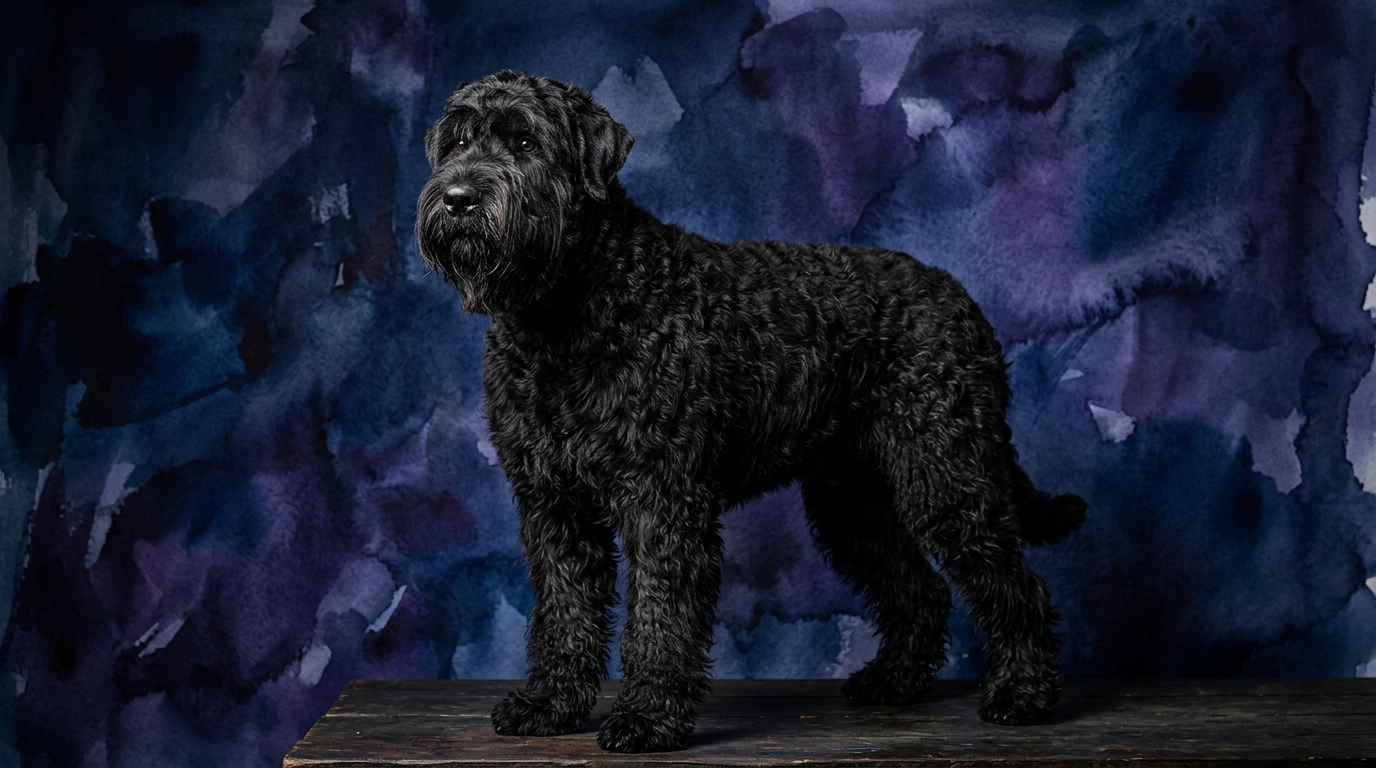
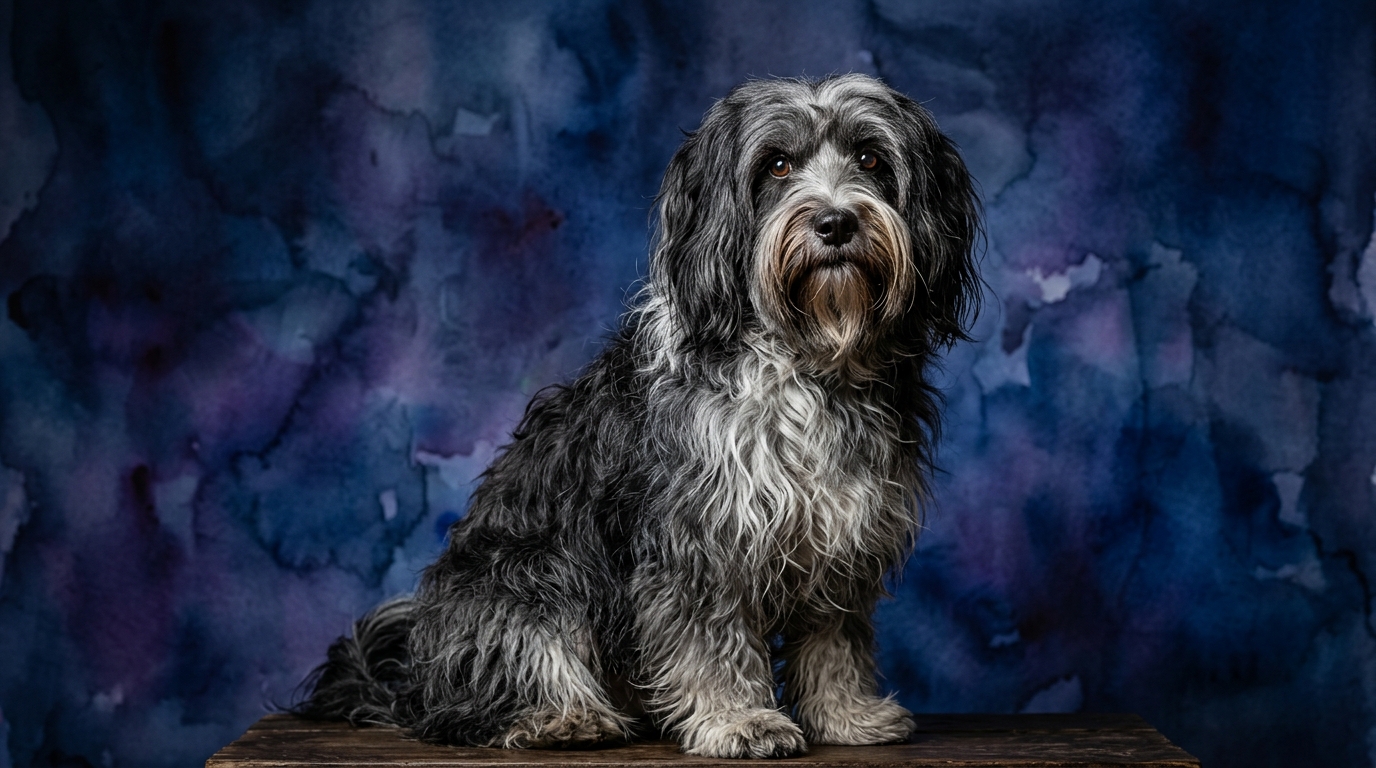
Side-by-Side IQ Profile: Unpacking Identical Scores
The Black Russian Terrier, a powerful Working Group dog, and the Tibetan Terrier, a sturdy Non-Sporting companion, both achieve a consistent 3/5 rating in Problem Solving, Training Speed, Social Intelligence, Instinctive Drive, and Memory. While the numbers are the same, their application and underlying behavioral expressions vary significantly. For the Black Russian Terrier, a 3/5 in Problem Solving often relates to their capacity for assessing novel threats in a guarding context or navigating complex training scenarios requiring independent thought. Their Training Speed at 3/5 reflects a willingness to learn intricate commands for a 'job' but can be tempered by a strong-willed nature that requires clear, consistent direction. Social Intelligence at 3/5 for the BRT is typically geared towards discerning trusted family members from strangers, reading subtle cues from their primary handler, and understanding social hierarchies within their pack. Their Instinctive Drive, also 3/5, is profoundly rooted in protection and territoriality, manifesting as a deep-seated desire to guard their family and property. Finally, a 3/5 Memory allows them to retain complex routines, remember past interactions, and recall specific training cues over long periods, crucial for their working roles.
For the Tibetan Terrier, a 3/5 in Problem Solving often expresses itself as cleverness in navigating household puzzles, figuring out how to access desired objects, or adapting to new environments. Their 3/5 Training Speed speaks to an eagerness to engage and learn, though it can be accompanied by an independent streak that makes them ponder 'what's in it for me?' before complying. Social Intelligence at 3/5 for the TT is characterized by their sensitivity to family dynamics, their ability to read human emotions, and their capacity for forming deep, nuanced bonds with their chosen people. Their Instinctive Drive, also 3/5, leans more towards their historical role as companion and 'lucky charm,' with an inherent curiosity, a tendency to alert to new sights or sounds, and a playful drive. Their 3/5 Memory aids them in remembering routines, family members, and the locations of favored toys or resting spots, contributing to their adaptable and comforting presence.
Where the Black Russian Terrier Wins Cognitively
Despite sharing identical scores, the Black Russian Terrier often demonstrates a cognitive edge in scenarios demanding independent judgment under pressure, particularly in protective or working capacities. Their 3/5 Problem Solving, when combined with their robust Instinctive Drive, allows them to make quick, decisive assessments of potential threats without constant human instruction, a trait less emphasized in a companion breed. This isn't just about raw strength; it's about the mental fortitude to evaluate a situation, process information rapidly, and act appropriately. Their 3/5 Training Speed, while potentially requiring a more experienced handler, translates into the ability to master and execute complex multi-step commands reliably, even in distracting environments. This deep-seated reliability in their learned behaviors, fueled by a strong desire to fulfill their perceived role, gives them an advantage in tasks requiring sustained focus and a serious approach to their 'job.' Their memory aids in recalling intricate patterns and past scenarios, allowing them to anticipate and react with a calculated demeanor, distinguishing them in roles requiring precision and unwavering dedication.
Where the Tibetan Terrier Wins Cognitively
The Tibetan Terrier, with its 3/5 cognitive profile, often excels in areas requiring nuanced social navigation and adaptable problem-solving within a domestic or social context. Their 3/5 Social Intelligence allows them to pick up on subtle emotional cues from their human companions, often anticipating needs or moods with remarkable accuracy, fostering exceptionally strong and empathetic bonds. This isn't about guarding, but about connection and understanding. Their Problem Solving, while rated the same, tends to manifest as creative solutions to everyday challenges, such as figuring out how to get attention or manipulate objects to their advantage in a non-threatening way. This ingenuity, coupled with their 3/5 Memory, enables them to adapt quickly to new routines or household changes, remembering previous successes and failures in various interactions. Their balanced Instinctive Drive, less focused on protection and more on companionship and curiosity, makes them inherently more adaptable to a wider range of social situations and less prone to reacting with intensity in novel settings, giving them a cognitive 'win' in versatility and harmonious integration into diverse family environments.
Which is Easier to Train and Why
Evaluating ease of training between these two breeds requires understanding their behavioral drivers, despite their identical 3/5 Training Speed scores. The Black Russian Terrier, a powerful working dog, possesses a strong independent streak and a formidable presence. While they are certainly capable of learning complex tasks quickly, their training demands a handler with unwavering consistency, clear leadership, and a deep understanding of working dog psychology. Their inherent drive to protect means that early and continuous socialization, coupled with firm but fair guidance, is paramount to channel their cognitive abilities constructively. Without proper direction, their independence can be misinterpreted as stubbornness, making them challenging for novice owners. Training a BRT is less about 'ease' and more about establishing a cooperative partnership built on mutual respect and clear expectations.
The Tibetan Terrier, while also possessing a 3/5 Training Speed, tends to be more responsive to positive reinforcement and can be more amenable to a wider range of training approaches. Their innate desire for companionship and their social intelligence often translate into a willingness to please, provided the training is engaging and rewarding. However, their occasional mischievousness and independent thought mean that sessions must be kept interesting to prevent boredom or a 'what's in it for me?' attitude. They may not have the sheer physical presence or intense working drive of the BRT, which can make their training feel less intimidating for a first-time owner. While they might occasionally test boundaries with playful stubbornness, they generally respond well to patient, consistent, and fun-filled training methods, making them arguably 'easier' for the average family to manage in terms of day-to-day obedience.
Which Suits Active Owners vs. Relaxed Owners
For the truly active owner, the Black Russian Terrier is an ideal match. This breed demands significant physical exercise and, crucially, consistent mental engagement. Their 3/5 Instinctive Drive for working and guarding means they thrive when given a 'job' or a structured activity that channels their energy and cognitive capacity. Daily vigorous walks, advanced obedience training, protection work, or dog sports are not just beneficial but essential for their well-being. A BRT without sufficient outlets for their considerable mental and physical prowess can become bored, potentially leading to destructive behaviors or an over-reliance on their protective instincts without proper direction. They require an owner who is committed to an active lifestyle and understands the dedication required to manage a powerful, intelligent working breed.
The Tibetan Terrier, while enjoying activity, is far more adaptable to a range of owner lifestyles, making them suitable for both moderately active and more relaxed owners. Their 3/5 Instinctive Drive is less about intense work and more about companionship and exploration, meaning they are content with moderate daily walks, playtime in the yard, and engaging indoor activities. They are happy to join their owners on adventures but are equally content to curl up on the couch for a relaxed evening. Their social intelligence and adaptability allow them to adjust to the rhythm of their household, making them excellent companions for individuals or families who appreciate a dog that can be both playful and calm. They do require mental stimulation through toys, puzzles, and regular interaction, but this doesn't necessarily translate into the same high-intensity demands as the Black Russian Terrier.
The Verdict
Choose the Black Russian Terrier if you are an experienced, active owner seeking a dedicated working companion who thrives on structure, mental challenges, and has a profound protective instinct.
Opt for the Tibetan Terrier if you desire a socially astute, adaptable companion who enjoys moderate activity but is equally content with relaxed home life, offering nuanced problem-solving in a domestic setting.
🧠 Find Your Pet's IQ Score
Our Pet IQ Lab assessment covers 25+ tests across 5 cognitive dimensions — personalized to your breed.
Take the Full IQ Test →Frequently Asked Questions
Do identical IQ scores mean these breeds learn at the same rate?
While both breeds score 3/5 in Training Speed, this indicates a moderate capacity for learning. The 'rate' can differ based on the type of task, handler's experience, and the dog's individual motivation. BRTs might excel in complex obedience for work, while TTs might pick up social cues or household rules with equal speed but different motivations.
How does 'Instinctive Drive' differ if both are 3/5?
For the Black Russian Terrier, a 3/5 Instinctive Drive is heavily weighted towards protection and guardianship, requiring channeling. For the Tibetan Terrier, it leans towards companionship, curiosity, and alerting, making them less intense but still driven by their inherent breed purpose. The score reflects the *presence* of drive, not its specific manifestation.
Can a Tibetan Terrier be a good guard dog like a Black Russian Terrier?
The Tibetan Terrier's 3/5 Instinctive Drive includes an alerting nature, making them excellent watchdogs who will signal new arrivals or unusual occurrences. However, their drive is not geared towards the intense, independent physical protection of a Black Russian Terrier. They are more likely to alert than to actively defend.