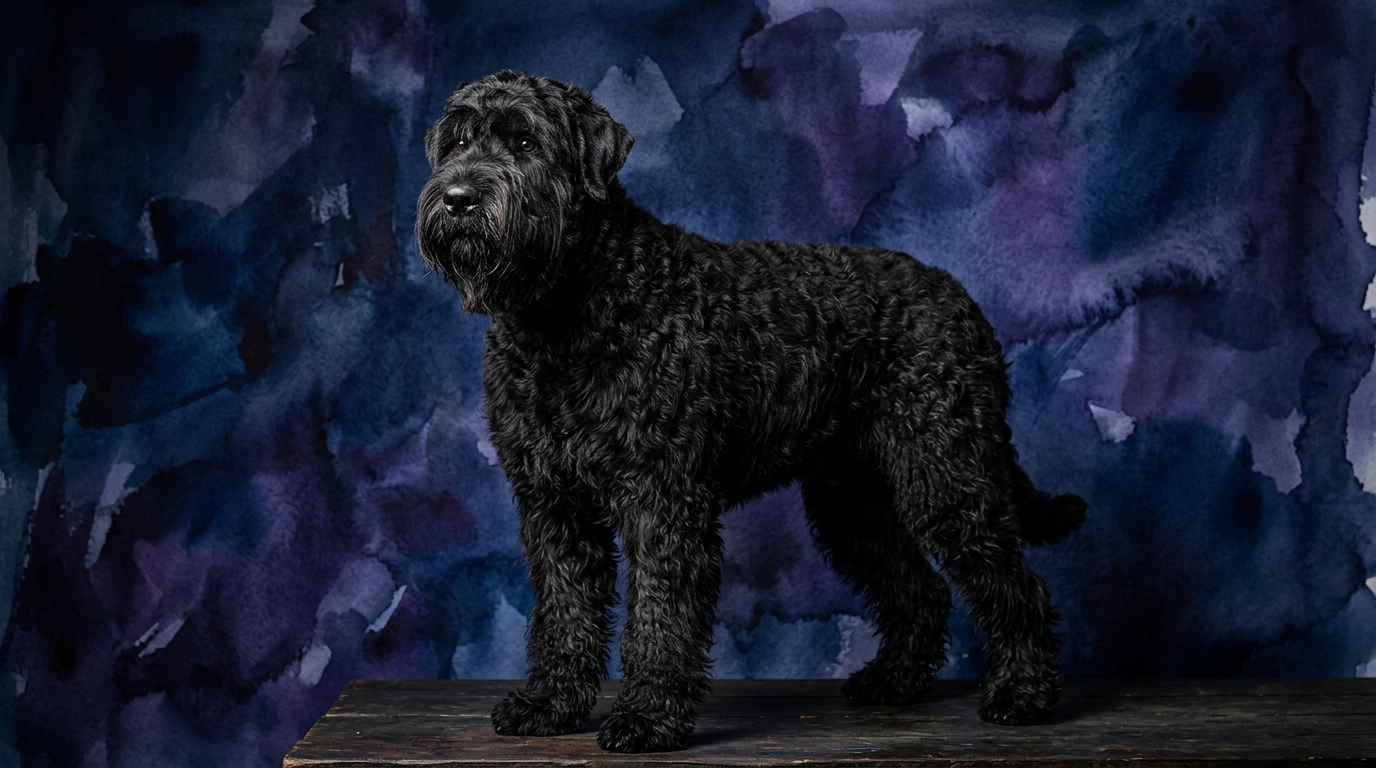
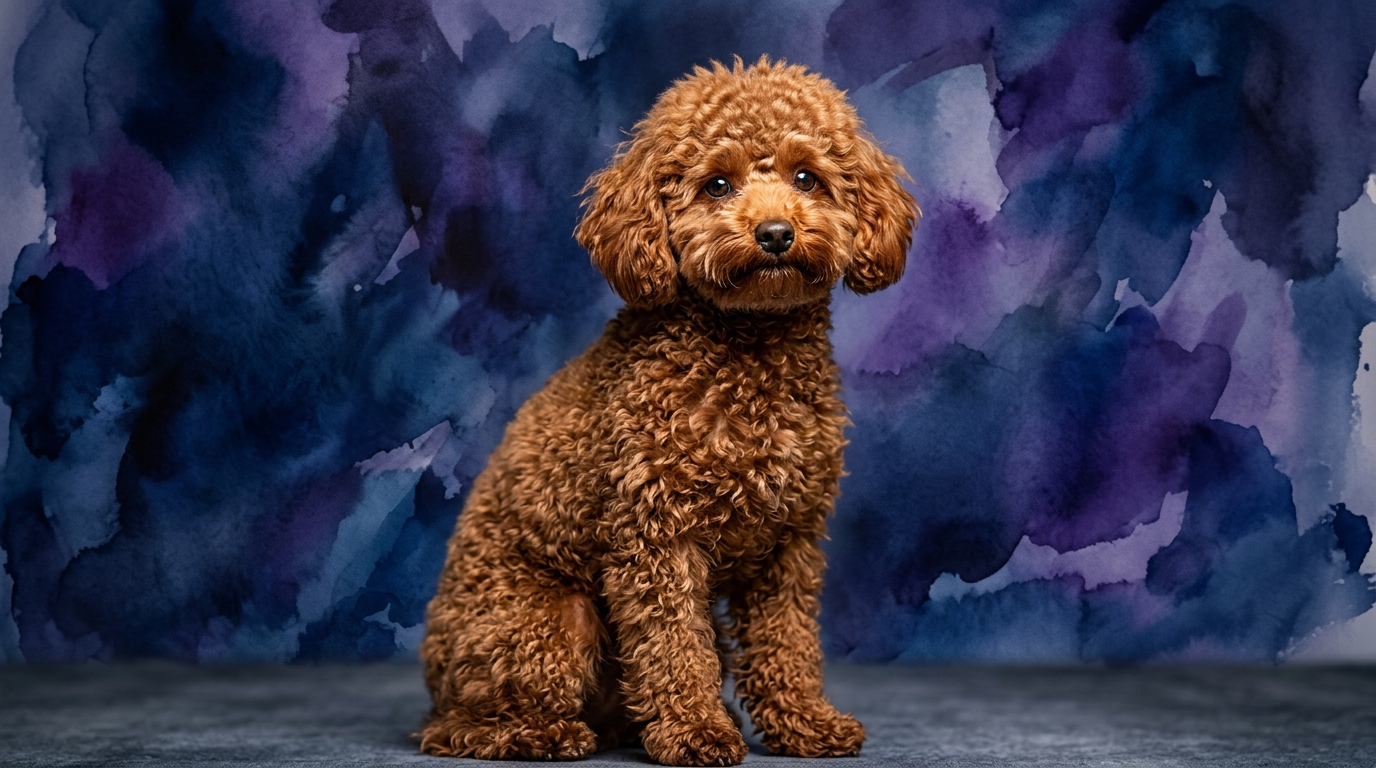
Side-by-Side IQ Profile: Black Russian Terrier vs. Toy Poodle
The Cosmic Pet Pet IQ Lab categorizes canine intelligence across five key dimensions, offering a nuanced look at how different breeds process information and interact with their environment. While the Toy Poodle holds a Coren rank of #2, placing it among breeds that understand new commands with very few repetitions, the Black Russian Terrier, though unranked by Coren, demonstrates a distinct cognitive profile shaped by its working heritage.
Let's explore their individual strengths across these cognitive dimensions.
**Black Russian Terrier (Working Group)**
**Problem Solving (3/5):** The Black Russian Terrier's problem-solving skills are often rooted in practical, real-world scenarios, particularly those involving protection and territory. They are capable of independent thought and can assess situations to determine appropriate responses, such as identifying potential threats or navigating complex environments to secure their family. Their solutions tend to be direct and effective for their intended purpose, rather than seeking novel, abstract answers.
**Training Speed (3/5):** Black Russian Terriers are capable learners, but their substantial independence and strong will mean they typically require consistent, patient, and firm training methods. They assimilate commands reliably over time, but their learning process often involves building a respectful partnership, where clear expectations and motivation, rather than rapid repetition, are paramount.
**Social Intelligence (3/5):** These dogs possess a refined social intelligence focused primarily on their immediate family and perceived threats. They are highly attuned to the nuances of their human companions' emotions and intentions, particularly concerning safety and security. With strangers, their social radar is more about discernment and caution, assessing trustworthiness rather than broad social engagement.
**Instinctive Drive (3/5):** The breed carries a strong, purposeful instinctive drive, a legacy of its development as a military working dog. This manifests as a natural inclination towards guarding, territoriality, and a deep loyalty to their family. This drive is a powerful motivator, channeling their focus towards protective behaviors and vigilance, rather than complex sport or intricate tasks for their own sake.
**Memory (3/5):** Black Russian Terriers exhibit good memory for routines, learned commands, and, crucially, for individuals and environments within their established territory. They retain information pertinent to their protective duties and family structure, remembering who belongs and where they are meant to be. Complex sequences or abstract associations might not be recalled with the same precision as other breeds, but practical memory is solid.
**Toy Poodle (Toy Group, Coren Rank #2)**
**Problem Solving (5/5):** Toy Poodles excel at problem-solving, often displaying remarkable insight and adaptability. They can quickly analyze new situations, apply previously learned concepts, and devise effective strategies to achieve desired outcomes, whether it's figuring out a puzzle toy, navigating an agility course, or understanding a multi-step command sequence. Their approach is often creative and efficient.
**Training Speed (5/5):** Among the quickest learners in the canine world, Toy Poodles grasp new commands and concepts with astonishing speed. They frequently require only a handful of repetitions to internalize a behavior, driven by their eagerness to engage and their capacity for rapid association. This makes them highly responsive and a delight to train using positive reinforcement.
**Social Intelligence (3/5):** Toy Poodles are highly observant of human behavior and emotions. They are adept at reading cues, understanding intentions, and adjusting their own actions to solicit attention, comfort, or play. They thrive on interaction and can be quite sensitive to the social dynamics within their household, often seeking to be central to family activities.
**Instinctive Drive (3/5):** While not a traditional working breed in the same vein as the BRT, Toy Poodles do possess an inherent drive for engagement, often manifesting as a desire to retrieve, play, and participate in activities. This drive is frequently channeled into learning new tricks, excelling in dog sports, or simply being an active, interactive companion, rather than guarding or hunting.
**Memory (5/5):** Toy Poodles possess an outstanding memory, capable of recalling a vast repertoire of commands, complex sequences of tricks, and intricate routines over extended periods. They remember specific events, people, and places with clarity, which significantly contributes to their rapid training speed and their ability to maintain learned behaviors consistently.
Where the Black Russian Terrier Wins Cognitively
The Black Russian Terrier’s cognitive strengths lie in its independent decision-making within a protective framework. While its problem-solving and training speed ratings are moderate, these are specifically tailored to its foundational purpose. A BRT's mind is wired for vigilance and assessment of threats, allowing it to make autonomous judgments in situations where a handler might be absent or incapacitated. This breed's social intelligence, though not broadly outgoing, is acutely refined for discerning friend from foe, making it exceptionally reliable in its guarding duties. Its memory is highly effective for retaining information critical to its territory and family, contributing to its unwavering loyalty and protective stance. For tasks demanding situational awareness, resilience under pressure, and independent protective action, the BRT's cognitive architecture provides a distinct advantage.
Where the Toy Poodle Wins Cognitively
The Toy Poodle shines in areas demanding abstract learning, rapid assimilation of information, and the application of complex sequences. Its superior problem-solving ability allows it to quickly dissect novel challenges, making it an excellent candidate for intricate puzzle toys, advanced obedience, and agility courses. The breed's exceptional training speed means it can acquire a vast vocabulary of commands and tricks with minimal repetition, making it highly adaptable to various training disciplines. Coupled with its excellent memory, a Toy Poodle can retain sophisticated behaviors over long periods, allowing for a diverse and engaging range of activities. Their cognitive prowess makes them highly versatile learners, excelling in environments that offer continuous mental enrichment and complex interactions.
Which is Easier to Train, and Why?
When considering ease of training, the Toy Poodle generally presents a more straightforward path for most owners. Their exceptionally high training speed and outstanding memory mean they grasp new commands and concepts with remarkable efficiency, often requiring fewer repetitions than many other breeds. This rapid learning, combined with their inherent eagerness to engage and please their human companions, makes them highly responsive to positive reinforcement and a joy to teach. Their cognitive wiring allows them to make quick associations between actions and consequences, leading to faster skill acquisition in obedience, tricks, and dog sports.
The Black Russian Terrier, while certainly trainable, demands a different approach. Its moderate training speed and independent nature mean that consistency, patience, and a firm, confident handler are essential. Unlike the Poodle's innate desire to rapidly comply, the BRT's training often involves building a deep, respectful partnership where the dog understands and accepts its role. Their strong will and protective instincts mean that training must establish clear boundaries and motivate them through a framework that appeals to their working drive, rather than solely relying on rapid command-and-reward cycles. Owners must be prepared for a more deliberate and committed training journey, understanding that the BRT's cognitive strengths lie in thoughtful, independent action rather than immediate, eager compliance.
Suitability for Active vs. Relaxed Owners
Neither the Black Russian Terrier nor the Toy Poodle are truly suited for a 'relaxed' owner in the sense of minimal engagement. Both breeds require significant commitment, albeit in different forms. An active owner seeking a powerful, dedicated guardian and willing to commit to consistent, firm training and extensive socialization will find the Black Russian Terrier a rewarding companion. These dogs thrive with owners who provide ample physical exercise, secure outdoor space, and mental stimulation that taps into their protective instincts, such as advanced obedience or protection sports. Their sheer size and strength necessitate an owner who can confidently manage and lead them.
The Toy Poodle, while smaller and less physically demanding in terms of raw strength, requires an equally active owner, but one focused more on mental engagement. Owners who enjoy participating in dog sports like agility, competitive obedience, or trick training will find the Toy Poodle's cognitive abilities truly flourish. They need regular physical exercise, but their substantial cognitive needs mean they thrive on puzzle toys, learning new skills, and constant interaction. An owner who can provide consistent mental challenges and is prepared for a highly interactive companion will find the Toy Poodle exceptionally responsive and engaging. While adaptable to apartment living, their minds require as much, if not more, exercise than their bodies.
The Verdict
Choose the Black Russian Terrier if you are an experienced owner seeking a dedicated, independent-thinking guardian, committed to consistent, firm training and extensive socialization for a powerful breed.
Opt for the Toy Poodle if you enjoy engaging in sophisticated training, dog sports, and mental challenges, and desire a highly responsive, adaptable companion, provided you can meet its substantial cognitive needs.
🧠 Find Your Pet's IQ Score
Our Pet IQ Lab assessment covers 25+ tests across 5 cognitive dimensions — personalized to your breed.
Take the Full IQ Test →Frequently Asked Questions
Is a Black Russian Terrier difficult to train?
Black Russian Terriers are capable learners, but their independent nature and protective instincts mean they require consistent, firm, and patient training. They respond best to handlers who establish clear leadership and use motivation tailored to their working drive.
Do Toy Poodles need a lot of mental stimulation?
Absolutely. Toy Poodles possess exceptional problem-solving abilities and memory, making mental stimulation crucial for their well-being. Engaging them with puzzle toys, trick training, and dog sports prevents boredom and potential behavioral issues.
Which breed is better for first-time dog owners?
Given their distinct cognitive profiles and needs, neither breed is typically recommended for novice owners without significant commitment and research. A Toy Poodle might be more manageable in size, but still requires dedicated mental engagement, while a Black Russian Terrier demands experienced handling due to its size, strength, and guarding instincts.