
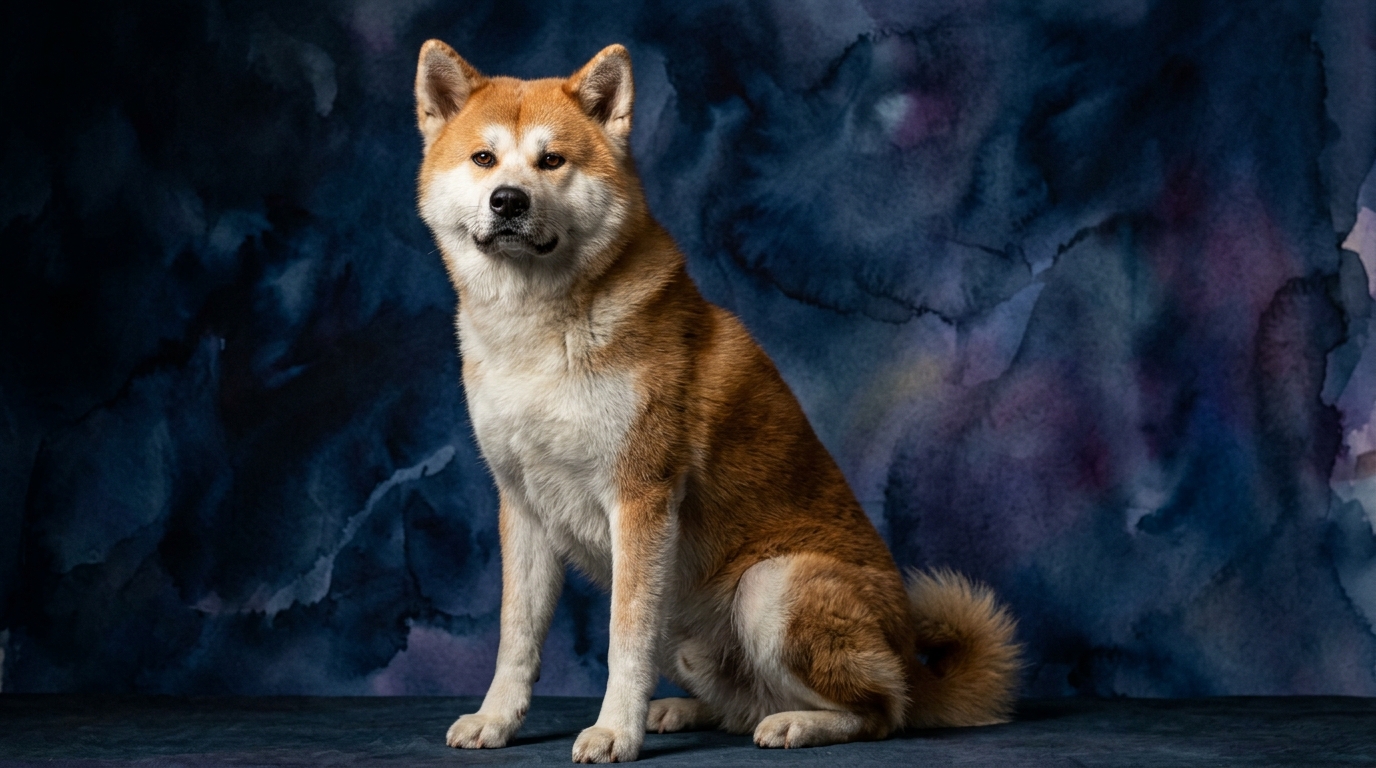
Side-by-Side Cognitive Profiles: Bloodhound vs. Akita
The Bloodhound, a breed Coren ranks at #74, presents a unique cognitive blueprint driven by its unparalleled olfactory capabilities.
**Bloodhound Problem Solving (5/5):** This breed excels at intricate problem-solving, particularly when a scent trail is involved. Their remarkable ability to interpret, follow, and reconstruct complex olfactory information over vast distances and varied terrain showcases a profound cognitive specialization, demanding relentless focus and decision-making.
**Bloodhound Training Speed (1/5):** Despite their high problem-solving skills, Bloodhounds exhibit a very low training speed for general obedience. Their intense, singular focus on scent often overrides human commands, making them challenging to motivate with conventional methods once their nose is engaged in a pursuit. Their independent working style means they are not inherently inclined towards rapid compliance.
**Bloodhound Social Intelligence (2/5):** Bloodhounds possess moderate social intelligence, primarily directed towards their human handlers within a working context. While capable of forming deep bonds and showing affection, their dominant drive is their sense of smell, which can lead them to appear less attuned to subtle social cues or complex inter-dog dynamics compared to other breeds.
**Bloodhound Instinctive Drive (5/5):** Their instinctive drive is exceptionally high, almost exclusively channeled into scent detection and tracking. This powerful, innate urge to follow a trail is the defining characteristic of the breed, profoundly shaping their entire cognitive and behavioral profile, often taking precedence over all other stimuli.
**Bloodhound Memory (5/5):** Bloodhounds exhibit exceptional memory, particularly for scent patterns, trail locations, and environmental cues. They can recall faint trails days old and navigate intricate environments based on stored olfactory information, a critical cognitive asset for their formidable tracking capabilities.
In contrast, the Akita, a Working breed ranked #54 by Coren, demonstrates a different set of cognitive strengths.
**Akita Problem Solving (3/5):** Akitas show a moderate capacity for problem-solving. They can learn and execute complex tasks and navigate novel situations with a thoughtful, deliberate approach. Their problem-solving skills are practical and oriented towards their environment and social structure, though not as hyper-specialized as the Bloodhound's olfactory puzzles.
**Akita Training Speed (2/5):** Akitas possess a slightly higher training speed than Bloodhounds, indicating they can grasp commands and routines with moderate repetition. However, their independent and sometimes stubborn nature means that consistent effort and patient, respectful training methods are crucial for reliable compliance.
**Akita Social Intelligence (3/5):** Akitas demonstrate moderate social intelligence. They are keen observers of their human family dynamics and form deeply loyal, protective bonds with their inner circle. However, they are typically reserved with strangers and can be selective with other dogs, necessitating careful socialization to ensure appropriate interactions.
**Akita Instinctive Drive (5/5):** Like the Bloodhound, Akitas have a very high instinctive drive, though its manifestation differs significantly. Their drive is rooted in guarding, hunting, and a strong sense of territory and family protection. This powerful innate motivation shapes their demeanor, requiring consistent guidance and appropriate outlets for its expression.
**Akita Memory (4/5):** Akitas possess strong memory capabilities, reliably recalling routines, commands, and past experiences. This cognitive strength aids their ability to learn and adapt within their established social circle and environment, contributing to their dependable nature as vigilant companions.
Where the Bloodhound Wins Cognitively
The Bloodhound's cognitive superiority lies unequivocally in specialized scent-based problem-solving and memory. Their 5/5 ratings in both categories reflect an unparalleled ability to process, interpret, and recall olfactory information, allowing them to follow a trail for miles over varied terrain and often days after it was laid. This isn't just about sniffing; it's a sophisticated application of cognitive resources to a singular, complex task, demanding sustained focus and decision-making that far surpasses most breeds. Their memory for scent details is legendary, enabling them to reconstruct intricate olfactory narratives that would be incomprehensible to other dogs.
Where the Akita Wins Cognitively
The Akita edges out the Bloodhound in general trainability and social intelligence, albeit modestly. With a training speed of 2/5 compared to the Bloodhound's 1/5, Akitas can learn commands and routines with greater efficiency, though still requiring consistent effort due to their independent streak. Their social intelligence, rated 3/5 versus the Bloodhound's 2/5, indicates a slightly better aptitude for understanding and navigating human social cues and family dynamics, making them more attuned to the nuances of household life. While both breeds have high instinctive drives, the Akita's manifests in a more socially integrated way, focusing on protection and loyalty within its defined social group, which can be more readily managed in a typical companion setting.
Which is Easier to Train and Why
The Akita generally presents as easier to train for general obedience and household manners compared to the Bloodhound, largely due to their slightly higher training speed (2/5 vs 1/5) and social intelligence (3/5 vs 2/5). Akitas, while independent, are often motivated by a desire to please their primary human and a strong sense of loyalty, making them more receptive to command-based training if respect is earned. Their protective instincts, though powerful, can be channeled through structured training. In contrast, the Bloodhound's profound instinctive drive (5/5) for scent work often makes them profoundly single-minded; once on a scent, their focus is incredibly difficult to divert, requiring immense patience and specialized techniques to instill obedience that competes with their nose. Their lower social intelligence in a non-working context means they are less inherently concerned with human approval when a fascinating scent is present, making standard obedience a significant challenge.
Which Suits Active Owners vs. Relaxed Owners
Neither the Bloodhound nor the Akita are ideal for truly relaxed owners seeking a low-maintenance canine. Both breeds possess an exceptionally high instinctive drive (5/5) that demands significant engagement. The Bloodhound, with its unparalleled need to follow scent, requires owners committed to providing regular, structured outlets for this drive, such as scent work, tracking sports, or long walks where they are allowed to explore with their nose. These dogs are not content with short backyard romps; their activity is mentally and physically demanding, making them suitable for active owners who appreciate and can facilitate their unique purpose. The Akita, while not requiring the same specialized scent work, also needs active engagement. Their strong guarding instincts and powerful physique necessitate consistent exercise, mental stimulation, and ongoing socialization to prevent boredom and channel their drive appropriately. They are best suited for active owners who understand the breed's need for leadership, consistent training, and purposeful activity, rather than a sedentary lifestyle.
The Verdict
Choose the Bloodhound if you are a dedicated, active individual fascinated by canine scent work, prepared to channel an unparalleled instinctive drive into tracking, and possess the patience for a dog whose primary motivation is its nose, not always human directives.
Opt for the Akita if you are an experienced, active owner seeking a loyal, protective companion who thrives on strong leadership, consistent training, and values a dog with a reserved but deeply bonded nature, provided you can commit to their significant exercise and socialization needs.
🧠 Find Your Pet's IQ Score
Our Pet IQ Lab assessment covers 25+ tests across 5 cognitive dimensions — personalized to your breed.
Take the Full IQ Test →Frequently Asked Questions
Is a Bloodhound a good family pet despite its low social intelligence score?
While a Bloodhound's social intelligence score is 2/5, indicating less focus on complex social cues, they can be affectionate family pets. Their deep connection often revolves around their handler, and they are generally gentle with children, though their immense size and powerful scent drive require supervision and consistent training to manage.
Do Akitas require a lot of exercise given their high instinctive drive?
Yes, Akitas, with their 5/5 instinctive drive, require significant daily exercise and mental stimulation. This drive manifests in their need for purposeful activity, guarding, and hunting, which, without adequate outlets, can lead to boredom and destructive behaviors. Daily walks, playtime, and training sessions are crucial.
How does the Coren rank (#74 vs #54) relate to their specific IQ scores?
The Coren rank broadly reflects a dog's working and obedience intelligence, often correlating with training speed and general problem-solving. While the Akita's higher rank (#54) suggests better general trainability than the Bloodhound (#74), it doesn't diminish the Bloodhound's specialized cognitive prowess in scent work, which isn't fully captured by a general obedience ranking.