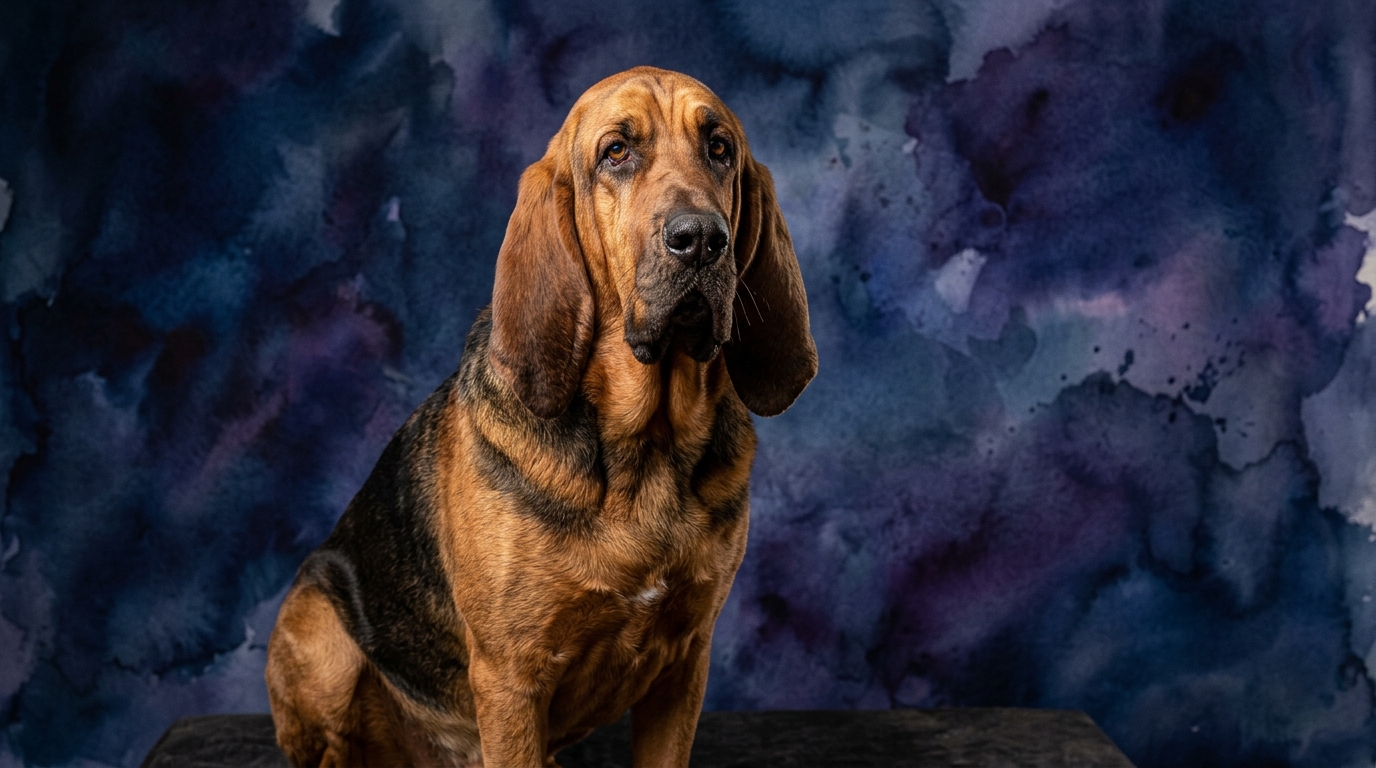
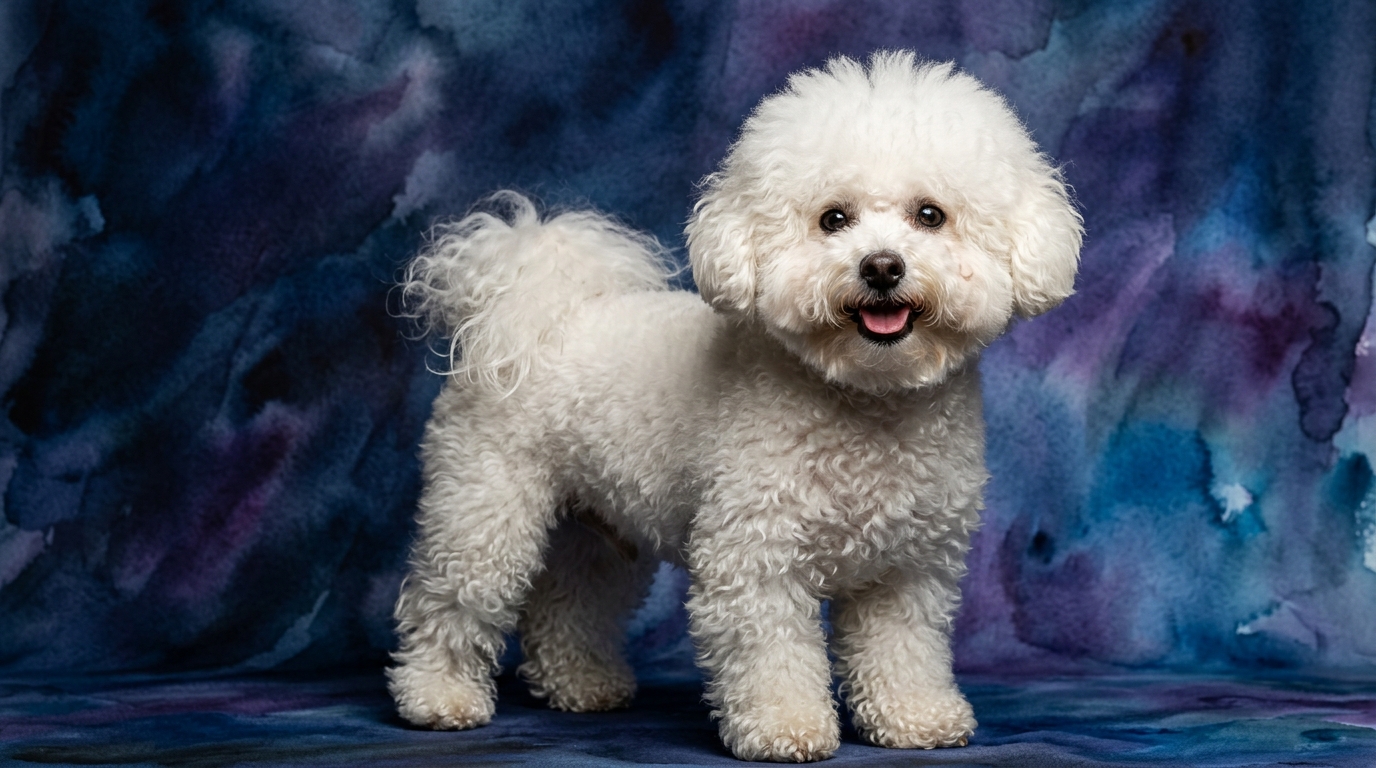
Side-by-Side Cognitive Profile: Bloodhound vs. Bichon Frisé
To understand the distinct cognitive landscapes of these breeds, The Cosmic Pet Pet IQ Lab provides a detailed breakdown across five crucial dimensions:
**Bloodhound (Coren Rank #74):** This breed’s cognitive architecture is profoundly shaped by its legendary nose. Its **Problem Solving (5/5)** isn't about deciphering abstract puzzles, but an exceptional capacity to analyze, interpret, and navigate a landscape of scents, following a faint trail with unwavering focus despite environmental chaos, false leads, or distractions. This is pure, applied cognitive deduction, where every sniff is a data point, meticulously processed to reconstruct a narrative. **Training Speed (1/5)** is notably low; their single-minded focus on scent often makes them appear profoundly stubborn or easily distracted by environmental smells during traditional obedience training. Their internal reward system is heavily biased towards tracking, meaning external motivators for obedience must be exceptionally compelling to capture their attention away from their primary sensory world. **Social Intelligence (2/5)** is modest; while generally amiable and tolerant, their primary focus is often on their olfactory world rather than intricate human-dog social cues or group dynamics, leading to a more independent social style. Their **Instinctive Drive (5/5)** is a powerful, almost overwhelming compulsion to follow a scent, often superseding other motivations or desires, including basic obedience. It's a deep-seated cognitive program that dictates much of their behavior and perception. Finally, their **Memory (5/5)** is outstanding, not just for remembering a treat location, but for intricate scent profiles, the nuances of a specific trail, and the spatial relationships within a tracking environment. They are capable of recalling specific smells and routes over long periods and vast distances, allowing them to re-engage with a lost trail hours or even days later.
**Bichon Frisé (Coren Rank #45):** This breed's cognition is finely tuned for companionship and social interaction. Their **Problem Solving (3/5)** involves figuring out moderately complex situations, such as manipulating objects to get a desired toy, figuring out how to open a cupboard, or employing charming behaviors to elicit attention. Their problem-solving often revolves around social interaction and achieving comfort or companionship, rather than intricate deductive reasoning seen in working breeds. **Training Speed (3/5)** is moderate; they are reasonably quick to learn new commands, tricks, and routines, especially when motivation involves positive reinforcement, praise, and social interaction. They respond well to consistent, engaging training methods that make learning a fun, shared activity with their human. Their **Social Intelligence (5/5)** is exceptional; they are acutely attuned to human emotions, intentions, and subtle social cues, thriving on interaction and connection. They are adept at reading body language, understanding vocal tones, and adjusting their own behavior to maintain harmony and engagement within their social group, often acting as emotional barometers for their families. Their **Instinctive Drive (2/5)** is low compared to breeds specifically bred for tasks like hunting or herding. Their primary internal drive is typically companionship, comfort, and social interaction, making them less prone to independent pursuits driven by deeply ingrained primal urges. Their **Memory (3/5)** is good for routines, familiar people, places, and learned behaviors. They effectively recall pleasant interactions and established household rules, contributing to their adaptability as family companions. While not focused on complex environmental details like a Bloodhound, their social memory is robust.
Where the Bloodhound Excels Cognitively
The Bloodhound's cognitive strengths are profoundly rooted in its specialized sensory world, particularly its unparalleled olfactory processing. Its Problem Solving score of 5/5 isn't about deciphering abstract puzzles, but an exceptional capacity to analyze, interpret, and navigate a landscape of scents, following a faint trail with unwavering focus despite environmental chaos, false leads, or distractions. This is pure, applied cognitive deduction, where every sniff is a data point, meticulously processed to reconstruct a narrative. Coupled with an Instinctive Drive of 5/5, their cognitive processes are singularly geared towards this purpose; they don't just sniff, they *analyze* and *commit* to the pursuit. Their Memory, also a perfect 5/5, allows them to retain intricate scent profiles and the precise spatial relationships within a trail over vast distances and extended periods, making them truly remarkable for persistent tracking tasks. This isn't rote memorization, but a deep, sensory recall that informs their next step, allowing them to reconnect with a lost trail hours or even days after it was laid, showcasing a unique form of cognitive endurance.
Where the Bichon Frisé Shines Cognitively
Conversely, the Bichon Frisé excels in a different realm of cognition, one deeply intertwined with social dynamics and emotional intelligence. Their Social Intelligence, a remarkable 5/5, means they possess an exceptional ability to read and respond to human emotions, intentions, and subtle social cues. They are masters of canine-human communication, adapting their behavior to elicit desired responses, offer comfort, or simply maintain harmonious relationships within their family unit. This acute social awareness underpins much of their cognitive success, allowing them to navigate complex household dynamics with grace and charm, often anticipating their owners' moods or desires. Their Training Speed, scoring 3/5, while not the highest among all breeds, is significantly better than the Bloodhound's, reflecting their eagerness to engage and learn when the motivation is social connection and positive reinforcement. They process and respond to instructions within a social context, making them responsive companions who are eager to please and interact, leveraging their understanding of human social structures to learn effectively.
Ease of Training: A Tale of Two Motivations
When it comes to ease of training, the Bichon Frisé clearly has an advantage due to its balanced cognitive profile and strong social drive. With a Training Speed of 3/5, they are generally eager to please and respond well to consistent, positive reinforcement methods, especially when training is framed as an engaging interaction. Their high Social Intelligence (5/5) means they are motivated by human approval and connection, making them receptive students who actively seek to understand and comply with commands. They thrive on the shared experience of learning and the positive feedback from their human companions.
In contrast, the Bloodhound's Training Speed of 1/5 presents a significant challenge. Their overwhelming Instinctive Drive (5/5) to follow a scent means that traditional obedience commands often pale in comparison to the allure of an interesting smell. This isn't a lack of cognitive capacity, but a powerful, innate focus that makes them appear stubborn or distracted in a training setting. Teaching a Bloodhound requires immense patience, understanding their primary motivation, and often integrating scent work into their training to capture and maintain their attention away from their primary olfactory mission. Their cognition is simply wired for a different kind of 'work'.
Matching Breeds to Lifestyles: Active vs. Relaxed Owners
The choice between these two breeds depends heavily on an owner's lifestyle and expectations for canine companionship. The Bloodhound, with its intense Instinctive Drive (5/5) and profound need for mental engagement through scent work, is best suited for active owners who are prepared to dedicate significant time and effort to their dog's innate talents. This means regular, structured scent tracking exercises, long walks where they can explore with their nose, and a tolerance for a dog whose attention is often directed outwards to the world of smells. They are not typically content with a purely sedentary existence and require an owner who understands and respects their deeply ingrained drive for olfactory exploration.
Conversely, the Bichon Frisé, with its lower Instinctive Drive (2/5) and exceptional Social Intelligence (5/5), thrives in a more relaxed household where human interaction and companionship are paramount. They are perfectly content with moderate daily exercise, ample lap time, and being an integral, affectionate part of family life. Their cognitive strengths are best appreciated by owners who value a responsive, emotionally attuned companion over a working partner, and who can provide consistent social engagement and a comfortable home environment. They are designed to be delightful, interactive family members.
The Verdict
Choose a Bloodhound if you are an experienced owner seeking a dedicated working partner for scent detection, prepared for extensive training tailored to their powerful olfactory drive, and value a dog whose primary joy comes from following a trail.
Opt for a Bichon Frisé if you desire an affectionate, socially astute companion who thrives on human interaction, adapts readily to family routines, and brings a joyful, engaging presence to a more relaxed home environment.
🧠 Find Your Pet's IQ Score
Our Pet IQ Lab assessment covers 25+ tests across 5 cognitive dimensions — personalized to your breed.
Take the Full IQ Test →Frequently Asked Questions
Is a Bloodhound difficult to live with given its low training speed score?
While Bloodhounds have a low training speed for traditional obedience, their cognitive strengths lie in their unparalleled scenting ability. Living with one requires understanding their profound instinctive drive and providing outlets for their nose work, which can make them content companions despite their independent streak in obedience.
Does the Bichon Frisé's high social intelligence mean they are prone to separation anxiety?
The Bichon Frisé's exceptional social intelligence means they form strong bonds and thrive on companionship. While this makes them wonderful family dogs, it also means they can be susceptible to separation anxiety if not properly socialized and trained to be comfortable alone from a young age.
How do the Coren ranks (Bloodhound #74, Bichon Frisé #45) relate to their IQ scores?
Coren's ranking primarily measures "working and obedience intelligence," focusing on trainability for commands. The Cosmic Pet IQ Lab's scores offer a broader, multi-dimensional view of cognition, explaining why a breed like the Bloodhound, lower in Coren's rank, can still excel phenomenally in specific cognitive areas like problem-solving and memory related to its instinctive drive.