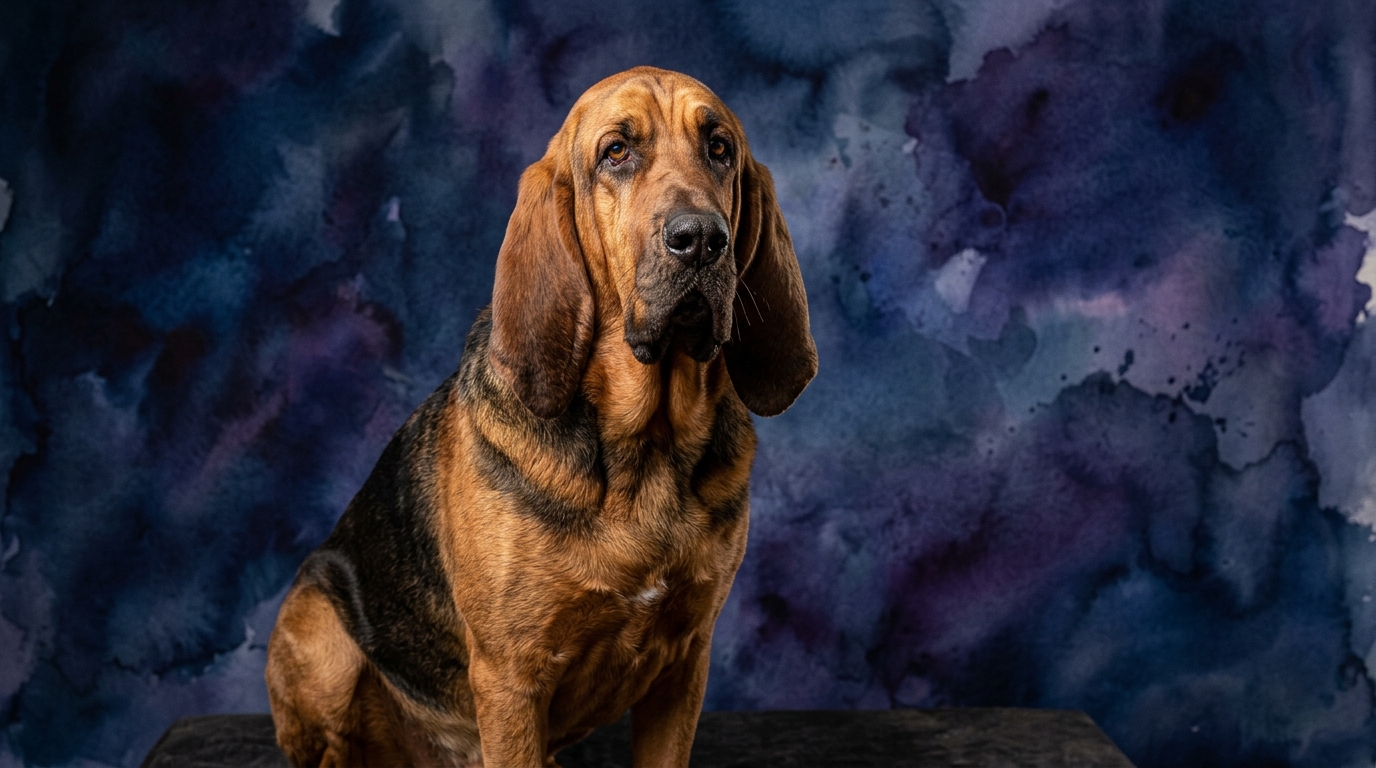
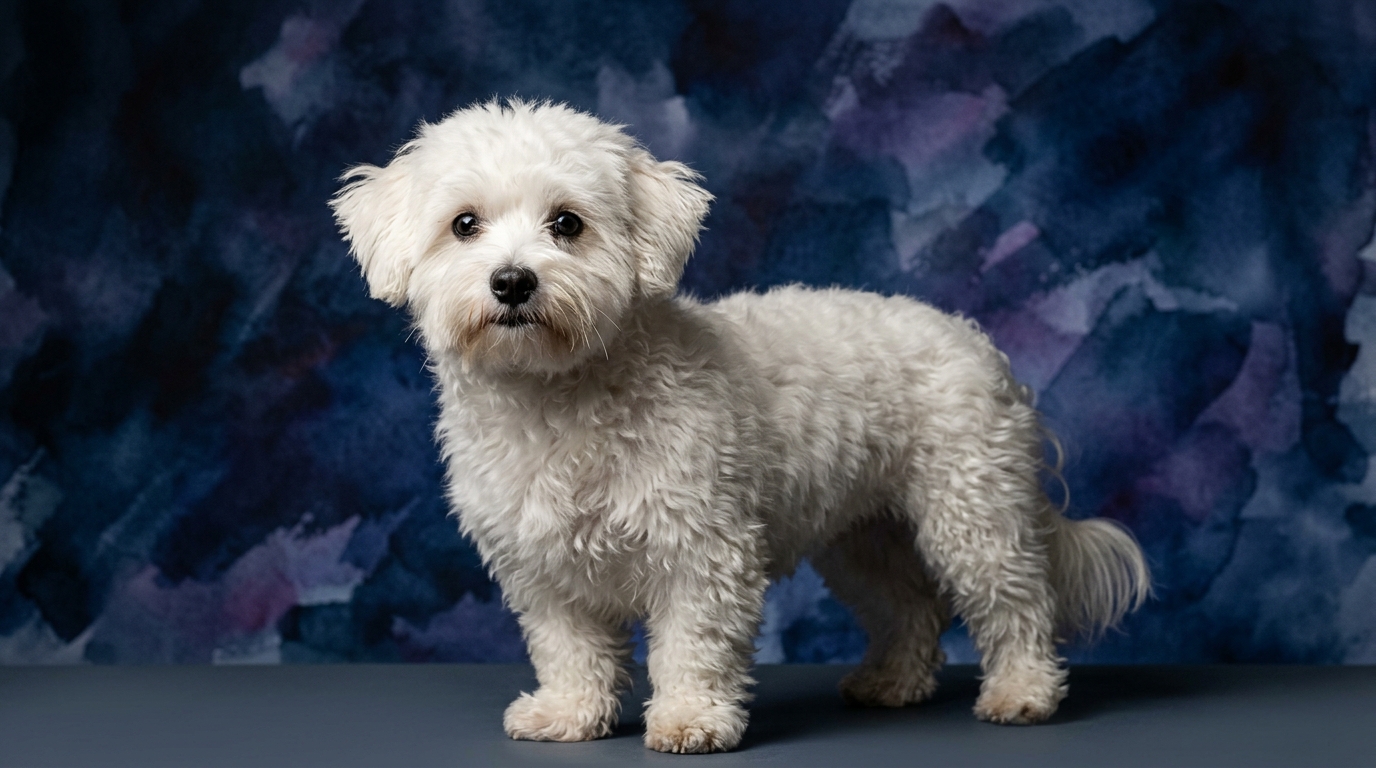
Side-by-Side Cognitive Profiles
The Bloodhound, a venerable scent hound, presents a cognitive profile profoundly optimized for its specific working role. Its Problem Solving is rated an exceptional 5/5, reflecting an unparalleled ability to independently strategize and navigate complex environments to locate targets. Paired with an equally impressive Instinctive Drive of 5/5, this breed is profoundly motivated by its olfactory senses, dedicating immense mental and physical energy to following a trail. Memory also scores a perfect 5/5, indicating an extraordinary capacity to recall scent patterns and track routes over long durations. However, this intense specialization comes with trade-offs: Training Speed is a modest 1/5, as their focus is often externalized towards scents rather than human commands, and Social Intelligence stands at 2/5, suggesting a more independent nature less attuned to nuanced human social cues.
In stark contrast, the Coton de Tuléar, a charming companion breed, exhibits a more balanced and generalized cognitive makeup. Each of its five dimensions – Problem Solving, Training Speed, Social Intelligence, Instinctive Drive, and Memory – registers a consistent 3/5. This uniform scoring suggests a breed that is moderately capable across the board without extreme specialization in any single area. Their 3/5 Problem Solving indicates a capacity for practical, everyday challenges but not the deep, independent strategizing of a Bloodhound. A 3/5 Training Speed means they are receptive to learning and can grasp commands at an average pace. Social Intelligence at 3/5 points to a reasonably adaptable and engaging companion, able to read and respond to human interaction without being overly dependent or aloof. Finally, their 3/5 Instinctive Drive and Memory indicate they possess typical canine curiosity and recall, but not the singular, all-consuming focus seen in working breeds.
Where the Bloodhound Excels Cognitively
The Bloodhound's cognitive strengths are undeniably rooted in its olfactory prowess and the mental machinery supporting it. A 5/5 in Problem Solving highlights its exceptional capacity for independent, goal-oriented thought, particularly when presented with a tracking challenge. This isn't about solving abstract puzzles, but rather the intricate process of deciphering a scent trail, navigating obstacles, and making complex decisions in varied terrains without human direction. Their mind is a sophisticated biological computer dedicated to scent analysis, pattern recognition, and path reconstruction.
Accompanying this is a 5/5 Instinctive Drive, an unyielding motivation to pursue a scent once engaged. This drive isn't merely physical; it's a deep cognitive compulsion that overrides distractions and fatigue, allowing them to maintain focus on their primary task for extended periods. This singular dedication is a testament to their specialized mental architecture. Furthermore, their 5/5 Memory is critical to their tracking success, enabling them to retain vast amounts of scent information, recall specific environmental cues, and remember the nuances of a trail over time and distance, making them unparalleled in their specific field of work.
While their Training Speed and Social Intelligence scores might seem lower in comparison, these are not deficiencies but rather reflections of their intense specialization. Their cognitive resources are so heavily invested in their sensory world and independent tracking that they are less inclined to prioritize human-centric training cues or subtle social signals. This means their wins are found in the depth and persistence of their specialized cognitive functions, not in general adaptability.
Where the Coton de Tuléar Shines Cognitively
While the Bloodhound's mind is a highly specialized instrument, the Coton de Tuléar's cognitive profile, with its consistent 3/5 across all dimensions, represents a different kind of strength: balanced adaptability. Its 3/5 in Social Intelligence is a significant advantage for a companion animal. Unlike the Bloodhound’s more independent focus, the Coton is moderately attuned to human emotions and social dynamics, making them more responsive to household interactions and generally easier to integrate into diverse family settings. They process social cues effectively enough to be engaging, but not so intensely that they become overly sensitive or demanding.
The Coton's 3/5 in Problem Solving, while not as profound as a Bloodhound's, is perfectly suited for navigating the practical, everyday challenges of a domestic environment. This might involve figuring out how to get a toy from under furniture or understanding a routine, rather than deciphering complex scent puzzles. This practical problem-solving ability, combined with a moderate 3/5 Instinctive Drive, means they possess natural curiosity and engagement without being overwhelmingly driven by a single compulsion that might lead them astray or make them difficult to manage off-leash in varied environments.
Essentially, the Coton de Tuléar's cognitive strengths lie in its generalist approach. Its balanced scores mean it's neither prone to extreme independent action nor overly dependent, offering a moderate and predictable mental landscape. This makes them versatile and generally easier to live with for many owners who seek a well-rounded and responsive companion rather than a highly specialized working animal. Their moderate Memory also ensures they retain routines and learned behaviors adequately for a pet, without the extraordinary, often overwhelming, sensory recall of a tracking breed.
Trainability: A Tale of Two Speeds
When it comes to ease of training, the Coton de Tuléar generally presents a more straightforward experience for the average owner compared to the Bloodhound. The Coton's Training Speed of 3/5 indicates a receptive learner, capable of grasping new commands and routines at a moderate pace. Their balanced Social Intelligence of 3/5 also contributes to their trainability, as they are sufficiently attuned to human interaction and motivated by praise and positive reinforcement, making them more inclined to cooperate and respond to cues.
The Bloodhound, with its Training Speed of 1/5, offers a considerably different training challenge. This isn't due to a lack of mental capacity, but rather a profound difference in cognitive priorities. Their exceptional 5/5 Instinctive Drive means that once a compelling scent is detected, their focus is singularly directed towards that trail, often rendering human commands secondary or even unheard. Their 5/5 Problem Solving means they are adept at independently pursuing their goals, which can manifest as stubbornness when an owner tries to redirect them from a scent. Training a Bloodhound requires immense patience, consistency, and a deep understanding of their scent-driven world, often needing specialized methods to work with, rather than against, their powerful instincts. While they can learn, their internal motivation often outweighs external commands, making the process slower and more demanding.
Cognition and Lifestyle: Active vs. Relaxed Owners
The distinct cognitive profiles of the Bloodhound and Coton de Tuléar naturally align with very different owner lifestyles. An owner with an active, hands-on approach who appreciates and can channel a dog's specialized drives would find a suitable match in the Bloodhound. Their 5/5 Instinctive Drive and Problem Solving demand an owner prepared for extensive, structured activity that engages their scenting abilities, such as scent work, tracking sports, or long, exploratory walks where their nose can lead. A relaxed owner might find themselves overwhelmed by the Bloodhound’s singular focus and persistence, which, if not properly managed, can lead to independent exploration (i.e., wandering off on a scent) and a perceived lack of responsiveness.
Conversely, the Coton de Tuléar, with its balanced 3/5 scores across the board, is an excellent fit for owners seeking a more relaxed yet engaging companion. Their moderate Instinctive Drive means they enjoy walks and playtime but are less likely to become obsessively focused on a single sensory input. Their 3/5 Social Intelligence makes them adaptable to various social settings, enjoying family time without requiring constant, intense mental work. A relaxed owner will appreciate their trainability and their capacity for gentle companionship, making them suitable for apartment living or homes where intense working drives are not a priority. They thrive on interaction and being part of daily life, offering a pleasant and manageable cognitive presence.
The Verdict
Choose a Bloodhound if you are a dedicated, experienced owner prepared to engage deeply with their profound scenting instincts and independent problem-solving skills, channeling their drive into purposeful activities. They thrive with owners who understand and respect their specialized cognitive architecture.
Opt for a Coton de Tuléar if you seek a balanced, adaptable companion who integrates smoothly into family life with moderate training effort and social engagement. They are ideal for owners desiring a responsive, charming presence without extreme cognitive demands.
🧠 Find Your Pet's IQ Score
Our Pet IQ Lab assessment covers 25+ tests across 5 cognitive dimensions — personalized to your breed.
Take the Full IQ Test →Frequently Asked Questions
Does a Bloodhound's low training speed mean it cannot be trained?
No, a Bloodhound's 1/5 training speed doesn't mean they are untrainable; rather, it indicates they learn differently and often at a slower pace due to their intense focus on scent. Training requires significant patience, consistency, and methods that work with, not against, their powerful instinctive drive, often leveraging their scenting abilities.
Is the Coton de Tuléar's moderate instinctive drive a disadvantage?
For most companion pet owners, the Coton de Tuléar's 3/5 instinctive drive is actually an advantage. It means they possess natural curiosity and enjoy engagement without being overwhelmingly driven by a singular compulsion, making them easier to manage in varied environments and less prone to wandering off on a trail.
How does Bloodhound's 5/5 memory impact daily life?
A Bloodhound's exceptional 5/5 memory is primarily geared towards recalling intricate scent patterns and tracking routes, making them unparalleled in their specific work. In daily life, this might manifest as remembering specific walking paths or routines, but its most profound impact is on their ability to persistently follow and retain complex scent information over time and distance.