
Side-by-Side Cognitive Profiles
The Bloodhound's Cognitive Blueprint: The Bloodhound earns a perfect 5/5 in Problem Solving, but this acuity is overwhelmingly focused on scent-based challenges. They excel at deciphering complex olfactory puzzles, navigating intricate environments purely by smell, a skill honed over centuries. Their Training Speed, however, registers a low 1/5; their immense focus on scent often makes conventional obedience training a patient, repetitive endeavor. Social Intelligence is modest at 2/5, as their primary attention is typically directed outward, towards a scent trail, rather than inward, towards human social cues. An unparalleled 5/5 in Instinctive Drive highlights their relentless, single-minded pursuit of a scent, a drive that can override almost all other stimuli. Finally, their Memory is a stellar 5/5, allowing them to recall specific scent profiles and complex trail patterns with remarkable accuracy over long periods.
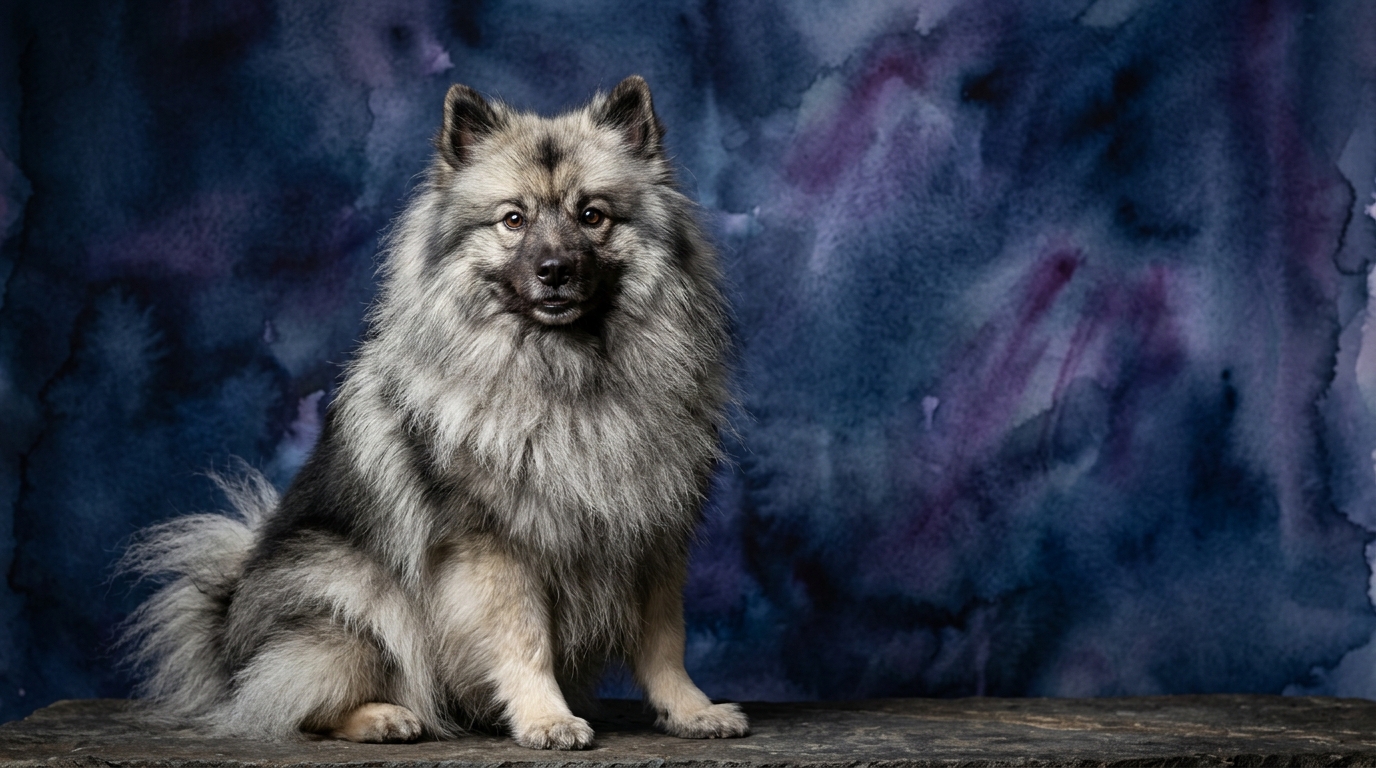
Keeshond's Cognitive Blueprint: In contrast, the Keeshond presents a more balanced, domestically oriented cognitive profile. Their Problem Solving rates a solid 4/5, demonstrating an ability to adapt to new situations, learn household routines, and figure out how to achieve desired outcomes within a home environment. Training Speed is a commendable 4/5, reflecting their eagerness to please and quick grasp of new commands and behaviors. Social Intelligence is a moderate 3/5, indicating a good awareness of family dynamics and an ability to communicate their needs and interpret human moods, though not as deeply attuned as some companion breeds. Their Instinctive Drive is a balanced 3/5, present enough to engage in play and explore, but not so overwhelming as to dominate their behavior. Like the Bloodhound, the Keeshond boasts a perfect 5/5 in Memory, remembering commands, people, and past experiences with impressive recall.
Where the Bloodhound's Cognition Excels
The Bloodhound's cognitive superiority shines brightest in specialized, instinct-driven tasks, particularly those involving scent. Their 5/5 Problem Solving, when applied to tracking, is unparalleled; they can follow trails hours or even days old, navigating through complex environments with a singular focus that few other breeds can match. This isn't about solving abstract puzzles, but about deconstructing a world of scent.
Their perfect 5/5 Instinctive Drive fuels this exceptional ability, manifesting as an unwavering persistence that allows them to overcome obstacles and distractions that would deter other dogs. This drive is a powerful cognitive engine, enabling sustained effort towards a specific, deeply ingrained goal.
Furthermore, the Bloodhound's 5/5 Memory is specifically adapted for retaining vast libraries of scent information and the intricate spatial patterns associated with trails. They remember the nuances of specific scents and can recall the sequence of a complex path, making them masters of long-term, sensory-specific recall.
Where the Keeshond's Cognition Shines
The Keeshond excels in areas that promote harmonious living and adaptability within a human family. Their 4/5 Training Speed is a clear cognitive advantage, allowing them to acquire new skills and commands far more rapidly than a Bloodhound. This quicker learning curve translates into greater versatility and responsiveness in various domestic settings.
A higher Social Intelligence (3/5) allows the Keeshond to better interpret human cues, moods, and expectations, fostering a stronger communicative bond. They are more attuned to their family members, adapting their behavior based on social feedback, which is a crucial cognitive strength in a companion animal.
While the Bloodhound's problem-solving is highly specialized, the Keeshond's 4/5 Problem Solving is more generalized, enabling them to navigate daily life challenges with more independent thought. This includes figuring out how to open a gate, access a treat, or understand complex household routines, demonstrating flexible cognitive application beyond a single instinct.
Training Ease: Bloodhound vs. Keeshond
Without a doubt, the Keeshond is significantly easier to train for general obedience and household manners, primarily due to their 4/5 Training Speed and 3/5 Social Intelligence. They are typically eager to please their human companions and quickly grasp new concepts, making repetitive drills less necessary. Their ability to read human body language and vocal tones allows for more nuanced communication during training sessions.
The Bloodhound, with a 1/5 Training Speed and 2/5 Social Intelligence, presents a greater training challenge for traditional obedience. Their powerful 5/5 Instinctive Drive means that once a compelling scent is detected, their focus becomes almost entirely dedicated to that stimulus, often overriding commands. Training a Bloodhound requires immense patience, consistent motivation, and often, incorporating their natural tracking abilities into the training process itself, rather than trying to suppress them. Their internal drive is a formidable cognitive force to redirect.
Suitability for Active vs. Relaxed Owners
The Bloodhound is best suited for owners who are "active" in a very specific and dedicated sense, not necessarily in terms of constant high-impact exercise, but in providing consistent, engaging outlets for their profound instinctive drive. Owners must be prepared for long, focused walks that allow for scent exploration, or even formal tracking activities, alongside robust containment measures. Their cognitive needs demand an owner who can channel their deep-seated pursuit drive constructively.
The Keeshond, with its more balanced cognitive profile and moderate instinctive drive (3/5), is a better fit for a wider range of owners, including those who prefer a more relaxed pace but still offer consistent mental stimulation and companionship. They enjoy regular walks, playtime, and learning new tricks, but their needs are less specialized and all-consuming than a Bloodhound's. They thrive on being an integrated family member, adapting well to varying activity levels as long as their social and cognitive needs are met.
The Verdict
Choose a Bloodhound if you are a dedicated individual seeking an unparalleled partner for scent work or tracking, prepared to navigate their profound instinctive drive with immense patience and specialized training.
Opt for a Keeshond if you desire a responsive, adaptable companion who integrates readily into family life, offering quicker trainability and a balanced cognitive profile for a harmonious household.
🧠 Find Your Pet's IQ Score
Our Pet IQ Lab assessment covers 25+ tests across 5 cognitive dimensions — personalized to your breed.
Take the Full IQ Test →Frequently Asked Questions
Do Bloodhounds struggle with learning new things?
Bloodhounds learn exceptionally well within their specialized domain of scent work, demonstrating a 5/5 in problem solving for these tasks. However, their 1/5 training speed for conventional obedience means they learn human-directed commands more slowly and require extensive repetition and motivation to comply.
Are Keeshonden good at problem-solving?
Yes, Keeshonden exhibit a strong 4/5 in general problem solving, allowing them to adapt effectively to various situations and learn household routines quickly. They can figure out how to achieve desired outcomes in their environment, making them quite adaptable companions.
How does a Bloodhound's memory compare to a Keeshond's?
Both breeds share an impressive 5/5 in memory. The Bloodhound's memory is particularly geared towards recalling complex scent patterns and spatial information for tracking, while the Keeshond's memory is adept at retaining commands, routines, and social interactions within a family setting.