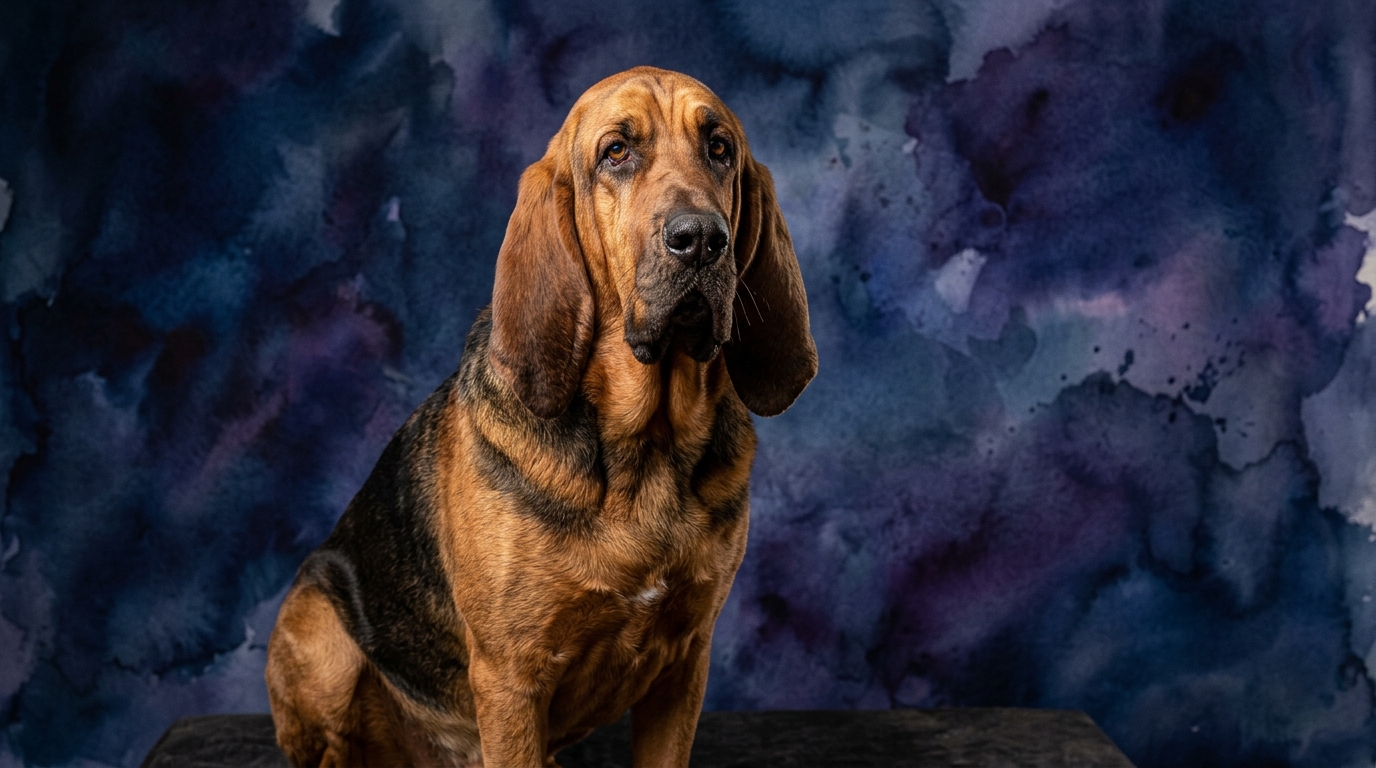
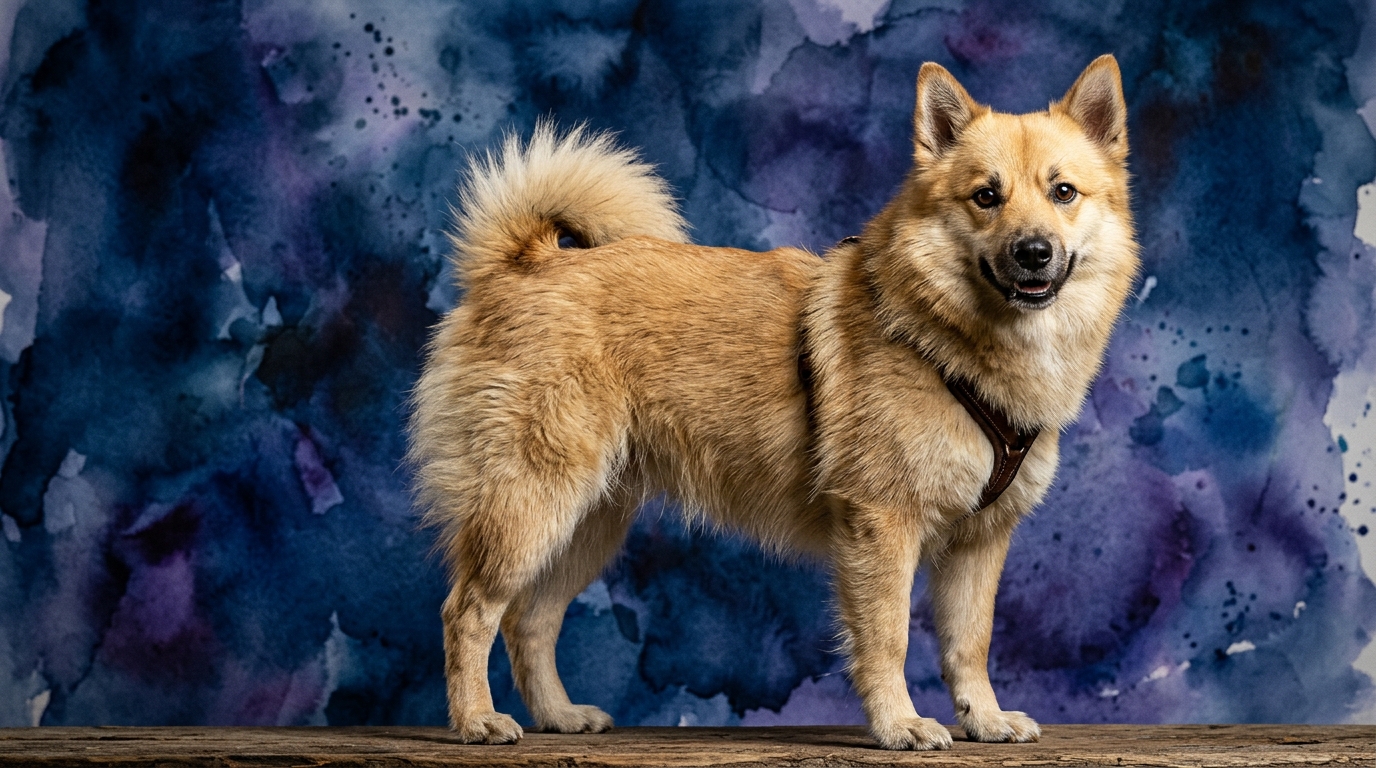
Side-by-side IQ profile
For the Bloodhound:
Problem Solving (5/5): This breed excels at unravelling complex scent puzzles, meticulously following faint trails over varied terrain and significant time. Their cognitive strength lies in processing vast amounts of olfactory data, deducing paths with unparalleled precision.
Training Speed (1/5): The Bloodhound's independent spirit and overwhelming focus on scent make them slow to acquire traditional obedience commands. Their attention is easily diverted by compelling odors, requiring immense patience and creative, scent-driven training methods.
Social Intelligence (2/5): While generally amiable, Bloodhounds are not primarily attuned to subtle human social cues. Their internal world is dominated by scent, meaning they often prioritize olfactory information over human directives in a working context.
Instinctive Drive (5/5): Their drive to track is absolute and relentless. Once on a scent, a Bloodhound will pursue it with singular focus, demonstrating unmatched perseverance.
Memory (5/5): Bloodhounds possess an extraordinary memory for scent, capable of recalling and differentiating specific olfactory profiles over long periods, crucial for their tracking prowess.
For the Norwegian Buhund:
Problem Solving (3/5): The Norwegian Buhund displays capable problem-solving, particularly in tasks related to herding, spatial navigation, and learning complex sequences in dog sports. They figure out how to achieve a goal, though not with the Bloodhound's specialized olfactory genius.
Training Speed (3/5): Buhunds are moderately quick learners, showing a willingness to engage and pick up new commands and routines with consistent positive reinforcement. They possess a good balance of eagerness and independent thought.
Social Intelligence (3/5): These dogs are generally well-attuned to human social cues, forming strong bonds and often demonstrating adaptability in various social settings. They are responsive to their owners' moods and intentions.
Instinctive Drive (3/5): The Buhund carries a strong, but manageable, herding instinct. They enjoy having a purpose and mental engagement, often seeking to "herd" family members, but their drive is not as singularly focused or overwhelming as the Bloodhound's.
Memory (3/5): Buhunds exhibit solid memory for commands, routines, and the people and places they encounter. They retain learned behaviors well, contributing to their overall trainability and adaptability.
Where Bloodhound wins cognitively
The Bloodhound's cognitive superiority undeniably lies in its specialized olfactory processing and memory, resulting in unparalleled problem-solving within the domain of scent. Their Problem Solving (5/5) involves meticulously deconstructing scent trails, discerning age, direction, and target identity from a cacophony of odors. This unique architecture allows them to perform detection feats beyond nearly any other breed. Coupled with extraordinary Memory (5/5) for specific scent profiles, they differentiate thousands of individual scents, retaining information over extended periods. This isn't just following a line; it's interpreting a three-dimensional scent picture across time, a complex cognitive act that makes them definitive experts in forensic tracking, fueled by their Instinctive Drive (5/5).
Where Norwegian Buhund wins cognitively
The Norwegian Buhund's cognitive strengths emerge from its more balanced and versatile IQ profile, allowing for broader adaptability across various tasks and social contexts. Unlike the Bloodhound's singular specialization, the Buhund's Problem Solving (3/5) is more generally applicable, enabling them to excel in diverse activities from herding to agility. Their moderate Training Speed (3/5) significantly outpaces the Bloodhound's, meaning they acquire new commands and complex sequences more readily. This generalist learning style makes them highly trainable for a wide array of roles. Furthermore, their Social Intelligence (3/5) is more developed for nuanced interaction with humans, making them responsive to cues and cooperative partners, a stark contrast to the Bloodhound's more internally-driven focus.
Which is easier to train and why
The Norwegian Buhund is generally easier to train compared to the Bloodhound, a distinction rooted in their contrasting cognitive profiles. The Buhund’s Training Speed (3/5) indicates a dog eager to learn and responsive to instruction, readily forming associations between commands and actions. They possess a natural inclination to cooperate and engage with handlers, often seeking to please. This makes them amenable to a wide range of training, from basic obedience to advanced dog sports, where they quickly grasp new concepts. Their moderate instinctive drive means they can focus on the handler even with distractions, making recall and leash manners more manageable.
Conversely, the Bloodhound's Training Speed (1/5) is low, primarily due to their overwhelming Instinctive Drive (5/5) to track. Once their nose hits a compelling scent, their world narrows to that olfactory pursuit, rendering traditional obedience commands secondary. Training a Bloodhound requires an owner to work *with* their powerful instinct, often integrating scent work into obedience to maintain engagement, rather than expecting a quick response to commands in a distracting environment. Their focus is internal and olfactory, making consistent, rapid learning of varied human-centric tasks a significant challenge.
Which suits active owners vs relaxed owners
The choice between these breeds largely depends on the *type* of activity an owner prefers. The Bloodhound suits active owners deeply committed to specialized activities like tracking, scent work, or search and rescue. Their "activity" isn't necessarily high-impact sports, but long, methodical walks or training where their profound Problem Solving (5/5) and Instinctive Drive (5/5) can be fully utilized. An owner must be prepared for a dog whose exercise is almost entirely centered around its nose, requiring significant time and dedication. They are unsuitable for relaxed owners seeking a low-maintenance companion, as unmet drive can lead to destructive behaviors.
The Norwegian Buhund suits a broader spectrum of active owners. Their balanced IQ profile, including moderate Instinctive Drive (3/5) and good Social Intelligence (3/5), means they thrive on diverse physical and mental engagement. They are excellent partners for hiking, agility, obedience, and family adventures. Buhunds enjoy having a job and appreciate interactive play and training sessions that challenge their Problem Solving (3/5) and utilize their moderate Training Speed (3/5). While energetic, they can also settle indoors after adequate stimulation, making them more adaptable to family life. They are not ideal for entirely relaxed owners, as they require consistent activity.
The Verdict
For individuals or families deeply committed to scent work, tracking sports, or specialized search and rescue, who possess the patience to manage an independent, scent-driven companion, the Bloodhound is an unmatched choice.
For active owners seeking a versatile, cooperative companion for various dog sports, outdoor adventures, and family life, who appreciate a dog with a balanced cognitive profile and good social engagement, the Norwegian Buhund is an ideal partner.
🧠 Find Your Pet's IQ Score
Our Pet IQ Lab assessment covers 25+ tests across 5 cognitive dimensions — personalized to your breed.
Take the Full IQ Test →Frequently Asked Questions
Is a Bloodhound difficult to manage for a first-time dog owner?
Yes, Bloodhounds present unique challenges for first-time owners due to their exceptional scent drive and independent nature. Their training speed is low, and their focus on scent can make traditional obedience difficult without specialized approaches and significant patience.
Can Norwegian Buhunds participate in dog sports beyond herding?
Absolutely, Norwegian Buhunds excel in a variety of dog sports, including agility, obedience, rally, and flyball. Their balanced problem-solving, moderate training speed, and social intelligence make them adaptable and eager participants.
How do their memory capabilities differ in practical terms?
A Bloodhound's memory is primarily specialized for intricate scent recall, allowing them to follow ancient or complex trails with precision. A Norwegian Buhund's memory is more general, enabling them to remember routines, commands, and social interactions effectively, making them proficient in learning diverse tasks.