Cognitive Blueprints: Bloodhound vs. Nova Scotia Duck Tolling Retriever
At The Cosmic Pet Pet IQ Lab, we analyze canine cognition across five distinct dimensions: Problem Solving, Training Speed, Social Intelligence, Instinctive Drive, and Memory. These metrics offer a granular view of a breed's mental architecture, moving beyond broad labels to pinpoint specific aptitudes. Understanding these profiles helps prospective owners align their expectations with a dog's inherent cognitive wiring.
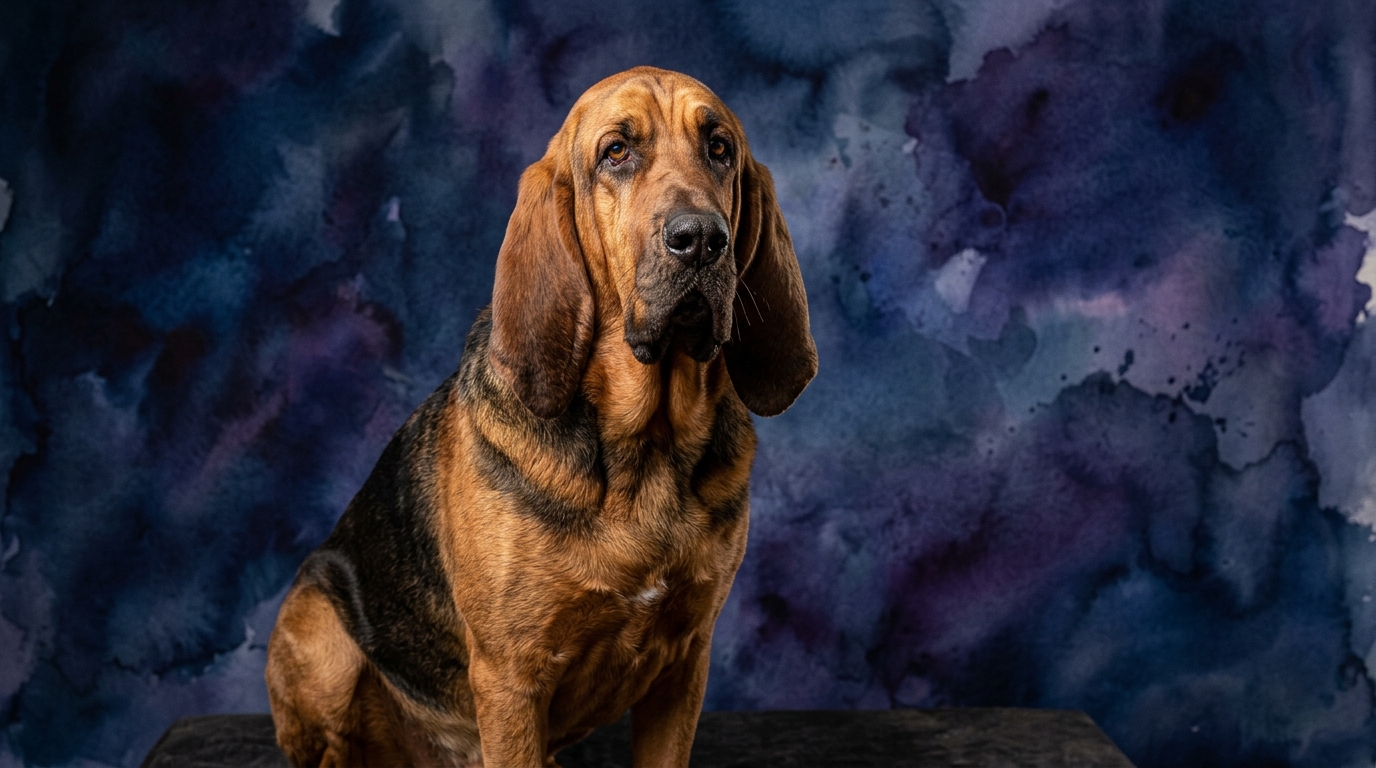
The Bloodhound presents a distinct cognitive profile, earning a Coren rank of #74, reflecting a specific aptitude set rather than broad obedience. They excel in Problem Solving (5/5), demonstrating an extraordinary capacity to unravel complex scent puzzles. Their Training Speed is notably low (1/5), indicating a preference for independent thought over immediate compliance. Social Intelligence is modest (2/5), as their focus is often externalized towards a scent rather than internal social cues. However, their Instinctive Drive for tracking is peerless (5/5), and their Memory for scent trails is exceptional (5/5), allowing them to recall and follow incredibly faint or old odors with precision.
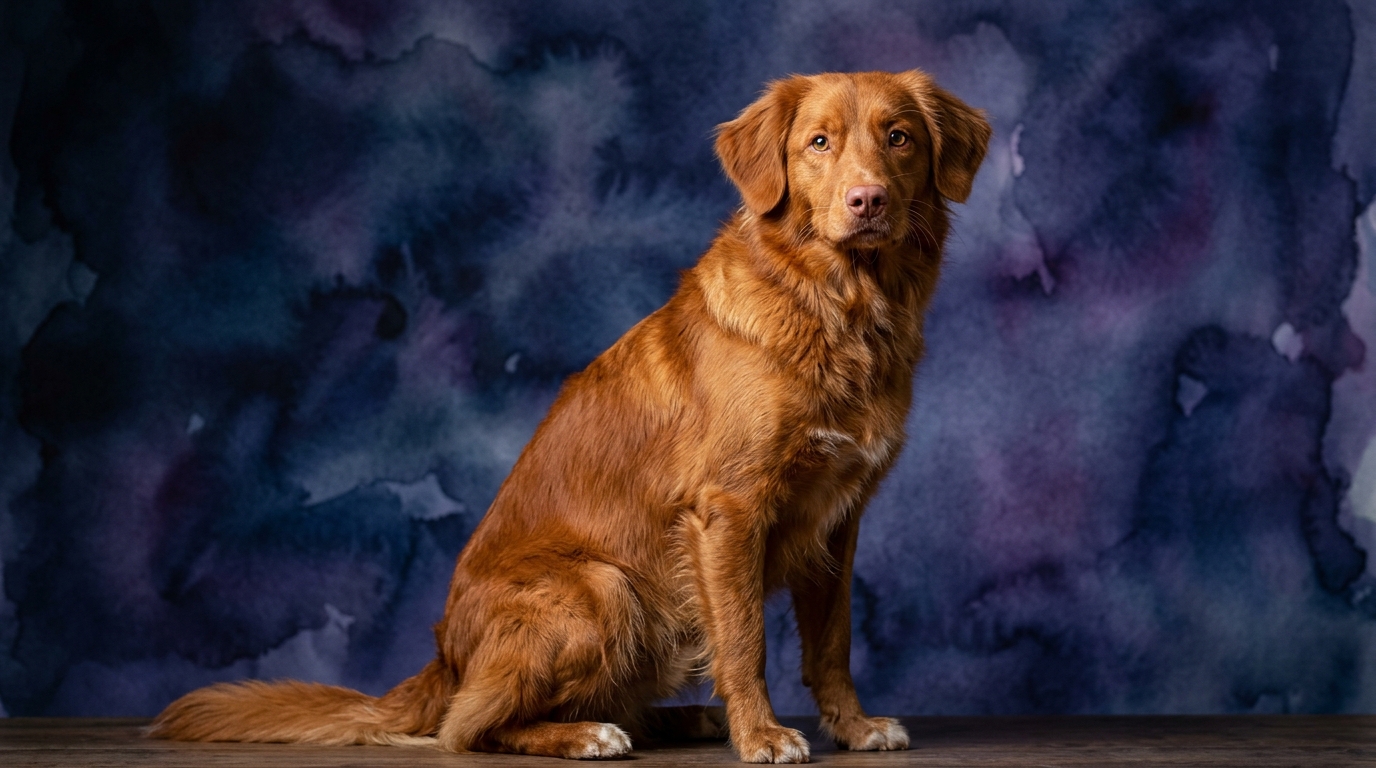
In contrast, the Nova Scotia Duck Tolling Retriever, though not Coren-ranked, exhibits a more balanced and generalized cognitive framework. Their Problem Solving ability is solid (3/5), allowing them to navigate varied tasks in the field or home. Training Speed is moderate (3/5), suggesting a reasonable aptitude for learning and retaining commands. Social Intelligence also scores a balanced (3/5), indicating an ability to read and respond to human cues and social dynamics effectively. Their Instinctive Drive for retrieving and luring is appropriate for their working role (3/5), and their Memory (3/5) supports the recall of learned behaviors and retrieving locations. This balanced profile makes them adaptable companions across many activities.
The Bloodhound's Unmatched Mental Prowess
The Bloodhound's cognitive strengths are undeniably specialized and profound, particularly in the realm of scent detection. Their Problem Solving score of 5/5 isn't about opening latches or figuring out complex agility courses; it's about dissecting a landscape of odors, identifying a target scent, and plotting the most efficient path to its source, often over vast distances and varied terrain. This involves filtering out distractions and maintaining focus on an invisible thread of information, a cognitive feat few other breeds can replicate.
Complementing this is their perfect 5/5 in Instinctive Drive. This isn't just a desire to sniff; it's an overwhelming, all-consuming compulsion to follow a trail once engaged. This drive is the engine that fuels their problem-solving prowess, pushing them through fatigue and distraction. Their exceptional Memory (5/5) is intrinsically linked to this, allowing them to retain the nuances of a scent trail, remember where they've searched, and even recall the specific scent of an individual over time, making them unparalleled in search and rescue or law enforcement roles. These cognitive dimensions are not merely strong; they are foundational to the breed's very existence and purpose.
The Toller's Balanced and Adaptable Mind
The Nova Scotia Duck Tolling Retriever's cognitive strengths lie in its well-roundedness and adaptability, a direct reflection of its working heritage. With a Problem Solving score of 3/5, they possess the mental agility to understand and execute multi-step tasks, such as 'tolling' — luring waterfowl by playing at the water's edge, then retrieving downed birds. This requires not just physical skill but also an understanding of cause and effect and the ability to adjust their actions based on the environment and handler's cues.
Their balanced Training Speed (3/5) and Social Intelligence (3/5) are significant advantages. Tollers are generally eager to engage with their handlers, making them receptive to learning new commands and routines. This cooperative nature allows for a wide range of training applications, from obedience and agility to dock diving and rally. Unlike the Bloodhound's singular focus, the Toller's mind is geared towards a more interactive and varied type of problem-solving, where understanding human direction and adapting to changing scenarios are paramount. This mental flexibility makes them excel in dynamic, partnership-based activities.
Training Trajectories: Patience for the Scent Hound, Partnership for the Toller
When it comes to training, the Bloodhound and the Nova Scotia Duck Tolling Retriever present vastly different experiences, primarily due to their distinct cognitive wiring. The Bloodhound's Training Speed of 1/5 is not an indication of an inability to learn, but rather a profound inclination to prioritize their powerful Instinctive Drive (5/5) over human instruction. Once a Bloodhound's nose is engaged, the scent becomes their world, making it incredibly challenging to redirect their attention. They learn best through consistent, positive reinforcement that taps into their natural instincts, often requiring the trainer to understand and work with their drive rather than against it. Obedience for a Bloodhound might be a slow, deliberate process, where commands are understood but often overridden by a compelling scent.
The Toller, with its Training Speed of 3/5 and Social Intelligence of 3/5, generally offers a more cooperative and responsive training experience. They are typically keen to please and enjoy the process of learning new tasks, making them more amenable to traditional obedience and sport training. Their balanced instinctive drive means they can focus on a task without being overwhelmingly distracted by a single sensory input. While they still possess a strong retrieving drive, it is more easily channeled and integrated into a training routine. Real behavioral differences include a Bloodhound's tendency to 'tune out' when on a scent, potentially ignoring recall, whereas a Toller is usually more attentive to the handler, eager for the next command or game.
Lifestyle Harmony: Matching Breed Minds to Human Rhythms
Choosing between a Bloodhound and a Nova Scotia Duck Tolling Retriever also means aligning their cognitive and physical needs with an owner's lifestyle. A Bloodhound is an ideal match for owners who are not just active, but specifically dedicated to channeling a dog's extraordinary scenting abilities. While they may not require constant high-impact exercise, their mental stimulation needs are immense and highly specialized. Owners must be prepared for regular, structured scent work, tracking, or trailing exercises, allowing the Bloodhound to engage their Problem Solving, Instinctive Drive, and Memory. A relaxed owner seeking a passive companion will quickly find themselves overwhelmed by an under-stimulated Bloodhound, whose powerful nose will lead them into trouble if not properly directed.
The Nova Scotia Duck Tolling Retriever suits active owners who enjoy a variety of outdoor pursuits and value a cooperative partner. Their balanced cognitive profile means they thrive on diverse physical activities like retrieving, swimming, hiking, and participating in dog sports such as agility or flyball. They appreciate mental challenges that involve learning new tricks and problem-solving within a human-dog partnership. While they can settle indoors when their needs are met, they are not content with minimal exercise or mental engagement. They are less suited for truly relaxed owners who prefer a very low-key companion, but more adaptable than the Bloodhound for active owners seeking a versatile, engaged partner for a range of activities.
The Verdict
Choose the Bloodhound if you are captivated by the world of scent, possess immense patience, and are prepared to channel a singular, powerful instinct into dedicated tracking or scent work.
Opt for the Nova Scotia Duck Tolling Retriever if you seek a versatile, biddable companion for diverse activities, appreciating a dog that combines athleticism with a cooperative and adaptable mind.
🧠 Find Your Pet's IQ Score
Our Pet IQ Lab assessment covers 25+ tests across 5 cognitive dimensions — personalized to your breed.
Take the Full IQ Test →Frequently Asked Questions
Are Bloodhounds difficult to train?
Bloodhounds can be challenging to train in traditional obedience due to their low Training Speed and overwhelming Instinctive Drive to follow scent. They learn, but often prioritize their nose over commands, requiring immense patience and creative, scent-based training methods.
What kind of mental stimulation does a Toller need?
Tollers thrive on varied mental stimulation, including retrieving games, puzzle toys, learning new tricks, and participating in dog sports like agility or obedience. Their balanced cognitive profile means they enjoy tasks that require both physical and mental engagement, often involving interaction with their owner.
How do their scenting abilities compare?
The Bloodhound possesses an unparalleled scenting ability (Instinctive Drive 5/5, Memory 5/5, Problem Solving 5/5) specialized for trailing individual scents over long distances. While Tollers have good scenting skills for retrieving (Instinctive Drive 3/5), it's a general ability for finding objects, not the Bloodhound's highly specialized, singular tracking prowess.