
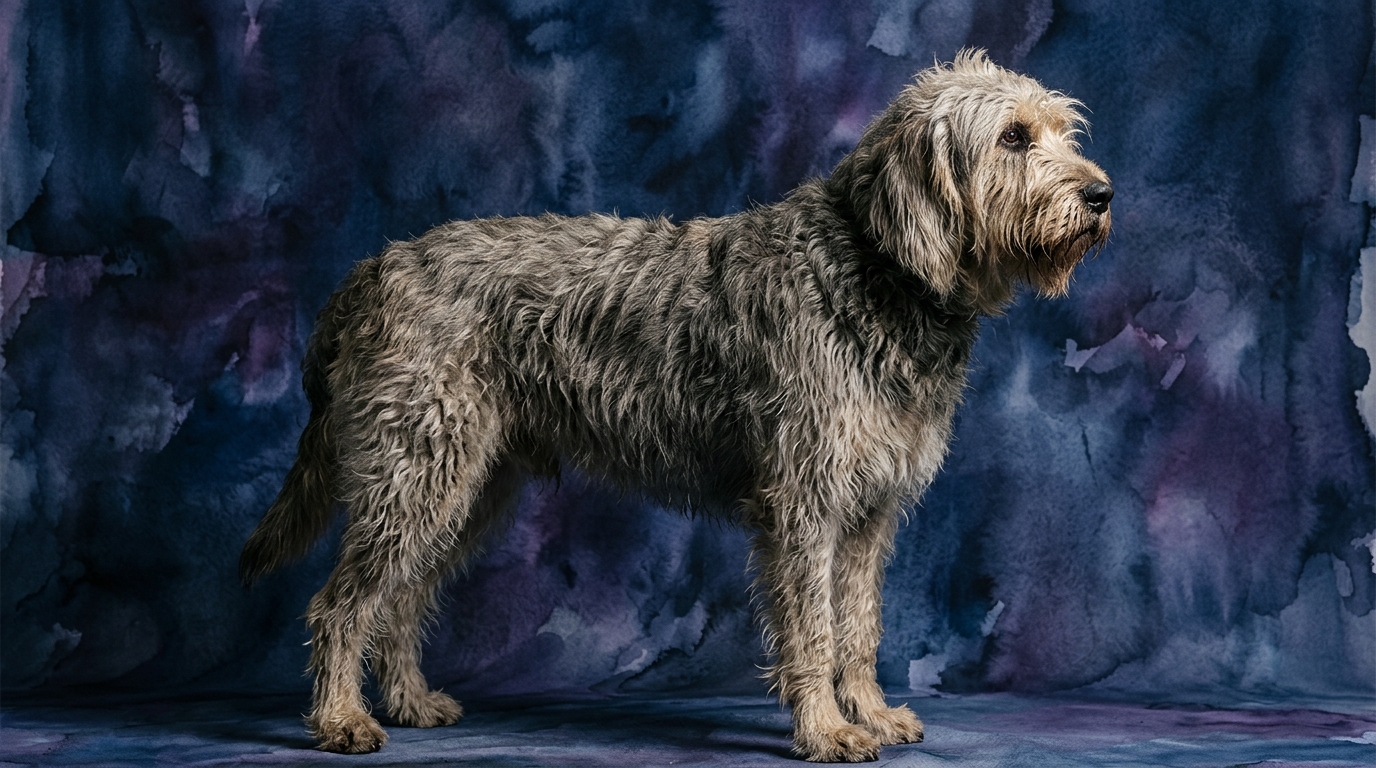
The Cosmic Pet Pet IQ Lab: Bloodhound vs. Otterhound Cognitive Profiles
Our proprietary Pet IQ Lab framework evaluates five crucial dimensions of canine cognition, providing a nuanced understanding beyond simple 'smartness.' Here's how the Bloodhound and Otterhound compare across these dimensions:
**Bloodhound (Coren Rank #74): A Scent-Driven Specialist**
**Problem Solving (5/5):** The Bloodhound's genius for problem-solving is almost exclusively dedicated to olfactory challenges. It navigates complex environments by unraveling intricate scent trails, demonstrating an unparalleled ability to process and follow the most minute odor molecules. This is a highly specialized, rather than generalized, cognitive strength.
**Training Speed (1/5):** This breed is not quick to grasp abstract commands, often preferring to follow its nose rather than human direction. Teaching a Bloodhound requires immense patience, consistent positive reinforcement, and a deep understanding of its innate drives, making conventional obedience a slow process.
**Social Intelligence (2/5):** While generally gentle, the Bloodhound can be somewhat aloof, its primary focus externalized towards scent work. It registers human presence and affection but isn't typically driven by complex social cues or a strong desire for reciprocal interaction, often appearing independent.
**Instinctive Drive (5/5):** This is the Bloodhound's defining characteristic: an insatiable, supreme tracking instinct. Once a scent is engaged, its entire being is compelled to follow it to its conclusion, overriding almost all other stimuli and making it an unstoppable force.
**Memory (5/5):** The Bloodhound possesses extraordinary recall for scent patterns and specific trails. It can differentiate between countless individual odor signatures and pick up old scents with astonishing accuracy, though this memory is largely dedicated to its scenting task rather than command retention.
**Otterhound (Not Coren-ranked): A Balanced, Adaptable Hunter**
**Problem Solving (3/5):** The Otterhound exhibits practical problem-solving skills, capable of adapting to environmental challenges encountered during a hunt or in daily life. This involves a more generalized application of intelligence beyond a singular focus, allowing it to navigate various situations effectively.
**Training Speed (3/5):** Moderately responsive to training, the Otterhound is quicker to pick up commands and routines than the Bloodhound. While still possessing a hound's independent streak, it generally responds well to consistent, positive reinforcement and finds motivation in engaging with its handler.
**Social Intelligence (3/5):** Generally affable and engaged, the Otterhound is more attuned to its human family's moods and social cues. It enjoys interaction and forms strong bonds, making it a more interactive and integrated companion within a household setting.
**Instinctive Drive (3/5):** While possessing a strong hunting drive, particularly for aquatic quarry, the Otterhound's instinctive compulsion is more balanced and less singularly obsessive than the Bloodhound's. It can be engaged in various activities without its drive entirely consuming its attention.
**Memory (3/5):** The Otterhound demonstrates good memory for routines, commands, and social interactions. This allows for a more predictable and harmonious integration into family life, as it can recall learned behaviors and social dynamics effectively.
The stark differences in these profiles highlight how two breeds from the same group can diverge significantly in their cognitive architecture, each optimized for distinct roles.
Where the Bloodhound's Cognition Excels
The Bloodhound's cognitive superiority is undeniably anchored in its specialized olfactory domain. Its perfect 5/5 problem-solving rating doesn't reflect general intellect, but a hyper-focused genius for tracking, allowing it to process and interpret scent information with unparalleled precision, effectively reconstructing complex narratives from faint odor molecules over vast distances and time.
This is inextricably linked to its unparalleled instinctive drive (5/5), an internal compass that compels it to pursue a trail relentlessly, often for miles and over varied terrain. This drive is so profound it overrides almost all other stimuli, making it an unstoppable force once locked onto a scent. Furthermore, its memory (5/5) for scent patterns is truly extraordinary; a Bloodhound can remember and differentiate between countless individual scent signatures, often picking up trails days old with astonishing accuracy. These three dimensions combine to create a canine detective without equal, a living testament to specialized evolution.
Where the Otterhound's Cognition Shines
Conversely, the Otterhound shines in areas where the Bloodhound's specialized nature presents challenges, particularly in adaptability and social integration. With a training speed of 3/5, the Otterhound is significantly more amenable to learning and retaining commands compared to the Bloodhound's 1/5. This suggests a greater willingness to engage with human direction and a quicker grasp of associative learning, making basic and advanced obedience training a more straightforward endeavor.
Its social intelligence, also rated 3/5, indicates a more balanced and interactive temperament. Otterhounds are typically more attuned to their human companions' moods and social cues, fostering a reciprocal relationship that extends beyond mere tolerance. While still a hound with an independent streak, their capacity for social engagement makes them more versatile family members. Their problem-solving (3/5) and instinctive drive (3/5) are also more generalized; they can apply their wits to various environmental challenges and engage in hunting activities without the singular, all-consuming focus of a Bloodhound, offering a more adaptable cognitive profile for a companion animal.
Trainability: A Tale of Two Hounds
When assessing trainability, the Otterhound clearly presents a more manageable experience for the average owner. Its 3/5 rating for training speed reflects a moderate willingness to learn and respond to commands. While still possessing a hound's independent spirit, Otterhounds generally pick up basic obedience quicker and are more motivated by positive reinforcement and interaction with their handlers. Their instinctive drive, rated 3/5, is present but not as overwhelmingly dominant as the Bloodhound's, allowing them to remain more receptive to instruction even when interesting scents are nearby.
The Bloodhound, with its 1/5 training speed, demands exceptional patience and a profound understanding of scent hound psychology. Its unparalleled instinctive drive (5/5) means that once a compelling scent is detected, the dog's entire being is dedicated to following it, often rendering human commands irrelevant in that moment. Training a Bloodhound isn't about teaching it to *not* follow a scent, but about teaching it to *return* after following a scent, or to *ignore* a scent on command – a monumental task that goes against its deepest biological programming. This makes the Otterhound significantly easier to integrate into a structured household through conventional training methods.
Owner Suitability: Active Pursuit vs. Balanced Companion
The choice between a Bloodhound and an Otterhound also hinges significantly on an owner's lifestyle and capacity for engagement. An active owner seeking a highly specialized partner for scent work, search and rescue, or extensive, dedicated tracking activities will find the Bloodhound's singular focus and immense stamina perfectly suited. These dogs require owners who can channel their 5/5 instinctive drive into productive outlets, understanding that a 'relaxed' walk is an opportunity for intense mental work for the dog, not a casual stroll. Their physical endurance matches their mental tenacity for scenting, demanding rigorous, purposeful exercise and a secure, inescapable environment.
For owners who appreciate a robust, active companion but desire a more balanced and socially interactive temperament, the Otterhound is an excellent fit. While they certainly thrive with activity and outdoor adventures, their 3/5 instinctive drive and problem-solving suggest they are content with a wider range of activities beyond pure scent work. They enjoy family outings, swimming, and exploring, and their moderate training speed makes them more adaptable to various companion roles. A relaxed owner who is still committed to daily exercise and mental enrichment but isn't seeking a single-minded working partner will find the Otterhound a more harmonious addition to their lifestyle.
The Verdict
Choose the Bloodhound if you are a dedicated individual or professional seeking an unparalleled scent specialist, willing to commit to extensive, purpose-driven training and manage its profound instinctive drive.
Opt for the Otterhound if you're an active family or individual desiring a robust, friendly hound that offers a more balanced cognitive profile, greater trainability, and adaptability as a devoted companion.
🧠 Find Your Pet's IQ Score
Our Pet IQ Lab assessment covers 25+ tests across 5 cognitive dimensions — personalized to your breed.
Take the Full IQ Test →Frequently Asked Questions
Are Bloodhounds generally good with children?
Bloodhounds are typically gentle and patient with children, but their large size and single-minded focus on scent can mean they might inadvertently bowl over smaller kids or ignore commands when on a captivating trail. Supervision is always recommended, and early socialization helps them adapt to family dynamics.
Do Otterhounds shed a lot?
Otterhounds have a dense, rough, double coat that does shed, but typically in moderate amounts throughout the year. Regular brushing, at least a few times a week, helps to manage loose hair and prevent matting, especially after they've been swimming.
What kind of exercise do these breeds need?
Both breeds require substantial daily exercise, but with different focuses. Bloodhounds need extensive, purposeful scent-driven activities, often covering many miles, while Otterhounds enjoy varied activities like swimming, long walks, and family playtime, making them more adaptable to general outdoor pursuits and requiring mental engagement beyond just scenting.