
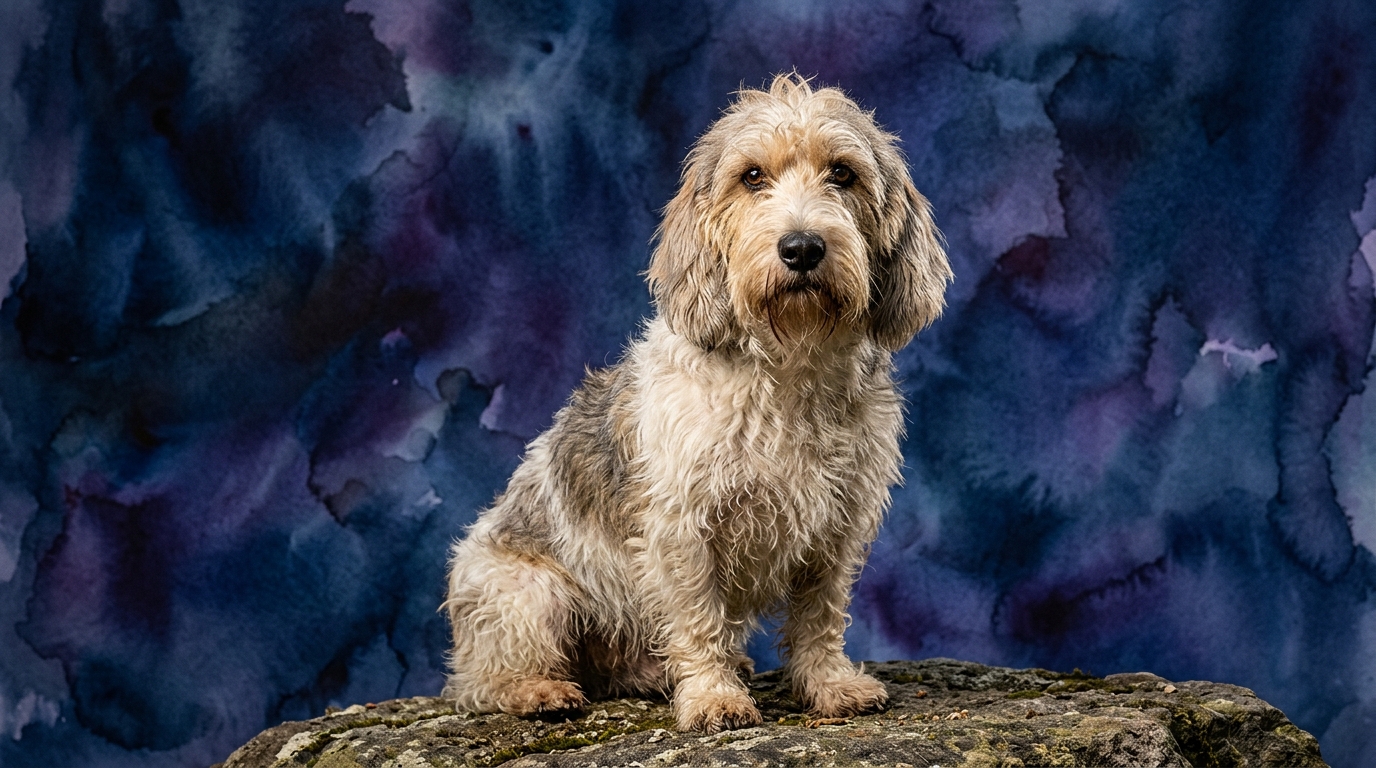
Side-by-Side IQ Profile: Bloodhound vs. PBGV
At The Cosmic Pet Pet IQ Lab, we evaluate canine intelligence across five critical dimensions, revealing the unique cognitive blueprints of each breed. For the Bloodhound, a breed Coren-ranked at #74, and the unranked Petit Basset Griffon Vendéen, these scores paint a clear picture of their mental strengths and leanings.
The Bloodhound's profile is one of extreme specialization: Problem Solving (5/5) indicates unparalleled independent logical deduction, particularly when tracking. Training Speed (1/5) highlights their notorious slowness to pick up commands, often due to their singular focus. Social Intelligence (2/5) suggests they are amiable but not highly attuned to subtle human social cues. Instinctive Drive (5/5) is absolute and all-consuming for tracking, guiding their every action. Memory (5/5) is exceptional, especially for scents and paths, crucial for sustained tracking efforts.
The Petit Basset Griffon Vendéen (PBGV) presents a more balanced, versatile cognitive profile: Problem Solving (3/5) demonstrates competent resourcefulness in navigating terrain or accessing interesting smells, though without the Bloodhound's intensity. Training Speed (3/5) indicates moderate responsiveness to commands, requiring consistent, engaging methods. Social Intelligence (3/5) shows they are generally friendly and read social cues adequately, enjoying interaction. Instinctive Drive (3/5) is strong for scent and chase, but more moderate than the Bloodhound's, allowing for easier redirection. Memory (3/5) is good and functional for routines, commands, and familiar environments, supporting their general adaptability.
Where the Bloodhound Wins Cognitively
The Bloodhound's cognitive superiority shines in tasks demanding extreme specialization and sustained focus. Their 5/5 Problem Solving isn't about solving abstract puzzles, but about deconstructing the most convoluted scent trails, interpreting subtle environmental changes, and making logical deductions from fragmentary information to reconstruct a path. This is coupled with an equally perfect 5/5 Instinctive Drive, which fuels their relentless pursuit, allowing them to ignore distractions that would derail any other breed. Furthermore, their 5/5 Memory is a vast library of scent profiles, terrain nuances, and past tracking experiences, enabling them to build an intricate mental map of the world through their nose. A Bloodhound can follow a 300-hour-old human scent across varied terrain, a feat of sustained cognitive effort and sensory processing that is virtually unmatched in the canine world. This deep cognitive specialization makes them peerless in search and rescue or law enforcement tracking.
Where the Petit Basset Griffon Vendéen Wins Cognitively
The Petit Basset Griffon Vendéen's cognitive advantages lie in their balanced and adaptable intelligence, particularly beneficial for a companion animal. Their 3/5 Training Speed, combined with a 3/5 Social Intelligence, means they are generally more receptive to human direction and social interaction than a Bloodhound. Unlike the Bloodhound's singular, overwhelming drive, the PBGV's 3/5 Instinctive Drive allows for a more flexible engagement with their environment; they enjoy a good chase but can be more readily recalled. This balance translates into a dog that is more amenable to living within a family structure, willing to learn household rules, and engage in reciprocal social play. While they may not track a cold trail for days, their cognitive profile makes them more versatile in adapting to various situations, from participating in dog sports to simply enjoying a relaxed evening with their family, without being overwhelmingly consumed by a single, powerful instinct.
Which is Easier to Train and Why
When it comes to ease of training, the Petit Basset Griffon Vendéen clearly holds the advantage. The Bloodhound's 1/5 Training Speed is a direct consequence of their overwhelming 5/5 Instinctive Drive and low 2/5 Social Intelligence. A Bloodhound, once on a scent, becomes singular in purpose; their brain is so consumed by the olfactory puzzle that human commands often register as mere background noise. Their low social intelligence means they aren't inherently driven to please or seek consistent human approval in the same way many other breeds are, making traditional reward-based training a constant uphill battle against their internal programming. You're not just teaching a command; you're attempting to override a primal, all-consuming instinct. In contrast, the PBGV's 3/5 Training Speed and 3/5 Social Intelligence mean they are much more biddable. They are still hounds with an independent streak, but their drive is less overwhelming, and they possess a greater capacity to engage with and respond to human cues. A PBGV is more likely to pause their investigation of an interesting smell to check in with their owner or respond to a recall, making training a more collaborative and rewarding experience for both parties.
Which Suits Active Owners vs. Relaxed Owners
The Bloodhound is unequivocally suited for active, dedicated owners who understand and can channel their profound mental and physical needs. An owner considering a Bloodhound must be prepared for rigorous, consistent engagement that satisfies their 5/5 Instinctive Drive and 5/5 Problem Solving. This means daily, structured "work" that involves scent trailing, long walks allowing for extensive sniffing, or participation in actual tracking sports. A relaxed owner who expects a Bloodhound to be a couch potato will quickly find themselves with a frustrated, potentially destructive companion. Their low 2/5 Social Intelligence also means they aren't always seeking constant human interaction, preferring to follow their nose, so an owner must respect this independent nature.
The Petit Basset Griffon Vendéen, with its more balanced cognitive profile, offers greater flexibility for various owner lifestyles. While they are active hounds who enjoy a good romp and daily walks that allow for sniffing and exploration, their 3/5 Instinctive Drive means their needs are less extreme. A PBGV can adapt to an active owner who enjoys hiking and dog sports, but they are equally content with a moderately active family who provides regular walks and interactive play. Their 3/5 Social Intelligence makes them more inclined to enjoy family time on the couch after their exercise, making them suitable for owners who appreciate a dog with zest but also a capacity for relaxation and companionship.
The Verdict
Opt for a Bloodhound if you are an experienced owner deeply committed to harnessing unparalleled scenting abilities, prepared for significant training challenges, and eager to engage in demanding tracking activities. This breed thrives with a job that satisfies their intense problem-solving and instinctive drive, demanding an owner who can dedicate substantial time to their specialized needs.
Select a PBGV if you seek an enthusiastic, moderately active hound companion that is more adaptable to family life, offering a good balance of playful energy and biddability. They are a better fit for owners who appreciate a spirited dog but prefer a more manageable training experience and a companion equally happy on the trail or the sofa.
🧠 Find Your Pet's IQ Score
Our Pet IQ Lab assessment covers 25+ tests across 5 cognitive dimensions — personalized to your breed.
Take the Full IQ Test →Frequently Asked Questions
Do Bloodhounds make good family pets despite their low social intelligence score?
Bloodhounds can be gentle and affectionate family members, but their low social intelligence means they may not be as attuned to subtle family dynamics or seek constant interaction as much as other breeds. They often bond deeply with their primary handler but remain focused on their scent world.
Is the Petit Basset Griffon Vendéen prone to excessive barking due to its hound nature?
PBGVs do have a characteristic "voice" and can be prone to barking or baying, especially when excited or on a scent, reflecting their instinctive drive. Consistent training from a young age can help manage this tendency, but owners should expect some vocalizations.
How important is early socialization for both breeds given their differing social intelligence?
Early socialization is crucial for both, though for different reasons. For Bloodhounds, it helps them tolerate various environments and people while maintaining focus, whereas for PBGVs, it helps channel their natural sociability into positive interactions and prevents shyness or over-excitability.