Side-by-Side IQ Profile: Bloodhound vs. Polish Lowland Sheepdog
At The Cosmic Pet's Pet IQ Lab, we evaluate canine cognition across five key dimensions. Let's delve into the specific profiles of the Bloodhound and the Polish Lowland Sheepdog (PON) to understand their mental architectures.
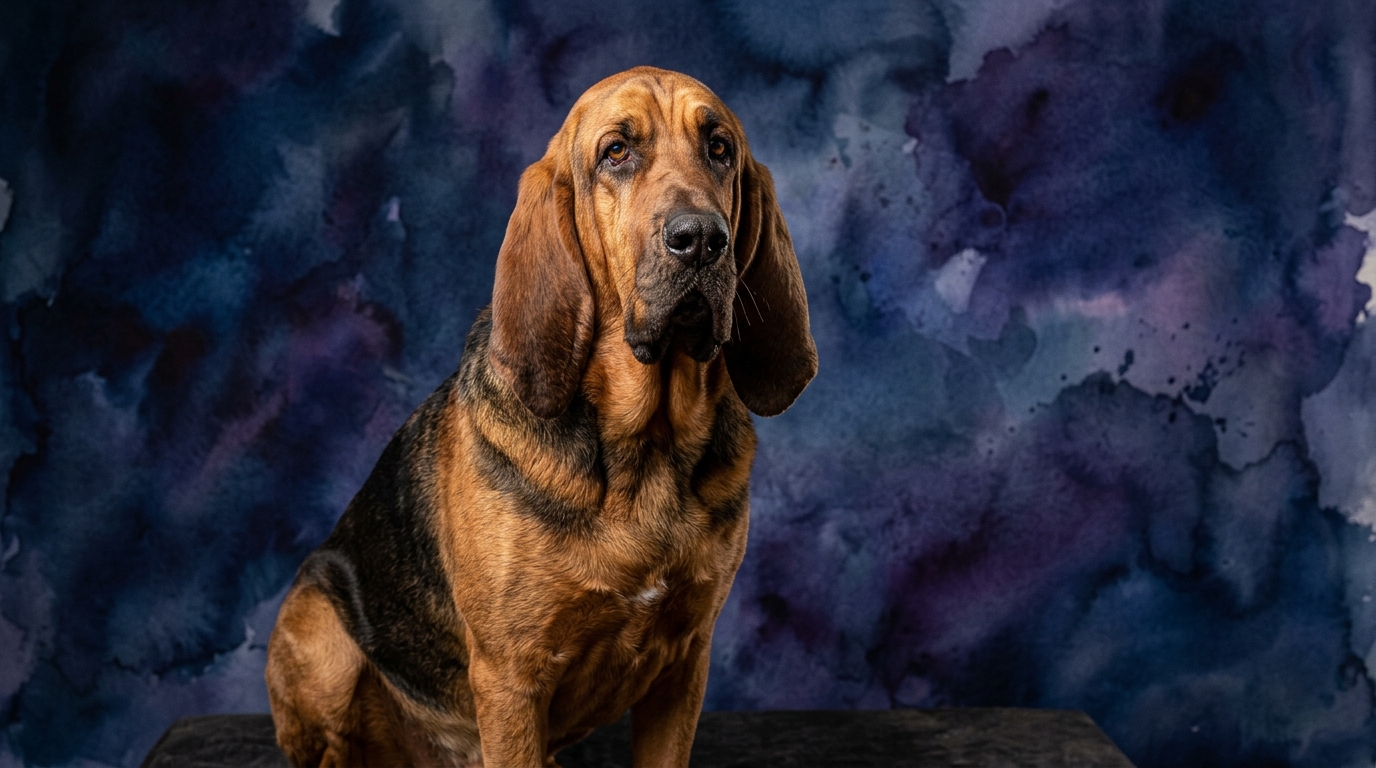
Bloodhound:
Problem Solving (5/5): This breed demonstrates exceptional aptitude for intricate, scent-based problem-solving. Their cognitive process is singularly focused on unraveling complex olfactory puzzles, methodically interpreting and reconstructing scent narratives with astonishing precision across challenging terrains.
Training Speed (1/5): Bloodhounds process commands slowly due to their independent nature and deep-seated instinct. Their desire for cooperation often takes a back seat to their nose, making traditional obedience training a significant challenge. Learning new behaviors demands immense patience and highly motivating techniques.
Social Intelligence (2/5): While affectionate with family, Bloodhounds are less attuned to complex human social cues, especially when engaged in a task. Their focus is primarily external, on environmental scents, rather than on interpreting subtle human interactions or seeking constant cooperative engagement.
Instinctive Drive (5/5): Their instinctive drive is overwhelmingly for scent work, manifesting as an unstoppable urge to track. This innate compulsion makes them oblivious to distractions once a compelling scent is encountered, guiding their every outdoor action.
Memory (5/5): Bloodhounds possess extraordinary scent memory. They can recall specific scent profiles and associated paths over long periods, allowing them to re-engage with old trails or distinguish between countless individual scent signatures with remarkable accuracy.
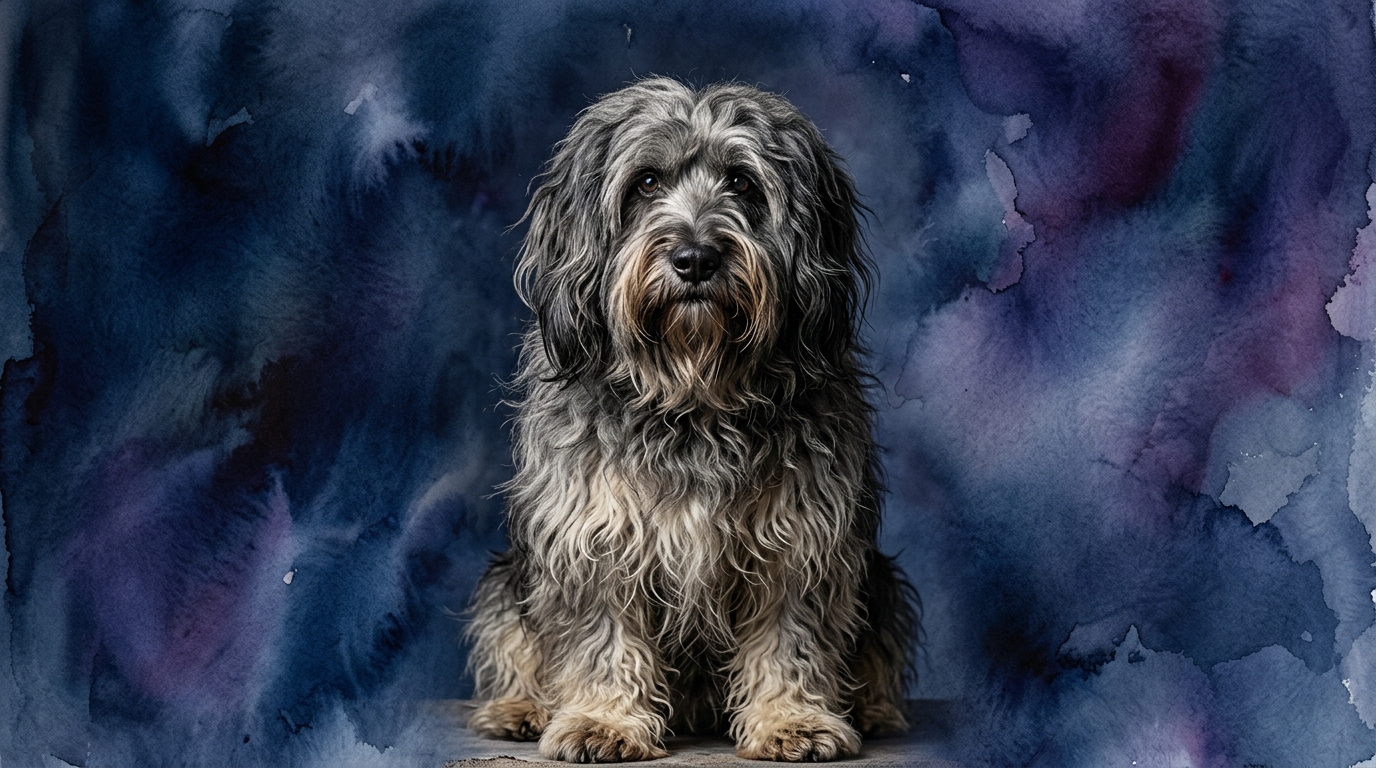
Polish Lowland Sheepdog (PON):
Problem Solving (3/5): The PON exhibits practical, moderate problem-solving abilities, particularly in herding-related scenarios. They can assess situations, make independent decisions, and adapt to changing conditions, showcasing a functional intelligence suitable for versatile roles.
Training Speed (3/5): PONs generally learn new commands and routines at a moderate pace. They are receptive to training and grasp concepts with consistency and clear communication, offering steady and reliable learning.
Social Intelligence (3/5): These dogs display a balanced social intelligence. They are attentive to family, forming strong bonds and interpreting human moods reasonably well. They enjoy interaction and participation in family life.
Instinctive Drive (3/5): The PON's instinctive drive is rooted in herding and guarding, manifesting as a desire to keep their “flock” safe. This drive is present but typically manageable, channelable through training and appropriate outlets.
Memory (3/5): PONs have a solid, functional memory for commands, routines, and the identity of people and places. They reliably remember training and family, contributing to their dependability as companions.
Where the Bloodhound Wins Cognitively
The Bloodhound's cognitive superiority is almost exclusively within olfactory perception and persistent tracking. Their problem-solving abilities (5/5) are unparalleled when deciphering complex scent trails, where they mentally reconstruct narratives from molecular traces, distinguishing between countless variables with precision. This isn't merely instinct; it's a sophisticated application of cognitive resources to a singular sensory input. Their memory (5/5) for scent is equally extraordinary, allowing them to retain and recall specific olfactory signatures over extended periods, enabling them to pick up old trails with surprising accuracy. This deep, specialized recall is a testament to their unique neurological wiring. Their instinctive drive (5/5) is a sustained, unwavering mental focus, allowing them to remain engaged with a task for hours, filtering out all other stimuli. This cognitive endurance makes them the undisputed champions of scent detection.
Where the Polish Lowland Sheepdog Wins Cognitively
While the Bloodhound excels in a singular, specialized niche, the Polish Lowland Sheepdog (PON) demonstrates a more balanced and adaptable cognitive profile across multiple domains. Their problem-solving (3/5) is less about hyper-specialized scent work and more about practical, real-world adaptability. They quickly assess situations, make independent decisions, and adjust their behavior in varied contexts, from managing livestock to navigating a household. This generalist intelligence allows for versatility. Their training speed (3/5) and social intelligence (3/5) are moderately developed, meaning they are more readily attuned to human cues and more willing to engage in cooperative learning. Unlike the Bloodhound, whose independence can be a cognitive barrier, the PON’s moderate social drive facilitates a smoother learning process and a more responsive partnership. They possess greater cognitive flexibility, transitioning between tasks and environments without the singular focus defining the Bloodhound.
Which Is Easier to Train and Why?
Evaluating ease of training between these two breeds reveals a stark contrast, largely due to their differing cognitive priorities and instinctive drives. The Polish Lowland Sheepdog is generally easier to train. Their moderate training speed (3/5) indicates a willingness to learn and capacity to absorb new commands effectively with consistent positive reinforcement. Crucially, their moderate social intelligence (3/5) means they are more attuned to their human companions, often eager to please and responsive to cues. Their instinctive drive (3/5), while present for herding, is more malleable and less overwhelming than the Bloodhound's, making it easier to integrate into training. In contrast, the Bloodhound presents a significant training challenge. Their training speed (1/5) is notably low because their primary cognitive processing is dedicated to scent, making human-centric commands secondary. Their powerful instinctive drive (5/5) to track can be an almost insurmountable distraction; once a scent is engaged, their brain is singularly focused. Their lower social intelligence (2/5) further complicates matters, as they are not inherently driven by a desire for human approval. Training a Bloodhound requires exceptional patience, specialized motivational techniques, and an understanding that their brain is wired for a different kind of 'work' than traditional obedience.
Which Suits Active Owners vs. Relaxed Owners?
The choice between these breeds also hinges significantly on an owner's lifestyle and energy levels. The Bloodhound absolutely requires active, highly dedicated owners prepared to understand and channel their profound instinctive drives. These are not dogs for relaxed owners seeking a low-maintenance companion. Their 5/5 instinctive drive for tracking demands consistent, structured outlets for their olfactory talents, whether through actual scent work, tracking sports, or extensive, mentally stimulating walks where they are allowed to follow scents. Failure to provide this leads to frustration and behavioral issues. Their demanding training regimen also requires an owner who is not only active physically but also mentally engaged and patient enough to work with a breed that learns at a slower pace and prioritizes its nose above all else. Conversely, the Polish Lowland Sheepdog suits owners who are active but perhaps not to the extreme degree required by a Bloodhound. Their balanced instinctive drive (3/5) means they thrive on regular exercise, mental stimulation, and participation in family activities, but their energy and drive are more manageable. They are better suited for owners who appreciate an engaged, responsive companion but might not commit to the singular, intense focus required to satisfy a Bloodhound's specialized cognitive needs.
The Verdict
Choose a Bloodhound if you are an owner seeking an unparalleled partner in scent detection, prepared to dedicate significant time to understanding and channeling their unique, powerful cognitive specialization.
Opt for a Polish Lowland Sheepdog if you desire a versatile, moderately active companion with a balanced cognitive profile, capable of adapting well to diverse family roles and activities.
🧠 Find Your Pet's IQ Score
Our Pet IQ Lab assessment covers 25+ tests across 5 cognitive dimensions — personalized to your breed.
Take the Full IQ Test →Frequently Asked Questions
Is a Bloodhound difficult to live with due to its high instinctive drive?
A Bloodhound's powerful instinctive drive (5/5) means they are primarily motivated by scent, which can make them challenging to manage without proper outlets. They require consistent training and opportunities for scent work to prevent them from becoming single-minded and potentially difficult to recall when on a trail.
How does the Polish Lowland Sheepdog's social intelligence impact its family life?
With a social intelligence score of 3/5, the Polish Lowland Sheepdog is attentive to its family and forms strong bonds, making it a good companion. They are responsive to human cues and enjoy participating in family activities, contributing to a harmonious household environment.
Can a Bloodhound be trained for tasks other than scent work?
While Bloodhounds can learn basic obedience, their low training speed (1/5) and overwhelming instinctive drive (5/5) mean they excel almost exclusively in scent-related tasks. Their cognitive architecture is so specialized that diverting them to other complex tasks can be a significant challenge, requiring immense patience and highly creative training methods.