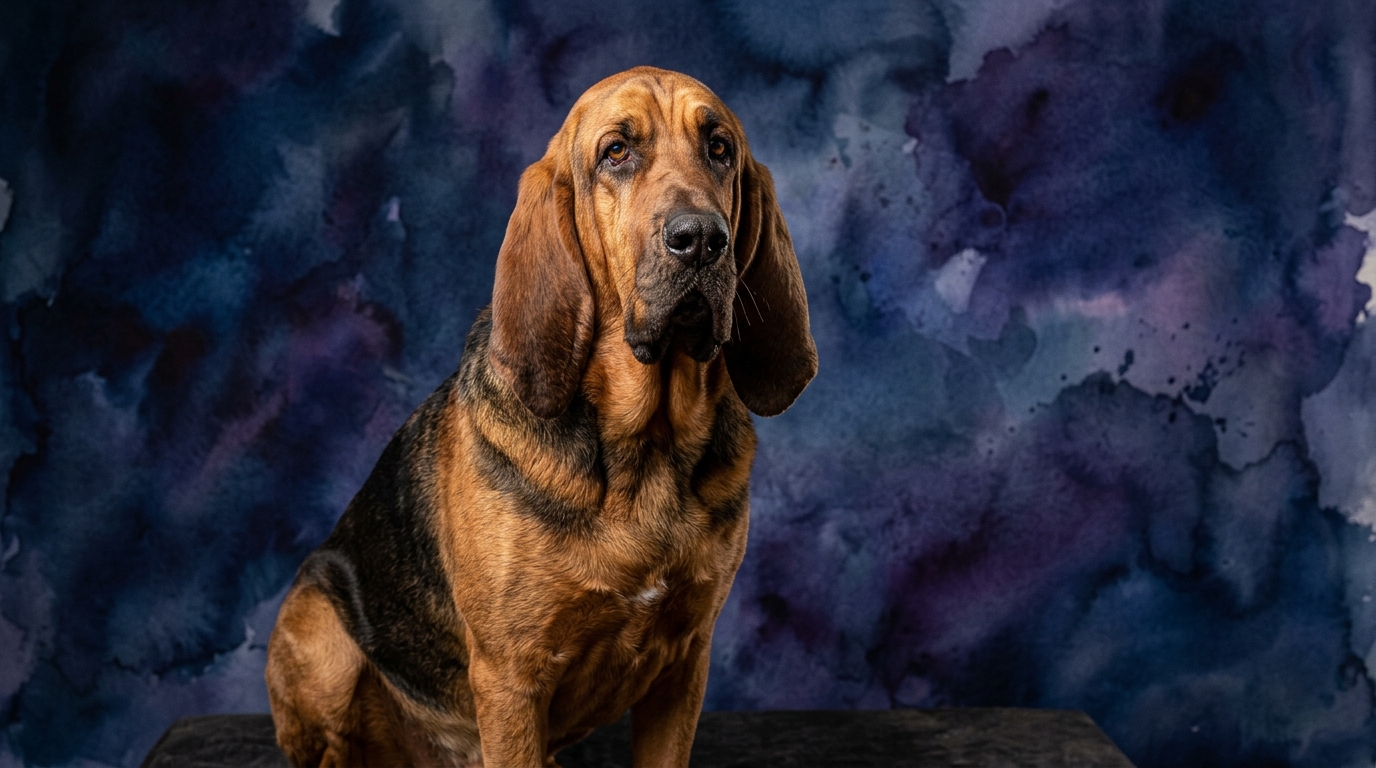
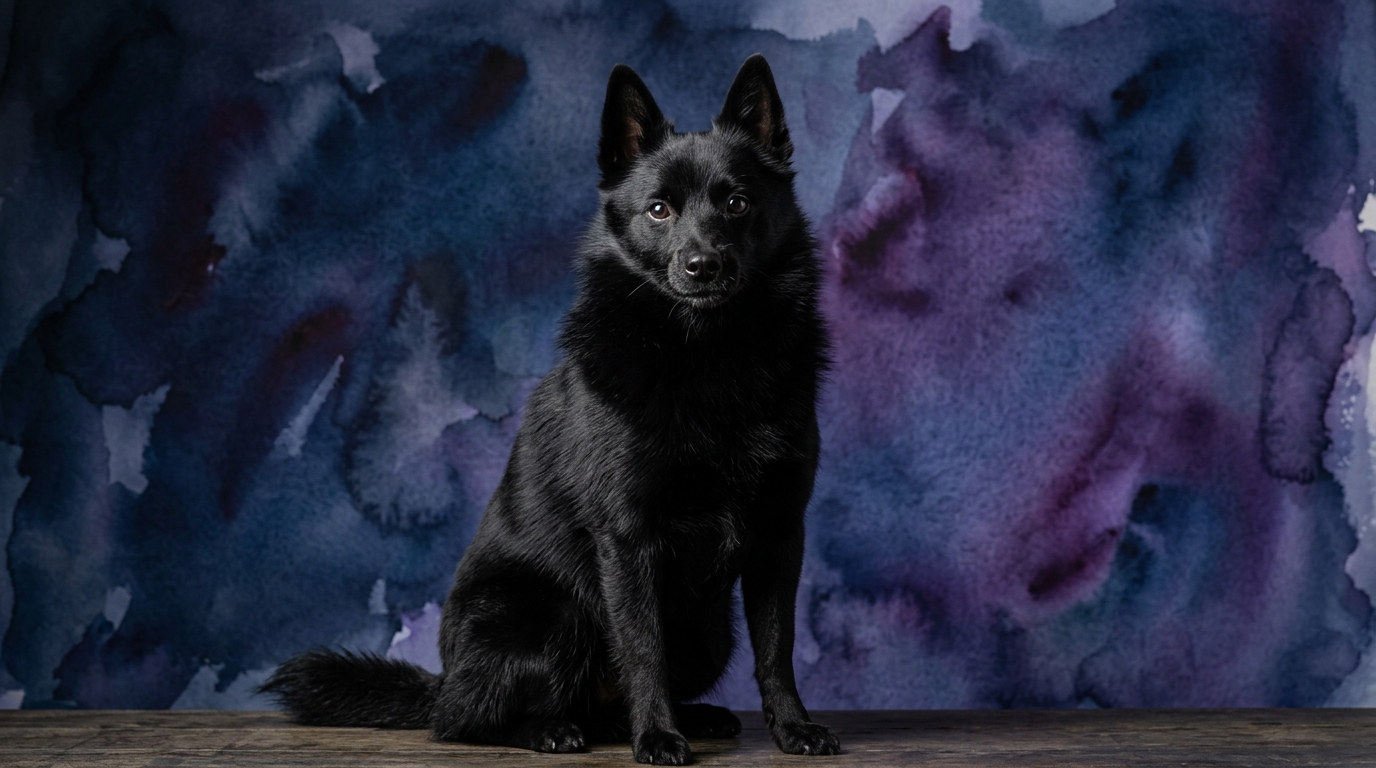
Side-by-Side IQ Profile: Bloodhound vs. Schipperke
The Cosmic Pet Pet IQ Lab provides a nuanced framework for understanding canine cognition across five key dimensions. For the Bloodhound, ranked #74 by Coren, its profile shows Problem Solving at 5/5, Training Speed at 1/5, Social Intelligence at 2/5, Instinctive Drive at 5/5, and Memory at 5/5. This paints a picture of a dog deeply connected to its inherent purpose and highly capable of complex tasks within that domain, yet less inclined towards rapid obedience.
In contrast, the Schipperke, with a Coren rank of #15, presents a distinct cognitive blueprint: Problem Solving at 5/5, Training Speed at 5/5, Social Intelligence at 3/5, Instinctive Drive at 3/5, and Memory at 5/5. This breed appears to be a quick study, adaptable, and possesses a balanced set of cognitive skills that make it highly responsive to human interaction and learning new tasks efficiently. Both breeds share a perfect score in Problem Solving and Memory, suggesting a capacity for complex thought and retention of information, but their approaches and application of these skills diverge significantly.
Where the Bloodhound Excels Cognitively
The Bloodhound's cognitive superiority undeniably lies in its unparalleled instinctive drive and memory, particularly concerning scent work. Its 5/5 score in both Instinctive Drive and Memory, combined with a 5/5 in Problem Solving, describes a dog whose entire cognitive architecture is geared towards persistent, intricate tracking. When presented with a scent trail, a Bloodhound doesn't just follow; it actively processes and interprets an immense volume of olfactory data, using sophisticated pattern recognition and spatial memory to reconstruct a path, often over vast distances and varied terrain. This isn't merely instinct; it's a dynamic, problem-solving application of its innate drive.
Their memory isn't just for commands; it's an extensive database of scent profiles and environmental cues, allowing them to recall and differentiate specific odors even after long periods. This cognitive specialization means that while they may not be the fastest to learn a 'sit' command (Training Speed 1/5), their brain is meticulously mapping and remembering the nuances of a lost person's unique odor signature, overcoming distractions, and navigating complex environments purely by scent. Their problem-solving manifests in their ability to 'puzzle out' a broken trail, making logical deductions based on faint scent particles and environmental changes, a truly remarkable feat of canine cognition that few, if any, breeds can rival.
Where the Schipperke Excels Cognitively
The Schipperke’s cognitive strengths shine brightest in its remarkable Training Speed (5/5) and its balanced Social Intelligence (3/5). While the Bloodhound is a specialist, the Schipperke is a versatile and eager learner, absorbing new commands and routines with impressive alacrity. This rapid acquisition of knowledge speaks to a flexible cognitive processing system, allowing them to quickly form associations between actions and consequences, and to grasp complex sequences of behaviors. Their high training speed makes them exceptional candidates for various dog sports and advanced obedience work, where quick understanding and precise execution are paramount.
Their 3/5 social intelligence, while not as high as some dedicated companion breeds, indicates a sufficient capacity for understanding human cues and intentions, fostering a cooperative learning environment. They are adept at reading their owner's body language and vocal tones, adjusting their responses accordingly. This combines with their problem-solving ability (5/5) to make them excellent at figuring out how to achieve desired outcomes in a human-centric world, whether it’s escaping a pen, manipulating a toy for a treat, or learning an intricate agility course. Their cognitive profile suggests a dog that is not only smart but also highly adaptable and responsive to guided learning experiences.
Training Aptitude: Bloodhound vs. Schipperke
When considering ease of training, the Schipperke undoubtedly takes the lead, primarily due to its 5/5 Training Speed. This breed possesses a strong desire to engage with its human companions and a quick grasp of new concepts, making the process of teaching basic obedience and even advanced tricks a relatively smooth experience. Their social intelligence, rated at 3/5, further aids this by allowing them to form strong bonds and understand human communication, fostering a cooperative learning dynamic. They are generally keen to please and respond well to consistent, positive reinforcement methods, showing a quick turnaround from introduction to mastery of a command.
The Bloodhound, with its 1/5 Training Speed, presents a significantly different training challenge. This isn't due to a lack of intelligence, as evidenced by its 5/5 Problem Solving and Memory, but rather a profound prioritization of its instinctive drive (5/5). A Bloodhound's brain is wired to follow scent, and once engaged on a trail, its focus becomes almost singular, making it incredibly difficult to divert its attention for obedience commands. Training a Bloodhound requires immense patience, understanding of its natural behaviors, and often specialized techniques that integrate its scenting drive rather than fighting it. While they can learn, the speed of acquisition and reliability of response in distractions will be markedly slower than a Schipperke's, demanding a more dedicated and persistent trainer.
Which Suits Active Owners vs. Relaxed Owners
For the truly active owner, especially one with a passion for outdoor activities that involve exploration or scent work, the Bloodhound is a compelling match. Its profound instinctive drive (5/5) and physical stamina demand an owner who is prepared for long, consistent exercise, ideally incorporating activities that engage its primary cognitive strength: tracking. Owners who enjoy hiking, long walks in varied environments, or who are interested in canine scent work (like search and rescue or tracking sports) will find a fulfilling partnership with a Bloodhound. This breed thrives on having a 'job' that utilizes its unique cognitive talents, making it unsuitable for a purely sedentary lifestyle.
The Schipperke, while certainly energetic and playful, offers a more adaptable activity profile, suiting a broader range of owners, including those who are active but perhaps not intensely focused on specific outdoor pursuits. Its balanced instinctive drive (3/5) and high training speed (5/5) mean it can excel in dog sports like agility or obedience, which provide mental and physical stimulation in a structured environment. They are content with regular walks, playtime in a securely fenced yard, and engaging indoor activities. For owners who enjoy training, interactive games, and a companion that is alert and engaged without requiring extreme, specialized physical outlets, the Schipperke is an excellent choice. They can thrive with moderately active families and even adapt to more relaxed households as long as their cognitive needs for learning and engagement are met.
The Verdict
Choose the Bloodhound if you are a highly dedicated owner passionate about engaging its extraordinary scenting abilities and prepared for extensive, focused training that respects its powerful instinctive drives.
Opt for the Schipperke if you seek a quick-witted, adaptable companion eager to learn, thriving on interactive training, and suitable for a range of active lifestyles without demanding highly specialized work.
🧠 Find Your Pet's IQ Score
Our Pet IQ Lab assessment covers 25+ tests across 5 cognitive dimensions — personalized to your breed.
Take the Full IQ Test →Frequently Asked Questions
Is a Bloodhound difficult to train?
Bloodhounds are not inherently difficult due to a lack of understanding, but their training speed is slow (1/5) and their instinctive drive (5/5) is paramount. This means they require immense patience and consistent, specialized training that often incorporates their natural scenting abilities, making them challenging for novice trainers.
Are Schipperkes good family dogs?
Schipperkes, with their 3/5 social intelligence and 5/5 training speed, can be excellent family dogs. They form strong bonds and are quick to learn household rules, thriving in an environment where they receive consistent interaction and mental stimulation from their human companions.
Which breed has better problem-solving skills?
Both Bloodhounds and Schipperkes score a perfect 5/5 in problem-solving. However, the Bloodhound applies its problem-solving primarily to complex scent trails, while the Schipperke uses it more broadly for navigating human environments, learning tasks, and adapting to various situations.