Side-by-Side IQ Profile: A Cognitive Blueprint
The Cosmic Pet Pet IQ Lab employs five key dimensions to map a breed's cognitive landscape: Problem Solving, assessing a dog's capacity for independent thought and navigating novel challenges; Training Speed, reflecting how quickly a dog grasps and retains new commands; Social Intelligence, indicating their aptitude for understanding and responding to human and canine social cues; Instinctive Drive, measuring the strength of innate, breed-specific behaviors; and Memory, gauging their ability to recall experiences and learned information. These metrics provide a nuanced understanding beyond simple obedience.
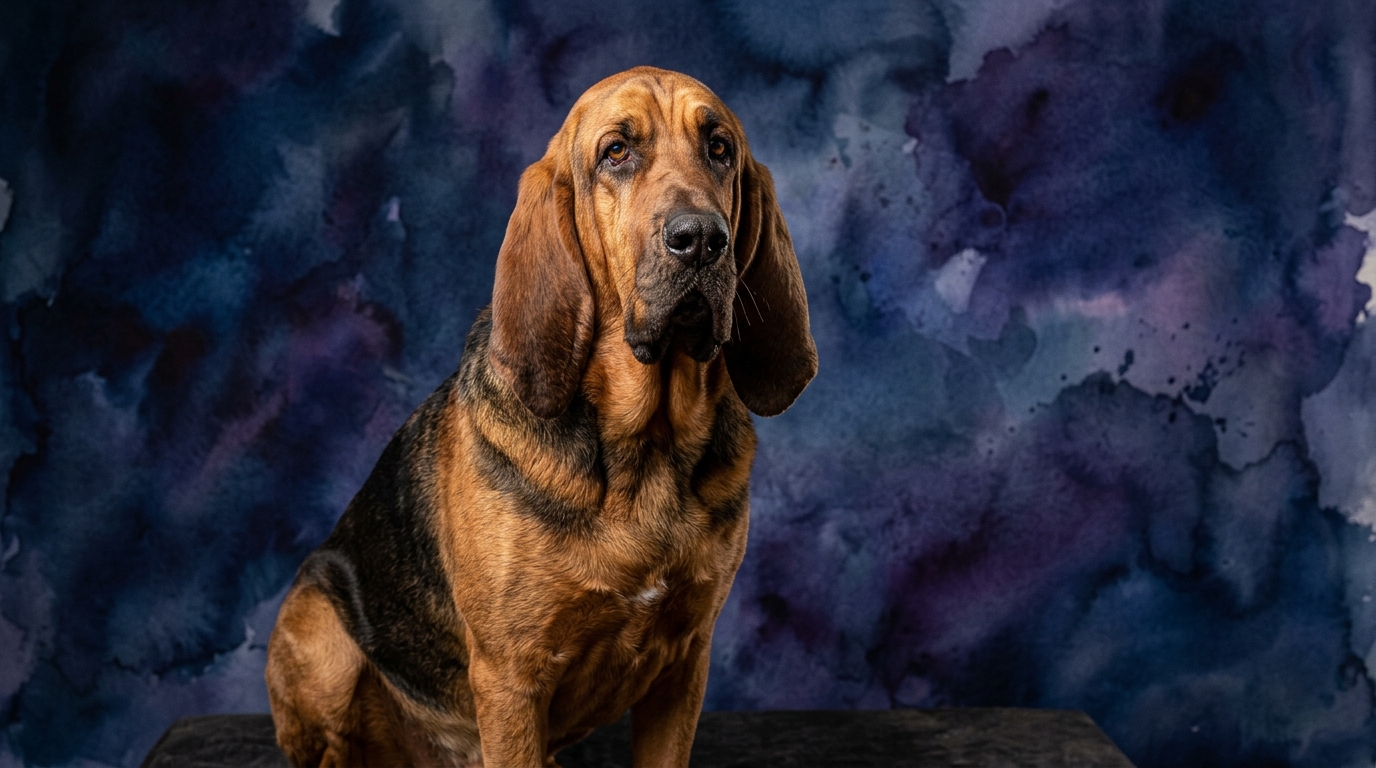
The Bloodhound, ranked #74 by Coren, presents a profile dominated by specialized sensory processing and recall. They excel with a 5/5 in Problem Solving, demonstrating exceptional ability to decipher complex scent trails and overcome environmental obstacles in pursuit of a track. Their Training Speed, however, registers at a challenging 1/5, reflecting a deep-seated independent focus on their primary drive. Social Intelligence stands at 2/5, as their world often revolves more around scent than social intricacies. Instinctive Drive is a profound 5/5, epitomizing their relentless scent-tracking heritage, complemented by a perfect 5/5 in Memory, essential for recalling intricate scent patterns over vast distances and time.
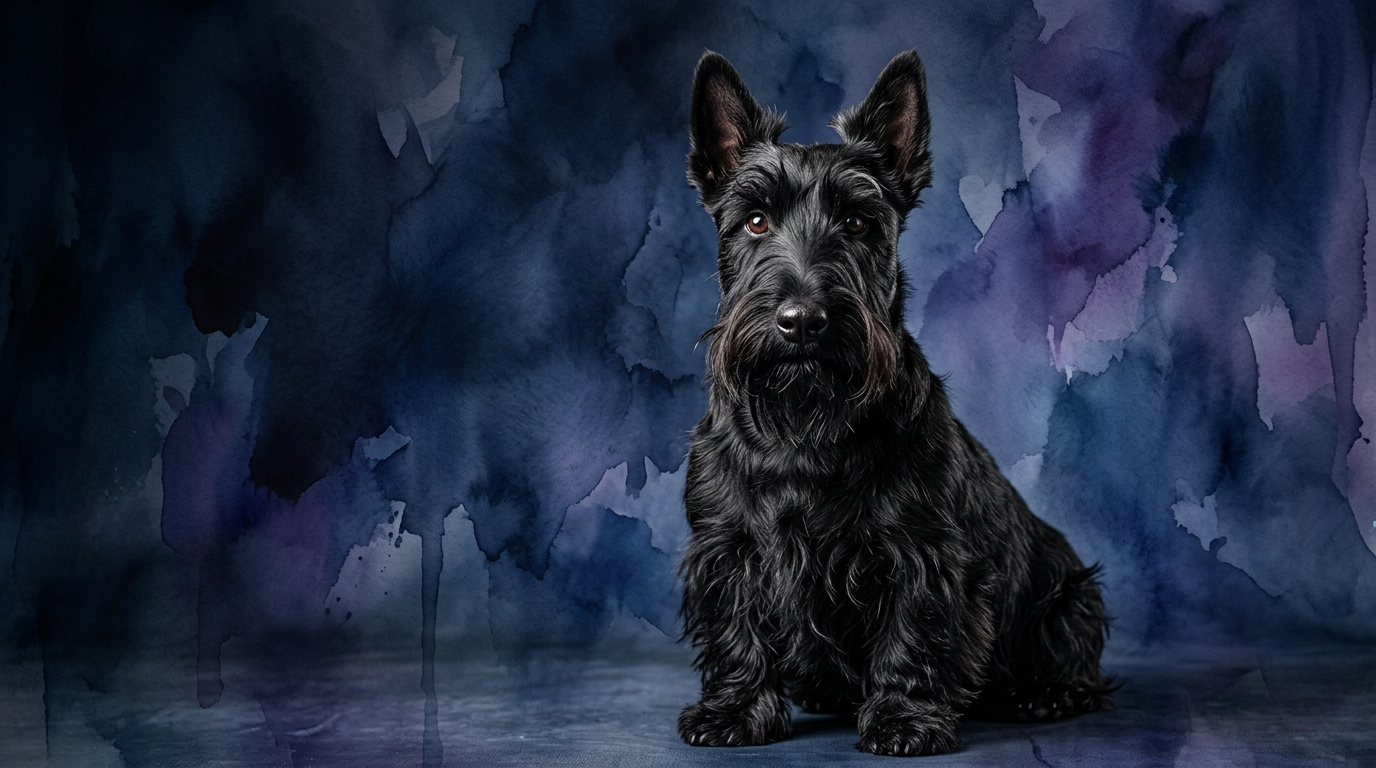
In contrast, the Scottish Terrier, with a Coren rank of #65, offers a balanced yet distinct cognitive blueprint. Their Problem Solving is a respectable 3/5, allowing them to figure out practical challenges like accessing a desired toy or navigating a familiar environment. Training Speed is a moderate 3/5, indicating a capacity to learn but often with a terrier's characteristic independent streak. Social Intelligence also scores 3/5, reflecting their engagement with human companions and awareness of their surroundings. Instinctive Drive is a solid 3/5, manifesting in their historical role as tenacious vermin hunters, while their Memory is also a consistent 3/5, enabling them to retain routine commands and experiences.
Where the Bloodhound's Mind Shines Cognitively
The Bloodhound's cognitive prowess is undeniably centered around its olfactory world. Their 5/5 Problem Solving isn't about solving abstract puzzles, but about the intricate, multi-layered task of scent discrimination and trailing. This involves filtering out countless environmental odors, interpreting subtle changes in scent concentration, and making complex navigational decisions based solely on a fading track. This specialized cognitive function is a direct manifestation of their 5/5 Instinctive Drive, a relentless, almost obsessive compulsion to follow a scent once engaged. This drive isn't just a physical urge; it's a cognitive engine that directs their entire problem-solving architecture towards a singular, profound purpose.
Complementing this is their 5/5 Memory. A Bloodhound doesn't just follow a scent; they build a detailed mental map of it, recalling specific nuances, turns, and environmental factors encountered hours or even days prior. This exceptional long-term memory allows them to re-engage with a lost trail, backtrack efficiently, and piece together a complex narrative from olfactory data. For tasks requiring sustained, focused cognitive effort on a sensory input, particularly scent, the Bloodhound stands unparalleled, their entire mental framework optimized for this singular, magnificent talent. Their capacity to ignore distractions and remain fixated on a scent trail for extended periods is a testament to their profound cognitive specialization.
Where the Scottish Terrier Holds Cognitive Advantages
While the Bloodhound's brilliance is highly specialized, the Scottish Terrier's cognitive strengths lie in their more generalized adaptability and balanced application of their mental faculties. Their 3/5 in Problem Solving allows them to navigate everyday domestic challenges and figure out practical solutions, such as how to get past a baby gate or retrieve a dropped toy from an awkward spot. This isn't the deep, single-minded focus of a Bloodhound, but rather a flexible, practical intelligence that enables them to thrive in a variety of home environments. Their moderate scores across the board suggest a cognitive profile that is less extreme but more versatile for typical companion dog roles.
The Scottish Terrier's 3/5 in Social Intelligence is a distinct advantage in a companion setting. They possess a greater capacity to read human moods and intentions, responding with appropriate behaviors and engaging in more reciprocal social interactions than their scent-driven counterparts. This social awareness contributes significantly to their Training Speed of 3/5. While not lightning-fast learners, their willingness to engage with their handler and their ability to process social cues means they are generally more amenable to structured training sessions and learn a broader repertoire of commands relevant to domestic life. Their cognitive energy isn't solely consumed by instinctual drives, leaving more bandwidth for social learning and interaction.
Training: A Tale of Two Temperaments
When it comes to training, the Bloodhound's 1/5 Training Speed is a direct consequence of their overwhelming 5/5 Instinctive Drive. Their world is dictated by scent, and when a compelling odor is present, all other stimuli, including a handler's commands, become secondary. This isn't a lack of ability to learn, but rather an extreme difficulty in diverting their attention from their primary cognitive focus. Teaching a Bloodhound "sit" or "stay" requires immense patience, consistency, and often, a mastery of environmental management to minimize scent distractions. Their problem-solving is directed entirely towards tracking, making general obedience a significant uphill battle unless it can be intertwined with their scent work.
The Scottish Terrier, with its 3/5 Training Speed, offers a more manageable training experience for the average owner. Their moderate Instinctive Drive (3/5) means they are less likely to be completely consumed by a single sensory input, allowing for greater focus on their handler. While they possess a terrier's characteristic independence and sometimes a stubborn streak, their 3/5 Social Intelligence makes them more inclined to engage in cooperative learning. They respond well to consistent, positive reinforcement methods and thrive on variety in training. Their cognitive framework allows for a more balanced allocation of attention between their own drives and human directives, making them generally more responsive to command learning.
Owners: Active Pursuits vs. Relaxed Companionship
The Bloodhound's cognitive profile makes them an ideal match for highly active owners whose definition of "activity" aligns with sustained, mentally demanding outdoor pursuits. These are individuals who are prepared to dedicate significant time to scent work, tracking, or similar activities that engage the Bloodhound's profound Problem Solving, Instinctive Drive, and Memory. A Bloodhound thrives when given a job that utilizes its exceptional olfactory capabilities, requiring owners who are not only physically capable of keeping up but also mentally invested in facilitating this specialized cognitive expression. Their independent nature and low social intelligence score mean they are not seeking constant social interaction but rather a partnership in their chosen "work."
The Scottish Terrier, conversely, suits owners who appreciate a more relaxed yet engaged companionship, without the intense, specialized demands of a working scent hound. Their balanced cognitive scores across Problem Solving, Training Speed, and Social Intelligence mean they adapt well to varied home environments and enjoy participating in family life. They appreciate consistent routines, moderate exercise, and mental stimulation through toys, short training sessions, and interactive play. Owners who enjoy a dog with a distinct personality, a moderate level of independence, and a capacity for social interaction will find the Scottish Terrier's cognitive makeup a rewarding fit. They are excellent companions for those seeking a dog that can be both a spirited individual and a responsive family member.
The Verdict
Choose a Bloodhound if you are a dedicated enthusiast of canine scent work, prepared to channel their profound problem-solving and instinctive drive into rigorous tracking activities, valuing their independent focus over general obedience.
Opt for a Scottish Terrier if you seek a balanced, adaptable companion who thrives on social interaction and moderate mental engagement, appreciating their practical problem-solving and more responsive training capabilities for a harmonious home life.
🧠 Find Your Pet's IQ Score
Our Pet IQ Lab assessment covers 25+ tests across 5 cognitive dimensions — personalized to your breed.
Take the Full IQ Test →Frequently Asked Questions
Does a Bloodhound's low training speed mean they cannot learn commands?
No, a Bloodhound's 1/5 Training Speed reflects their intense focus on scent, making general obedience commands challenging to instill, especially when distractions are present. They can learn, but it requires exceptional patience and dedication to redirect their profound instinctive drive towards human directives. Their learning is heavily biased towards tasks involving their olfactory abilities.
Is a Scottish Terrier's 3/5 Problem Solving adequate for complex tasks?
A Scottish Terrier's 3/5 Problem Solving score indicates a practical intelligence for everyday challenges rather than complex, abstract tasks. They can figure out how to navigate household obstacles or manipulate toys, but their cognitive strength lies in adaptable, resourceful solutions within their environment, not the specialized, sustained cognitive effort of a Bloodhound's tracking.
How does social intelligence impact the daily life with these breeds?
A Bloodhound's 2/5 Social Intelligence means they are less attuned to human social cues and prefer to engage with their environment through scent, potentially appearing aloof. A Scottish Terrier's 3/5 Social Intelligence allows for more reciprocal interaction, making them generally more responsive to family dynamics and better at reading and reacting to human moods and intentions in a companion setting.