
Side-by-Side IQ Profile: Bloodhound vs. Treeing Walker Coonhound
At The Cosmic Pet Pet IQ Lab, we assess canine cognition across five key dimensions: Problem Solving, Training Speed, Social Intelligence, Instinctive Drive, and Memory. Analyzing these metrics for the Bloodhound and the Treeing Walker Coonhound offers a clear picture of their distinct mental architectures, shaped by centuries of selective breeding for specific tasks.
The Bloodhound, a breed often recognized for its incredible nose, scores exceptionally high in Problem Solving (5/5), Instinctive Drive (5/5), and Memory (5/5). Their cognitive prowess is overwhelmingly channeled into scent work, where they exhibit unparalleled deductive reasoning to unravel complex olfactory puzzles. However, this intense specialization means their Training Speed (1/5) is notably low, reflecting a strong independent streak, and their Social Intelligence (2/5) indicates a focus more on their environment and task than on human social cues.
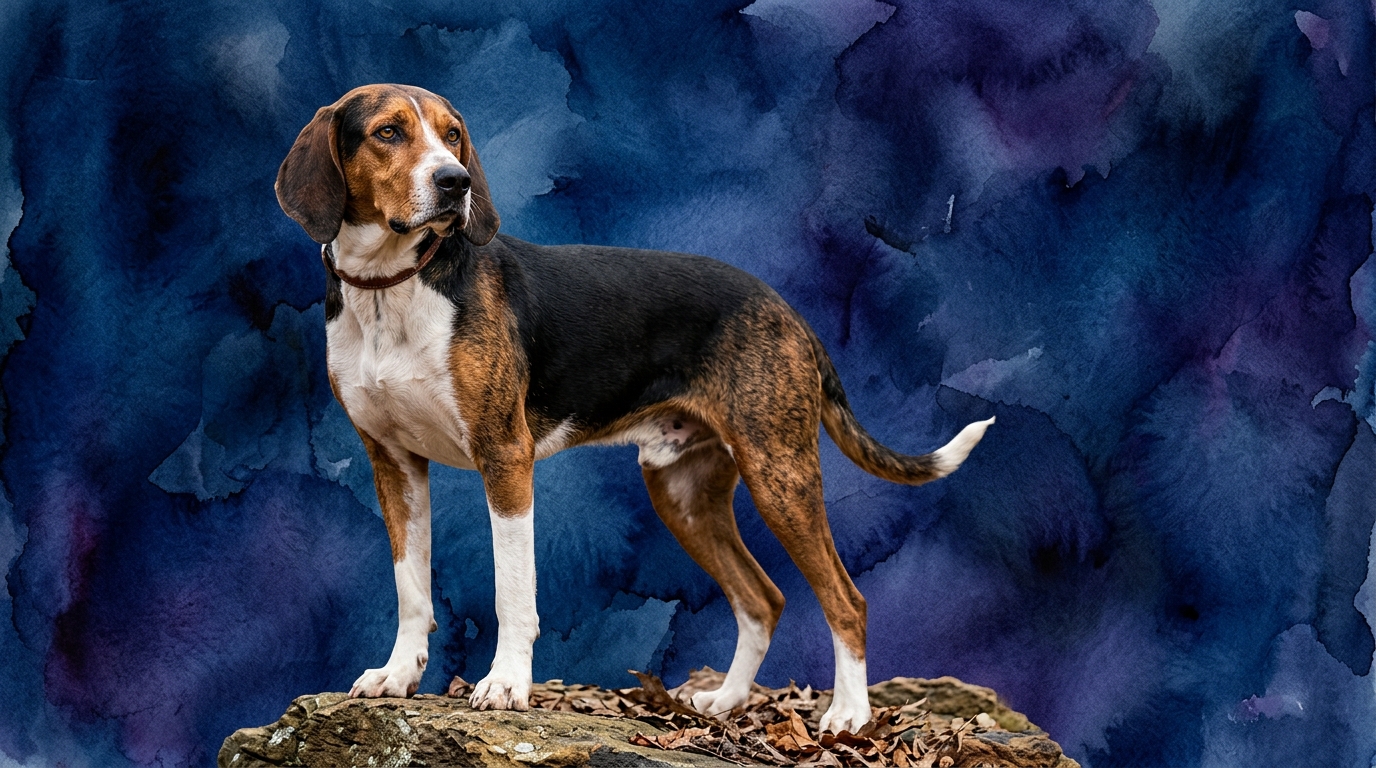
In contrast, the Treeing Walker Coonhound presents a more balanced cognitive profile with scores of 3/5 across all five dimensions: Problem Solving, Training Speed, Social Intelligence, Instinctive Drive, and Memory. This breed’s intelligence is geared towards active hunting and interaction, demonstrating a respectable ability to figure out immediate challenges, a moderate willingness to learn from humans, and a generally affable nature. Their instinctive drive is significant but typically more manageable than the Bloodhound's singular obsession.
These contrasting profiles highlight how two breeds within the same hound group can develop vastly different cognitive strengths. The Bloodhound's mind is a highly specialized instrument for scent, while the Treeing Walker Coonhound possesses a more generalized, adaptable intelligence suited for varied hunting scenarios and companionship.
Where the Bloodhound Wins Cognitively
The Bloodhound's cognitive superiority undeniably lies in its extraordinary olfactory capabilities, reflected in its perfect 5/5 scores for Problem Solving, Instinctive Drive, and Memory. This isn't just about a good nose; it's about a sophisticated cognitive process that allows them to interpret, store, and act upon complex scent information in a way few other breeds can rival.
Their Problem Solving isn't about solving abstract puzzles, but about reconstructing an entire narrative from a fading scent trail. This involves intricate deductive reasoning, navigating varied terrains, ignoring countless distractions, and making choices based on minute olfactory differences – a cognitive feat of immense complexity and focus. They can discern the passage of an individual, the direction they took, and even the time elapsed, all from airborne molecules.
Furthermore, the Bloodhound’s exceptional Memory (5/5) is deeply intertwined with this scenting ability. They possess an astounding capacity for long-term recall of scent profiles, track patterns, and spatial information related to past trails. This allows them to learn and apply complex tracking strategies, making them highly effective in sustained, challenging search and rescue or law enforcement operations where remembering specific scent signatures is crucial.
Their perfect Instinctive Drive (5/5) is not merely a physical urge but a cognitive imperative. This relentless drive fuels their problem-solving and memory, ensuring they remain focused on the task, often to the exclusion of all else. For specific scent-related tasks, the Bloodhound's cognitive architecture is designed for unparalleled performance.
Where the Treeing Walker Coonhound Wins Cognitively
While the Bloodhound excels in hyper-specialized scent deduction, the Treeing Walker Coonhound's cognitive strengths lie in a more balanced and adaptable intelligence, particularly in areas of social engagement and practical, agile hunting. Their consistent 3/5 scores across the board indicate a well-rounded mental capacity that serves them well in diverse situations.
The Treeing Walker Coonhound's relatively higher Social Intelligence (3/5, compared to Bloodhound's 2/5) is a significant advantage. This means they are generally more attuned to human companionship and cues, making them more integrated family members. They are more likely to seek interaction, understand social dynamics within a household, and respond to their owner's moods, fostering a more reciprocal relationship.
Their Problem Solving (3/5) is geared towards the dynamic challenges of treeing game. This involves quick decision-making, agility, and strategic thinking to corner quarry up a tree, utilizing environmental features and their keen senses of sight and hearing alongside scent. It's a pragmatic, action-oriented intelligence, requiring them to adapt rapidly to changing circumstances in the field.
The Treeing Walker Coonhound's balanced Instinctive Drive (3/5) is also a cognitive benefit for a companion animal. While strong, it is often more amenable to redirection and training, allowing owners to channel this energy into constructive activities beyond pure hunting. This makes them more versatile and less singularly focused than a Bloodhound, fitting better into varied lifestyles where their natural drives are part of a broader set of engagements.
Which is Easier to Train and Why
When it comes to trainability, the contrast between these two breeds is stark, largely dictated by their respective scores in Training Speed and Instinctive Drive. For the average owner, the Treeing Walker Coonhound will prove to be significantly easier to train due to its more cooperative cognitive wiring.
The Bloodhound's Training Speed (1/5) is among the lowest, making them exceptionally challenging to train in traditional obedience. Their supreme Instinctive Drive (5/5) for scent work means their nose often governs their decisions, rendering them largely impervious to typical commands when a compelling scent is present. They are not inherently eager to please in the conventional sense; their pleasure comes from following a trail. Training a Bloodhound requires immense patience, creativity, and a deep understanding of motivational techniques that align with their scent-driven world, rather than attempting to override it.
Conversely, the Treeing Walker Coonhound's Training Speed (3/5) indicates a much greater willingness to learn and respond to human direction. Their balanced Social Intelligence (3/5) means they are generally more receptive to positive reinforcement and enjoy working collaboratively with their handlers. While they possess a strong hunting drive, it’s typically more manageable and can be channeled into various activities, including obedience, agility, or scent games that reinforce desired behaviors.
Therefore, for owners seeking a dog that will readily learn basic commands and integrate smoothly into a structured training regimen, the Treeing Walker Coonhound is the more accessible choice. The Bloodhound demands a highly committed, experienced trainer who understands and respects their profound, independent specialization.
Which Suits Active Owners vs. Relaxed Owners
Matching a dog's cognitive and physical needs with an owner's lifestyle is crucial for a harmonious relationship. Both Bloodhounds and Treeing Walker Coonhounds are active breeds, but the *type* of activity and engagement they require differs significantly, influencing their suitability for various owner types.
A Bloodhound is best suited for an owner who is deeply committed to providing consistent, specialized mental stimulation through scent work. This isn't necessarily about high-impact physical exercise, but rather long, deliberate tracking sessions that engage their unparalleled Problem Solving and Memory. A 'relaxed' owner who expects a dog to entertain itself or be satisfied with short walks will find a Bloodhound challenging, as their strong Instinctive Drive (5/5) requires a dedicated outlet to prevent boredom and potential behavioral issues. Their low Social Intelligence (2/5) means they thrive with owners who appreciate their independence and don't demand constant interactive engagement.
The Treeing Walker Coonhound, with its balanced cognitive profile, suits a more conventionally active owner. They require vigorous physical exercise, often involving running, exploring, and engaging in activities that utilize their agility and senses. Their higher Social Intelligence (3/5) means they enjoy being part of family activities and are often keen to participate in adventures alongside their humans. Owners who enjoy hiking, trail running, or dog sports will find a Treeing Walker Coonhound a spirited and engaging companion, provided they can consistently channel their instinctive drives.
In summary, while neither breed is for a truly relaxed owner, the Bloodhound demands a specialized kind of active engagement centered on their unique cognitive strengths in scent. The Treeing Walker Coonhound, conversely, fits better with a generally active owner who can provide ample physical exercise and enjoys a more interactive, socially engaged canine partner.
The Verdict
Choose a Bloodhound if you are captivated by the profound depths of olfactory problem-solving and memory, prepared for a singular focus on scent work, and ready to commit to highly specialized training methods for a dog whose primary joy is the trail. They thrive with owners who appreciate their independent, scent-driven intellect above all else.
Opt for a Treeing Walker Coonhound if you seek a more socially engaged, active companion who enjoys both outdoor adventures and family life, and are willing to provide consistent, positive training to channel their energetic hunting instincts. They offer a balanced blend of biddability and spirited independence.
🧠 Find Your Pet's IQ Score
Our Pet IQ Lab assessment covers 25+ tests across 5 cognitive dimensions — personalized to your breed.
Take the Full IQ Test →Frequently Asked Questions
Do Bloodhounds make good family pets despite their low social intelligence score?
Bloodhounds can certainly be affectionate family members, forming deep bonds with their chosen people. Their low social intelligence score primarily reflects their independent nature and extreme focus on scent, meaning they might be less attuned to subtle human social cues or less overtly demonstrative than some other breeds.
Is a Treeing Walker Coonhound suitable for apartment living?
A Treeing Walker Coonhound generally requires significant space and vigorous exercise to thrive, making apartment living challenging without a highly dedicated owner. While they are adaptable and social, their strong instinctive drive and energy levels demand ample outdoor activity and mental stimulation to prevent boredom and destructive behaviors.
Can Treeing Walker Coonhounds be trained for purposes other than hunting?
Absolutely! Treeing Walker Coonhounds can excel in various dog sports like agility, obedience, and scent work, leveraging their biddability and keen senses. Their balanced training speed and social intelligence make them versatile learners, eager to engage in activities that provide both physical and mental challenge.