
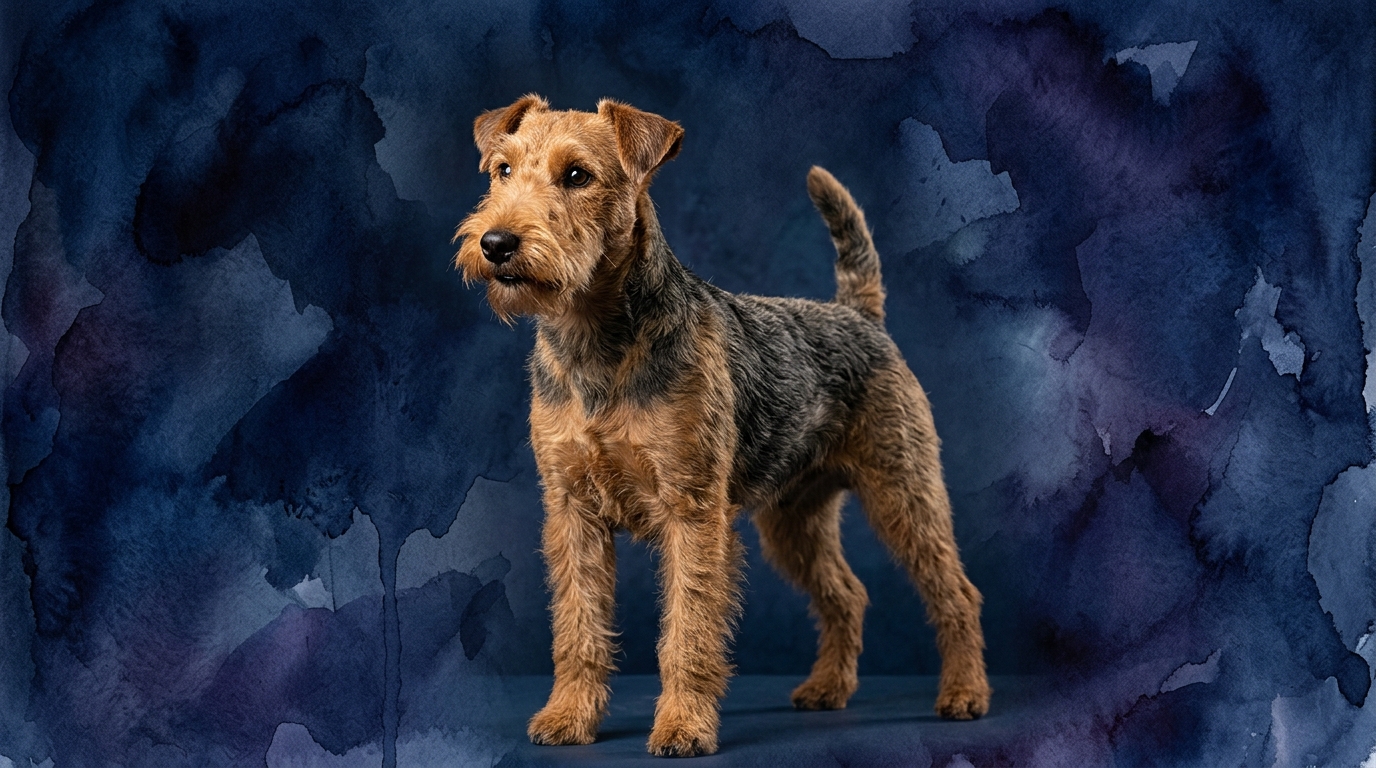
Side-by-Side Cognitive Profiles: Bloodhound vs. Welsh Terrier
At The Cosmic Pet Pet IQ Lab, we evaluate canine intelligence across five key dimensions, offering a nuanced view beyond simple labels. The Bloodhound, a majestic hound breed, registers a Coren rank of #74, indicating a generally lower standing in terms of 'working and obedience intelligence' compared to many breeds, yet this ranking doesn't capture its extraordinary specialization. Its IQ profile is striking: Problem Solving 5/5, Training Speed 1/5, Social Intelligence 2/5, Instinctive Drive 5/5, and Memory 5/5. This suggests a brain hyper-focused on its primary purpose.
In stark contrast, the Welsh Terrier, a spirited terrier breed, is not Coren-ranked, which often implies a more independent or less biddable nature that doesn't fit neatly into traditional obedience metrics. Its cognitive scores present a remarkably balanced, middle-ground profile: Problem Solving 3/5, Training Speed 3/5, Social Intelligence 3/5, Instinctive Drive 3/5, and Memory 3/5. This suggests a dog that is competent across various cognitive tasks without extreme specialization in any single area, providing a versatile companion.
Where the Bloodhound's Cognition Shines Brightest
The Bloodhound's cognitive superiority lies unequivocally in its olfactory-driven problem solving and memory, both rated a perfect 5/5. This breed possesses an unparalleled ability to decipher complex scent trails, a skill that demands sophisticated cognitive mapping and an incredible capacity for sustained focus. Their problem-solving isn't about opening latches or figuring out puzzle toys; it's about interpreting a three-dimensional tapestry of odors, distinguishing a specific human scent from countless others, and following it over vast distances, varying terrains, and through time. This involves an intricate process of scent discrimination, pattern recognition, and persistent tracking, showcasing a highly specialized form of intelligence.
Furthermore, their 5/5 memory is intrinsically linked to this scent prowess. A Bloodhound can retain and recall intricate details of a scent trail, effectively building a mental map of their quarry's path, even hours or days later. This memory extends to recognizing specific scents and associating them with past experiences, allowing them to learn and refine their tracking strategies. This deep, specialized memory and problem-solving capacity makes them invaluable in fields requiring sustained, intricate sensory processing, a domain where few other breeds can compete.
Where the Welsh Terrier's Cognition Offers an Edge
The Welsh Terrier's cognitive strengths stem from its balanced profile, particularly its moderate scores across all dimensions (3/5). While the Bloodhound excels in a niche, the Welsh Terrier demonstrates a more generalized and adaptable intelligence. Its 3/5 problem-solving ability allows it to navigate everyday domestic challenges, figure out how to get to a dropped treat, or understand the routines of its household with reasonable efficiency. This isn't the specialized problem-solving of a tracker, but rather a practical, adaptable intelligence suited for varied environments.
The Welsh Terrier also shows a more balanced social intelligence (3/5) compared to the Bloodhound's lower score. This means they are generally more attuned to human social cues and interactions, capable of forming responsive bonds and integrating smoothly into family dynamics. Their moderate instinctive drive (3/5) allows them to engage with their surroundings and express their terrier nature without being overwhelmingly single-minded, making them more pliable and versatile companions in a range of activities from structured obedience to interactive play. This generalist approach to cognition allows them to excel in diverse settings where extreme specialization might be a hindrance.
Ease of Training: A Tale of Two Motivations
When it comes to ease of training, the Welsh Terrier (Training Speed 3/5) generally presents a more manageable experience than the Bloodhound (Training Speed 1/5). The Bloodhound's independent nature and overwhelming instinctive drive for scent work mean that conventional obedience commands often take a backseat to an intriguing odor. Their brain is wired to follow a trail, and once they're 'on scent,' external commands or human pleas often become irrelevant to them. Training a Bloodhound requires immense patience, understanding of their motivation, and often, specialized reward systems that can compete with the allure of a captivating scent. They are not intentionally disobedient; rather, their primary cognitive function overrides other inputs, making 'come' a suggestion when a fascinating trail beckons.
The Welsh Terrier, while possessing typical terrier tenacity, is more responsive to traditional training methods. Their 3/5 training speed means they can learn commands and routines with consistent positive reinforcement, though they may still test boundaries. Their balanced instinctive drive allows them to be redirected more easily from distractions. They enjoy engagement and mental stimulation that comes from learning new things, making them more amenable to varied training exercises, from basic manners to agility. Their moderate social intelligence also helps them to be more receptive to their owner's guidance and desire for interaction during training sessions.
Matching Canine Cognition to Lifestyle: Active vs. Relaxed Owners
Neither the Bloodhound nor the Welsh Terrier is truly suited for a 'relaxed' owner in the sense of a sedentary lifestyle, but they require different types of engagement. An active owner for a Bloodhound is one who understands and embraces its profound need for scent work. This means providing regular opportunities for them to use their nose, whether through formal tracking, scent games, or long, meandering walks where they are encouraged to follow interesting smells. Their physical activity might appear slow and methodical, but their mental activity during scent work is incredibly intense. A relaxed owner who cannot fulfill this deep-seated cognitive need will likely find themselves with a frustrated and potentially destructive dog, as their incredible instinctive drive needs an outlet.
For the Welsh Terrier, an active owner is someone who enjoys varied physical and mental stimulation. This breed thrives on activities like brisk walks, playful games of fetch, agility training, or even earthdog trials that tap into their terrier instincts. Their balanced cognitive profile means they appreciate diverse challenges and interaction. A relaxed owner who fails to provide sufficient outlets for their energy and curiosity might encounter a dog prone to boredom-driven behaviors like excessive barking or digging. While they are adaptable, their moderate instinctive drive and problem-solving abilities require consistent engagement to keep them content and well-adjusted.
The Verdict
Choose the Bloodhound if you are captivated by extreme specialization, possess the patience to work with an independent mind, and are prepared to channel their unparalleled scenting abilities into meaningful activities.
Opt for the Welsh Terrier if you seek a versatile, moderately trainable companion with a balanced cognitive profile, capable of engaging in various activities and adapting well to a lively family environment.
🧠 Find Your Pet's IQ Score
Our Pet IQ Lab assessment covers 25+ tests across 5 cognitive dimensions — personalized to your breed.
Take the Full IQ Test →Frequently Asked Questions
Is the Bloodhound truly intelligent given its low training speed?
Yes, absolutely. The Bloodhound exhibits a highly specialized intelligence, particularly in problem-solving related to scent and memory for complex trails. Its low training speed reflects its independent nature and overwhelming instinctive drive, not a lack of cognitive capacity, but rather a different prioritization of inputs.
Can a Welsh Terrier be trained for scent work like a Bloodhound?
While a Welsh Terrier can certainly enjoy scent games and has a decent instinctive drive, its olfactory capabilities and specialized problem-solving in scent are not comparable to a Bloodhound's. A Welsh Terrier will not exhibit the same level of precision, endurance, or dedication to complex trail following that defines a Bloodhound.
Which breed is better for a first-time dog owner?
Given its more balanced cognitive profile, moderate training speed, and social intelligence, the Welsh Terrier is generally a more suitable choice for a first-time dog owner. The Bloodhound's extreme specialization and independent nature can be quite challenging for someone new to dog ownership.