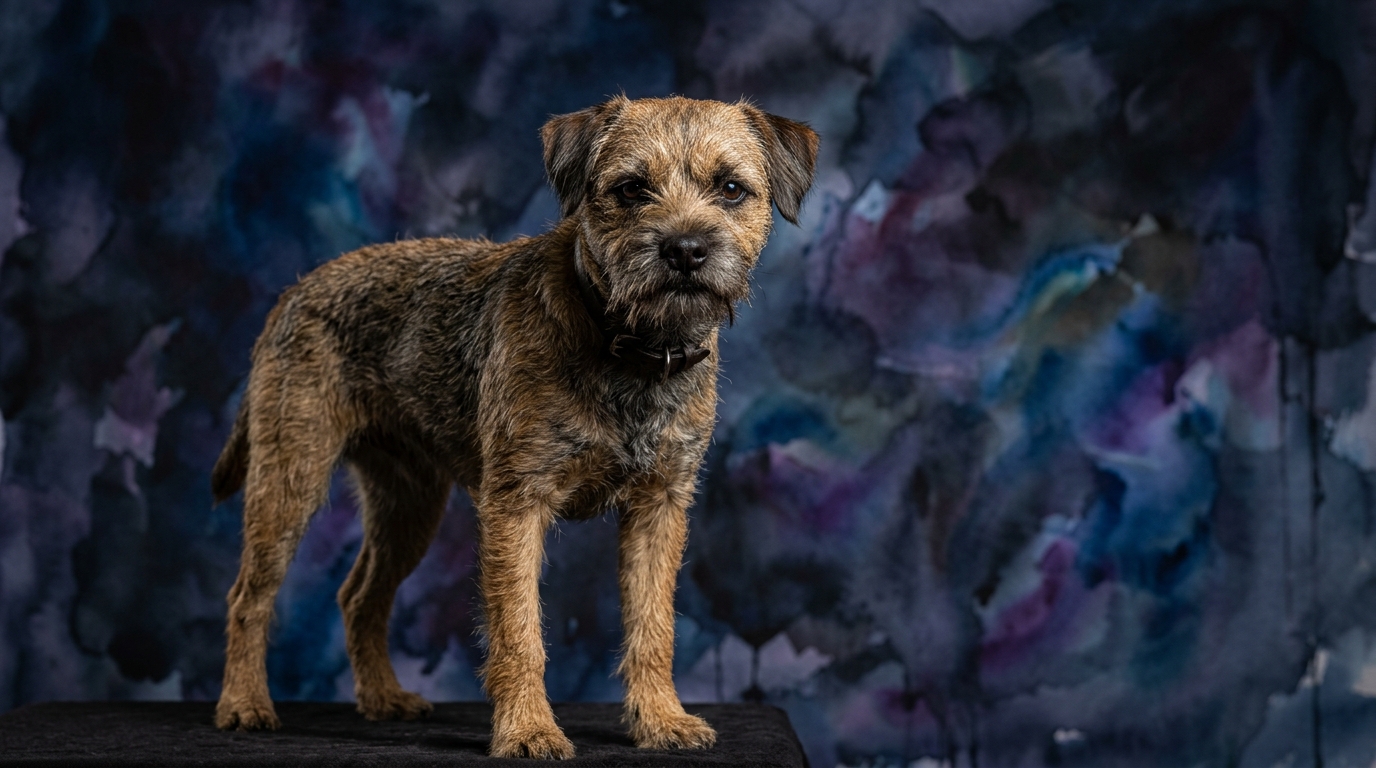
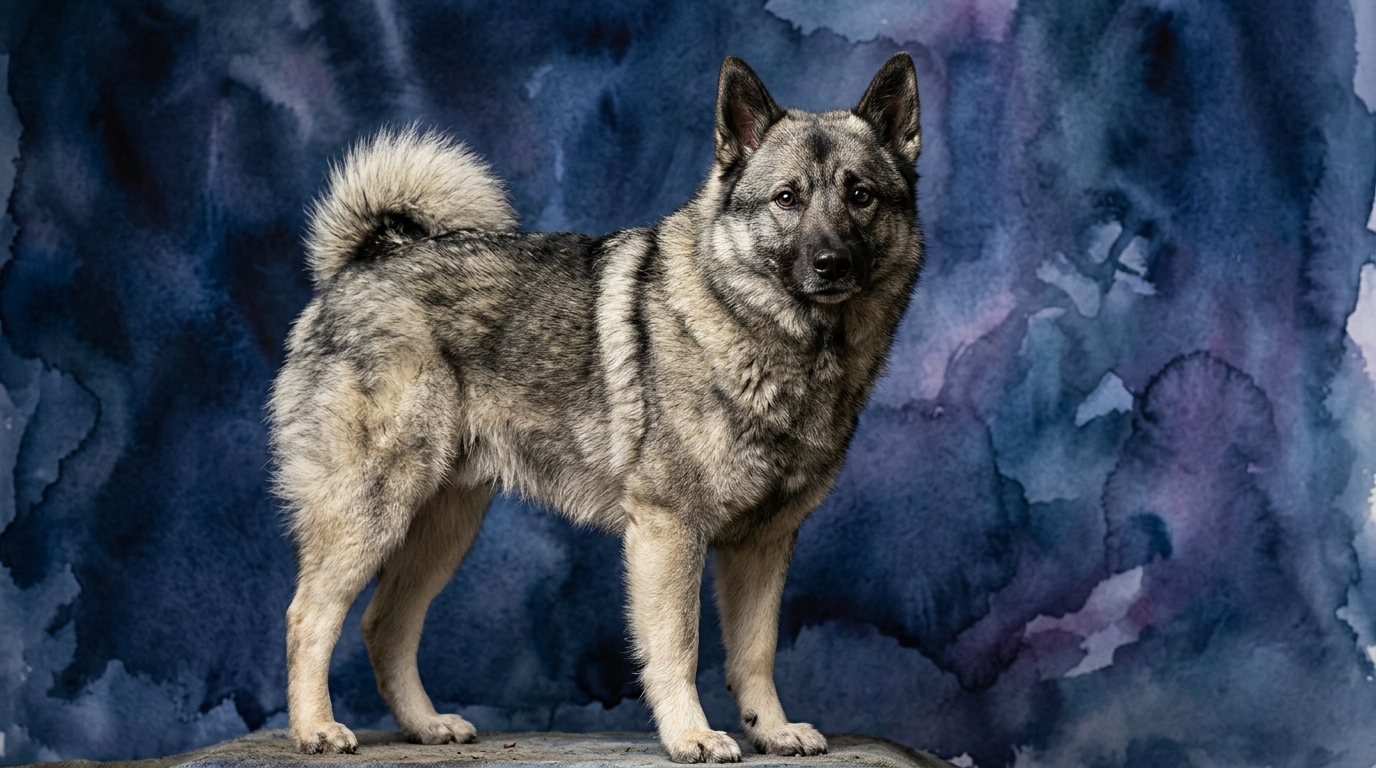
Side-by-Side IQ Profile: Border Terrier vs. Norwegian Elkhound
At first glance, the Border Terrier and Norwegian Elkhound appear to be cognitive equals, both ranking quite respectably in canine intelligence (Border Terrier at Coren rank #30, Norwegian Elkhound at #36). Our Pet IQ Lab scores further emphasize this parity across several key dimensions. However, understanding how these scores are expressed in each breed's unique history and temperament is crucial.
The Border Terrier, a small but hardy working dog from the Anglo-Scottish border, shows a Problem Solving score of 4/5. This reflects their historical role in independently flushing foxes from their lairs, requiring quick wit and adaptable strategies in confined, unpredictable environments. Their Training Speed also stands at 4/5, indicating a capacity to grasp new commands swiftly, though often with a characteristic terrier independence. Social Intelligence is rated 3/5, suggesting they are capable of forming strong bonds but can be discerning or reserved with strangers and other canids. Their Instinctive Drive, at 3/5, is primarily focused on prey pursuit, digging, and vocalization, deeply rooted in their working heritage. Finally, a Memory score of 4/5 means they retain learned behaviors and environmental cues with impressive accuracy.
The Norwegian Elkhound, a robust hunting dog with ancient Scandinavian roots, mirrors the Border Terrier's scores across the board. Their Problem Solving is 4/5, reflecting their need to track large game like moose for extended periods over challenging terrain, often requiring strategic thinking to corner or hold quarry. Training Speed, also 4/5, indicates a readiness to learn, but like many hounds, their motivation often aligns with their innate drives. Social Intelligence is 3/5, pointing to a breed that is loyal to its family but can be aloof or watchful of outsiders. Their Instinctive Drive, 3/5, is strongly geared towards scent tracking, endurance, and a characteristic baying vocalization used to alert hunters. A Memory score of 4/5 means they excel at remembering complex scent trails, routines, and commands, essential for their demanding hunting tasks.
Where the Border Terrier Wins Cognitively
While their raw scores are identical, the Border Terrier often displays a cognitive edge in scenarios demanding immediate, independent, and often self-directed problem-solving within dynamic, close-quarters situations. Their ancestral work required them to make split-second decisions underground, without human direction, to engage and deter prey. This fosters a type of cognitive flexibility and tenacity that excels in 'on-the-fly' adjustments.
For instance, a Border Terrier might more readily devise a novel way to retrieve a toy stuck under furniture, demonstrating persistent trial-and-error combined with agile physical manipulation. Their terrier 'gameness' translates into a cognitive persistence that doesn't easily give up on a mental challenge once engaged, particularly if it taps into their prey drive or desire to 'get' something. This makes them particularly adept at puzzle toys or agility courses that demand quick, independent decisions rather than sustained, methodical application of learned sequences.
Where the Norwegian Elkhound Wins Cognitively
The Norwegian Elkhound's cognitive strengths shine in areas requiring sustained focus, environmental awareness, and methodical problem-solving over long durations and vast distances. Their historical role as a tracking and baying hound for big game demanded an ability to process complex scent information, navigate challenging landscapes, and maintain a consistent strategy for hours, often days, on end. This cultivates a different kind of cognitive endurance and strategic depth.
An Elkhound might excel at intricate scent work or search-and-rescue tasks where maintaining a long-term mental map of an area and systematically following a trail are paramount. Their problem-solving isn't just about immediate tactical decisions but about strategic persistence towards a distant goal. This makes them particularly effective in activities that require sustained mental engagement, such as advanced obedience drills that build on sequences, or competitive tracking where consistency and methodical application of memory are key.
Which is Easier to Train and Why
Despite both breeds scoring 4/5 for Training Speed, the practical experience of training them can differ significantly due to their inherent temperaments and motivations. The Border Terrier, with its terrier independence, learns commands quickly but may choose to apply them only when it suits their agenda or when a more stimulating distraction isn't present. Their strong prey drive means they can be easily sidetracked by squirrels or interesting scents, requiring consistent, engaging training to maintain focus. While they pick up concepts rapidly, motivating them to consistently comply requires creativity and leveraging their natural drive for interaction and 'work' in a positive reinforcement framework.
The Norwegian Elkhound also learns commands swiftly, but their hound nature often means they are driven by scent and their ancestral urge to track. This can manifest as an independent streak where they prioritize following a compelling scent over responding to a recall. Training an Elkhound often requires patience and understanding of their deep-seated instincts; while they are capable of learning complex tasks, their compliance is often best achieved through methods that tap into their natural drives, such as scent games or long-distance recalls that feel like a 'hunt.' Their potential for vocalization (baying) also requires specific training to manage, which can be a unique challenge compared to the Border Terrier's more generalized vocal tendencies.
Which Suits Active Owners vs. Relaxed Owners
Neither the Border Terrier nor the Norwegian Elkhound is well-suited for a truly relaxed, sedentary owner. Both breeds possess substantial energy levels and cognitive needs that demand regular engagement. However, the *type* of activity and engagement they require varies, making them suitable for different kinds of active lifestyles.
The Border Terrier thrives with owners who can provide consistent, varied mental and physical stimulation in bursts. They enjoy brisk walks, off-leash exploration in secure areas, digging opportunities, and puzzle toys. Their cognitive needs are met through problem-solving games, short but engaging training sessions, and opportunities to 'hunt' (even if it's just for a hidden treat). They are adaptable to different environments, including apartments, provided their exercise and mental needs are consistently met. An active owner for a Border Terrier is someone who enjoys interactive play, short hikes, and consistent training.
The Norwegian Elkhound, on the other hand, is built for endurance and sustained activity. They require significantly more physical exertion, thriving on long hikes, jogging, and activities that allow them to utilize their tracking abilities. Their cognitive needs are best met through activities that leverage their stamina and methodical problem-solving, such as competitive tracking, long-distance recall training, or extended scent games. They are less suited for apartment living due to their size, vocal nature, and need for vast outdoor spaces. An active owner for an Elkhound is someone who leads a very outdoorsy lifestyle, enjoys extensive daily exercise, and understands how to channel a powerful prey drive into constructive activities.
The Verdict: When to Choose Each Breed
Choosing between a Border Terrier and a Norwegian Elkhound boils down to understanding the nuances of their similar IQ scores and how they manifest in daily life, aligning with your lifestyle and expectations.
If you're seeking a compact, tenacious companion who excels at independent, quick-witted problem-solving in varied environments and can adapt to smaller living spaces with consistent bursts of activity, the Border Terrier is likely your ideal match. They thrive with owners who appreciate their spunky independence and can provide engaging mental challenges and interactive play.
Conversely, if your lifestyle involves extensive outdoor adventures, a profound appreciation for sustained endurance and methodical tracking, and you have ample space for a larger, more vocal companion, the Norwegian Elkhound will be a deeply rewarding choice. They flourish with owners who can channel their powerful instincts into long-distance activities and appreciate their steadfast, albeit sometimes aloof, loyalty.
The Verdict
Choose the Border Terrier if you seek a compact, quick-witted companion for varied, interactive mental and physical challenges, adaptable to diverse living situations with consistent engagement.
Opt for the Norwegian Elkhound if you lead a highly active, outdoorsy lifestyle, appreciating sustained endurance, methodical tracking, and a steadfast, larger companion with ample space.
🧠 Find Your Pet's IQ Score
Our Pet IQ Lab assessment covers 25+ tests across 5 cognitive dimensions — personalized to your breed.
Take the Full IQ Test →Frequently Asked Questions
Are Border Terriers good for first-time dog owners?
Border Terriers can be suitable for first-time owners who are committed to consistent training and mental stimulation. Their independence and strong prey drive require patience and clear boundaries, but their relatively small size and eagerness to learn make them manageable for dedicated individuals.
Do Norwegian Elkhounds bark excessively?
Norwegian Elkhounds are known for their vocalizations, particularly a distinctive baying bark used to alert hunters. While not necessarily 'excessive' in their natural working context, this can be a significant trait in a home environment and requires early training to manage if quiet is a priority.
Which breed is generally better with children?
Both breeds can be good with children when properly socialized and raised together, but the Border Terrier, being smaller and often more tolerant of bustling household activity, might be a slightly more natural fit for families with younger children. The Elkhound's size and strong personality mean interactions should always be supervised, though they are typically loyal to their family pack.