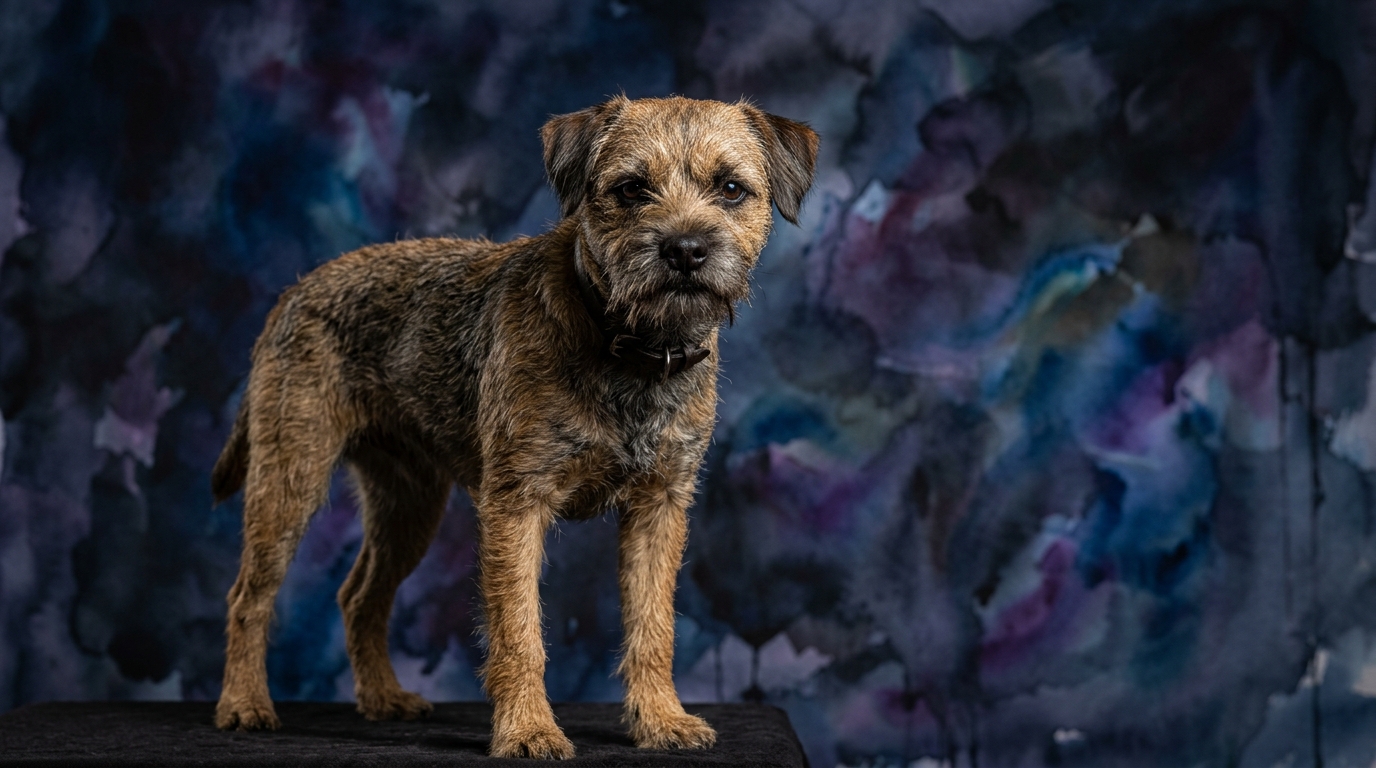
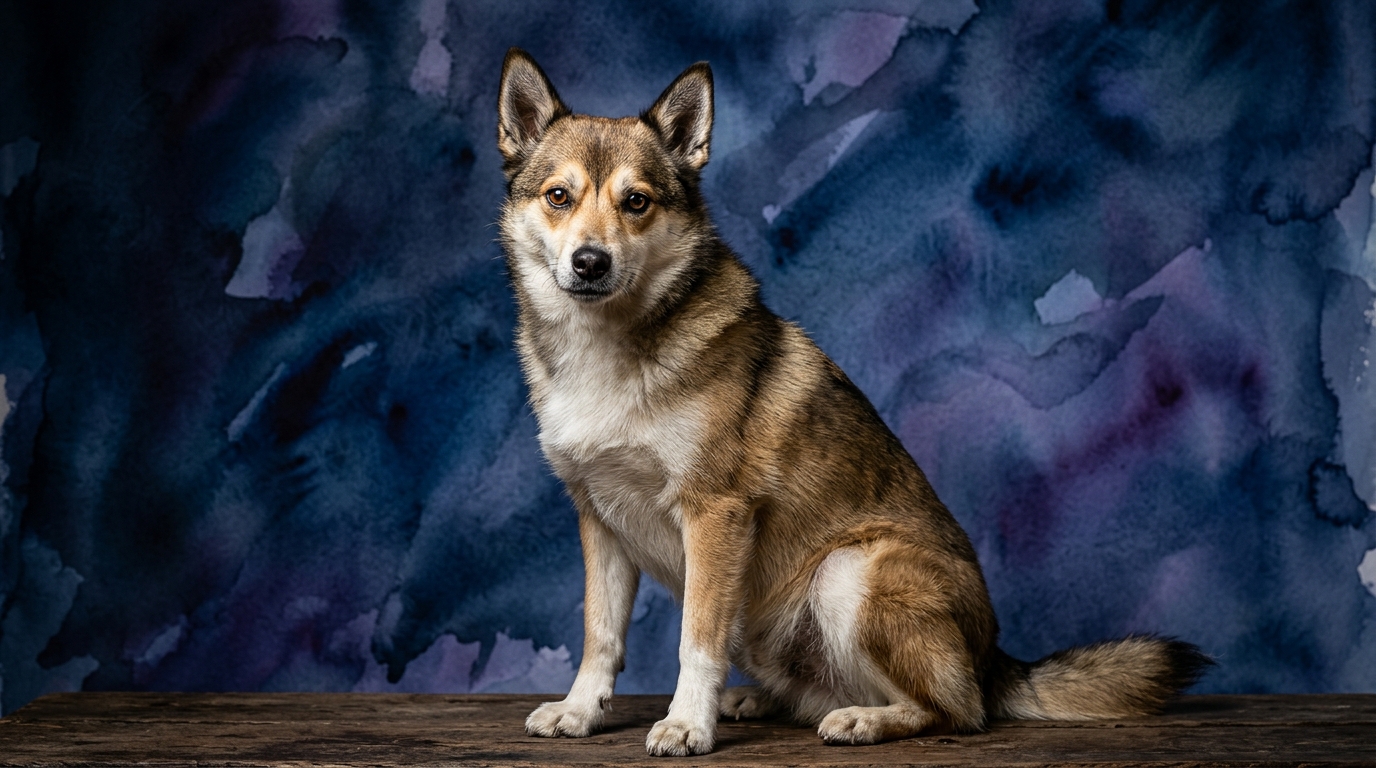
Side-by-side IQ profile
The Cosmic Pet Pet IQ Lab employs a five-dimensional framework to assess canine intelligence, offering a nuanced view beyond simple "smartness." For the Border Terrier, a breed recognized for its working acumen, we observe a Problem Solving score of 4/5, indicating a strong capacity for navigating novel challenges and strategizing. Its Training Speed also stands at 4/5, reflecting a readiness to acquire new commands and behaviors efficiently. Memory, crucial for retaining learned tasks and routines, scores an impressive 4/5. Social Intelligence, vital for understanding human cues and integrating into a family unit, is rated 3/5, suggesting competent but perhaps not exceptionally effusive social engagement. Finally, its Instinctive Drive, the inherent urge to perform breed-specific tasks like hunting, registers 3/5, a balanced score that fuels its purpose without overwhelming other cognitive functions.
The Norwegian Lundehund, a breed with an extraordinary evolutionary history, presents a different cognitive landscape. Across all five dimensions – Problem Solving, Training Speed, Social Intelligence, Instinctive Drive, and Memory – the Lundehund consistently scores 3/5. This uniformity suggests a balanced, yet perhaps not conventionally outstanding, cognitive profile. Its Problem Solving at 3/5 indicates a functional ability to address environmental obstacles, while a Training Speed of 3/5 points to a moderate pace for learning new directives. Memory at 3/5 means information is retained, though perhaps requiring more reinforcement than a higher-scoring breed. Social Intelligence at 3/5 suggests they are capable of forming bonds but might possess an independent streak. The Instinctive Drive of 3/5 reflects their deep-seated urges, originally centered around their unique puffin-hunting role, which required a specific blend of agility, persistence, and specialized problem-solving within confined spaces.
Where Border Terrier wins cognitively
The Border Terrier's cognitive strengths distinctly shine in areas demanding quick comprehension and retention, scoring 4/5 in Problem Solving, Training Speed, and Memory. This breed's history as a working terrier required it to think on its feet, navigating complex underground tunnel systems to flush out quarry. This lineage manifests as an innate ability to analyze situations and devise solutions, such as figuring out how to retrieve a hidden toy or open a gate. Their superior Training Speed means they pick up new commands and routines with fewer repetitions, making them a satisfying partner for structured activities like obedience trials or agility courses. Furthermore, their excellent Memory ensures that once a lesson is learned, it tends to stick, allowing for a broad repertoire of behaviors and a consistent response to cues, even after a break from training. This cognitive profile makes them adept at tasks requiring sequential learning and sustained focus on human-directed objectives.
Where Norwegian Lundehund wins cognitively
While the Norwegian Lundehund’s scores of 3/5 across the board might seem less remarkable on a generalized scale, their unique history highlights a specialized form of cognitive excellence. Their original role involved hunting puffins in narrow, rocky crevices, demanding an extraordinary combination of physical agility and spatial problem-solving. This required them to navigate intricate, often dark, three-dimensional environments, utilizing their unique skeletal flexibility (including extra toes and flexible joints) as a cognitive tool. Their Problem Solving, though rated 3/5, is profoundly specialized in adapting to challenging physical terrains and extracting prey from complex hideaways, a task that demanded tenacity and precise body awareness rather than broad obedience. Their Instinctive Drive, also 3/5, is intensely focused on exploration and scent work, a persistent curiosity that allowed them to locate and extract birds from nearly inaccessible places. This breed's "win" lies in its unparalleled environmental adaptability and a specific kind of independent, investigative intelligence, honed for a highly demanding and peculiar ecological niche.
Which is easier to train and why
When considering ease of training, the Border Terrier generally presents a more straightforward path for owners, primarily due to its higher scores in Training Speed (4/5) and Memory (4/5). These attributes mean Border Terriers are typically eager to learn and quick to grasp new commands, requiring fewer repetitions to solidify behaviors. Their Coren rank of #30, placing them among breeds with above-average working and obedience intelligence, further supports their biddable nature in structured training environments. While their Instinctive Drive (3/5) means they can be distracted by scents or small prey, their strong desire to engage with their human companions and their capacity for retention make them responsive to consistent, positive reinforcement.
In contrast, the Norwegian Lundehund, with a Training Speed and Memory of 3/5, typically requires a more patient and creative approach to training. Their independence, a trait that was crucial for their solitary hunting role, means they might be less inclined to blindly follow commands. While they are capable of learning, they may take longer to process and retain information, and may require more motivational strategies to maintain focus. Their Problem Solving (3/5) is geared towards independent exploration and navigating complex physical spaces rather than readily complying with human directives. Owners should expect to invest more time in foundational training and embrace methods that engage their curiosity and specialized problem-solving skills, rather than relying solely on traditional obedience drills.
Which suits active owners vs relaxed owners
The Border Terrier, with its balanced Instinctive Drive (3/5) and general terrier energy, is a fitting companion for active owners who enjoy structured outdoor activities and mental engagement. They thrive on consistent exercise, such as brisk walks, runs, or off-leash exploration in secure areas, and benefit significantly from activities that challenge their problem-solving abilities, like agility, earthdog trials, or advanced obedience. Their robust memory and trainability make them excellent partners for dog sports, requiring owners to be committed to regular training and physical outlets. A relaxed owner might find the Border Terrier's drive and need for stimulation overwhelming, potentially leading to boredom-induced behaviors if not adequately channeled.
The Norwegian Lundehund, while capable of bursts of energy, can also adapt to a slightly more relaxed pace, making them suitable for owners who appreciate unique canine companionship without necessarily committing to high-impact sports. Their specialized cognitive and physical traits mean they excel in activities like scent work, puzzle toys, and exploring varied terrains, which satisfy their natural curiosity and unique physical capabilities. While they need regular exercise to stay healthy and mentally stimulated, it doesn't always have to be high-intensity. Owners who enjoy leisurely hikes, exploring new environments, or engaging in calm, mentally stimulating games at home might find a Lundehund a delightful match. Their independence also means they can be content with periods of self-entertainment, provided their basic needs for activity and interaction are met.
The Verdict
Choose the Border Terrier if you seek a highly trainable, cognitively agile companion for structured activities and thrive on consistent engagement in dog sports or advanced obedience. Their sharp problem-solving and memory make them excellent partners for owners who appreciate a dog ready to learn and execute complex tasks.
Opt for the Norwegian Lundehund if you are fascinated by a unique breed with specialized problem-solving skills related to environmental navigation and enjoy a dog with an independent, curious spirit that thrives on exploration and mentally stimulating, less conventionally structured activities.
🧠 Find Your Pet's IQ Score
Our Pet IQ Lab assessment covers 25+ tests across 5 cognitive dimensions — personalized to your breed.
Take the Full IQ Test →Frequently Asked Questions
Does the Lundehund's lower IQ score mean it's less capable of learning?
Not at all; the Lundehund's 3/5 scores indicate a moderate learning pace, but their specialized intelligence is geared towards unique problem-solving, particularly in complex physical environments, rather than traditional obedience. They are certainly capable of learning, but often require more patience and creative training methods tailored to their independent nature.
Are Border Terriers prone to being overly energetic due to their higher cognitive scores?
Border Terriers possess a notable drive and energy, reflected in their cognitive scores and working background, which means they do require consistent mental and physical stimulation to prevent boredom. Their energy is best channeled through structured activities, training, and regular exercise, making them ideal for active owners.
How does the "Instinctive Drive" score impact daily life for these breeds?
For both breeds at 3/5, Instinctive Drive means they have inherent urges tied to their historical roles; for the Border Terrier, it's often prey drive, requiring secure leashes and yards, while for the Lundehund, it's a strong drive for exploration and scent work, which can lead to independent adventures if not managed. Understanding this drive helps owners provide appropriate outlets and manage potential challenges.