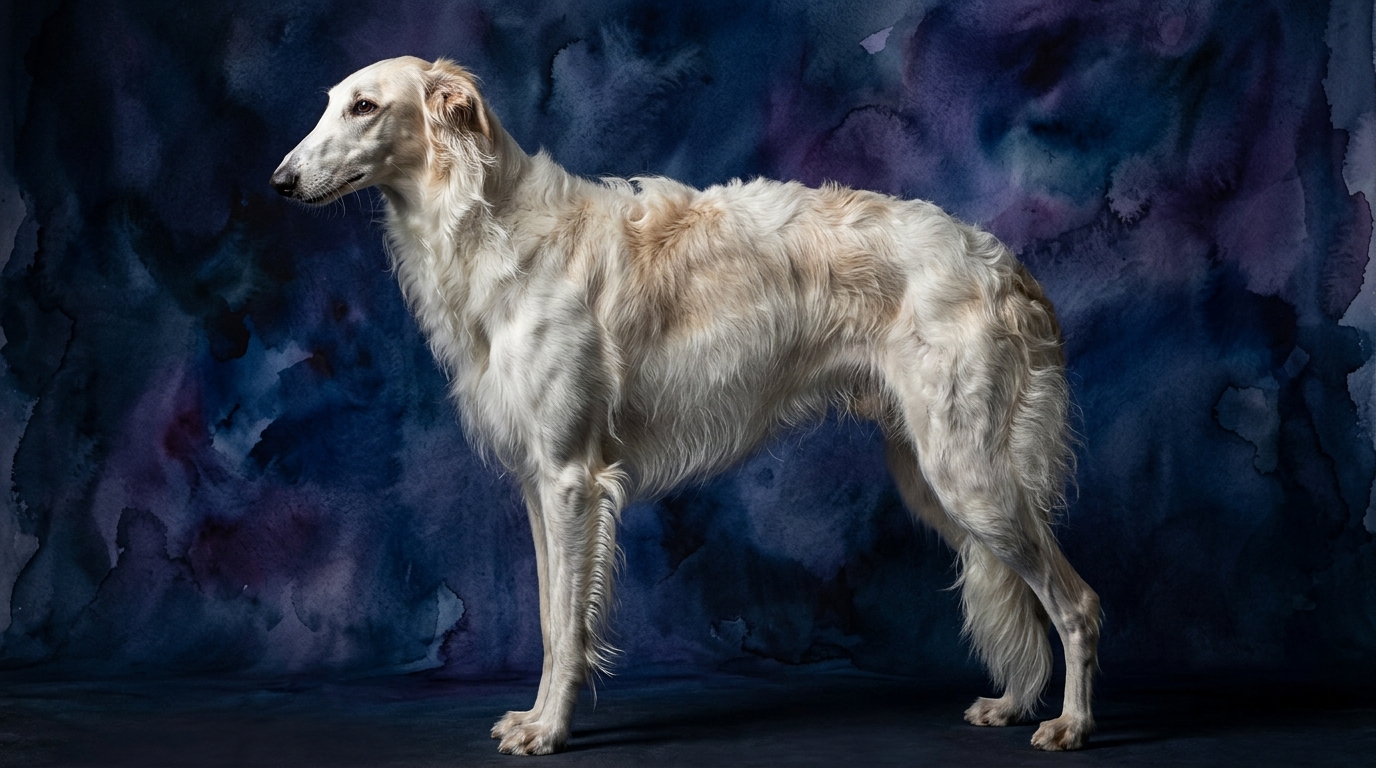
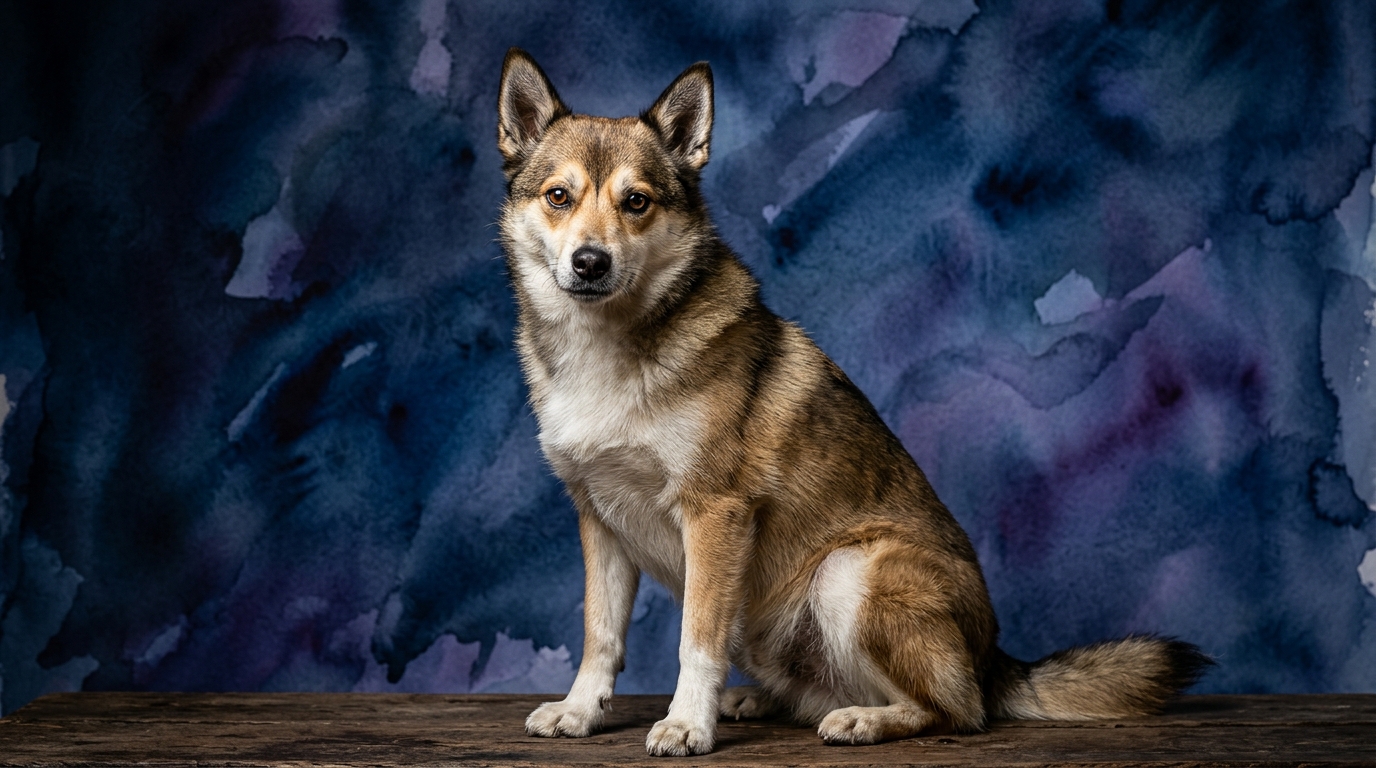
Side-by-Side Cognitive Profiles
The Cosmic Pet Pet IQ Lab assesses five key cognitive dimensions, and both the Borzoi and Norwegian Lundehund register a balanced 3/5 across the board. However, these identical scores belie a fascinating divergence in how their cognitive abilities are expressed, deeply rooted in their historical roles and physical adaptations.
For Problem Solving (3/5), the Borzoi demonstrates this through independent strategic thinking during a high-speed chase. Their decisions on how to outmaneuver fast-moving prey over vast distances are instantaneous and self-directed, showcasing a reactive, spatially-oriented intellect focused on pursuit efficiency. In contrast, the Norwegian Lundehund's 3/5 in problem-solving shines in their ability to navigate treacherous, confined spaces like puffin nesting caves. This involves unique body contortions, devising strategies to extract prey from tight crevices, and a tactile, exploratory approach to their environment.
Training Speed (3/5) for the Borzoi means they grasp concepts readily but often require compelling motivation. Their sighthound independence means compliance is often a choice based on perceived value or their own inclination, rather than an inherent eagerness to please. For the Norwegian Lundehund, also at 3/5, their observant nature allows them to pick up tasks, but their independent, sometimes stubborn temperament necessitates engaging, positive reinforcement methods that tap into their natural curiosity and drive for exploration, rather than rote repetition.
Social Intelligence (3/5) in the Borzoi manifests as forming deep, quiet bonds with their chosen humans, observing family dynamics with a keen, often reserved, demeanor. They are typically polite with strangers but not overtly effusive, preferring to assess situations before engaging, communicating with subtle cues. The Lundehund's 3/5 social intelligence is expressed through a watchful wariness of new people or environments, coupled with intense loyalty to their families. They are adept at reading their human's moods and intentions, often acting as diligent guardians once trust is established.
Instinctive Drive (3/5) for the Borzoi is powerfully rooted in their sighthound heritage: the pursuit of movement. This indicates a strong, innate impulse to chase, requiring secure environments and careful management around small, fast-moving objects, driven primarily by visual cues and speed. The Norwegian Lundehund's 3/5 instinctive drive is geared towards hunting small prey in challenging environments, manifesting as a strong urge to explore, climb, dig, and investigate crevices, driven by a blend of visual, olfactory, and tactile exploration.
Finally, Memory (3/5) for the Borzoi enables them to recall complex running patterns, familiar routes, and specific commands learned through consistent practice. They retain spatial information exceptionally well, remembering the layout of their environment and the location of specific items or boundaries. The Lundehund utilizes their 3/5 memory to recall intricate hunting techniques, complex sequences of unique movements, and the precise locations of hidden objects or pathways, excelling at remembering multi-step processes and environmental details relevant to their exploratory nature.
Where the Borzoi Excels Cognitively
The Borzoi's cognitive strengths are deeply intertwined with their role as open-field hunters. Their problem-solving acumen truly shines in dynamic, high-speed scenarios where they must process visual information rapidly and make independent decisions to intercept fast-moving prey. This isn't about traditional puzzle-solving, but rather about sophisticated spatial reasoning and predictive analysis in motion, calculating trajectories and adapting tactics on the fly. Their memory for vast landscapes and efficient running routes further supports this, allowing them to navigate complex outdoor environments with grace and precision. Their social intelligence, while reserved, demonstrates a keen observational capacity, enabling them to understand and respond to the subtle emotional states of their trusted companions, fostering a deeply empathetic, if quiet, bond.
Where the Norwegian Lundehund Excels Cognitively
The Norwegian Lundehund's unique evolutionary niche has fostered a distinct set of cognitive advantages. Their problem-solving is unparalleled when it comes to navigating and manipulating complex, confined physical spaces. This involves an intricate understanding of their own flexible anatomy and how to use it to their advantage, such as contorting their bodies to fit into tight crevices or climbing vertical surfaces. Their memory is particularly adept at recalling intricate sequences of movements and the precise locations of hidden objects or pathways within a detailed environment. The Lundehund's instinctive drive for exploration and climbing also fuels a persistent curiosity, leading them to investigate and learn from novel situations in a hands-on, physically engaged manner. Their social intelligence, characterized by initial wariness, then intense loyalty, demonstrates a finely tuned ability to assess trustworthiness and form strong, protective bonds within their immediate family.
Training Dynamics: Borzoi vs. Lundehund
Neither the Borzoi nor the Norwegian Lundehund fits the mold of a traditional 'easy to train' breed, primarily due to their strong independent streaks. The Borzoi, with its sighthound heritage, learns quickly but often requires motivation beyond simple compliance. They excel when training taps into their natural drives, such as lure coursing or recall games that simulate a chase in a safe, enclosed area. Their independence means consistent, positive reinforcement is key, and understanding that they may choose to 'think about it' before responding is crucial. They are not typically eager to please in the same way some working breeds are, making patience and engaging methods more effective than strict obedience drills.
The Norwegian Lundehund presents its own training considerations. Their problem-solving abilities and strong exploratory drive mean they thrive on mental stimulation and varied tasks. However, their unique 'spitz' independence and potential for stubbornness mean that repetitive training can quickly lead to disengagement. They respond best to positive reinforcement, clicker training, and activities that involve discovery, climbing, or scent work. Training a Lundehund is less about achieving perfect heelwork and more about fostering a partnership built on mutual respect and understanding their intrinsic motivations. Owners must embrace their dog's unique physical capabilities and use them to their advantage in training, perhaps by teaching complex agility sequences or puzzle-solving.
Lifestyle Match: Active vs. Relaxed Owners
When considering lifestyle, the Borzoi offers a distinctive blend of intense athleticism and calm domesticity. They require regular opportunities for high-speed sprinting in a securely fenced area, satisfying their profound instinctive drive for a chase. However, once their exercise needs are met, Borzoi are typically serene, quiet companions indoors, content to lounge elegantly. They suit owners who can provide dedicated, safe spaces for them to run freely and appreciate a dog that is a graceful, somewhat reserved presence within the home, rather than one constantly demanding attention or activity. Their active periods are often short bursts of intense energy.
The Norwegian Lundehund, while not requiring the same sheer speed, demands a more consistently interactive and mentally stimulating lifestyle. Their inherent drive for exploration, climbing, and problem-solving means they thrive with owners who enjoy varied activities like hiking, agility, puzzle toys, and exploring new environments. They are more consistently 'on' than a Borzoi, with a curious and often playful demeanor that requires regular engagement to prevent boredom. Owners who enjoy teaching new tricks, engaging in dog sports, and providing opportunities for their dog to use its unique physical and cognitive abilities will find the Lundehund a rewarding companion. They are less suited to a purely sedentary lifestyle, even if their exercise is not always high-intensity running.
The Verdict
Choose the Borzoi if you appreciate a dog with bursts of intense speed and independent thought outdoors, followed by a calm, elegant demeanor indoors, and value a quietly devoted companion.
Opt for the Norwegian Lundehund if you seek a curious, agile companion eager to explore, solve problems, and engage in varied, mentally stimulating activities, appreciating their unique physical and cognitive adaptations.
🧠 Find Your Pet's IQ Score
Our Pet IQ Lab assessment covers 25+ tests across 5 cognitive dimensions — personalized to your breed.
Take the Full IQ Test →Frequently Asked Questions
Are Borzoi or Lundehunds good for first-time dog owners?
Neither breed is typically recommended for first-time dog owners due to their independent natures and specific needs. Both require an understanding of their unique drives and a commitment to consistent, positive, and engaging training methods to thrive.
Which breed is more adaptable to apartment living?
While both can adapt if their exercise and mental stimulation needs are met, the Borzoi might be slightly more adaptable given their indoor calmness after sufficient sprinting exercise. The Lundehund's persistent exploratory drive may find apartment living more restrictive without dedicated outdoor adventures and mental challenges.
Do either of these breeds typically get along well with other pets?
The Borzoi's strong sighthound prey drive means caution is advised with smaller, fast-moving pets, though they can coexist peacefully with proper introductions. Lundehunds can generally get along with other dogs and cats, but their unique hunting instincts might lead to curiosity or chasing behavior with smaller, unfamiliar animals.