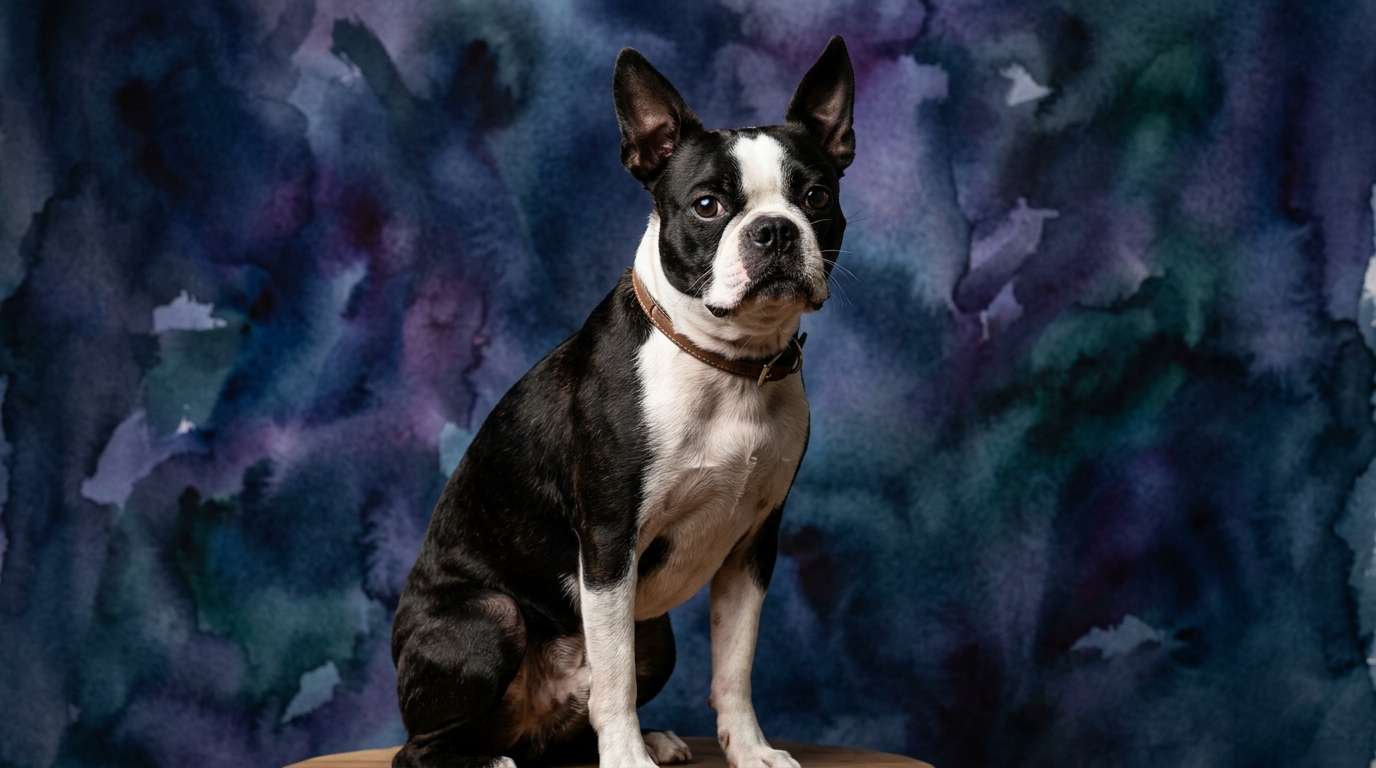
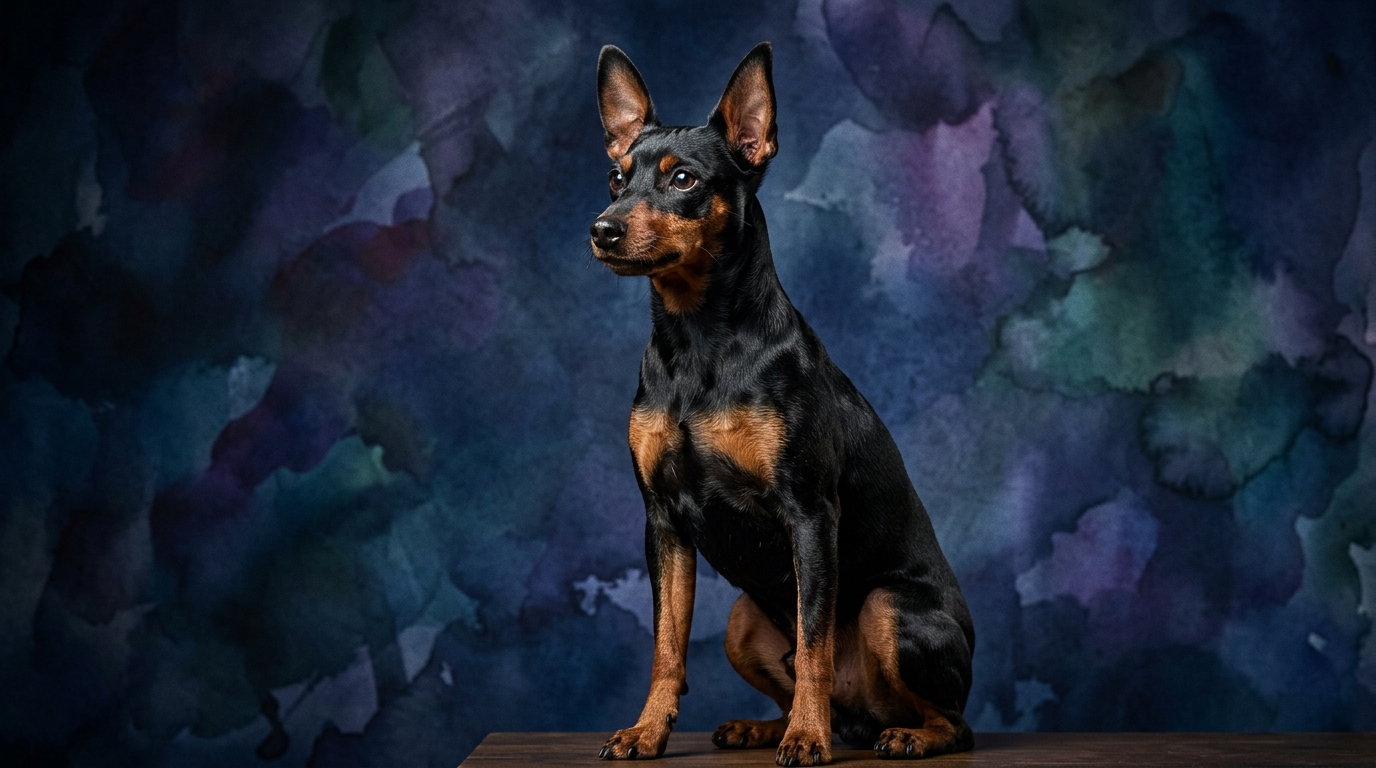
Side-by-Side IQ Profile: Boston Terrier vs. Miniature Pinscher
The Cosmic Pet Pet IQ Lab's assessment reveals intriguing cognitive differences between the Boston Terrier and Miniature Pinscher. Both breeds share a Problem Solving capacity of 3/5, signifying a moderate ability to navigate challenges through observation and learned behaviors, and a Training Speed of 3/5, indicating an average pace for acquiring new commands with consistent reinforcement. However, their social and instinctive profiles diverge.
The Boston Terrier excels in Social Intelligence (4/5), displaying a superior aptitude for understanding human emotions and cues, often forming deep, empathetic bonds. The Miniature Pinscher, while socially adept (3/5), expresses affection and understanding with more independence. In Instinctive Drive, the Boston Terrier scores a lower 2/5, meaning subdued urges for chasing or guarding, leading to more human-focused attention. The Miniature Pinscher, with a 3/5, exhibits a more pronounced drive, including vigilance and a strong prey drive, making them highly alert. Both breeds possess an average Memory (3/5) for retaining routines and experiences.
Where the Boston Terrier Wins Cognitively
Boston Terriers demonstrate a distinct cognitive edge in social intelligence (4/5 compared to the Min Pin's 3/5). Their capacity for reading human emotions and subtle cues is particularly refined, leading to an intuitive understanding of family dynamics. This means a Boston Terrier is more likely to perceive a shift in your mood or respond to an unspoken need for comfort, adapting their behavior to maintain a harmonious environment. Their deep empathetic connection makes them exceptionally attuned companions.
Another cognitive advantage for the Boston Terrier lies in its lower instinctive drive (2/5 versus the Min Pin's 3/5). This isn't a lack of drive, but rather a reduced compulsion for strong predatory or guarding behaviors, which can translate into a more focused cognitive presence in domestic settings. With fewer internal distractions from environmental triggers like squirrels or perceived threats, Boston Terriers often channel their attention more consistently towards human interaction, making them less reactive and generally calmer in varied social situations.
Where the Miniature Pinscher Wins Cognitively
The Miniature Pinscher's elevated instinctive drive (3/5 compared to the Boston Terrier's 2/5) presents a unique cognitive strength, especially for tasks requiring vigilance and independent initiative. Their inherent drive to observe and react, rooted in their history as ratters, means they possess a heightened awareness of their surroundings. This translates into a quicker detection of novel sounds or movements, making them naturally alert watchdogs. Their cognitive processing is actively engaged in environmental scanning and proactive response.
While both breeds share a 3/5 rating for problem-solving, the Miniature Pinscher often approaches challenges with a tenacious, self-directed cognitive style. Their independence fuels a persistent exploration of solutions, even if it involves creatively bending rules or finding unconventional pathways to a desired outcome. This isn't just about figuring things out; it's about a driven, autonomous effort to overcome obstacles, often demonstrating ingenuity without immediate human prompting, showcasing a robust inner motivation for achievement.
Training Aptitude: Which is Easier to Train and Why
While both breeds are rated 3/5 for training speed, the Boston Terrier generally offers an easier training experience for the average pet owner. Their superior social intelligence (4/5) and lower instinctive drive (2/5) mean they are often more motivated by human praise and connection, eager to please their family. This intrinsic desire to cooperate, coupled with fewer internal distractions, allows for more focused learning sessions and a quicker adoption of new commands when positive reinforcement methods are consistently applied.
In contrast, the Miniature Pinscher, despite the same training speed rating, can present a more challenging training journey due to its pronounced instinctive drive (3/5) and independent nature. Their strong prey drive and vigilance mean they can be easily distracted by environmental stimuli, requiring more engaging and consistent methods to maintain focus. Training a Min Pin often demands greater patience, creative motivation, and firm boundaries to channel their willfulness and energy effectively, ensuring commands are not only learned but reliably executed.
Matching Canine Cognition to Owner Lifestyles
For active owners who relish structured engagement and varied environments, the Miniature Pinscher frequently proves to be a more compatible companion. Their elevated instinctive drive and vigilant nature mean they thrive on consistent mental and physical stimulation, excelling in activities like agility, obedience, or scent work that tap into their natural inclinations. Owners prepared to channel their Min Pin's independent problem-solving and tenacious energy into interactive training and regular, stimulating outings will find a spirited and responsive partner eager for challenges.
Conversely, relaxed owners seeking an intuitively comforting companion that integrates smoothly into a calmer household might find the Boston Terrier a more suitable match. Their superior social intelligence allows them to adapt readily to a family's rhythm, content with moderate exercise and ample opportunities for close physical contact. While they enjoy play, their lower instinctive drive means they are generally less demanding of constant high-intensity activity, making them wonderful partners for those who prioritize quiet companionship, emotional responsiveness, and a harmonious home life.
The Verdict
Choose the Boston Terrier if you prioritize an empathetic, socially attuned companion who thrives on close human connection and integrates smoothly into a calmer household rhythm with moderate exercise needs.
Opt for the Miniature Pinscher if you are an active owner prepared to channel their inherent drive and independent spirit into engaging activities, appreciating a vigilant and tenacious companion.
🧠 Find Your Pet's IQ Score
Our Pet IQ Lab assessment covers 25+ tests across 5 cognitive dimensions — personalized to your breed.
Take the Full IQ Test →Frequently Asked Questions
Are Boston Terriers good at learning tricks?
Yes, Boston Terriers generally enjoy learning tricks due to their social intelligence and desire to engage with their humans. Their average training speed means they pick up new commands effectively with consistent, positive reinforcement, often delighting in showing off their new skills.
Do Miniature Pinschers have a strong prey drive?
Miniature Pinschers possess a noticeable instinctive drive, which includes a strong prey drive. This stems from their history as ratters and means they may be inclined to chase small, fast-moving objects, requiring careful management in environments with small pets or wildlife.
Which breed is more prone to separation anxiety?
While individual temperament varies, Boston Terriers, with their higher social intelligence and strong bond-forming capacity, might be slightly more prone to exhibiting signs of separation distress if not properly accustomed to alone time. Miniature Pinschers, being more independent, can also experience it, but their self-reliant nature might make them somewhat less intensely affected in certain cases.