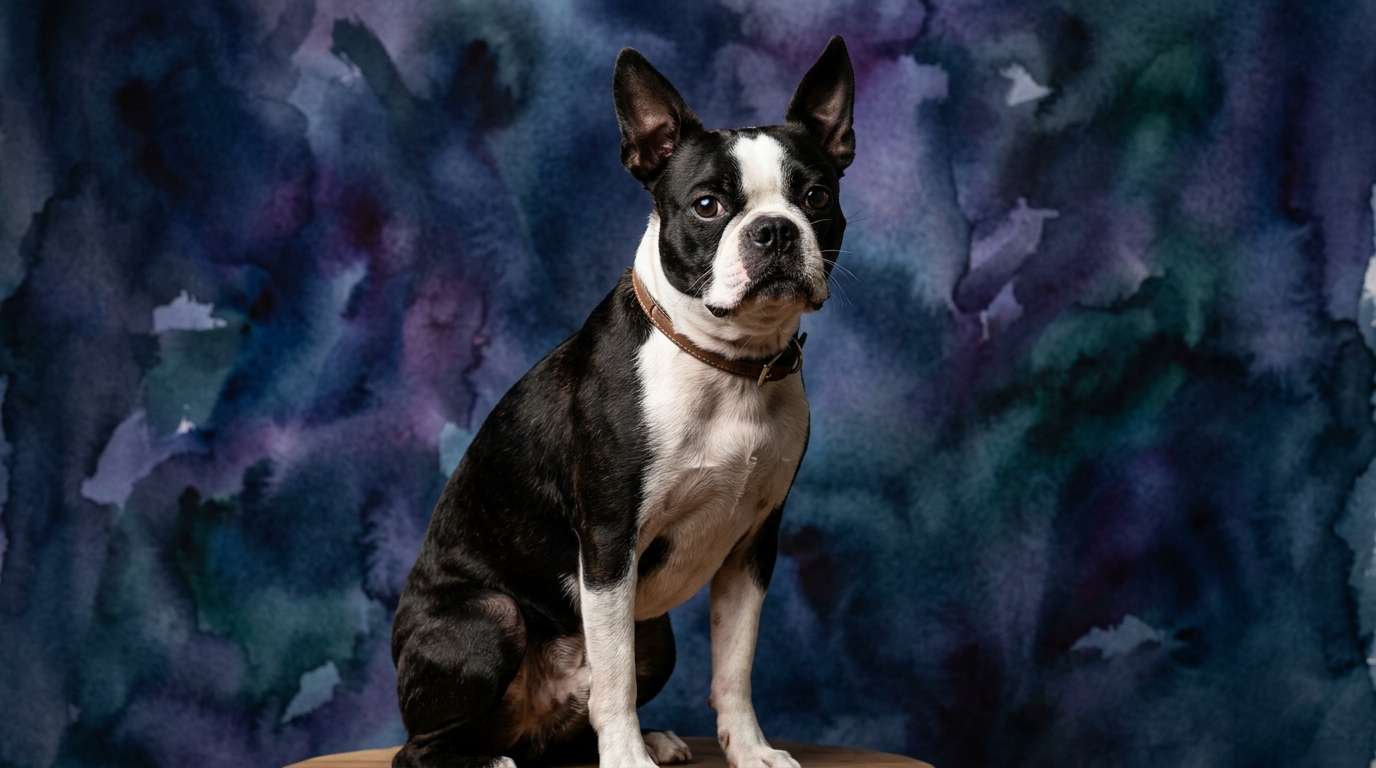
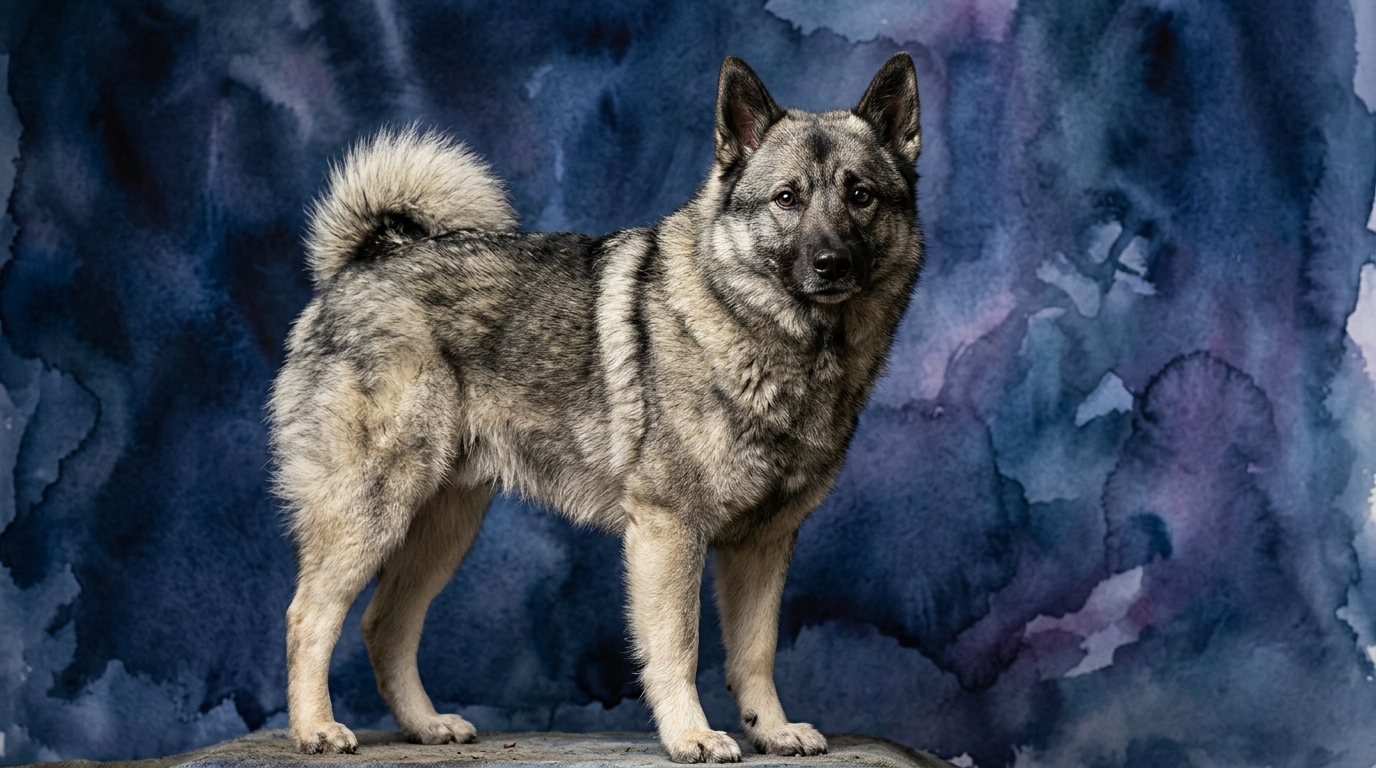
Side-by-Side IQ Profile: Boston Terrier vs. Norwegian Elkhound
The Cosmic Pet Pet IQ Lab employs five key dimensions to evaluate canine intelligence, offering a nuanced perspective beyond simple obedience. Let's explore how the Boston Terrier and Norwegian Elkhound measure up in each.
Problem Solving:
Boston Terrier (3/5): This breed navigates common challenges like retrieving toys from tricky spots or solving simple treat puzzles with moderate success. They often seek human guidance for more complex problems, showing a capacity for independent strategy that leans towards familiar contexts.
Norwegian Elkhound (4/5): The Elkhound exhibits a stronger aptitude for independent problem-solving, a trait vital for their hunting past. They can devise strategies to overcome obstacles or figure out how to access desired objects, showcasing resourceful, on-the-spot thinking in varied environments.
Training Speed:
Boston Terrier (3/5): Boston Terriers grasp new commands and routines at a moderate pace, typically requiring consistent repetitions. Their social nature often aids training, but playful distractions necessitate steady, engaging methods to maintain focus.
Norwegian Elkhound (4/5): This breed demonstrates a quicker uptake of new commands, often achieving proficiency with fewer repetitions. Their working background makes them efficient learners, though their independent streak demands engaging and consistent training to channel their focus.
Social Intelligence:
Boston Terrier (4/5): Boston Terriers excel in interpreting human social cues, making them highly attuned and empathetic companions. They adapt readily to family dynamics and human moods, forming strong, intuitive bonds that make them exceptional household members.
Norwegian Elkhound (3/5): The Elkhound possesses solid social intelligence, understanding their family role and forming deep connections, but is generally more independent. Their self-sufficient hunting past means they bond deeply yet often retain a degree of self-possession, less overtly people-pleasing than the Boston Terrier.
Instinctive Drive:
Boston Terrier (2/5): This breed exhibits a relatively low instinctive drive, with minimal predatory, herding, or guarding urges. This contributes significantly to their adaptability as house pets, requiring less intense outlet for primal behaviors compared to many other breeds.
Norwegian Elkhound (3/5): The Norwegian Elkhound displays a moderate instinctive drive, stemming directly from its moose-hunting heritage. This includes a notable prey drive, strong scenting abilities, and a propensity for vocalization (baying), requiring appropriate outlets and management in a domestic setting.
Memory:
Boston Terrier (3/5): Boston Terriers hold a moderate memory for routines, learned commands, and familiar people or places. They recall past experiences, aiding daily life and reinforcing training, though complex or infrequent tasks might need refreshing.
Norwegian Elkhound (4/5): The Elkhound shows strong memory, retaining complex information, intricate routes, and learned skills over long periods. This superior recall, crucial for a hunting dog remembering vast territories and scent trails, means they remember training and experiences with remarkable clarity.
Where the Boston Terrier Wins Cognitively
The Boston Terrier's standout cognitive strength lies in its exceptional social intelligence (4/5). This breed truly shines in its ability to interpret human cues, understand family dynamics, and adapt to varying social situations with remarkable ease. They are masters of harmonious cohabitation, often anticipating their owner's needs or moods, which fosters a deep, intuitive connection. This profound social understanding makes them highly empathetic companions, excelling in roles where sensitivity to human emotion is paramount, far surpassing the Elkhound's more independent social approach.
Where the Norwegian Elkhound Wins Cognitively
The Norwegian Elkhound demonstrates superior cognitive performance across several key dimensions, particularly in problem-solving (4/5), training speed (4/5), and memory (4/5). Their capacity for independent thought and strategic action in novel situations is a direct result of their long history as self-reliant hunters. This means they can often figure out complex environmental puzzles or devise their own solutions without constant human intervention. Coupled with a quicker ability to grasp and recall new information, the Elkhound possesses a formidable intellectual toolkit for navigating and mastering their environment more autonomously than the Boston Terrier.
Which is Easier to Train, and Why?
The Norwegian Elkhound generally presents as easier to train in terms of raw learning speed and retention, scoring 4/5 in both training speed and memory. Their working heritage means they are often eager to engage in structured learning and can quickly connect actions to consequences, retaining commands with fewer repetitions. However, their moderate instinctive drive (3/5) and independent problem-solving (4/5) mean that while they learn fast, they also require a trainer who understands how to channel their self-reliant nature. They might question commands or seek their own solutions if not properly motivated, contrasting with the Boston Terrier's more direct motivation for social approval.
The Boston Terrier, with a 3/5 in training speed and problem-solving, might take a bit longer to master new commands. However, their superior social intelligence (4/5) makes them highly motivated by praise and interaction, often striving to please their human companions. This social drive can make them very compliant and eager participants in training, even if the learning curve is slightly gentler. Their lower instinctive drive (2/5) also means fewer competing urges like strong prey drive or territorial instincts to manage during training, making them less prone to distraction by environmental stimuli compared to the Elkhound's keen hunting senses. Therefore, while the Elkhound processes information faster, the Boston Terrier's social eagerness and lower internal distractions can make the *process* of training feel more straightforward for an owner seeking a highly responsive, people-focused learner.
Which Suits Active Owners vs. Relaxed Owners?
The Norwegian Elkhound, with its moderate instinctive drive (3/5) for hunting and strong problem-solving skills (4/5), thrives with active owners who can provide consistent mental and physical stimulation. Their heritage as a resilient big-game hunter means they require regular, vigorous exercise, such as long hikes, runs, or engaging scent work, to prevent boredom and channel their natural drives. Owners who enjoy outdoor adventures, participate in dog sports like agility or tracking, or are committed to ongoing training challenges will find the Elkhound a fulfilling and capable partner. Their independent nature also suits owners who appreciate a dog that can make its own decisions within established boundaries.
Conversely, the Boston Terrier, characterized by its lower instinctive drive (2/5) and high social intelligence (4/5), is an excellent match for more relaxed owners or those living in urban environments. While they enjoy walks and playtime, their exercise requirements are moderate, making them content with shorter bursts of activity and ample indoor companionship. Their desire for human interaction and comfort means they are happiest when integrated into daily family life, often preferring to snuggle on the couch rather than embark on a multi-mile trek. Owners who prioritize a devoted, adaptable companion eager for cuddles and social engagement over intense physical exertion will find the Boston Terrier an ideal fit.
The Verdict
Choose the Boston Terrier if you desire a highly socially intelligent, adaptable companion eager for human interaction, well-suited for a more relaxed lifestyle and urban living.
Opt for the Norwegian Elkhound if you're an active owner seeking a resourceful, quick-learning partner for outdoor adventures, dog sports, and engaging in more independent problem-solving tasks.
🧠 Find Your Pet's IQ Score
Our Pet IQ Lab assessment covers 25+ tests across 5 cognitive dimensions — personalized to your breed.
Take the Full IQ Test →Frequently Asked Questions
Do Boston Terriers get bored easily without constant mental stimulation?
While Boston Terriers possess moderate problem-solving skills, their high social intelligence means they primarily seek engagement through human interaction rather than complex independent tasks. They are generally content with regular playtime, consistent routines, and ample companionship, rather than needing constant, novel mental challenges like some working breeds.
Can Norwegian Elkhounds be trained for off-leash activities despite their hunting drive?
Norwegian Elkhounds are capable of learning off-leash commands due to their high training speed and memory. However, their moderate instinctive drive, particularly a strong prey drive, means that reliable off-leash control requires extensive, consistent training in distraction-rich environments and a deep understanding of their individual temperament. In areas with wildlife, caution and secure fencing are always recommended.
How does the memory difference impact daily life for these breeds?
The Elkhound's superior memory allows them to retain complex training, routes, and past experiences with remarkable clarity, which can be advantageous for advanced tasks but also means they remember negative associations strongly. The Boston Terrier's moderate memory is still sufficient for daily routines and basic commands, but they might require more frequent refreshers for less common tasks, making them slightly more forgiving of occasional inconsistencies.