Side-by-Side Cognitive Profiles
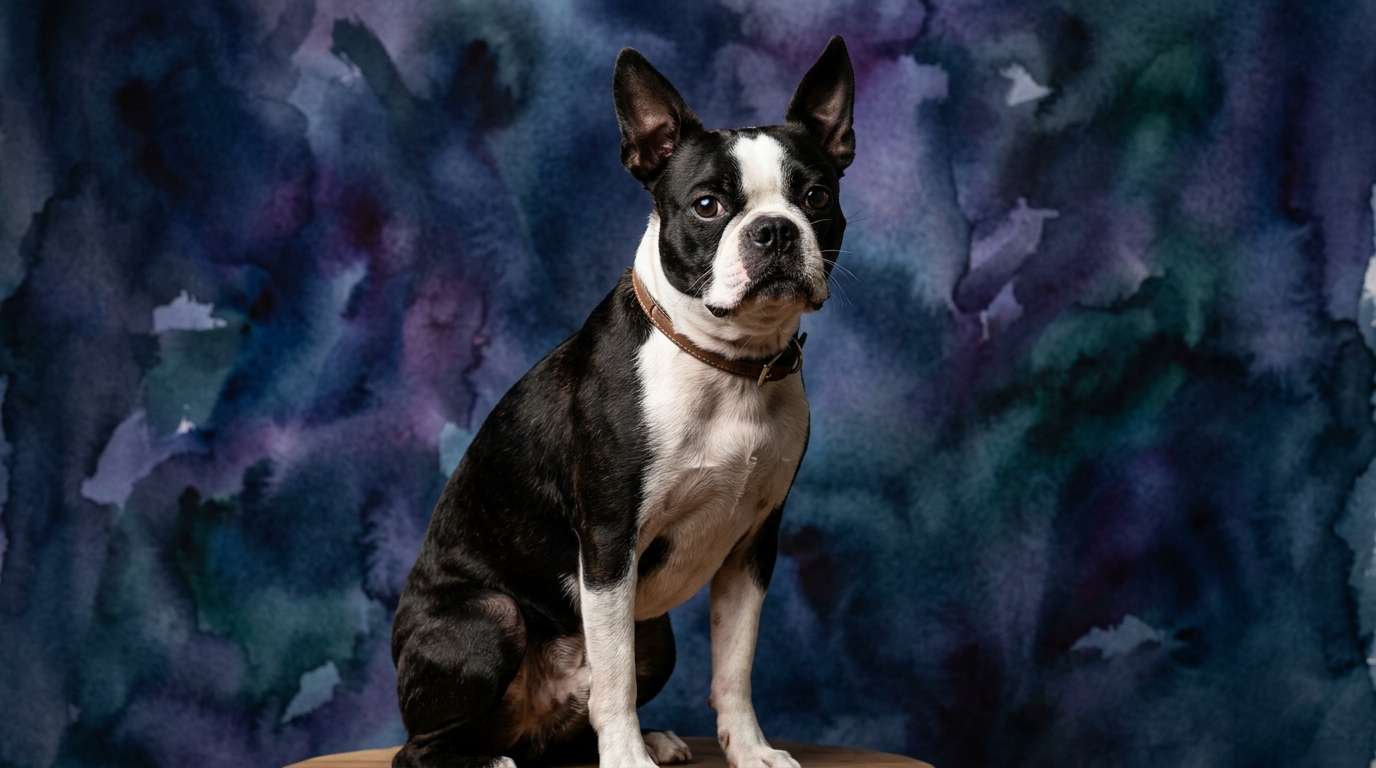
**Boston Terrier**: (Non-Sporting, Coren rank #54) These compact companions possess a distinct cognitive makeup that prioritizes social interaction and adaptability. Their **Problem Solving (3/5)** capacity is solid for moderately complex tasks, especially when a social reward or human attention is involved; their solutions often cleverly engage their human. **Training Speed (3/5)** is dependable, as Boston Terriers learn new commands at a moderate pace, thriving on positive reinforcement and short, engaging sessions, with consistency being key to solidifying behaviors. A standout trait is their **Social Intelligence (4/5)**, as they are highly attuned to human emotions and social cues, excelling at understanding subtle interactions and seeking companionship, adeptly integrating into family dynamics. Their **Instinctive Drive (2/5)** is relatively low, primarily focused on companionship and interactive play rather than strong predatory or guarding instincts, reflecting a domesticated focus. They possess a good **Memory (3/5)** for commands, routines, and social interactions, allowing them to recall learned behaviors and people over time.
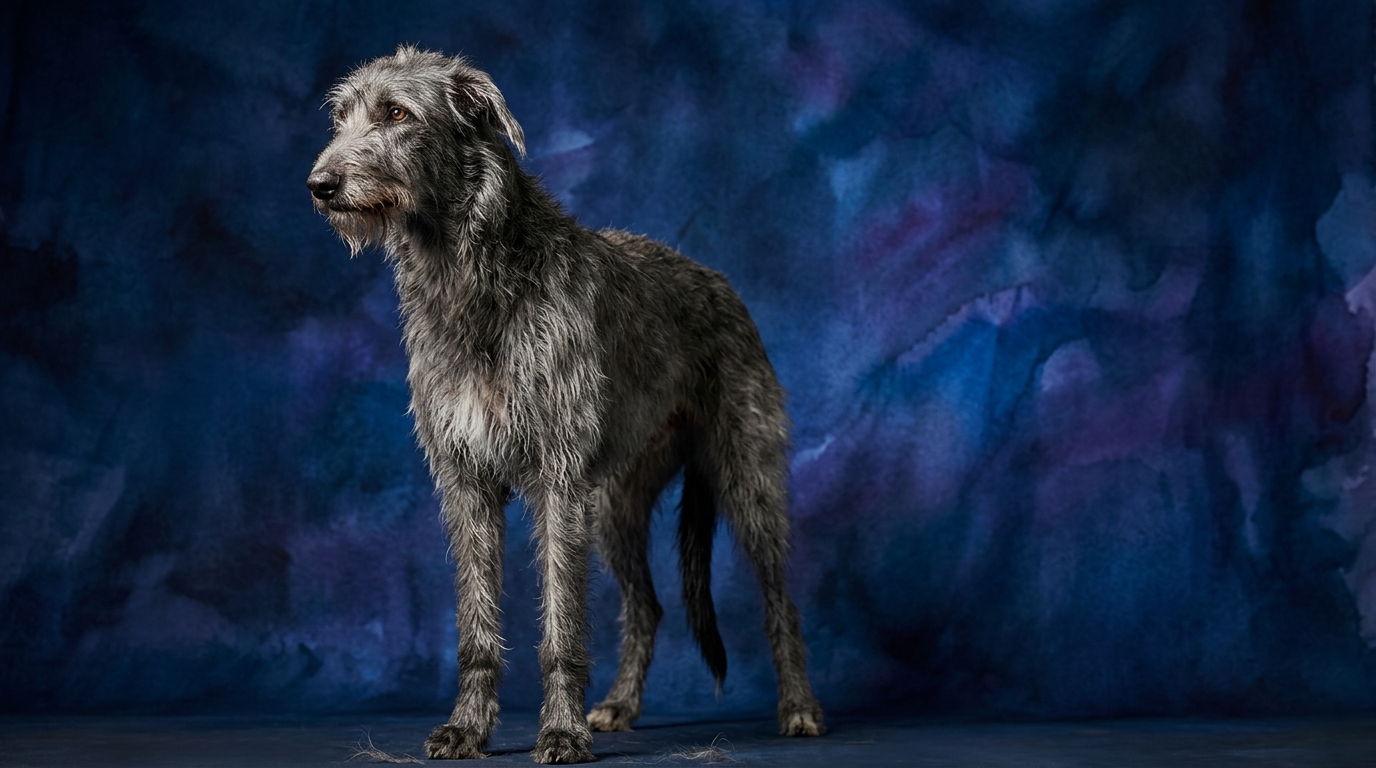
**Scottish Deerhound**: (Hound, Not Coren-ranked) The Scottish Deerhound's cognitive landscape is shaped by its ancestral role as a sighthound, fostering independence and keen environmental awareness. Their **Problem Solving (3/5)** demonstrates a similar capacity for moderate challenges, often employing a more independent approach; solutions might be driven by innate curiosity or a desire for comfort rather than direct human interaction. **Training Speed (3/5)** is moderate, but their hound independence means motivation needs to be compelling; varied, reward-based training works best as repetitive drills might be met with disinterest. While affectionate with their chosen family, their **Social Intelligence (3/5)** leans more towards understanding pack dynamics and individual relationships rather than the broad, eager-to-please social attunement of a companion breed; they are sensitive but can be reserved. They possess a distinct sighthound **Instinctive Drive (3/5)**, making them keenly aware of movement and distant objects; this drive is a significant part of their cognitive landscape, influencing their attention and focus outdoors. Deerhounds exhibit a good **Memory (3/5)** for places, people, and established routines, remembering learned behaviors and environmental layouts effectively.
Where the Boston Terrier Excels Cognitively
The Boston Terrier shines brightest in social intelligence, scoring a 4/5 compared to the Deerhound's 3/5. This isn't merely about being friendly; it reflects a sophisticated ability to interpret human body language, vocal inflections, and emotional states, allowing them to adapt their behavior to fit the social context. A Boston Terrier is often quicker to pick up on a subtle shift in its owner's mood, perhaps offering a comforting nudge or initiating a playful distraction. This social acumen makes them particularly skilled at integrating seamlessly into diverse family environments and understanding the unspoken rules of a household, often anticipating needs or reacting appropriately to social cues without explicit commands. Their cognitive strength lies in processing complex social information and using it to foster deep, reciprocal bonds.
Where the Scottish Deerhound Excels Cognitively
The Scottish Deerhound's cognitive edge manifests in its instinctive drive, rated 3/5 against the Boston Terrier's 2/5, and how this shapes their perception and interaction with the environment. While the Boston Terrier's drives are primarily social, the Deerhound's ancestral purpose as a coursing hound means its brain is wired to process visual stimuli and react with remarkable speed and focus to distant movement. This isn't just a physical attribute; it's a cognitive strength in rapid pattern recognition and decision-making when a target is spotted. Their problem-solving, though rated similarly at 3/5, often involves independent assessment of a situation, such as navigating varied terrain or finding the most efficient path during a chase simulation, without constant human prompting. This independent thought, driven by instinct, allows them to excel in scenarios requiring self-reliance and acute environmental awareness over direct human collaboration.
Training Dynamics: Which is Easier?
Assessing ease of training involves more than just a training speed score, as both breeds rate 3/5. The Boston Terrier, with its superior social intelligence (4/5) and lower instinctive drive (2/5), generally presents a more straightforward training experience for the average owner. Their eagerness to please and keen attention to human social cues mean they are often highly motivated by praise, attention, and interaction. They tend to seek human collaboration, making them responsive to positive reinforcement and less prone to independent pursuits that might distract from training. Real behavioral differences include a Boston's tendency to maintain eye contact and readily engage in back-and-forth interactions during training sessions, viewing it as a shared activity.
In contrast, the Scottish Deerhound, despite a similar training speed score, can be perceived as more challenging due to its stronger instinctive drive (3/5) and more independent social intelligence (3/5). While intelligent, their sighthound nature means their attention can be profoundly diverted by visual stimuli, making outdoor training or recall particularly demanding. Their independence means they might question the utility of a command if it doesn't align with their immediate interest, requiring trainers to be creative and highly motivating. A Deerhound might learn a command quickly but choose not to execute it if a squirrel darts across the yard, demonstrating a cognitive prioritization of instinct over learned obedience in certain contexts. Therefore, while both learn, the Boston Terrier's inherent social wiring often translates to a more cooperative and less distraction-prone training partner.
Lifestyle Fit: Active vs. Relaxed Owners
The Boston Terrier, with its moderate instinctive drive (2/5) and strong social intelligence (4/5), is often an excellent fit for owners seeking a relaxed yet engaging companion. While they enjoy play and regular walks, their exercise needs are generally manageable, and their primary desire is to be involved in family activities, whether lounging on the sofa or accompanying short errands. They thrive on companionship and mental stimulation through interaction, making them suitable for individuals or families who are home frequently and enjoy a dog that is an integral, present part of daily life without requiring extensive athletic outlets. Their cognitive makeup leans towards social engagement over intense physical exertion, making them adaptable to various relaxed home environments.
The Scottish Deerhound, with its higher instinctive drive (3/5) and historical background as a coursing hound, aligns better with active owners who appreciate and can accommodate significant bursts of exercise. Despite their calm demeanor indoors, these dogs possess a profound need to run freely and stretch their long legs in a safe, expansive area. Their cognitive processing of the environment is deeply tied to movement and space, meaning they require opportunities to engage their sighthound instincts, even if it's just a vigorous sprint in a fenced field. Owners who enjoy long, brisk walks, have access to secure open spaces, or participate in activities like lure coursing would find the Deerhound's needs met. Their independent nature also means they can be content to relax once their physical and mental stimulation needs are satisfied, but those needs are distinctly more demanding than a Boston Terrier's.
The Verdict
Choose the Boston Terrier if you prioritize a highly socially attuned companion that thrives on close human interaction, adapts readily to varied home life, and offers a more straightforward, cooperative training experience.
Opt for the Scottish Deerhound if you are an active owner with access to secure open spaces, appreciate a dog with independent instincts and a calm indoor presence, and can accommodate their distinct need for vigorous, free-running exercise.
🧠 Find Your Pet's IQ Score
Our Pet IQ Lab assessment covers 25+ tests across 5 cognitive dimensions — personalized to your breed.
Take the Full IQ Test →Frequently Asked Questions
Is a Boston Terrier difficult to train?
Not typically. Boston Terriers have a moderate training speed (3/5) and high social intelligence (4/5), making them eager to please and responsive to positive reinforcement. Their main motivation is often human companionship and attention, which aids in cooperative learning.
Do Scottish Deerhounds require a lot of mental stimulation?
Scottish Deerhounds benefit from mental stimulation that taps into their sighthound instincts, such as observing their environment or puzzle toys. While not always needing complex problem-solving (3/5), opportunities for independent exploration and engaging their keen visual perception are valuable for their cognitive well-being.
How do their social needs compare?
Boston Terriers (4/5 social intelligence) have strong social needs, thriving on constant human interaction and being central to family life. Scottish Deerhounds (3/5 social intelligence) are affectionate with their family but can be more reserved with strangers and appreciate a degree of independence, though they still bond deeply.