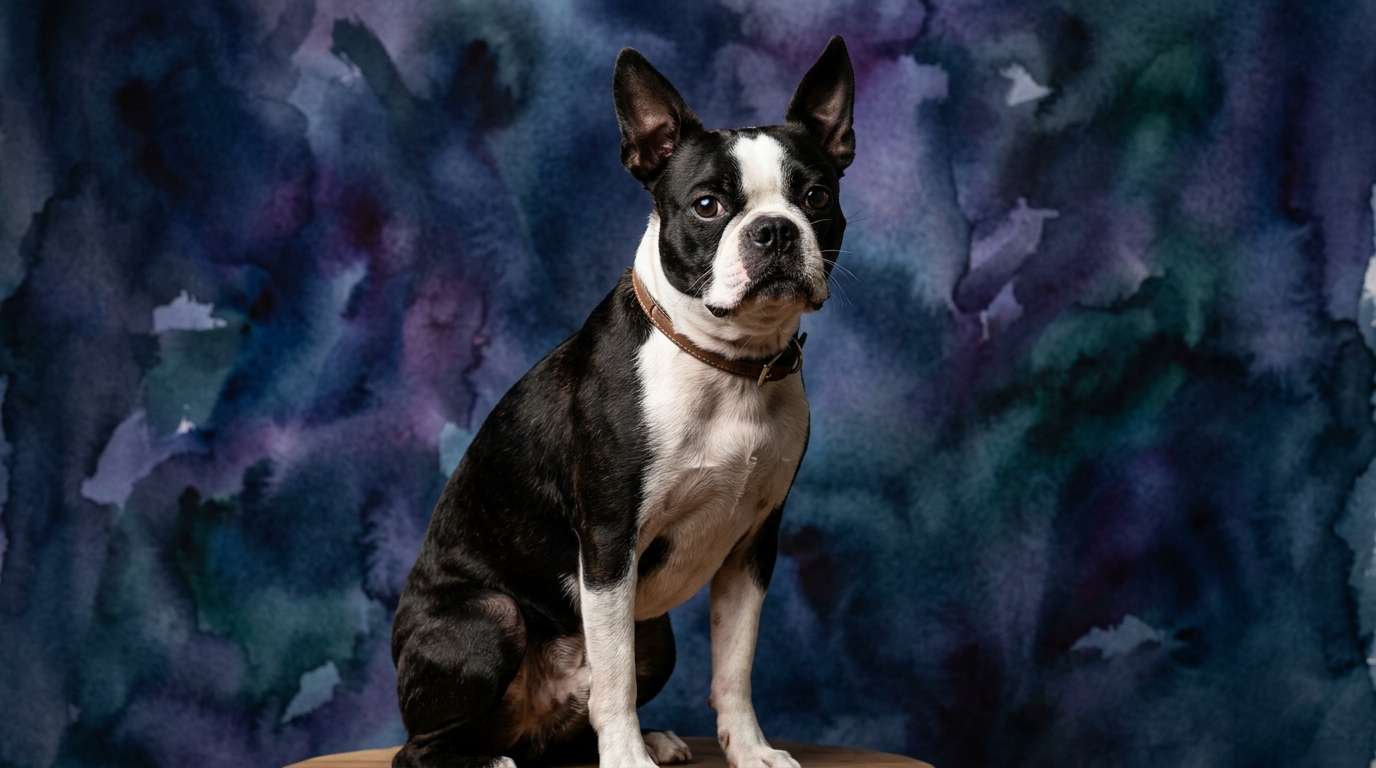
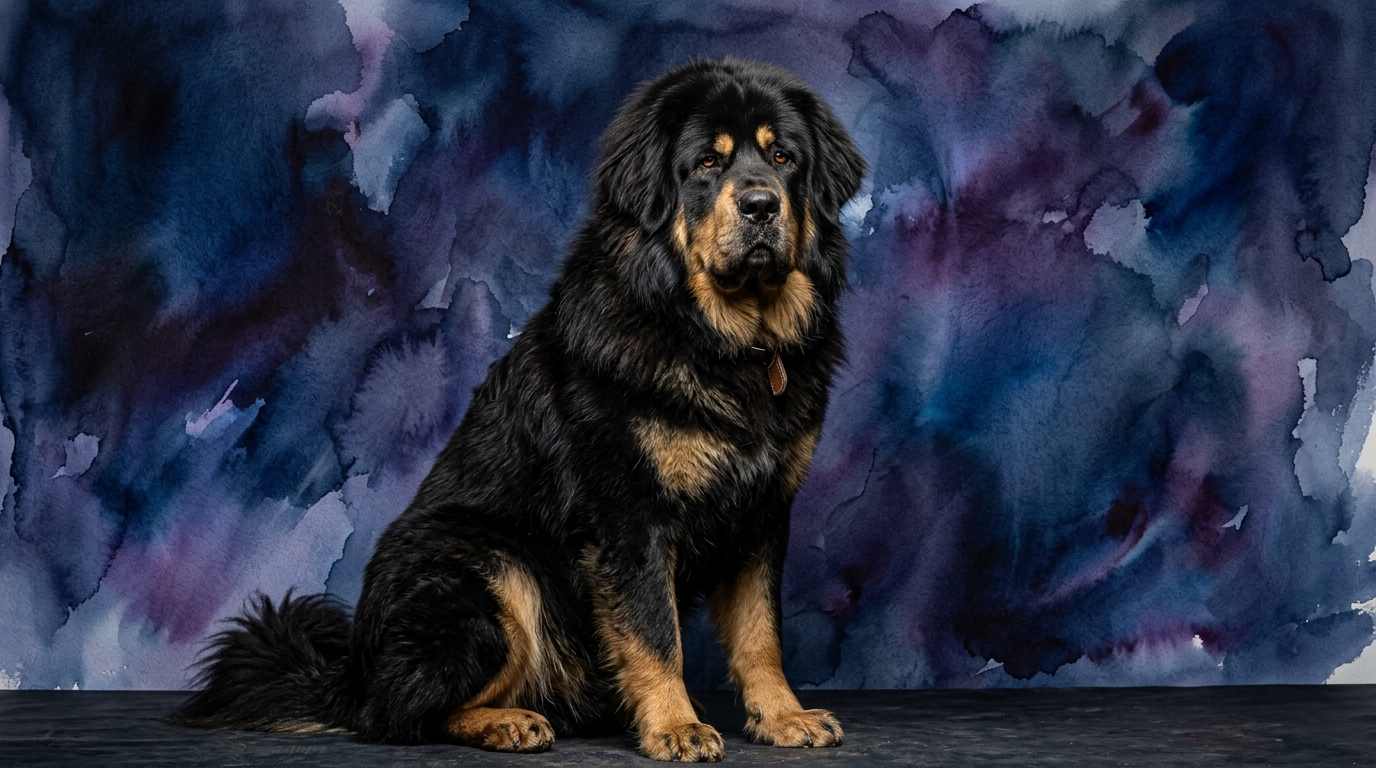
Side-by-Side IQ Profile: Boston Terrier vs. Tibetan Mastiff
The Boston Terrier, a member of the Non-Sporting Group and ranked #54 by Coren for obedience and working intelligence, presents a balanced cognitive profile. Our Pet IQ Lab data shows a Problem Solving score of 3/5, indicating a moderate ability to navigate novel situations and figure out solutions independently. Training Speed also registers at 3/5, suggesting they grasp new commands at an average pace, responsive but not always instant. Where the Boston Terrier truly shines is in Social Intelligence, earning a 4/5; this reflects their strong desire for human connection and understanding of social cues, making them highly attuned companions. Their Instinctive Drive is a modest 2/5, meaning less inclination towards independent hunting, guarding, or herding behaviors. Memory is rated at 3/5, providing them with a solid capacity to retain learned information and experiences.
In stark contrast, the Tibetan Mastiff, a Working Group breed, remains unranked by Coren, a testament to their often independent and less biddable nature, which doesn't always align with standard obedience metrics. Despite this, our IQ Lab scores reveal a comparable Problem Solving ability to the Boston Terrier, also at 3/5, showing they are capable thinkers in their own right, particularly when it comes to their primary function. Training Speed matches at 3/5, though this often requires a different approach due to their independent streak. Social Intelligence for the Tibetan Mastiff is 3/5; while they form deep bonds with their families, they are typically more reserved with strangers and less overtly eager to please than many companion breeds. Their Instinctive Drive is a robust 3/5, reflecting their powerful genetic predisposition for guarding and territorial vigilance. Memory, like the Boston Terrier, stands at 3/5, allowing them to recall past events and learned boundaries effectively.
Where the Boston Terrier Wins Cognitively
The Boston Terrier’s cognitive strength lies prominently in its superior Social Intelligence, scoring a 4/5 compared to the Tibetan Mastiff's 3/5. This translates into a dog that is exceptionally attuned to human emotions and social dynamics within a household. They are often more eager to engage in cooperative tasks, readily pick up on subtle cues from their owners, and tend to seek out interaction and approval. This heightened social awareness contributes to their adaptability in various home environments and their reputation as charming companions. Their lower Instinctive Drive (2/5) means they are less preoccupied with independent guarding or territorial patrolling, allowing them to focus more on human-centric interactions and training, without constant internal distractions from ancient protective urges. This makes them inherently more flexible as household members, less prone to making independent decisions based on their own perceptions of threats or territory.
Where the Tibetan Mastiff Wins Cognitively
The Tibetan Mastiff's cognitive advantages are rooted in its robust Instinctive Drive, which scores 3/5 compared to the Boston Terrier's 2/5. This higher drive is not about aggression, but rather a powerful, intrinsic motivation for vigilance and protection. This breed possesses an innate understanding of boundaries and territory, and a sophisticated ability to assess potential threats independently. Their problem-solving skills (3/5) are frequently applied to their guardian role, discerning anomalies in their environment and reacting appropriately without constant human direction. While their social intelligence is lower with strangers, their memory (3/5) allows them to retain a detailed 'mental map' of their environment and the individuals within it, remembering who belongs and who does not, which is critical for their historical purpose. This combination of drive, problem-solving, and memory makes them exceptionally self-reliant and effective guardians, capable of complex decision-making in their domain.
Which is Easier to Train and Why
When considering ease of training, the Boston Terrier generally presents a more straightforward experience. While both breeds share a 3/5 Training Speed, the Boston Terrier's higher Social Intelligence (4/5) and lower Instinctive Drive (2/5) make a significant difference. Boston Terriers are typically more motivated by human interaction and praise, eager to please their owners, and less inclined to follow their own agenda. They are less likely to challenge commands and more receptive to consistent positive reinforcement. This makes them amenable to a wider range of training techniques and more forgiving of novice trainers, as their primary goal is often to be a cooperative part of the family.
The Tibetan Mastiff, despite an equal Training Speed score, poses a greater challenge due to its powerful Instinctive Drive (3/5) and slightly lower Social Intelligence (3/5). These dogs possess a strong independent streak, a legacy of their solitary guardian role. They aren't necessarily stubborn, but rather evaluate commands and situations through the lens of their own judgment and protective instincts. Training a Tibetan Mastiff requires immense patience, consistency, and a deep understanding of canine psychology, particularly regarding their guardian nature. They respond best to fair, respectful leadership and motivation that appeals to their desire for security and purpose, rather than blind obedience. Their training often focuses on channeling their natural protective behaviors rather than suppressing them, requiring an owner to be a skilled and consistent leader to ensure cooperation.
Which Suits Active Owners vs. Relaxed Owners
For the relaxed owner seeking a companion that fits seamlessly into a calm household routine, the Boston Terrier is often the more suitable choice. Their moderate energy levels, adaptability to apartment living, and strong social intelligence mean they thrive on companionship and relatively modest exercise. They are generally content with daily walks and indoor play, making them excellent companions for those who prefer a less demanding physical routine but still desire an engaging and affectionate canine presence. Their lower instinctive drives mean fewer behavioral challenges related to independent action or territoriality.
The Tibetan Mastiff, while not hyperactive in the traditional sense, demands a different kind of 'active' owner. This refers to an owner who is actively engaged in comprehensive socialization, consistent training, and proactive management of a powerful, independently thinking guardian breed. Their strong instinctive drive and territorial nature require an owner who understands their needs for secure boundaries, ample space, and a well-defined role within the family. This is not a breed for a passive owner; they require someone prepared to invest significant time and effort into their upbringing and ongoing management to ensure they are well-adjusted and safe members of society. They suit owners who appreciate and can responsibly manage a dog with a powerful, ancient purpose.
The Verdict
Choose the Boston Terrier if you prioritize a highly sociable, adaptable companion with moderate exercise needs and a straightforward training experience, ideal for a relaxed family environment.
Opt for the Tibetan Mastiff if you are an experienced owner prepared for a significant commitment to training, socialization, and management of a powerful, independent guardian with a deep protective instinct.
🧠 Find Your Pet's IQ Score
Our Pet IQ Lab assessment covers 25+ tests across 5 cognitive dimensions — personalized to your breed.
Take the Full IQ Test →Frequently Asked Questions
Is a Boston Terrier good for first-time dog owners?
Yes, Boston Terriers are often considered suitable for first-time dog owners due to their adaptable nature, moderate exercise requirements, and eagerness to please, making their training and integration into a family generally less challenging.
Do Tibetan Mastiffs require a lot of exercise?
Tibetan Mastiffs do not typically require intense, high-impact exercise but do need regular, moderate activity like daily walks and secure outdoor space to patrol. Their mental stimulation often comes from their guardian duties rather than constant physical exertion.
Which breed is better with children?
The Boston Terrier, with its higher social intelligence and generally playful, gentle demeanor, is often considered a better fit for families with children. Tibetan Mastiffs can be devoted to their family children but require careful socialization and supervision due to their size and protective instincts.