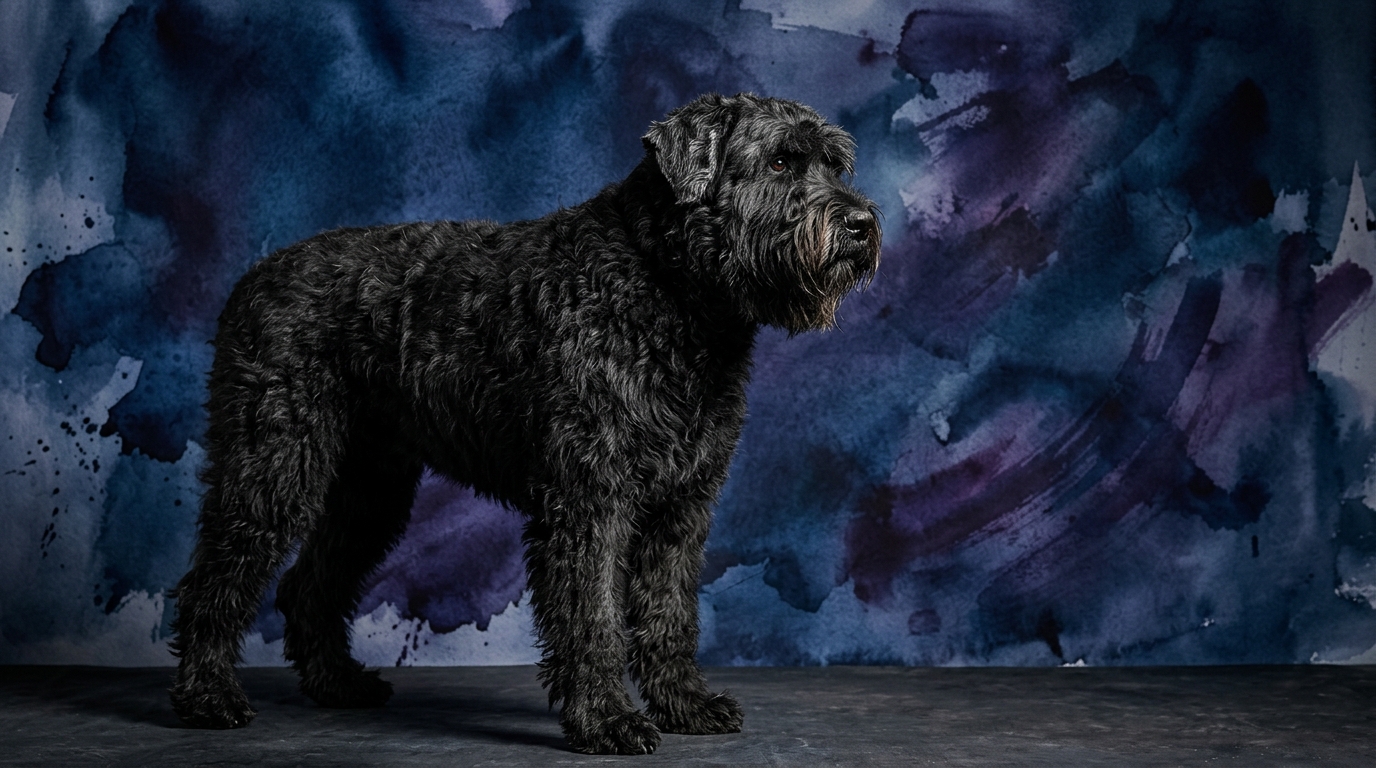
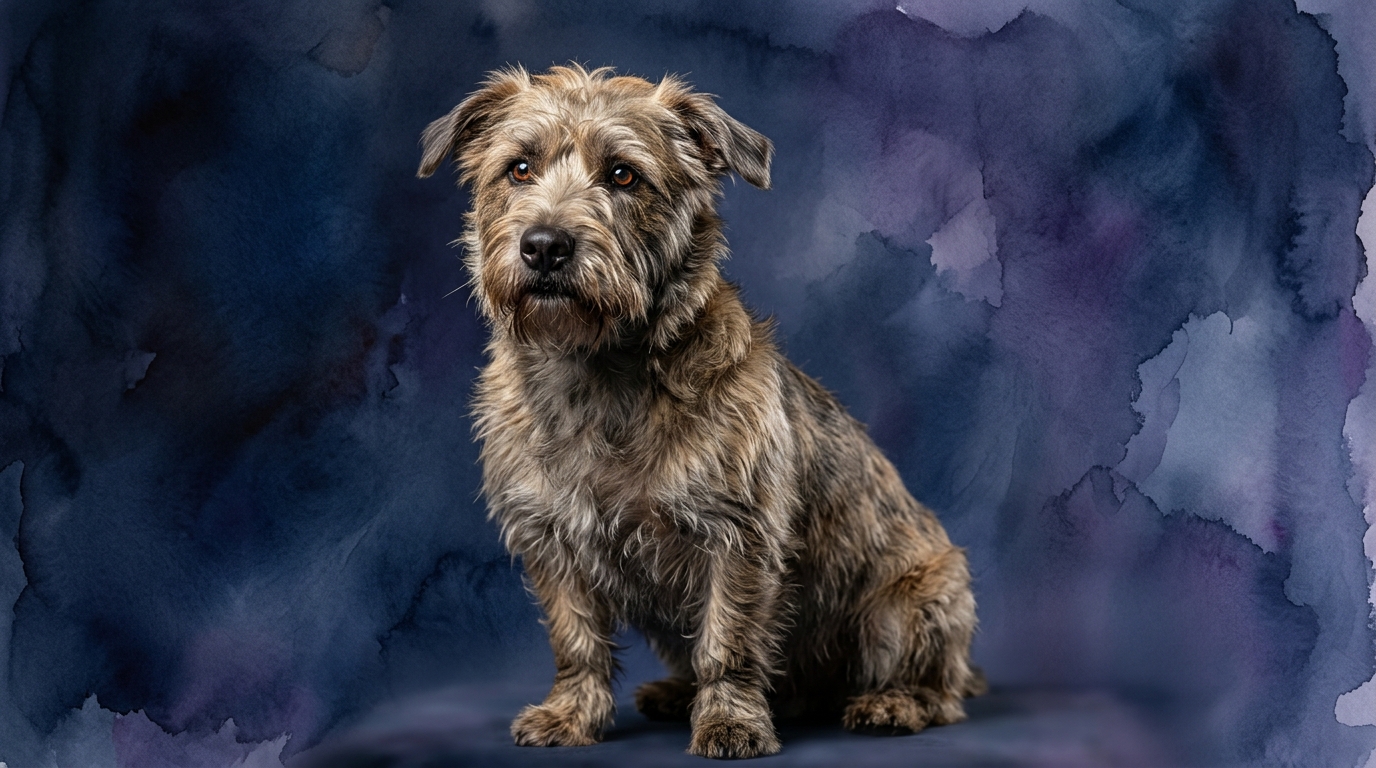
Side-by-Side Cognitive Profiles: Bouvier vs. Glen
The Bouvier des Flandres, a robust farm dog from Flanders, developed an intelligence for managing livestock and property. Their problem-solving (3/5) manifests as a strategic aptitude for anticipating herd movements, navigating farm environments, and making independent decisions about animal control. This dynamic assessment of fluid, real-time situations is their cognitive hallmark. Training speed (3/5) reflects an ability to learn complex command sequences and adapt to varied tasks, though their independent nature necessitates a clear, consistent leader. Social intelligence (3/5) is seen in their discerning awareness of their family unit, understanding subtle human cues, and assessing strangers with a protective, reserved demeanor. They excel at reading group dynamics. Their instinctive drive (3/5) is strongly rooted in herding and guarding, exhibiting a powerful desire to gather, protect, and patrol, aimed at organizing and maintaining order. Finally, their memory (3/5) retains intricate routines, specific commands, and past interactions, contributing to their reliability as working partners and family guardians.
In contrast, the Glen of Imaal Terrier, from Ireland's rugged glens, developed an intelligence specialized for tenacious, independent work against vermin. Their problem-solving (3/5) shines in scenarios demanding persistence and ingenuity within confined spaces, like navigating tunnels and locating quarry underground without direct human guidance. This is a focused, goal-oriented intelligence. Training speed (3/5) indicates they learn quickly when motivated by tasks aligning with their drives, but their inherent terrier stubbornness can slow rote obedience if not approached creatively. Social intelligence (3/5) is characterized by a keen awareness of their immediate environment and quarry's intentions. They are discerning with unfamiliar individuals, often reserved, and their dog-to-dog interactions can be assertive. Their instinctive drive (3/5) is profoundly strong in digging and prey pursuit, an unwavering tenacity for independent work. This drive dictates much of their behavior. Their memory (3/5) is excellent for recalling specific scent trails, successful hunt locations, and strategies for tackling persistent prey, making them highly effective in their specialized role.
Where the Bouvier des Flandres Cognitively Excels
The Bouvier des Flandres demonstrates distinct cognitive advantages in specific domains. Their strategic problem-solving for dynamic, multi-subject scenarios is paramount. A Bouvier excels at tasks requiring them to manage and influence the movement of multiple entities simultaneously, utilizing spatial reasoning and predictive capacity. Furthermore, their social intelligence is particularly adept at nuanced judgment within complex social structures, discerning intentions and acting as a calm, watchful presence. Their memory and training aptitude are geared towards retaining and executing multi-step commands in varying environments, allowing for intricate tasks that adapt to changing conditions, a testament to their comprehensive, applied learning.
Where the Glen of Imaal Terrier Cognitively Excels
Conversely, the Glen of Imaal Terrier showcases unique cognitive prowess where the Bouvier's strengths might not apply. Their problem-solving excels in situations demanding intense focus and unyielding persistence in confined, challenging environments. A Glen meticulously works to overcome obstacles or locate hidden items, demonstrating tenacious ingenuity focused on conquering specific, often hidden, challenges. Their instinctive drive and memory are perfectly aligned for independent, goal-oriented tasks, allowing them to operate effectively without constant human direction. This independent decision-making, combined with unwavering focus, allows them to excel in tasks requiring sustained effort and self-reliance, especially when aligned with their deep-seated drives.
Training Dynamics: Bouvier vs. Glen
Determining 'easier' to train depends on the training type and trainer's approach. The Bouvier des Flandres, with their herding background, is generally more amenable to structured obedience and complex command sequences. Accustomed to partnership, they value clear direction and consistency. Their problem-solving (3/5) and training speed (3/5) mean they grasp multi-step tasks when leadership is firm but fair. However, their independent streak requires a trainer who establishes clear expectations and maintains engagement, appealing to their desire for purpose.
The Glen of Imaal Terrier, while capable (3/5 training speed), presents a different dynamic. Their terrier heritage imbues strong independence and tenacious will. They excel when training taps into instinctive drives (3/5), like scent work or digging games. Repetitive obedience might meet disinterest, as their problem-solving (3/5) favors practical, self-directed tasks over arbitrary commands. Effective Glen training requires creativity, patience, and motivation through play and rewards aligning with natural instincts, respecting their innate drive for self-direction.
Thus, for traditional obedience and complex cooperative tasks, the Bouvier might offer a smoother path due to their handler-oriented working history. For owners tailoring training to a dog's inherent drives and independent spirit, the Glen can be equally rewarding, albeit less 'easy' in a conventional sense.
Matching Breeds to Lifestyles: Active vs. Relaxed Owners
The distinction between suiting 'active' versus 'relaxed' owners relates more to the type of engagement each breed requires, rather than just physical exertion. The Bouvier des Flandres thrives with consistent mental stimulation and purposeful exercise. An 'active' owner provides structured walks, regular training, and perhaps canine sports. They need a 'job' or clear role to feel fulfilled; a relaxed owner failing to provide this might find a Bouvier becoming bored or developing undesirable behaviors, as their thoughtful problem-solving (3/5) and instinctive drives (3/5) demand appropriate channels.
The Glen of Imaal Terrier also requires specific owner engagement. While they can be content indoors, their strong instinctive drives (3/5) for digging and prey pursuit necessitate dedicated outlets. A 'relaxed' owner for a Glen must still actively provide structured play, engaging puzzle toys, and secure outdoor spaces for digging. Without these, a Glen might create their own 'work' by digging up gardens or pursuing small animals. They need intense bursts of activity and mental challenges satisfying their terrier spirit. Owners understanding and embracing terrier tenacity, providing appropriate avenues for their drives, will find a devoted companion. An owner expecting a purely passive companion might struggle with the Glen's independent spirit.
The Verdict
Choose a Bouvier des Flandres if you seek a thoughtful, protective companion capable of complex learning and partnership in a structured environment, especially if managing a household with other animals or a family.
Opt for a Glen of Imaal Terrier if you appreciate an independent, tenacious spirit and are prepared to engage a dog with strong drives in creative, stimulating ways, particularly in a home without small prey animals.
🧠 Find Your Pet's IQ Score
Our Pet IQ Lab assessment covers 25+ tests across 5 cognitive dimensions — personalized to your breed.
Take the Full IQ Test →Frequently Asked Questions
Do identical IQ scores mean these breeds are equally easy to train?
Not at all; identical scores indicate similar potential but their application differs. Bouviers generally respond well to structured commands, while Glens require training that leverages their independent, tenacious nature and strong drives.
Which breed is better with children?
Both can be good with children, but their approaches differ. Bouviers are often protective and watchful, while Glens can be playful but may have a lower tolerance for rough play due to their terrier nature. Close supervision is essential for both.
Can a Glen of Imaal Terrier live in an apartment?
Yes, a Glen can adapt to apartment living if their exercise and mental stimulation needs are consistently met. This includes daily walks, engaging playtime, and secure outlets for their digging and hunting instincts.