Side-by-Side Cognitive Profiles
At The Cosmic Pet Pet IQ Lab, we assess canine cognition across five crucial dimensions: Problem Solving, Training Speed, Social Intelligence, Instinctive Drive, and Memory. Interestingly, both the Bouvier des Flandres and the Greater Swiss Mountain Dog register a consistent 3 out of 5 across all these metrics, suggesting a baseline of solid working intellect. However, these scores manifest in distinct ways, reflecting their breed-specific histories and inherent aptitudes.
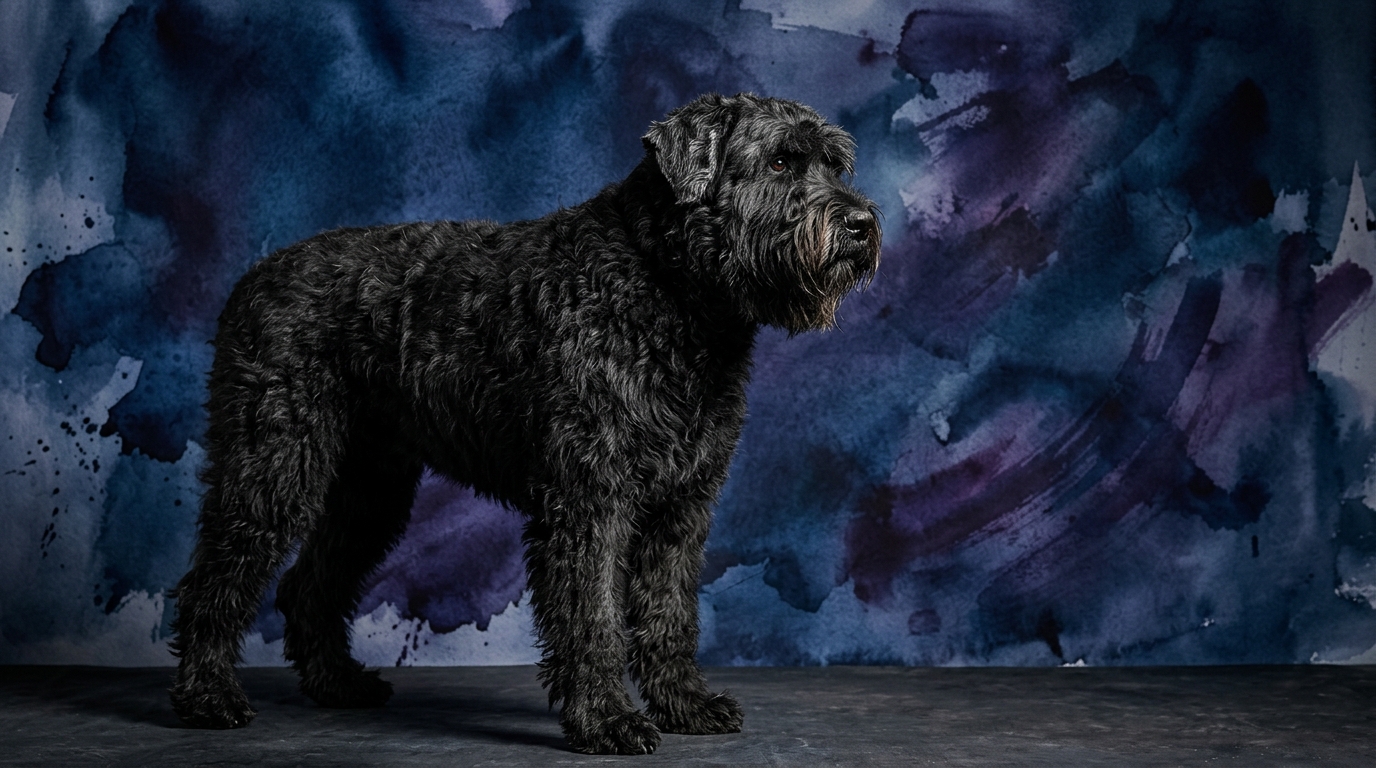
The Bouvier des Flandres, originating from the Flemish region as a cattle herder, drover, and guard dog, displays its Problem Solving (3/5) through an ability to adapt tactics on the fly when managing livestock or navigating complex, unpredictable terrain. Their Training Speed (3/5) reflects a capacity for learning intricate routines and commands, often requiring a handler who can consistently channel their independent decision-making. Social Intelligence (3/5) is evident in their nuanced understanding of group dynamics, whether it's a herd of cattle or a human family, allowing them to anticipate reactions and subtly influence movement. Their Instinctive Drive (3/5) is profoundly tied to herding, protecting, and controlling, manifesting as a strong desire for purpose and structure. Memory (3/5) is crucial for recalling routes, livestock patterns, and the specific commands vital for their demanding work.
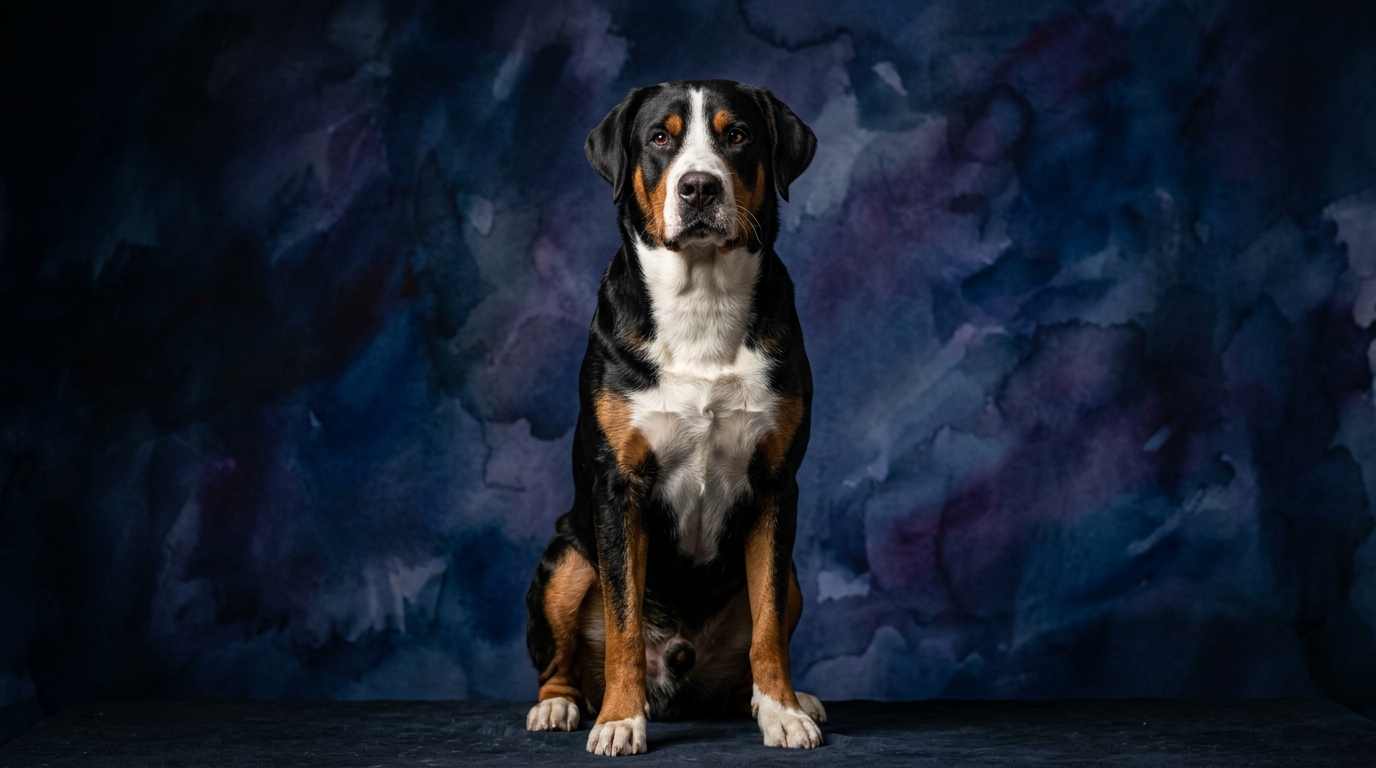
In contrast, the Greater Swiss Mountain Dog, a robust working breed from the Swiss Alps, historically served as a draft dog, cattle driver, and guardian. Their Problem Solving (3/5) is geared towards practical, real-world challenges like navigating alpine trails while pulling heavy carts or assessing environmental threats, demanding a methodical and persistent approach. Training Speed (3/5) indicates a steady acquisition of skills for tasks requiring strength and reliability, thriving on clear, consistent instruction. Social Intelligence (3/5) is keenly developed for discerning threats and understanding family dynamics, making them excellent, discerning guardians who are attuned to their social environment. Their Instinctive Drive (3/5) is powerful, encompassing hauling, guarding, and a deep desire to be a useful and protective family member. Memory (3/5) is essential for remembering people, places, and the complex tasks associated with their diverse working roles, ensuring reliability and consistency.
Where the Bouvier des Flandres Excels Cognitively
Despite identical numerical scores, the Bouvier des Flandres exhibits particular cognitive strengths rooted in its herding heritage. Their Problem Solving, while rated 3/5, shines in dynamic, fluid situations. Unlike a static puzzle, managing a scattered herd requires constant adjustment, anticipation, and quick tactical changes. This breed often demonstrates a remarkable ability to 'read' a situation and make autonomous decisions to achieve a goal, such as redirecting a stray animal or blocking an escape route. This translates into a dog that can excel in activities requiring agile thinking and rapid response, like advanced agility courses or rally obedience where sequences change.
The Bouvier's Social Intelligence, also a 3/5, is particularly adept at understanding and influencing group dynamics. Their historical role demanded subtle communication with livestock and a keen awareness of their handler’s cues. This breed can be highly observant of human emotions and family interactions, often attempting to 'organize' or 'herd' their family members, sometimes subtly guiding them to a desired location. This capacity for nuanced social interaction makes them deeply attuned companions, though it requires an owner who understands their desire to manage their environment. Their Instinctive Drive (3/5) is specifically about control and organization, providing a strong internal motivation for structured activities and a purposeful existence.
Where the Greater Swiss Mountain Dog Shows Cognitive Advantage
The Greater Swiss Mountain Dog, while sharing the same IQ scores, demonstrates its cognitive prowess in areas distinct from the Bouvier. Its Problem Solving (3/5) excels in tasks requiring sustained effort, physical strength, and methodical execution. For instance, figuring out the most efficient way to pull a heavy cart over uneven terrain, or navigating a difficult path while remaining steadfast, showcases a practical, enduring form of intelligence. This breed tends to approach challenges with a deliberate, persistent mindset, making them excellent candidates for tasks that require reliability and stamina, such as draft work or long-distance hiking.
The Swissy’s Social Intelligence (3/5) is particularly strong in its capacity for discernment and territorial awareness. As guardians, they developed an acute ability to distinguish between familiar and unfamiliar, friend and potential threat, and to understand the social hierarchy within their household. This translates into a dog that is often reserved with strangers but deeply devoted and protective of its family, displaying a clear understanding of who belongs and who doesn't. Their Instinctive Drive (3/5) is profoundly linked to purposeful work involving strength, loyalty, and a desire to be a dependable presence, whether guarding the homestead or accompanying their human companions on adventures. Their memory (3/5) is particularly robust for recalling specific boundaries and established routines, contributing to their steadfast nature.
Training: Bouvier vs. Swissy Responsiveness
Both breeds achieve a Training Speed score of 3/5, indicating they are capable learners but require consistency and a clear training approach. However, their behavioral differences influence the training experience. The Bouvier des Flandres, with its herding background, can be highly responsive to commands but also possesses a strong independent streak. They were bred to make decisions about livestock, which means they might 'think for themselves' if they perceive an inconsistency or a better way to do something. Training a Bouvier requires a confident, consistent handler who can channel their desire to control into appropriate tasks, making it critical to establish leadership early and maintain engaging, varied sessions to prevent boredom.
The Greater Swiss Mountain Dog, by contrast, often exhibits a more straightforward desire to work cooperatively with their handler, especially in tasks that align with their strength and guarding instincts. Their methodical approach to problem-solving can make them excellent students for specific, repetitive tasks, and they generally thrive on having a clear 'job.' However, their sheer size and strength necessitate early and consistent training to ensure they are manageable. While they may not challenge authority in the same independent way a Bouvier might, their protective nature requires careful socialization to ensure they are discerning guardians rather than overly suspicious. Ultimately, neither is inherently 'easier'; the Bouvier might present more creative challenges due to its independent decision-making, while the Swissy requires a steadfast commitment to managing its physical presence and protective tendencies.
Ideal Owners: Active Pursuits vs. Steadfast Companionship
Choosing between these breeds often comes down to matching a dog's inherent drives with an owner's lifestyle. The Bouvier des Flandres is ideally suited for active owners who relish engaging in complex, dynamic activities with their dog. Their strong herding drive and agile problem-solving capabilities mean they thrive when given a 'job' that requires mental and physical exertion, such as competitive obedience, agility, rally, or even advanced scent work. An owner who enjoys structured training, can provide consistent mental challenges, and appreciates a dog that thinks alongside them (and sometimes independently) will find a rewarding partnership. They are not a breed for owners seeking a purely decorative companion or one content with minimal exercise.
The Greater Swiss Mountain Dog also requires a committed, active owner, but their energy profile leans more towards sustained, purposeful activities. They are excellent companions for hiking, long walks, or even actual carting or draft work, which taps into their historical purpose. While they enjoy outdoor adventures, they are often content to relax indoors with their family after a good day's work, displaying a more 'off-switch' than some high-drive herding breeds. An owner who appreciates a powerful, steadfast companion, values a strong protective instinct, and can provide consistent training and socialization will find a loyal and devoted family member. They are not suited for entirely sedentary households, as their robust build and working heritage demand regular physical engagement.
The Verdict
Choose the Bouvier des Flandres if you are an active owner seeking a dog for complex, dynamic activities, who thrives on a thinking partner and can provide firm, consistent guidance to channel their strong herding and protective instincts.
Choose the Greater Swiss Mountain Dog if you seek a powerful, steadfast companion for purposeful outdoor activities, who thrives on being a reliable guardian and family member, and you appreciate a dog with a robust physical presence and a desire to work alongside you in a methodical fashion.
🧠 Find Your Pet's IQ Score
Our Pet IQ Lab assessment covers 25+ tests across 5 cognitive dimensions — personalized to your breed.
Take the Full IQ Test →Frequently Asked Questions
Are Bouvier des Flandres or Greater Swiss Mountain Dogs good for first-time owners?
Neither breed is typically recommended for first-time dog owners due to their size, strength, strong drives, and need for consistent, experienced handling. Both require extensive socialization and training from a young age to develop into well-adjusted companions.
What kind of mental stimulation do these breeds need?
Both breeds require significant mental stimulation beyond just physical exercise. Bouviers benefit from activities like puzzle toys, advanced obedience, and dog sports that challenge their problem-solving and herding instincts. Swissys thrive on purposeful tasks like draft work, scent games, and consistent training that engages their methodical intelligence and desire to work.
How do their protective instincts differ?
The Bouvier's protective instincts are often tied to its herding desire to 'manage' and control its family, which can manifest as watchful vigilance. The Greater Swiss Mountain Dog's protective nature is more overtly that of a guardian, with a strong territorial sense and a discerning approach to strangers, stemming from its historical role as a property and family protector.