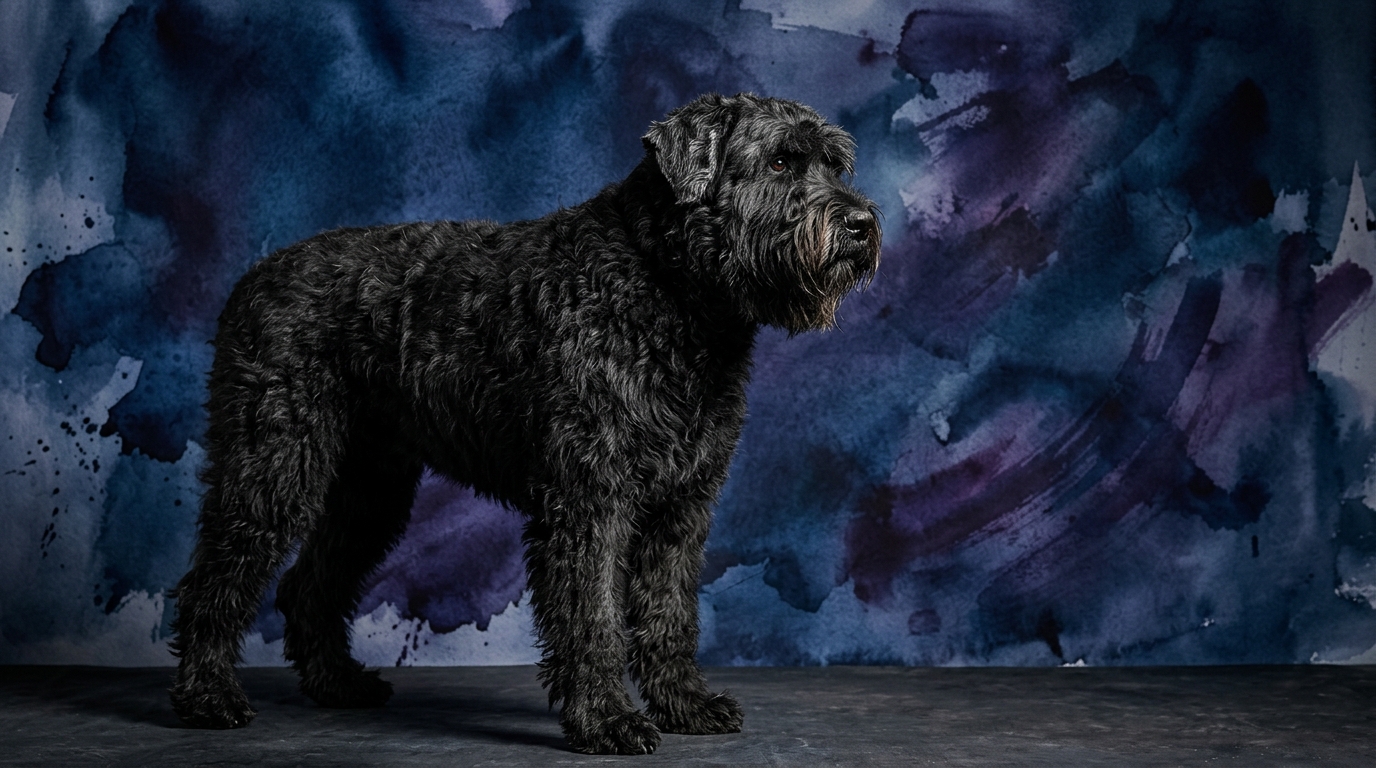
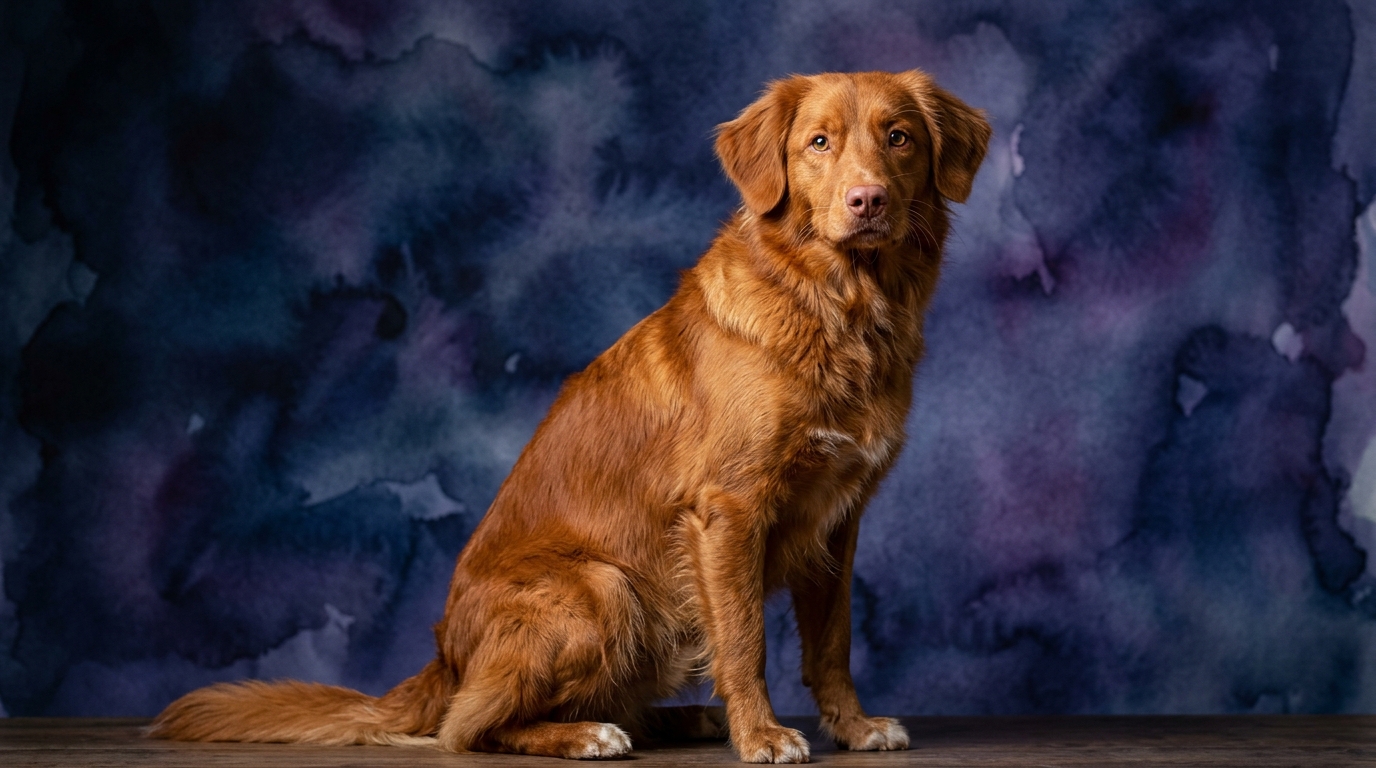
Side-by-Side Cognitive Profiles: Bouvier vs. Toller
At first glance, the Bouvier des Flandres and the Nova Scotia Duck Tolling Retriever present an intriguing cognitive mirror image, both scoring 3 out of 5 in problem-solving, training speed, social intelligence, instinctive drive, and memory. However, these identical scores belie distinct expressions shaped by their historical roles and inherent breed characteristics. Understanding these nuances requires looking at how a 3/5 score translates within the context of a robust herding dog versus an agile sporting retriever.
For the Bouvier des Flandres, a 3/5 in **Problem Solving** reflects an ability to independently assess and manage dynamic situations, such as maneuvering livestock or guarding property. Their solutions often involve strategic positioning and a thoughtful approach to obstacles, rather than impulsive action. A 3/5 in **Training Speed** indicates they are capable learners, absorbing commands and routines effectively, though their independent nature means they require consistent, engaging methods to prevent boredom or stubbornness. Their **Social Intelligence** at 3/5 points to a discerning nature; they are adept at reading their handler's intentions and the dynamics of their immediate 'flock' or family, but often reserved with strangers. The 3/5 for **Instinctive Drive** is deeply rooted in their herding and protective instincts, manifesting as a strong desire to oversee and control their environment and charges. Finally, a 3/5 in **Memory** allows them to retain complex patterns, recall boundaries, and remember specific tasks, which is crucial for their working heritage.
The Nova Scotia Duck Tolling Retriever, despite the same scores, exhibits these traits differently. Their 3/5 in **Problem Solving** is typically demonstrated in the field, figuring out the most efficient retrieve path, adapting to changing water currents, or understanding how to 'toll' (lure) waterfowl effectively. Their solutions are often cooperative, working in tandem with a human partner. A 3/5 in **Training Speed** signifies a quick grasp of new commands and an eagerness to perform, especially when motivated by play or reward. Tollers generally learn rapidly, though sustained focus requires engaging activities. Their **Social Intelligence** at 3/5 is characterized by an acute awareness of their handler’s cues and moods, crucial for hunting partnership, and generally a friendly, though sometimes boisterous, interaction with familiar people. The 3/5 for **Instinctive Drive** is powerfully expressed through their intense prey drive and natural retrieving behaviors, coupled with the unique 'tolling' instinct. Their 3/5 **Memory** is excellent for recalling specific retrieve locations, remembering complex sequences of hand signals, and retaining hunting strategies over time.
Where the Bouvier des Flandres Excels Cognitively
The Bouvier des Flandres' cognitive strengths truly shine in scenarios demanding independent decision-making and a strong sense of responsibility. Their problem-solving capabilities, while rated 3/5, are uniquely geared towards managing dynamic, often unpredictable situations involving livestock or property. This isn't just about following commands; it's about making sound judgments when direct instructions aren't present, such as strategically moving a flock or assessing a potential threat. Their social intelligence, also 3/5, manifests as a nuanced ability to read environmental cues and individual temperaments within their perceived domain, allowing them to act as a watchful, self-assured guardian. This extends to their memory, where they excel at recalling complex spatial relationships and long-term routines, which is vital for maintaining order and security within their territory. They demonstrate a thoughtful, deliberate approach to novel situations, often preferring to observe and analyze before acting.
Where the Nova Scotia Duck Tolling Retriever Excels Cognitively
The Nova Scotia Duck Tolling Retriever's cognitive strengths are deeply rooted in cooperative work and adaptability within fluid, high-energy environments. Their 3/5 problem-solving ability is particularly effective in tasks requiring quick assessment and execution, such as navigating varied terrain and water conditions to retrieve game, or understanding complex decoy setups. They exhibit a remarkable ability to learn and adjust their strategies based on immediate feedback from their handler and the environment. Their social intelligence, also 3/5, is geared towards forming a highly responsive partnership; they are exceptionally attuned to subtle human body language and vocal cues, making them outstanding collaborators in field tasks. This keen awareness allows them to anticipate needs and react swiftly. Their memory supports this by enabling them to recall precise retrieve locations and intricate sequences of commands, which are essential for efficient and successful hunting expeditions. They demonstrate an eager, enthusiastic approach to new challenges, often thriving on mental and physical engagement.
Ease of Training: Bouvier des Flandres vs. Nova Scotia Duck Tolling Retriever
Despite both breeds scoring 3/5 in training speed, the practical experience of training them can differ significantly due to their underlying behavioral traits. The Nova Scotia Duck Tolling Retriever generally presents as easier to train for a wider range of owners. Their inherent eagerness to please, coupled with a high drive for retrieving and play, makes them highly motivated students. Tollers respond well to positive reinforcement, quickly connecting actions with rewards and typically demonstrating a strong desire for continued engagement. Their enthusiasm means they often pick up new commands with gusto, though maintaining their focus requires varied and stimulating sessions to prevent boredom from setting in.
Conversely, the Bouvier des Flandres, while capable learners, can be more challenging for novice owners. Their strong independent streak, a valuable asset in their herding role where they needed to make decisions without constant human direction, can translate into a more deliberate approach to training. They require a confident, consistent handler who can establish clear expectations and engage their thoughtful minds. Bouviers may question commands or test boundaries, not out of defiance, but from a cognitive drive to understand the purpose and logic behind an instruction. Training a Bouvier often involves building a deep, respectful partnership where the dog trusts the handler's judgment, making consistency and patience paramount.
Lifestyle Suitability: Active vs. Relaxed Owners
When considering lifestyle, the cognitive and behavioral profiles of these two breeds point to distinct ideal matches. The Nova Scotia Duck Tolling Retriever is an excellent fit for active owners who relish outdoor adventures and mental engagement. Their enthusiastic problem-solving and strong instinctive drives mean they thrive on activities like agility, dock diving, advanced obedience, and especially retrieving games. They require consistent physical exertion and mental stimulation to prevent boredom and channel their energy constructively. Owners who enjoy structured training sessions and participating in dog sports will find a highly cooperative and joyful companion in a Toller. Their social intelligence also makes them keen participants in family activities, though their exuberance might be overwhelming for a very calm household.
The Bouvier des Flandres, while capable of physical activity, often suits owners who appreciate a more measured pace and value a steadfast, thoughtful companion. Their independent problem-solving and protective instincts mean they excel in roles where they can oversee and maintain order, such as guarding or managing a property. They require structured routines and a clear sense of purpose, even if that purpose is simply being a watchful family member. While they need regular exercise, it doesn't always have to be high-impact; long, purposeful walks or opportunities to patrol a yard can be highly satisfying. Owners who prefer a discerning, protective companion who is content with a strong bond and less frenetic activity will find the Bouvier a rewarding presence. Their social intelligence means they are deeply loyal to their inner circle but may not seek constant interaction or boisterous play with everyone.
The Verdict
Choose the Bouvier des Flandres if you seek a self-assured, discerning companion capable of independent thought and protective loyalty, and are prepared for a consistent, patient training approach.
Opt for the Nova Scotia Duck Tolling Retriever if you desire an enthusiastic, cooperative partner for high-energy activities and structured training, who thrives on interactive engagement and a clear working purpose.
🧠 Find Your Pet's IQ Score
Our Pet IQ Lab assessment covers 25+ tests across 5 cognitive dimensions — personalized to your breed.
Take the Full IQ Test →Frequently Asked Questions
Do Bouvier des Flandres make good family dogs?
Yes, Bouvier des Flandres can be excellent family dogs, particularly for families who understand their need for clear leadership and early socialization. They are loyal and protective of their family members, often forming strong bonds with children when raised with them, acting as watchful guardians.
Are Nova Scotia Duck Tolling Retrievers good with other pets?
Nova Scotia Duck Tolling Retrievers can generally coexist well with other pets, especially if socialized from a young age. However, their strong prey drive means careful introductions are necessary with smaller, fast-moving animals, and their energetic nature might be overwhelming for very timid pets.
Which breed is better for apartment living?
Neither breed is ideally suited for small apartment living without significant commitment to exercise and mental stimulation. However, the Toller's higher energy and vocal tendencies might make them more challenging in an apartment than a Bouvier, who, with sufficient exercise, can be calmer indoors.