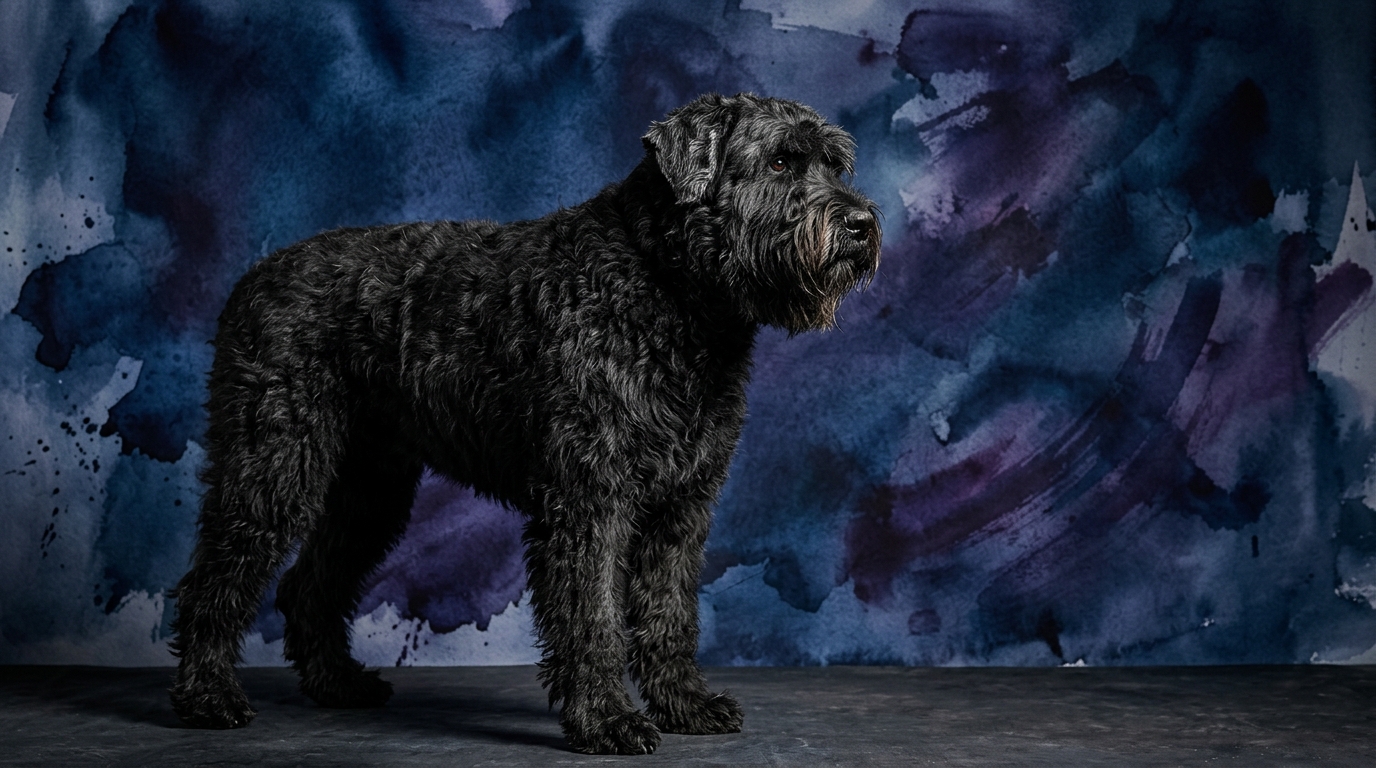
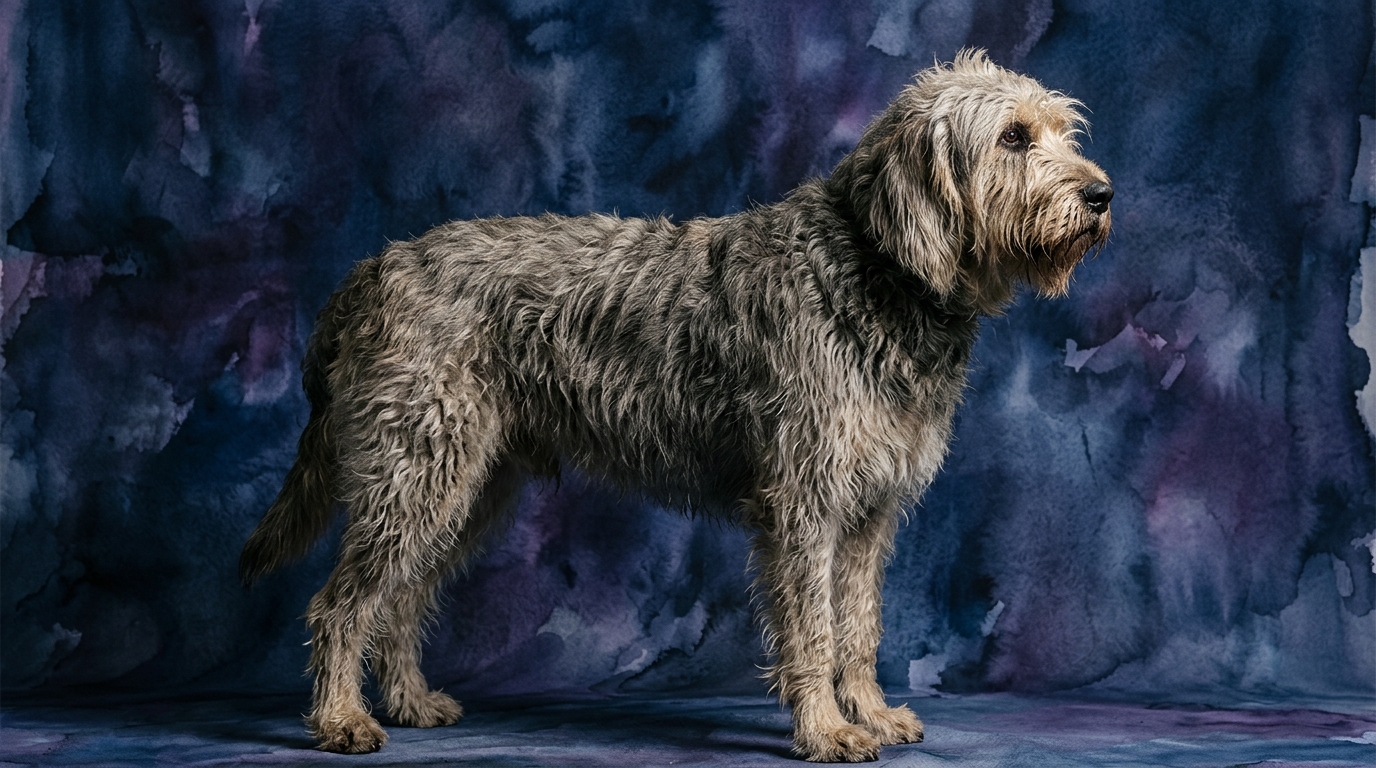
Side-by-Side IQ Profile: Bouvier des Flandres vs. Otterhound
The Pet IQ Lab provides a detailed lens through which to view canine cognition, assessing five crucial dimensions. For both the Bouvier des Flandres, a robust herding dog, and the Otterhound, a unique scent hound, every score registers at a '3/5' — signifying a capable, middle-ground cognitive aptitude that is neither exceptional nor deficient but rather practical and functional for their respective purposes. Let’s explore what these scores mean for each breed specifically.
For the **Bouvier des Flandres**, a score of 3/5 in **Problem Solving** indicates a dog that can effectively navigate challenges within its environment, particularly those related to managing livestock or understanding complex household routines. This isn't about abstract logic, but rather practical, observation-based solutions. Their **Training Speed** at 3/5 suggests they are generally responsive to consistent instruction, capable of learning new commands and sequences at a steady pace, often motivated by a desire to work alongside their handler. **Social Intelligence** at 3/5 means they are attuned to their family's emotional states and social structures, though often reserved with strangers, demonstrating a discerning understanding of their social circle. A 3/5 in **Instinctive Drive** highlights their inherent herding tendencies, a strong protective nature, and a watchful vigilance over their territory and people. Finally, their **Memory** score of 3/5 indicates a solid capacity to recall learned behaviors, routines, and individuals over time, crucial for their working roles and integration into family life.
Turning to the **Otterhound**, their 3/5 in **Problem Solving** manifests differently; it speaks to their ability to unravel intricate scent puzzles, navigating complex terrain and overcoming obstacles to follow a trail. This problem-solving is less about structured strategy and more about tenacious, sensory-driven pursuit. Their **Training Speed** at 3/5 reflects a capacity to learn, but often at a pace dictated by their independent and scent-focused nature; they can grasp concepts but might require more patience and creative motivation to overcome distractions. **Social Intelligence** at 3/5 suggests they are generally amiable and enjoy companionship, capable of reading basic human cues and forming strong bonds, though their boisterous nature might mean they are less subtle in their social interactions than some other breeds. Their 3/5 **Instinctive Drive** is powerfully rooted in their deep-seated desire to track and bay, exhibiting remarkable endurance and single-mindedness when on a scent. Their **Memory** at 3/5 is particularly strong for scents and routes, allowing them to recall specific trails and locations, and remember individuals associated with positive experiences, often driven by their primary sensory input.
Where Bouvier des Flandres Wins Cognitively
While both breeds score identically, the Bouvier des Flandres demonstrates distinct cognitive strengths rooted in its herding lineage. Their 3/5 problem-solving ability, for instance, often translates into a more strategic and anticipatory approach to tasks. A Bouvier excels at understanding and predicting movement, whether it’s livestock, children, or even the flow of a busy household. This manifests as a more structured cognitive process, where they can assess a situation and devise a sequential plan, making them adept at tasks requiring multiple steps or a degree of foresight in a controlled environment. Their social intelligence, while not overtly effusive, allows for a precise reading of a handler's intent and subtle body language, which is crucial for effective collaboration in a working partnership. This nuanced understanding of human communication gives them an edge in tasks requiring close handler-dog teamwork and response to non-verbal cues. Additionally, their memory for routines and specific commands in context is often very robust, allowing them to perform complex sequences reliably once learned, a hallmark of a proficient working herding dog.
Where Otterhound Wins Cognitively
The Otterhound, despite sharing the same scores, showcases its own unique cognitive advantages, primarily stemming from its specialized role as a scent hound. Their 3/5 problem-solving skill is profoundly expressed through their ability to untangle complex scent trails, navigating challenging environments with unwavering focus and tenacity. This isn't about strategic planning in the human sense, but rather an intricate, sensory-driven form of problem-solving that involves filtering countless olfactory inputs, differentiating subtle nuances, and persisting over long distances. Their instinctive drive, also 3/5, is a powerful engine for this cognitive strength, endowing them with immense endurance and a single-minded determination that allows them to overcome physical and mental fatigue while on a scent. This unparalleled focus on a primary sensory input means they can block out other distractions that might deter a different breed. Furthermore, their memory, while a 3/5, is particularly specialized for scent recall, allowing them to remember and differentiate between specific smells over time and distance, which is a cognitive feat in itself, making them superior in tasks requiring intricate olfactory discrimination.
Which is Easier to Train and Why
When considering ease of training, the Bouvier des Flandres generally presents a more straightforward path. Their 3/5 training speed is often enhanced by a natural inclination to work cooperatively with their handler, a trait deeply ingrained from their herding heritage. They tend to be more handler-focused and responsive to verbal commands and physical cues, making them quicker to pick up new behaviors in a structured training setting. While they possess independence, it’s often channeled into problem-solving within the framework of a task. Consistency and clear direction will yield steady progress with a Bouvier, as their desire to please their primary human often outweighs environmental distractions. This means they are less likely to become fixated on an external stimulus when a command is given, allowing for more efficient learning sessions.
The Otterhound, on the other hand, can be more challenging for the novice trainer, despite its 3/5 training speed. Their strong, independent scent drive is a significant factor. When an Otterhound catches an interesting scent, their instinctive drive often overrides any learned commands, making consistent recall and focus difficult in stimulating environments. Their problem-solving capacity is excellent for unraveling trails but less so for abstract obedience tasks unless highly motivated. Training an Otterhound requires immense patience, creativity, and a deep understanding of hound psychology. Lessons need to be engaging, positive, and often incorporate scent work to hold their interest, as their primary motivation is often the pursuit of an olfactory puzzle rather than direct handler appeasement. It's not that they cannot learn, but that their cognitive focus is often elsewhere, demanding a different approach to engagement and motivation.
Which Suits Active Owners vs. Relaxed Owners
For owners with an active lifestyle, both breeds require substantial engagement, but the *type* of activity differs significantly. The Bouvier des Flandres thrives with owners who can provide structured activity and mental challenges that tap into their herding and protective instincts. This means regular, vigorous exercise like long walks, runs, or hikes, combined with activities such as obedience trials, agility, or even herding practice. They need a job to do, whether it's guarding the home, participating in dog sports, or simply managing the family's 'flock'. An active owner for a Bouvier is one who is prepared to be a consistent leader, providing purpose and direction to their dog's considerable energy and cognitive abilities. They are not content with just being a couch potato; their 3/5 instinctive drive and problem-solving need an outlet.
The Otterhound also demands an active owner, but one who understands and caters to their deep-seated need to track and explore. Their immense stamina and powerful scent drive mean they require extensive, often unstructured, outdoor adventures where they can follow their nose. Long hikes in varied terrain, swimming, and exploring new scents are paramount. A relaxed owner who prefers short, leashed walks around the block will find an Otterhound quickly becomes bored and potentially destructive or vocal. While they enjoy family time, their cognitive profile and instinctive drive are geared towards exploration and pursuit. Owners should be prepared for a dog that will enthusiastically follow a scent regardless of obstacles, making off-leash reliability a significant challenge and requiring secure fencing and diligent supervision. Their energy is less about structured work and more about immersive sensory exploration.
The Verdict
Choose the Bouvier des Flandres if you seek a loyal, protective companion eager for structured work and mental challenges, and you are prepared to provide consistent leadership and a 'job' for your dog. Their cognitive strengths align with cooperative tasks and a desire for purpose within the family unit.
Opt for the Otterhound if you are an adventurous owner who delights in exploring the outdoors, values a dog with a robust, independent spirit, and can provide ample opportunities for scent-driven exploration and physical endurance. Their cognitive profile suits those who appreciate a dog's natural instincts and unique, boisterous charm.
🧠 Find Your Pet's IQ Score
Our Pet IQ Lab assessment covers 25+ tests across 5 cognitive dimensions — personalized to your breed.
Take the Full IQ Test →Frequently Asked Questions
Do Bouvier des Flandres and Otterhounds have similar temperaments due to their identical IQ scores?
While their Pet IQ Lab scores are numerically identical, their temperaments differ significantly due to their breed groups and historical purposes. Bouviers are typically more reserved, protective, and handler-focused, while Otterhounds are generally more boisterous, independent, and driven by scent. The scores reflect general cognitive capacity, not personality traits.
Which breed is better for first-time dog owners?
Neither breed is typically recommended for first-time dog owners without prior research and commitment to their specific needs. The Bouvier requires a confident, consistent leader to manage its protective instincts, while the Otterhound's independent, scent-driven nature can be challenging to train and manage, especially off-leash. Both benefit from experienced handling.
How do their 3/5 instinctive drive scores manifest differently in daily life?
The Bouvier's 3/5 instinctive drive manifests as a strong herding instinct, often seen in 'gathering' family members or subtly controlling movement, along with a protective vigilance over their home. The Otterhound's 3/5 instinctive drive is primarily expressed through an overwhelming desire to track scents, leading to a tenacious focus on trails and a tendency to wander if off-leash, driven by their powerful nose rather than protective duties.