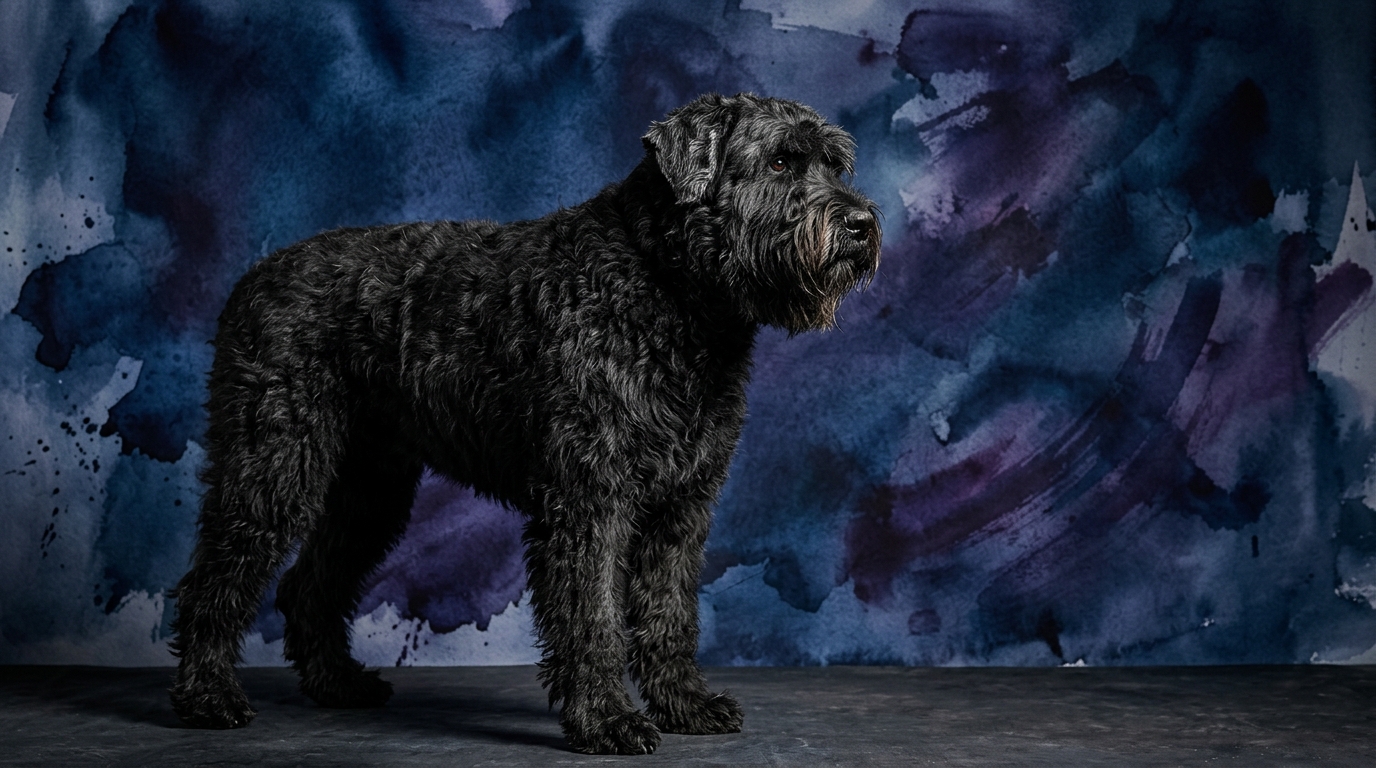
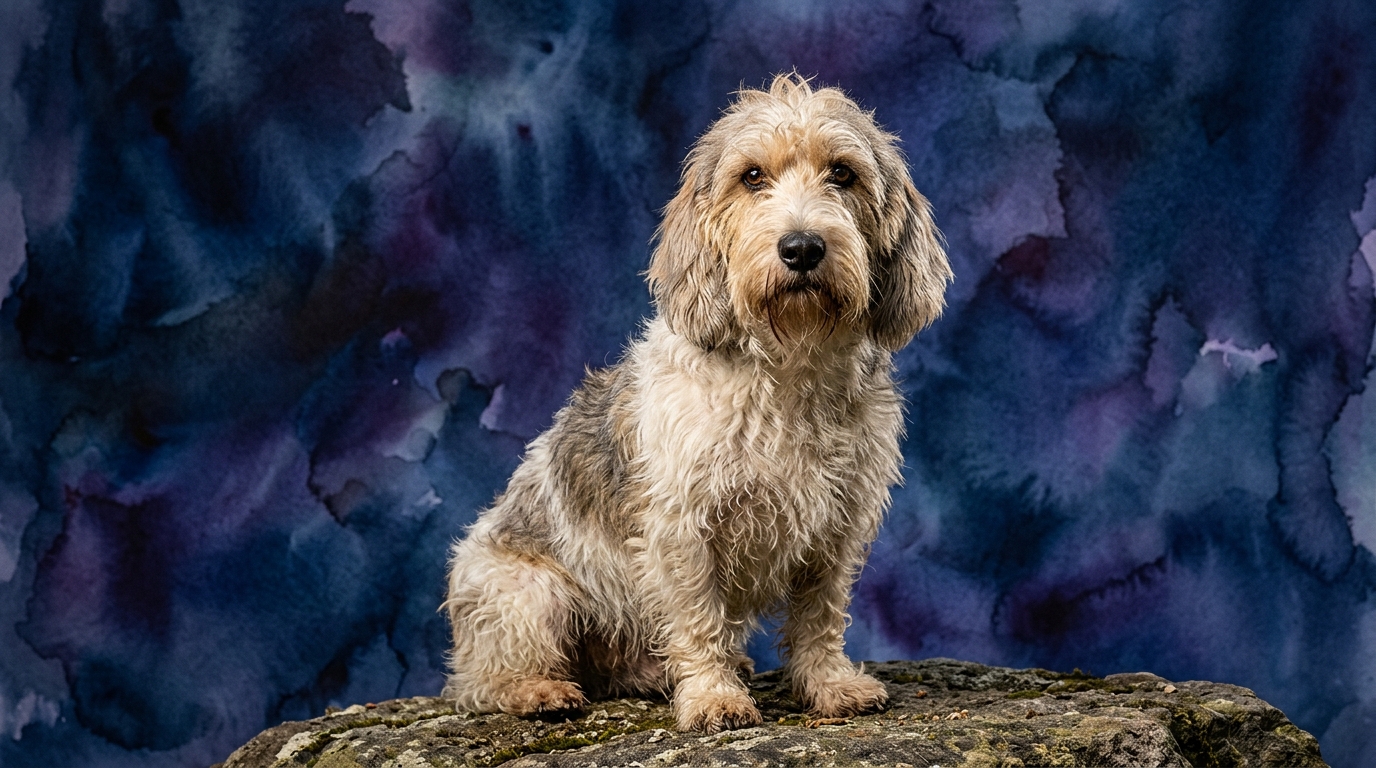
Side-by-Side IQ Profile: Herding Strategy vs. Scent-Driven Persistence
At The Cosmic Pet Pet IQ Lab, both the Bouvier des Flandres and the Petit Basset Griffon Vendéen score a consistent 3/5 across all five cognitive dimensions: Problem Solving, Training Speed, Social Intelligence, Instinctive Drive, and Memory. While these numerical scores are identical, the *nature* and *application* of these cognitive traits are profoundly influenced by their historical roles. The Bouvier, a robust herding dog, historically navigated complex livestock scenarios, demanding independent judgment and a strong partnership with its handler. Its 3/5 in Problem Solving typically manifests as strategic thinking for managing movement, while its 3/5 in Training Speed reflects a steady learner who often needs to understand the 'why' behind a command. Social Intelligence at 3/5 for a Bouvier often means a focused attentiveness to its primary human and a reserved but observant demeanor with others. Its Instinctive Drive at 3/5 is deeply rooted in herding and protection, and Memory at 3/5 supports complex routines and learned boundaries.
In contrast, the Petit Basset Griffon Vendéen (PBGV), a spirited hound bred to track game through dense underbrush, applies its 3/5 scores quite differently. Its Problem Solving at 3/5 is less about human-directed strategy and more about independent, persistent navigation of scent trails, overcoming environmental obstacles to follow a lead. A PBGV's 3/5 Training Speed indicates a capacity to learn, but this is often tempered by its powerful independent hunting drive, meaning it can be easily distracted by compelling scents. Social Intelligence at 3/5 for a PBGV typically translates to an affable, outgoing nature with both humans and other dogs, though its focus can quickly shift to an interesting smell. Its Instinctive Drive at 3/5 is overwhelmingly dominated by an insatiable desire to track and bay, while its 3/5 Memory excels in recalling scent patterns and the layout of its hunting grounds, rather than necessarily complex human commands when a trail is hot.
Where Bouvier des Flandres Excels Cognitively
The Bouvier des Flandres demonstrates particular cognitive strengths in areas demanding methodical application of intelligence and a strong working partnership. Their 3/5 Problem Solving shines in tasks requiring logical sequencing and adapting to dynamic situations, such as maneuvering livestock or navigating agility courses with precision. This isn't about impulsive action but rather considered judgment. Their 3/5 Training Speed, while not lightning-fast, reflects a deep retention of learned behaviors and an ability to generalize commands across different contexts once they've grasped the underlying principle. This depth of learning makes them reliable partners in complex tasks. Furthermore, their Social Intelligence, also at 3/5, is particularly adept at reading human cues within a working framework, allowing for a nuanced communication that is invaluable in roles requiring close collaboration and protection. They form profound bonds, interpreting their handler’s intent with a focus that makes them excellent at understanding and anticipating instructions, demonstrating a focused loyalty that is a hallmark of their breed.
Where Petit Basset Griffon Vendéen Excels Cognitively
The Petit Basset Griffon Vendéen, with its hound heritage, showcases its cognitive prowess in areas demanding independent initiative and an unwavering focus on sensory input. Their 3/5 Problem Solving is remarkable in its application to scent work, where they can meticulously unravel complex olfactory puzzles, navigating intricate environments to pinpoint a target. This isn't about human-directed problem-solving but a self-directed, persistent drive to follow a trail to its conclusion. Their 3/5 Memory is exceptionally strong for scent patterns and geographical layouts, allowing them to remember and retrace routes, or recall the location of intriguing smells even after some time has passed. While their Training Speed is also 3/5, their learning is often best leveraged when it aligns with their natural drives, such as scent discrimination games or tracking exercises, where they can apply their innate talents. Their Social Intelligence, at 3/5, allows them to be highly adaptable and friendly within a diverse 'pack' of humans and other dogs, thriving on social interaction, albeit sometimes with an independent streak that prioritizes an interesting smell over social niceties.
Training Dynamics: Bouvier’s Deliberation vs. PBGV’s Distractibility
When it comes to ease of training, the identical 3/5 Training Speed scores for both breeds belie significant behavioral differences that impact the owner experience. The Bouvier des Flandres, while capable of learning steadily, often exhibits a thoughtful, deliberate approach. They aren't necessarily slow to understand, but they can be independently minded and may 'question' a command or require consistent motivation to comply, especially if it doesn't immediately make sense to their herding instincts. This means training requires patience, clarity, and establishing strong leadership, but once a Bouvier commits to a command, their 3/5 Memory ensures deep retention and reliable execution. Their independence can sometimes be mistaken for stubbornness, but it’s often a manifestation of their problem-solving mind at work.
The Petit Basset Griffon Vendéen, on the other hand, also scores 3/5 for Training Speed, indicating a moderate ability to learn. However, their primary training challenge stems from their overwhelming 3/5 Instinctive Drive for scent. A PBGV can learn commands quickly in a distraction-free environment, but the moment an enticing smell enters the picture, their focus can shift entirely, making consistent obedience difficult. Their independent hunting nature means they often prioritize a hot trail over a human command, which can make them seem 'stubborn' or 'difficult to train' in real-world scenarios. Effective training for a PBGV therefore demands high-value rewards, engaging methods, and an understanding that their nose will always be their guiding force, requiring owners to manage their environment and provide appropriate outlets for their keen instincts rather than expecting perfect recall amidst interesting smells.
Matching Lifestyles: Active Engagement vs. Moderate Adventure
The cognitive profiles and inherent drives of these two breeds naturally align with different owner lifestyles. The Bouvier des Flandres, with its strong herding and guarding instincts and a mind that thrives on purpose, is best suited for active, engaged owners. They require consistent mental stimulation through training, puzzle toys, and learning new tasks, alongside ample physical exercise that allows them to use their robust bodies. An owner who enjoys dog sports like agility, obedience, or even practical protection work will find a dedicated partner in the Bouvier. Their 3/5 Social Intelligence makes them deeply attuned to their family, but they need clear boundaries and consistent leadership to prevent their protective instincts from becoming overbearing. They are not a breed for relaxed owners seeking a low-maintenance companion; they demand a significant investment of time and energy to channel their considerable cognitive and physical capacities constructively.
The Petit Basset Griffon Vendéen, while possessing a comparable 3/5 in Instinctive Drive, channels this energy differently. Their need for activity is often centered around exploring with their nose rather than intense, structured work. They suit moderately active owners who are willing to provide daily walks, opportunities for safe off-leash sniffing in secure areas, and engaging scent games. While they can enjoy bursts of high-energy play, they are also quite content to relax indoors, often after a good 'nose adventure.' Their 3/5 Social Intelligence makes them generally friendly and adaptable to various social settings, enjoying family life and often getting along well with children and other pets. They are not a sedentary breed, but their exercise needs are more about fulfilling their natural curiosity and scenting drive than demanding a high-octane athletic partnership, making them a good fit for owners who enjoy outdoor exploration without the intensity of a dedicated working dog.
The Verdict
Choose the Bouvier des Flandres if you are an active owner seeking a dedicated, thoughtful working partner who thrives on structured training, clear leadership, and purposeful engagement in activities like dog sports or protection work.
Opt for the Petit Basset Griffon Vendéen if you are a moderately active owner who appreciates an independent, cheerful companion with an insatiable curiosity for scents, and you are prepared to channel their strong hound instincts through scent games and secure exploration.
🧠 Find Your Pet's IQ Score
Our Pet IQ Lab assessment covers 25+ tests across 5 cognitive dimensions — personalized to your breed.
Take the Full IQ Test →Frequently Asked Questions
Do identical IQ scores mean these breeds learn at the exact same pace?
Not exactly. While both score 3/5 for training speed, the Bouvier's learning style is often more deliberate and requires understanding the 'why,' while the PBGV's learning can be quick but is frequently overshadowed by its strong scent drive and potential for distraction. The *manifestation* of their 3/5 speed differs significantly based on their intrinsic motivations and breed purpose.
Which breed is better with children or other pets?
Both breeds can be good with children and other pets with proper socialization. The Bouvier's 3/5 social intelligence often leads to a protective and devoted bond with its family, while the PBGV's 3/5 social intelligence typically manifests as a more generally outgoing and adaptable nature. Supervision and early positive experiences are key for both.
How do their 3/5 instinctive drives differ in daily life?
The Bouvier's 3/5 instinctive drive is primarily expressed through herding, guarding, and protective behaviors, requiring outlets like structured activities or property patrol. The PBGV's 3/5 instinctive drive is almost entirely focused on scenting and tracking, meaning they will relentlessly follow interesting smells and require secure areas or leashed walks to prevent them from wandering off on a trail.