Side-by-Side IQ Profile: Herding vs. Terrier Intellect
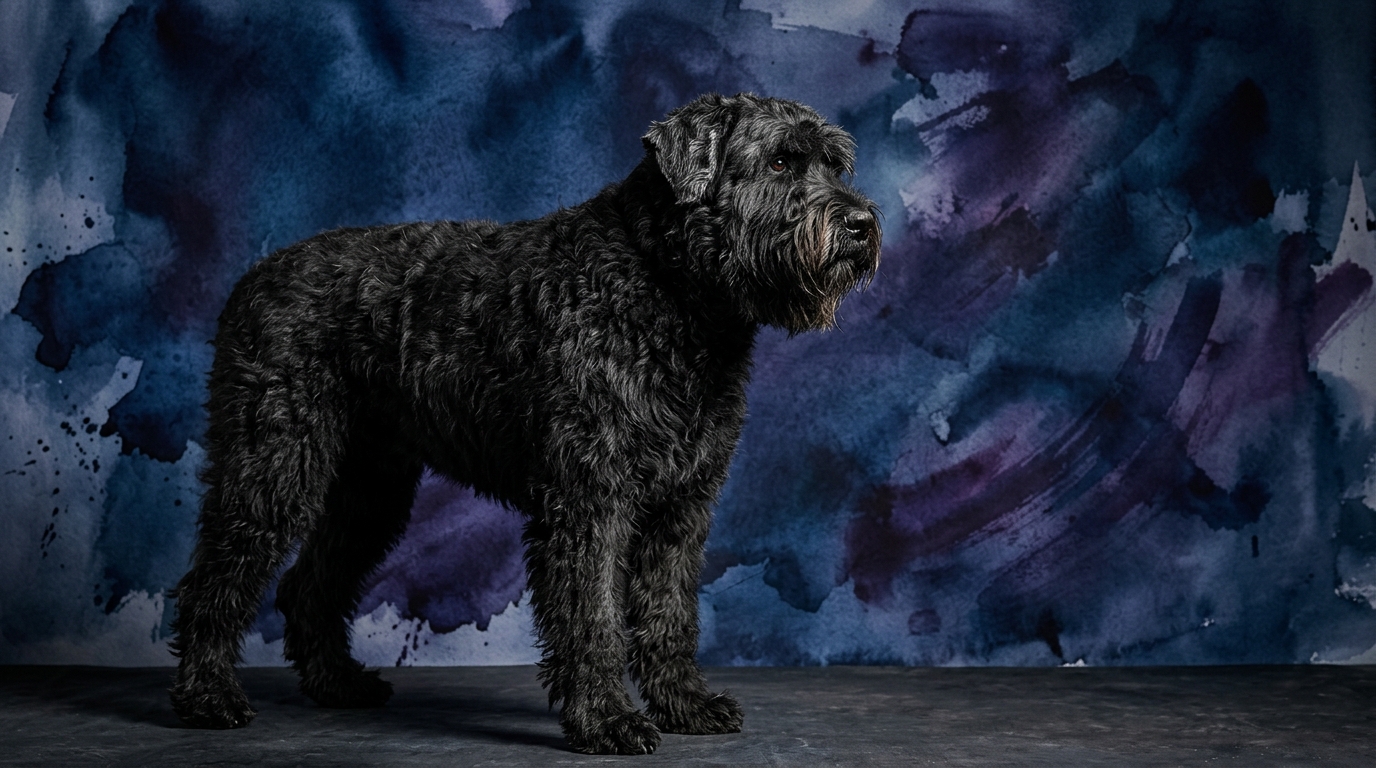
**Bouvier des Flandres (Herding Group)**
**Problem Solving (3/5):** The Bouvier's problem-solving aptitude manifests in their methodical approach to tasks. Originating as cattle drivers and farm guardians, they excel at understanding complex sequences, navigating obstacles, and making independent decisions within a structured context, such as moving livestock or protecting property. Their solutions tend to be practical and efficient, focused on completing a perceived 'job.'
**Training Speed (3/5):** While not possessing the lightning-fast acquisition of some herding breeds, the Bouvier learns consistently and thoroughly. Their 3/5 score reflects a capacity to absorb and retain commands, particularly when presented with clear, consistent instruction and a sense of purpose. They are willing partners in learning, though their independent spirit means they require a handler who can command respect without resorting to harsh methods.
**Social Intelligence (3/5):** Bouviers display a deep, discerning social intelligence. They are profoundly bonded with their families, understanding subtle shifts in mood and household dynamics. Their protective instincts are finely tuned, allowing them to differentiate between genuine threats and benign strangers. This 3/5 score indicates an ability to read social cues and respond appropriately within their trusted circle, often with a reserved dignity towards outsiders.
**Instinctive Drive (3/5):** Their instinctual drive is primarily rooted in their herding and guarding heritage. This 3/5 score reflects a strong innate desire to control movement, protect territory, and watch over their family. They possess a natural inclination to be vigilant, observant, and ready to act, needing appropriate outlets for these deep-seated behaviors to prevent boredom or misdirection.
**Memory (3/5):** Bouviers exhibit solid memory capabilities. They reliably recall commands, routines, and the intricacies of their environment. This 3/5 score means they remember past experiences, both positive and negative, and apply these recollections to future situations, making them dependable companions once trained, and capable of long-term retention of complex tasks.
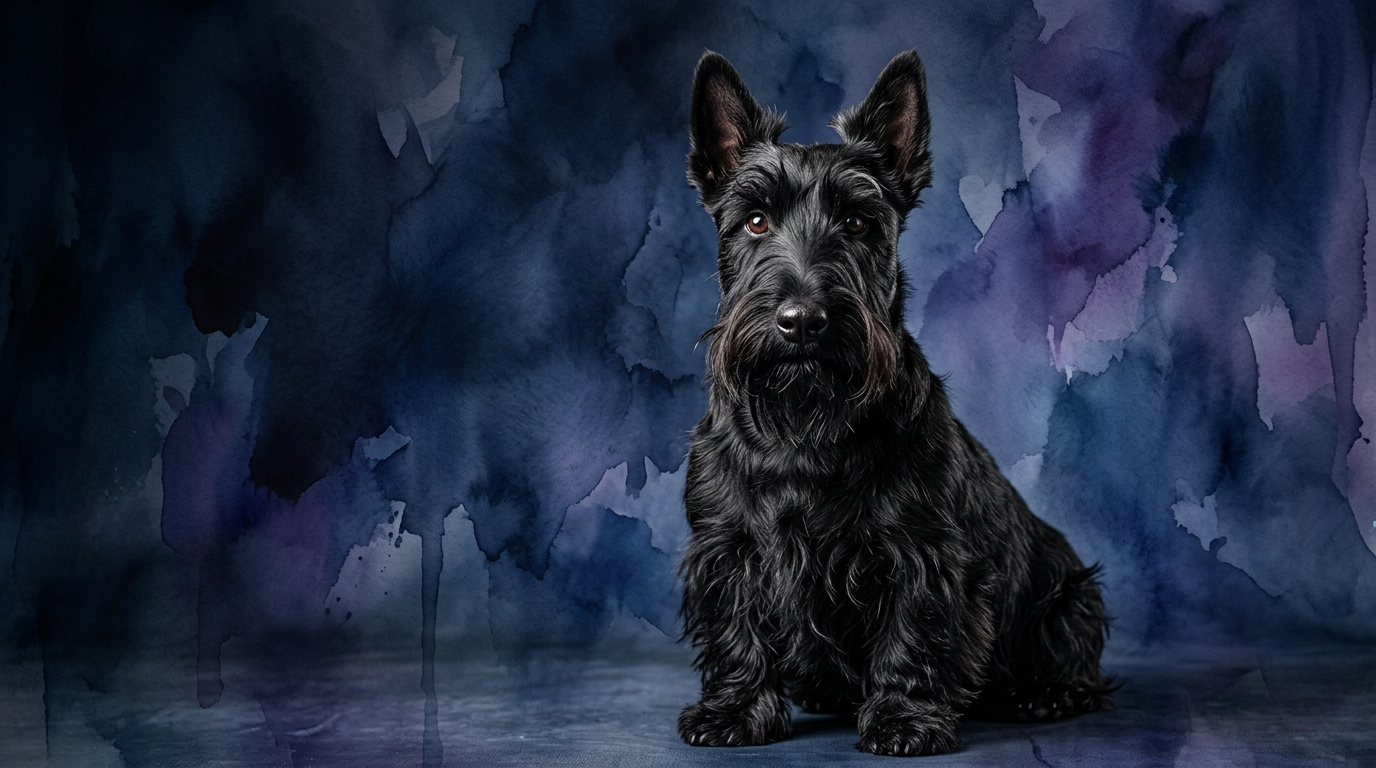
**Scottish Terrier (Terrier Group)**
**Problem Solving (3/5):** The Scottish Terrier's problem-solving is characterized by its tenacious and independent nature. Bred to hunt badger and fox, their 3/5 score reflects an ability to devise strategies for reaching prey, navigating tight spaces, and overcoming obstacles with singular focus. Their solutions are often self-directed and persistent, driven by an inherent determination to achieve their goal, whether it's unearthing a critter or obtaining a desired toy.
**Training Speed (3/5):** Scottish Terriers learn rapidly when motivated, quickly grasping concepts and commands. However, their 3/5 training speed is often tempered by their independent and sometimes stubborn temperament. While they understand *what* is being asked, their inclination to act on their own terms means compliance can be selective. This score indicates quick comprehension, but not necessarily immediate or consistent obedience in the face of their own desires.
**Social Intelligence (3/5):** Scottish Terriers possess a unique social intelligence marked by their dignified and sometimes aloof demeanor. They form deep bonds with their chosen humans, understanding family routines and individual personalities. Their 3/5 score means they are adept at reading social situations, but often choose to interact on their own terms, maintaining a certain reserve with strangers while being acutely aware of their surroundings and the roles of those within their inner circle.
**Instinctive Drive (3/5):** Their instinctive drive is profoundly terrier in nature. This 3/5 score highlights a powerful prey drive, an urge to dig, and a territorial assertiveness. These instincts are deeply ingrained, compelling them to explore, chase, and investigate. Owners must understand and channel these drives constructively, recognizing their historical purpose rather than attempting to suppress them entirely.
**Memory (3/5):** Scottish Terriers demonstrate reliable memory for routines, people, and past events. Their 3/5 score ensures they recall training, though their application of it might be inconsistent due to their independent will. They are particularly adept at remembering places where interesting smells or potential 'prey' were found, and can hold onto perceived injustices or rewarding experiences with tenacity.
Where the Bouvier des Flandres Wins Cognitively
The Bouvier des Flandres arguably shines brighter in cognitive areas requiring sustained cooperation and a methodical approach to complex, multi-stage tasks. Their herding background instills a framework for understanding and executing sequences of commands that lead to a larger objective, whether it's navigating an agility course or performing service dog duties. While their problem-solving score is 3/5, this manifests as a more deliberate, systematic thought process when working in partnership with a human. They demonstrate a capacity for critical thinking in scenarios demanding nuanced control and protection, such as discerning friend from foe in a crowded environment, a particular strength of their social intelligence at 3/5. This discerning nature means they process social information with a protective filter, making subtle judgments about intent and demeanor more readily than some breeds.
Where the Scottish Terrier Wins Cognitively
Conversely, the Scottish Terrier exhibits a distinct cognitive advantage in situations demanding independent resourcefulness and tenacity. Their 3/5 problem-solving score, while numerically identical, translates into a remarkable ability to find self-initiated solutions, particularly when confronted with obstacles related to their strong prey drive or curiosity. They are adept at figuring out how to bypass barriers, locate hidden objects, or persist until a desired outcome is achieved, often without direct human guidance. This self-reliance extends to their social intelligence (3/5), where they navigate social landscapes with a confident, self-possessed demeanor, choosing when and how to engage. They excel at assessing situations quickly and making snap decisions based on their own internal logic, a testament to their historical role as solo hunters requiring quick wits in challenging environments.
Which is Easier to Train and Why
When considering ease of training, the Bouvier des Flandres generally presents a more straightforward path for the dedicated owner. Their 3/5 training speed is complemented by their inherent desire to work and collaborate with a handler, a remnant of their herding lineage. They appreciate structure and consistency, and once they understand what is expected, they tend to apply their solid 3/5 memory to recall commands reliably. However, their robust nature means they require a confident, fair, and consistent leader; an owner who can earn their respect without being heavy-handed. Their problem-solving (3/5) leans towards understanding and executing complex instructions, making them responsive to advanced obedience or task-oriented training.
The Scottish Terrier, despite also scoring 3/5 in training speed, poses a different kind of training challenge. They are quick to grasp concepts, but their strong individual will and deeply ingrained instinctive drives (3/5), particularly prey drive and digging, often override a desire to comply. Training a Scottie often feels more like a negotiation, requiring immense patience, positive reinforcement, and creative ways to make tasks rewarding for them. Their problem-solving (3/5) is geared towards achieving their *own* goals, which may not always align with their owner's. An owner must be prepared for their 3/5 memory to recall training, but for their social intelligence (3/5) to allow them to selectively apply it based on their mood or perceived benefit. Consistency is paramount, but so is making training feel like a game that benefits the Scottie, rather than a chore.
Which Suits Active Owners vs. Relaxed Owners
For active owners seeking a canine partner for structured activities, the Bouvier des Flandres is often the more fitting choice. Their 3/5 instinctive drive, rooted in herding and guarding, means they thrive when given a 'job,' whether it's advanced obedience, agility, tracking, or simply being a vigilant family protector. They require significant mental stimulation and regular physical exercise to channel their energy and intelligence productively. Owners who enjoy long walks, structured training sessions, and involving their dog in daily tasks will find a highly engaged and cooperative companion in the Bouvier. Their social intelligence (3/5) allows them to integrate well into an active family life, understanding their role and responsibilities.
Conversely, while not a sedentary breed, the Scottish Terrier can better suit owners who appreciate an independent companion and prefer more relaxed, albeit still engaging, daily routines. Their physical exercise needs are moderate, consisting of brisk walks and opportunities for vigorous play. However, their 3/5 instinctive drive for hunting and digging means they require mental engagement to prevent boredom, which might involve puzzle toys, supervised digging areas, or short, stimulating training bursts. Owners who appreciate a dog with a strong personality, a dignified presence, and the occasional independent streak will find the Scottie a delightful, if sometimes challenging, companion. Their problem-solving (3/5) makes them excellent at entertaining themselves, but this needs to be guided to prevent destructive behaviors.
The Verdict
Choose a Bouvier des Flandres if you seek a dedicated, protective working partner who thrives on structured training and a clear sense of purpose within an active family.
Opt for a Scottish Terrier if you appreciate a resilient, independent companion with a spirited personality, who values their own counsel and provides unique entertainment with their tenacious problem-solving.
🧠 Find Your Pet's IQ Score
Our Pet IQ Lab assessment covers 25+ tests across 5 cognitive dimensions — personalized to your breed.
Take the Full IQ Test →Frequently Asked Questions
Do Bouvier des Flandres bark a lot?
Bouviers are not typically excessive barkers, but their 3/5 instinctive drive for guarding means they will alert to perceived threats or unusual activity. Their barks are usually purposeful and deep, serving as a warning rather than idle chatter. Consistent training can help manage their vocalizations.
Are Scottish Terriers good with other pets?
Scottish Terriers can coexist with other pets, especially if raised together, but their 3/5 instinctive prey drive means small, fast-moving animals like cats or rodents might trigger their hunting instincts. Supervision and early socialization are crucial for successful multi-pet households.
How much grooming does each breed require?
Both breeds require significant grooming. The Bouvier des Flandres has a harsh, shaggy double coat that needs regular brushing (several times a week) to prevent mats and professional grooming every 6-8 weeks. The Scottish Terrier's wiry coat also needs regular brushing, hand-stripping, or professional clipping to maintain its texture and prevent skin issues, typically every 4-6 weeks.