Side-by-Side IQ Profile: Unpacking Canine Cognition
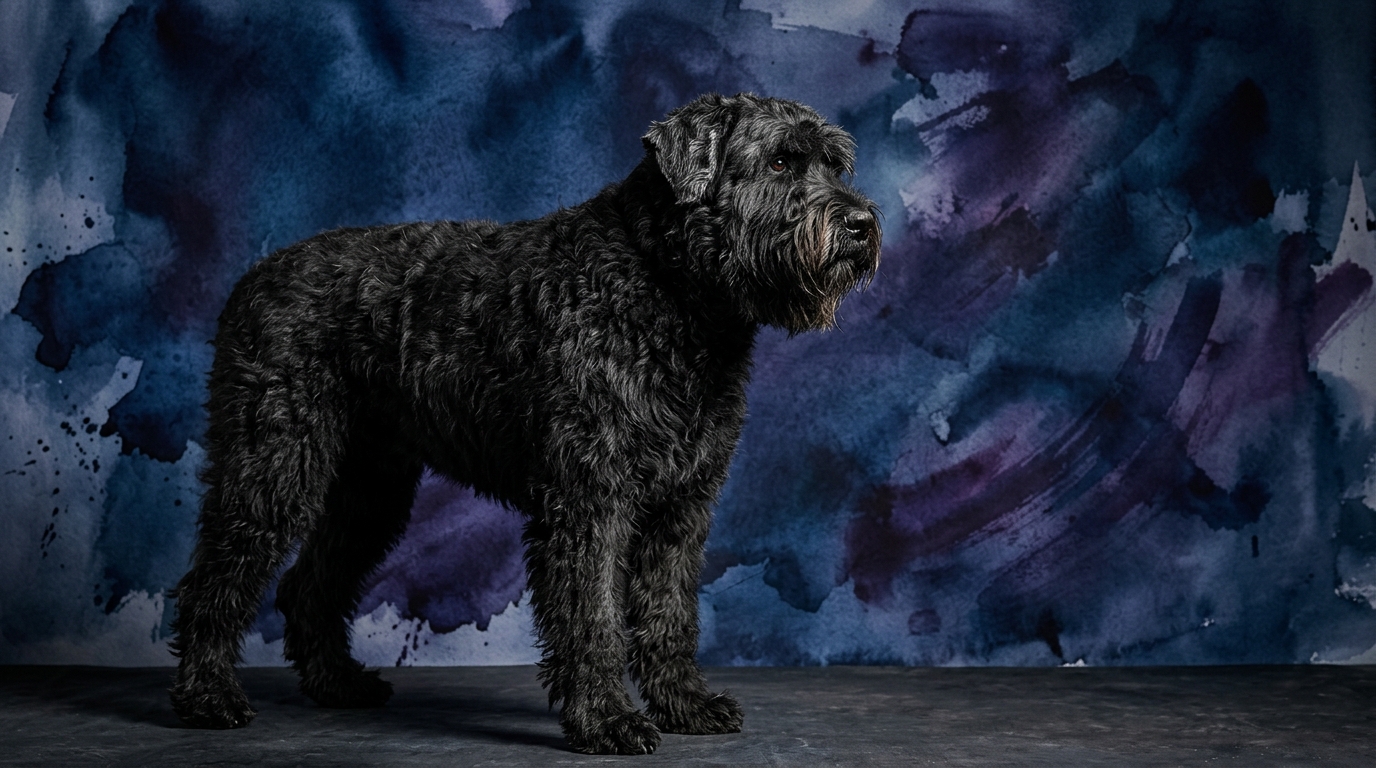
Originating from Flanders as cattle herders, the Bouvier des Flandres exhibits a balanced, practical intelligence. Its Problem Solving score of 3/5 suggests a moderate capacity for independent thought and figuring out novel situations, often leaning on strong working instincts rather than abstract reasoning. Training Speed, also at 3/5, indicates it learns new commands and routines at a steady, deliberate pace, requiring consistent methods and patience for retention. Social Intelligence, rated 3/5, points to a dog that understands human cues and relationships adequately, but might not be as overtly expressive or keen on intricate social maneuvering as some breeds. Its Instinctive Drive, a solid 3/5, reflects a moderate inherent desire to perform breed-specific tasks, like guarding or herding, providing a foundation for purposeful activity. Finally, Memory at 3/5 suggests it retains learned information and experiences reliably, but perhaps without the lightning-fast recall seen in other breeds. This overall profile paints a picture of a thoughtful, capable dog that thrives on clear direction and meaningful work.
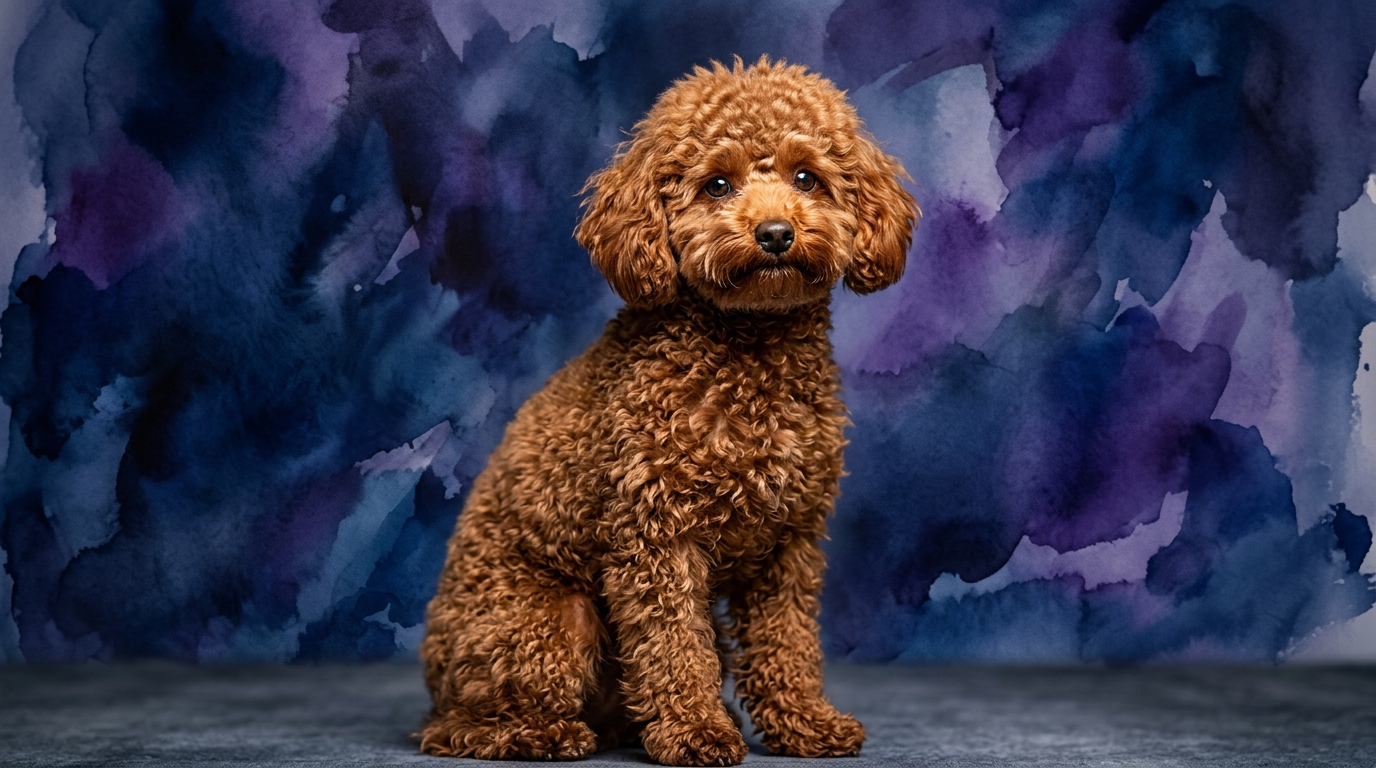
Despite its dainty appearance, the Toy Poodle carries the genetic legacy of its larger Poodle ancestors, originally bred for waterfowl retrieving, and its cognitive profile reflects this working heritage. Its Problem Solving ability is exceptional, scoring a perfect 5/5, indicating a profound capacity to analyze situations, devise solutions, and adapt to new challenges with remarkable ingenuity. Training Speed also stands at 5/5, meaning Toy Poodles absorb new commands, tricks, and complex routines with extraordinary quickness, often picking up concepts after only a few repetitions. Social Intelligence, at 3/5, matches the Bouvier, suggesting a good understanding of human interaction, but perhaps not an overwhelming drive for complex social dynamics beyond their immediate family. Instinctive Drive, also 3/5, points to a moderate inherent desire for certain activities, which for Poodles often translates into a love for retrieving games and active engagement. Memory, scoring 5/5, is another standout trait, allowing the Toy Poodle to retain a vast repertoire of learned behaviors, commands, and past experiences with impressive accuracy and longevity. This profile describes a highly adaptable, quick-witted canine with a strong aptitude for learning and mental engagement, underscored by its Coren rank of #2 among dog breeds.
Where the Bouvier des Flandres Cognitively Excels
The Bouvier des Flandres, with its uniform 3/5 cognitive scores, shines in areas demanding steadfastness, independent judgment within a framework, and a durable work ethic. Its strength lies in processing information and responding with a deliberate, measured approach, invaluable in traditional herding tasks requiring self-reliant decisions within a larger goal. Unlike breeds that might act impulsively, a Bouvier's moderate problem-solving and training speed indicate a thoughtful dog that assesses before acting, and once learned, lessons are deeply ingrained. This ensures consistent performance, less prone to errors of haste. For tasks requiring prolonged focus and methodical execution, such as patrolling boundaries or managing livestock, its steady memory and instinctive drive provide a robust foundation. This breed is a diligent partner, not a flashy performer, valuing consistency and reliability above all.
Where the Toy Poodle Cognitively Excels
The Toy Poodle’s cognitive strengths are remarkably pronounced, particularly in rapid acquisition and flexible application of knowledge. Its perfect 5/5 scores in Problem Solving, Training Speed, and Memory indicate exceptional learning and retention, placing it among the most adaptable canine companions. This breed grasps complex concepts with intuitive understanding, often anticipating commands or solving multi-step puzzles with minimal guidance. High problem-solving means a Toy Poodle can navigate novel environments, solve intricate enrichment toys, or even figure out how to open gates with considerable ingenuity. Its speed of learning allows mastering a vast array of commands and tricks, making it a star in obedience, agility, and even trick training. Coupled with outstanding memory, learned information tends to stick, enabling an extensive behavioral repertoire. This cognitive profile means the Toy Poodle is perpetually ready for new challenges, thrives on mental stimulation, and adapts behavior to a wide variety of situations and expectations.
Which is Easier to Train and Why
Based on their respective IQ profiles, the Toy Poodle is demonstrably easier and faster to train than the Bouvier des Flandres. The Toy Poodle's 5/5 Training Speed means it grasps new commands and routines with astonishing rapidity, often requiring fewer repetitions to achieve proficiency. Their 5/5 Problem Solving and Memory further enhance this, allowing them to not only learn quickly but also to retain that knowledge over extended periods and apply it flexibly in different contexts. A Toy Poodle might learn "sit" in a single session, and then generalize that command to various environments with ease, often enjoying the process of learning and seeking out mental engagement. In contrast, the Bouvier des Flandres, with a 3/5 Training Speed, requires a more patient, consistent, and structured approach. While certainly trainable, they absorb new information at a more moderate pace. Lessons need to be reinforced more frequently, and generalization to new environments might take more deliberate practice. A Bouvier might understand "sit" but needs more consistent cues and repetitions to perform it reliably across different distractions. Their independent herding nature means they may occasionally weigh a command against their own assessment of a situation, rather than instantly complying. For owners seeking a dog that picks up cues almost instantly and enjoys complex, fast-paced training, the Toy Poodle is the clear choice. For those who appreciate a more thoughtful, deliberate learner and are prepared for consistent, patient instruction, the Bouvier offers a rewarding training journey.
Which Suits Active Owners vs. Relaxed Owners
Understanding the cognitive profiles helps align these breeds with suitable lifestyles. The Bouvier des Flandres, despite its moderate IQ scores, is fundamentally a working dog from the Herding group, meaning it often suits active owners who can provide consistent purpose and structured activity. Its 3/5 Instinctive Drive, while not extreme, still points to a need for mental and physical engagement that goes beyond casual walks. This breed thrives when given a "job" – whether it's obedience training, protection work, agility, or simply long, purposeful hikes. Their moderate problem-solving and memory mean they benefit from routine and a clear sense of structure, which active, engaged owners are often better equipped to provide. A relaxed owner who offers minimal mental stimulation might find a Bouvier becoming bored or developing undesirable independent behaviors. Conversely, the Toy Poodle, with its exceptional problem-solving and training speed, also benefits immensely from active engagement, but their activity can be more varied and often less physically demanding in terms of sheer endurance. They are ideal for active owners who enjoy mental games, trick training, agility (suited for their size), or even canine freestyle. Their ability to learn quickly means they can be challenged with new concepts daily, preventing boredom. While they appreciate physical exercise, their mental needs are paramount. A truly relaxed owner who offers little engagement risks a Toy Poodle becoming restless or finding their own, potentially mischievous, ways to solve problems. In essence, both breeds benefit from active owners, but the *type* of activity differs: the Bouvier needs purposeful, consistent physical and mental work, while the Toy Poodle thrives on diverse, often intricate, mental challenges.
The Verdict
Choose a Bouvier des Flandres if you value a steadfast, deliberate, and dependable partner for purposeful activities, appreciating a dog that thinks through problems and learns consistently, even if at a moderate pace. This breed suits those seeking a loyal protector and working companion who thrives on clear structure and meaningful tasks, and who are prepared for patient, consistent training.
Choose a Toy Poodle if you desire a quick-witted, highly adaptable, and mentally agile companion who excels in rapid learning, problem-solving, and retaining a vast repertoire of behaviors. This breed is ideal for owners who enjoy engaging in complex training, mental games, and various dog sports, and who appreciate a dog that can quickly adapt to diverse situations and learn new things with enthusiasm.
🧠 Find Your Pet's IQ Score
Our Pet IQ Lab assessment covers 25+ tests across 5 cognitive dimensions — personalized to your breed.
Take the Full IQ Test →Frequently Asked Questions
Are Bouvier des Flandres difficult to train?
While not inherently difficult, Bouvier des Flandres require consistent, patient training due to their moderate training speed (3/5). They learn steadily and retain information well, but benefit from clear methods and frequent reinforcement to master commands and generalize behaviors effectively.
Do Toy Poodles need a lot of mental stimulation?
Yes, Toy Poodles thrive on significant mental stimulation due to their exceptional problem-solving and memory (both 5/5). They enjoy learning new tricks, puzzle toys, and engaging in interactive games, which prevents boredom and channels their quick wit constructively.
Which breed is better for a first-time dog owner?
The Toy Poodle's rapid training speed and eagerness to learn generally make it a more forgiving choice for a first-time owner, provided they are prepared to meet its significant mental stimulation needs. The Bouvier's more independent nature and deliberate learning pace might be more challenging for a novice handler.