
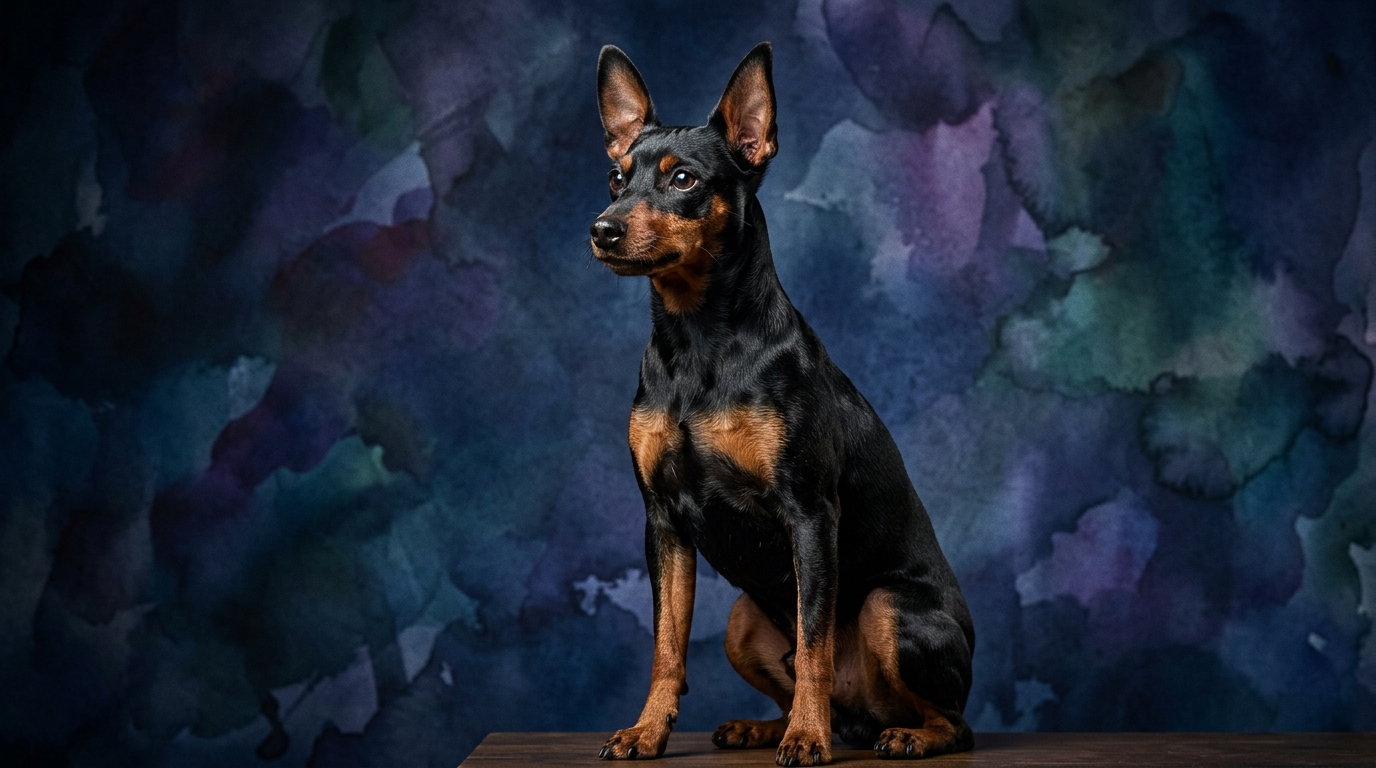
Side-by-Side Cognitive Profiles: Boxer vs. Miniature Pinscher
The Cosmic Pet Pet IQ Lab employs a five-dimensional framework to assess canine intelligence, providing a granular view beyond general perceptions. For the Boxer, a working breed with a Coren rank of #48, their cognitive scores reflect a balanced approach with a standout social aptitude. Their Problem Solving is rated at 3/5, indicating a capacity for navigating novel situations and figuring out puzzles, but not necessarily an instinctive drive to do so independently. Training Speed also sits at 3/5, suggesting they grasp commands at a moderate pace, often requiring consistent, engaging methods. Where Boxers truly shine is in Social Intelligence, scoring an impressive 5/5; this reflects a profound ability to understand human cues, emotions, and intentions, fostering deep connections. Their Instinctive Drive, at 4/5, points to a strong internal motivation for activity, play, and often protection, rooted in their heritage. Finally, their Memory is rated 3/5, meaning they retain learned information and experiences adequately over time.
In contrast, the Miniature Pinscher, a toy breed not featured on the Coren ranking, presents a remarkably consistent cognitive profile across all dimensions. Their Problem Solving is 3/5, mirroring the Boxer's capacity for working through challenges, though perhaps with a different approach. Training Speed is also 3/5, suggesting a similar pace of learning new commands, requiring patience and clear communication. Their Social Intelligence is 3/5, indicating they recognize human cues and form bonds, but perhaps with a more independent streak than their Boxer counterparts. The Min Pin's Instinctive Drive is 3/5, a moderate level that still fuels their alert nature and zest for life. Lastly, their Memory is 3/5, allowing them to recall past events and training with reasonable accuracy. This uniformity across their scores suggests a highly adaptable and self-reliant cognitive makeup, perfectly suited to their 'King of Toys' persona.
Where the Boxer Excels Cognitively
The Boxer's most notable cognitive strength lies in their exceptional Social Intelligence, scoring a full 5/5 compared to the Min Pin's 3/5. This pronounced aptitude means Boxers possess an uncanny ability to read human body language, vocal tones, and even subtle emotional shifts. They are inherently attuned to their human companions, often anticipating needs and responding with empathy and engagement. This isn't merely about affection; it's a sophisticated cognitive function that allows them to integrate seamlessly into a family unit, understanding household dynamics and individual personalities with remarkable depth. Their cooperative nature, deeply ingrained from their working dog ancestry, makes them highly receptive to joint activities and shared experiences, fostering a profound partnership.
Furthermore, the Boxer's higher Instinctive Drive (4/5 versus Min Pin's 3/5) translates into a more sustained and focused energy for tasks and interaction. While both breeds are driven, the Boxer's drive is often channeled into robust play, protective instincts, and a desire to participate alongside their human. This translates cognitively into a greater capacity for sustained engagement in activities like agility, obedience trials, or even just long games of fetch, where their mental focus can be maintained for longer periods. Their cognitive processing is geared towards active collaboration and purposeful action, making them responsive partners in structured activities.
Where the Miniature Pinscher Offers Unique Cognitive Advantages
While the Miniature Pinscher's individual IQ scores don't surpass the Boxer's in any single dimension, their consistent 3/5 across the board points to a balanced, self-contained cognitive profile that offers distinct advantages, particularly in terms of independent thought and situational awareness. Their Problem Solving at 3/5, coupled with a lower Social Intelligence (3/5), suggests a cognitive approach that might be less reliant on human input for navigating challenges. Min Pins often exhibit a resourceful independence, using their wits to assess situations and find solutions on their own terms, rather than constantly seeking human guidance. This self-reliance can be a cognitive 'win' for owners who appreciate a dog with a strong internal compass.
The Min Pin's cognitive architecture, while not scoring higher, is optimized for alertness and vigilance. Their moderate Instinctive Drive (3/5) is frequently channeled into an acute awareness of their surroundings, making them excellent watchdogs. Their cognitive processing is finely tuned to detect subtle changes in their environment, processing sounds and sights with a keen focus that belies their size. This isn't about raw problem-solving power, but rather a specialized cognitive efficiency in environmental monitoring and early detection, a trait valuable for a small dog designed to be a spirited companion and protector within its domain. Their ability to quickly assess and react to novel stimuli, even if it's just a leaf blowing past the window, showcases a rapid cognitive processing geared towards vigilance.
Training Dynamics: Boxer vs. Miniature Pinscher
When it comes to ease of training, the Boxer generally presents a more straightforward experience for most owners, despite both breeds sharing a 3/5 Training Speed score. The key differentiator lies in their Social Intelligence. The Boxer's 5/5 in this area means they possess a deep desire to please and cooperate with their human companions. They are highly motivated by positive reinforcement that strengthens their bond, quickly understanding that compliance leads to positive interaction and approval. Their robust Instinctive Drive (4/5) can be effectively channeled into training exercises, making them eager participants in activities like obedience, rally, or even protection work, where their cognitive focus aligns with their natural inclinations. Behavioral challenges, when they arise, often stem from boredom or a lack of clear communication, rather than deliberate defiance.
The Miniature Pinscher, with its 3/5 Training Speed and 3/5 Social Intelligence, can be more challenging to train for some. Their independence, while a cognitive advantage in some contexts, means they are less inherently driven by the desire to please their human. A Min Pin might weigh the perceived benefit of a command against its own immediate desires, requiring a trainer to be exceptionally consistent, patient, and creative in making training rewarding. Their alert nature, a cognitive strength for vigilance, can also translate into distractibility during training sessions, as their attention is easily drawn to environmental stimuli. Successful Min Pin training often hinges on short, engaging sessions, high-value rewards, and a firm, yet positive, leadership that acknowledges their spirited and self-assured cognitive style. They demand a trainer who respects their independent mind rather than expects blind obedience.
Lifestyle Match: Active vs. Relaxed Owners
For owners with an active lifestyle, the Boxer is an almost ideal cognitive match. Their 4/5 Instinctive Drive fuels a significant need for physical exercise and mental engagement. Boxers thrive when they are active partners in their owner's life, whether it's through long runs, hiking, playing vigorous games, or participating in dog sports like agility or flyball. Their high Social Intelligence means they prefer to engage in these activities alongside their human, making them excellent companions for shared adventures. A sedentary lifestyle would be a poor cognitive fit for a Boxer, leading to boredom and potential behavioral issues as their considerable mental and physical energy is left unchanneled.
The Miniature Pinscher, while energetic for its size, offers a more flexible fit for both active and moderately relaxed owners, provided their cognitive and physical needs are met with consistency. Their 3/5 Instinctive Drive means they require regular exercise, but their needs can often be satisfied with daily walks, indoor play sessions, and short bursts of activity, making them suitable for apartment living. A relaxed owner who prioritizes consistent mental stimulation through puzzle toys, training games, and varied short outings can keep a Min Pin content. Their independent cognitive streak means they are less demanding of constant direct interaction than a Boxer, sometimes content to observe from a comfortable perch, making them adaptable to owners who might not always be 'on the go' but still provide structured engagement.
The Verdict
Choose a Boxer if you seek a deeply socially intelligent companion for an active, engaged lifestyle, valuing a dog that thrives on cooperative participation and shared activity.
Opt for a Miniature Pinscher if you appreciate a spirited, independent thinker with acute environmental awareness, suitable for owners who can provide consistent mental and physical stimulation in a more compact package.
🧠 Find Your Pet's IQ Score
Our Pet IQ Lab assessment covers 25+ tests across 5 cognitive dimensions — personalized to your breed.
Take the Full IQ Test →Frequently Asked Questions
Are Boxers difficult to manage due to their strong instinctive drive?
While Boxers possess a 4/5 Instinctive Drive, this energy is often channeled into play, protective instincts, and a desire for activity. With their 5/5 Social Intelligence, they are highly receptive to guidance and excel when their drive is directed through consistent training and ample opportunities for physical and mental engagement, making them manageable and responsive.
Do Miniature Pinschers require extensive mental stimulation despite their small size?
Yes, Min Pins, with their balanced 3/5 scores across all cognitive dimensions, including problem-solving and memory, benefit significantly from mental stimulation. Their independent nature and keen alertness mean they thrive on puzzle toys, varied training sessions, and opportunities to explore, preventing boredom and channeling their cognitive energy constructively.
How does a Boxer's high social intelligence affect their adaptability to different family members?
A Boxer's 5/5 Social Intelligence means they are exceptionally adept at understanding and forming bonds with various family members. They quickly learn to read individual cues and adapt their interactions, fostering strong, empathetic connections with everyone in the household, making them highly integrated and responsive family companions.