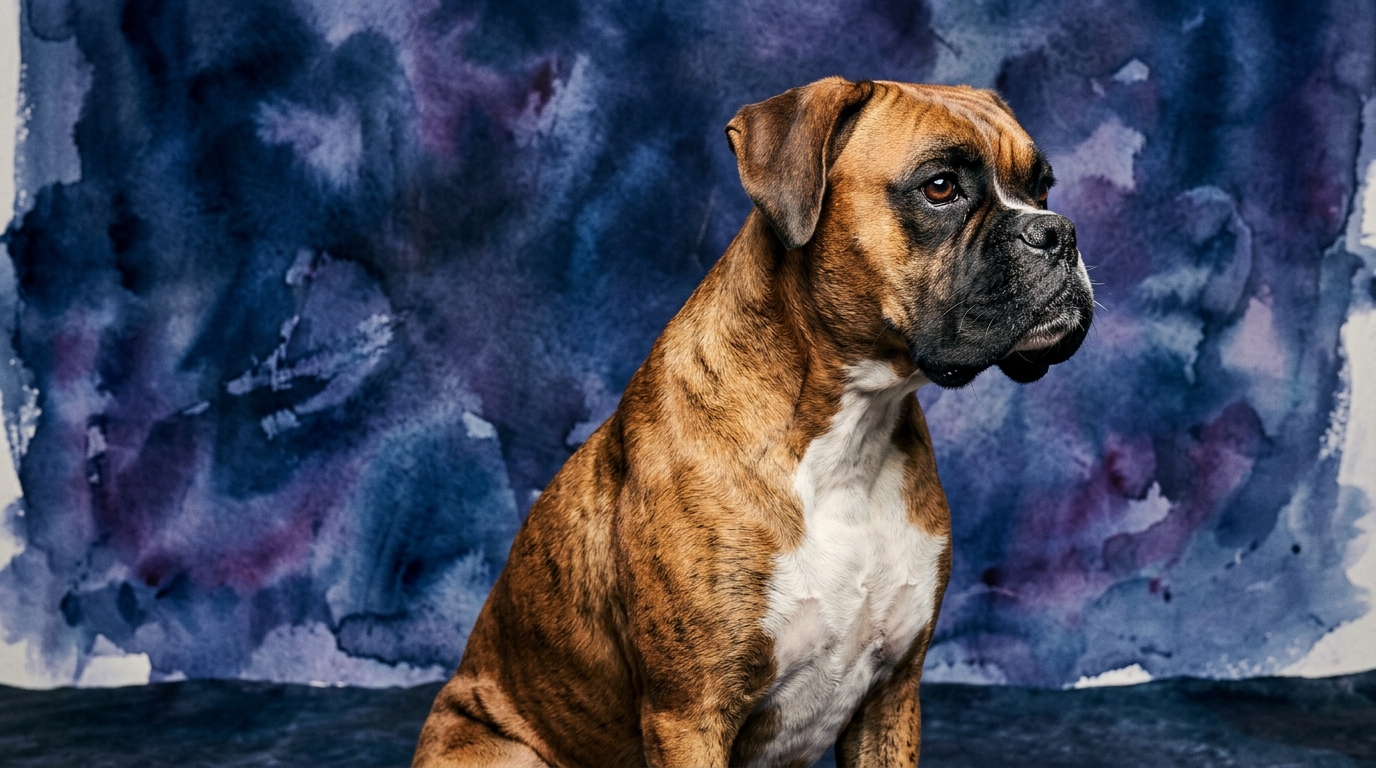
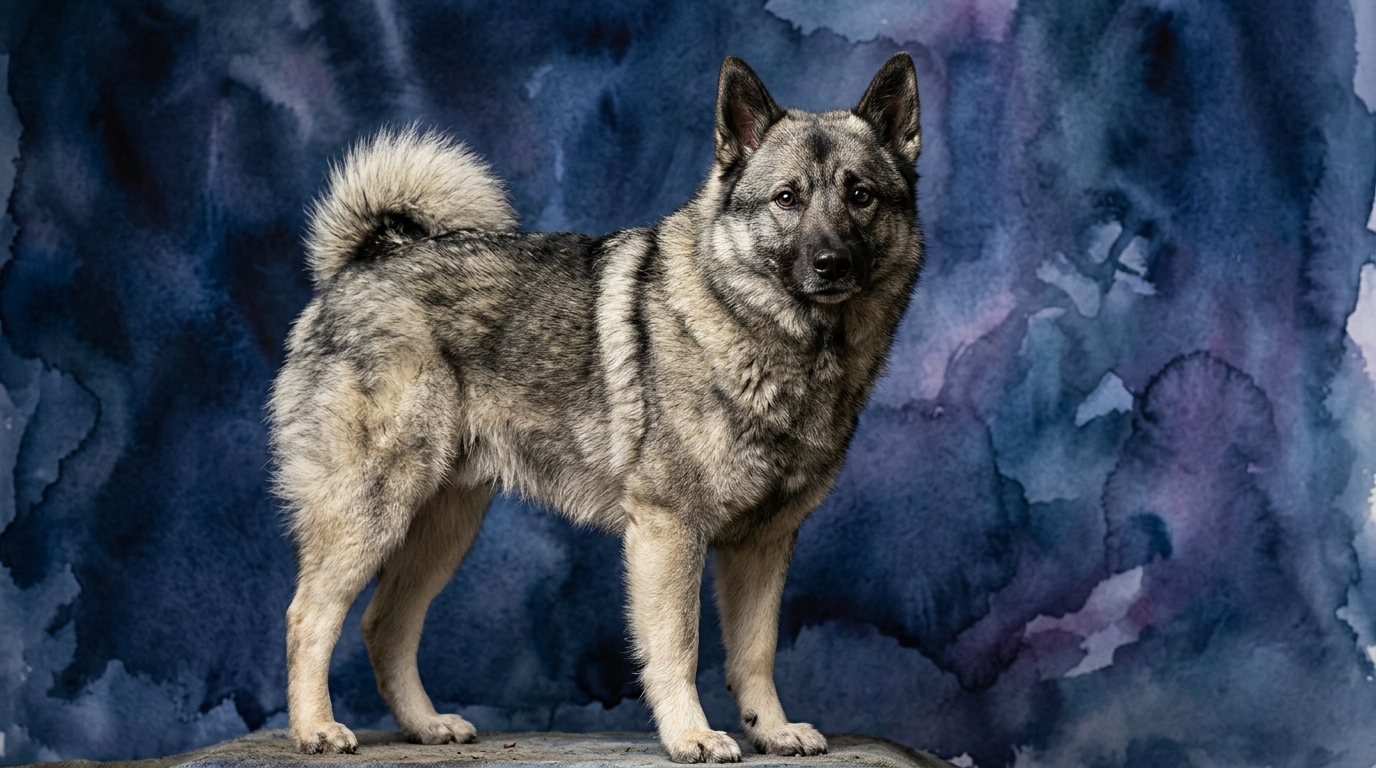
Side-by-Side Cognitive Profile: Boxer vs. Norwegian Elkhound
At The Cosmic Pet Pet IQ Lab, we dissect canine intelligence across five critical dimensions. The Boxer, a robust member of the Working Group, registers a Coren rank of #48, indicating a solid capacity for adaptive learning. Its Problem Solving score of 3/5 suggests it learns effectively through experience and directed guidance rather than immediate, abstract insight. Training Speed, also at 3/5, means the Boxer thrives on consistent, engaging repetition, which helps channel its inherent playfulness and energy. Where the Boxer truly shines is Social Intelligence, earning a perfect 5/5; these dogs are remarkably attuned to human emotions and social cues, eager to interact and form deep bonds. Their Instinctive Drive, at 4/5, points to a strong propensity for protective behaviors and purpose-driven tasks, often involving their human companions. Memory for the Boxer is 3/5, meaning learned behaviors stick with practice, but complex sequences might require refreshers.
The Norwegian Elkhound, classified within the Hound Group, holds a higher Coren rank of #36, reflecting a greater general cognitive flexibility. Its Problem Solving ability is rated 4/5, indicating a resourceful nature and a knack for figuring out challenges independently, often employing clever strategies. Training Speed for the Elkhound is 4/5; they grasp new commands and concepts quite rapidly, though their independent spirit can sometimes influence their willingness to comply. Social Intelligence stands at 3/5; while Elkhounds bond with their families, they are generally less overtly demonstrative and less reliant on constant human validation than Boxers, preferring a more self-directed engagement. Their Instinctive Drive is 3/5, characterized by a strong prey drive and a desire to track and explore, but often on their own terms rather than as part of a collaborative task. The Elkhound's Memory is rated 4/5, showcasing a robust ability to retain information, crucial for a breed historically tasked with navigating vast territories and recalling trails.
Where the Boxer Cognitively Excels
The Boxer's standout cognitive strength lies in its exceptional Social Intelligence, scoring a rare 5 out of 5. This isn't merely about being friendly; it signifies a profound ability to interpret human emotions, body language, and vocal tones. Boxers leverage this acumen to forge incredibly strong, reciprocal bonds, often anticipating their owner's moods and desires. This makes them highly cooperative partners in training and daily life, eager to engage in shared activities and quick to understand what is expected of them in a social context. Their expressive faces and animated communication are direct manifestations of this high social IQ, making them intuitive and empathetic companions.
Furthermore, the Boxer's Instinctive Drive, rated at 4/5, often manifests as a strong desire for purposeful interaction and protection, which contrasts with the Elkhound's more self-directed drives. While the Elkhound's drives are about independent hunting, the Boxer's drives are more frequently channeled into collaborative tasks, such as guarding their family or engaging in interactive play that mimics working roles. This drive, combined with their social intelligence, makes them particularly responsive to training that involves a 'job' or a role within the family unit, thriving on the validation and interaction it brings.
Where the Norwegian Elkhound Cognitively Excels
The Norwegian Elkhound demonstrates superior Problem Solving capabilities, scoring 4/5 compared to the Boxer's 3/5. This reflects their history as independent hunters, requiring them to think on their paws without constant human direction. An Elkhound is more likely to devise creative solutions to obstacles, such as figuring out how to open a cupboard or navigate a complex scent trail, relying on their own strategic thinking rather than waiting for a cue. This intellectual resourcefulness means they appreciate mental challenges that allow them to exercise their independent thought processes.
Complementing this, the Elkhound's Training Speed is 4/5, indicating they grasp new commands and concepts more quickly than a Boxer. They absorb information efficiently, needing fewer repetitions to understand a new task. This rapid acquisition of knowledge is paired with a Memory score of 4/5, meaning once they learn something, they retain it well. This strong recall, vital for remembering complex scent patterns and routes, also applies to obedience commands, making them capable students who can build a substantial repertoire of learned behaviors over time. Their challenge isn't learning *what* to do, but often *why* they should do it if it conflicts with their independent nature.
Training Dynamics: Boxer vs. Norwegian Elkhound
Determining which breed is 'easier' to train is nuanced, as it depends on an owner's approach and expectations. The Boxer, with its 3/5 Training Speed, may require more repetitions to solidify commands, but its 5/5 Social Intelligence makes it incredibly eager to please and highly motivated by human praise and interaction. A Boxer thrives on positive reinforcement, playful engagement, and consistent, clear communication. Their exuberance can sometimes be a distraction, making focus a key training goal, but their inherent desire to collaborate often smooths the learning process for a dedicated owner. They respond well to training that feels like a game and strengthens their bond with their person.
The Norwegian Elkhound, while boasting a faster Training Speed of 4/5, presents a different kind of training challenge due to its 3/5 Social Intelligence and independent nature. Elkhounds learn commands quickly, but their willingness to *perform* them consistently can be conditional. They are less driven by the sheer desire to please and more by what makes sense to them or what offers a compelling reward. This means training an Elkhound requires patience, fairness, and a deep understanding of their motivations. Owners must prove that following commands is worthwhile and consistent, as an Elkhound will question or ignore directives if it doesn't see the point or if a stronger instinct takes over. Their independence means they need a firm, consistent leader who respects their intelligence but doesn't allow them to dictate terms.
Lifestyle Match: Active vs. Relaxed Owners
Neither the Boxer nor the Norwegian Elkhound is suited for a truly relaxed, sedentary lifestyle; both breeds demand significant physical and mental engagement. The Boxer, with its high energy and 4/5 Instinctive Drive, thrives with active owners who enjoy interactive play, structured training sessions, and plenty of opportunities for running and vigorous exercise. Their social intelligence means they genuinely enjoy participating in family activities and being the center of attention during playtime. They need mental stimulation through puzzle toys, obedience work, or even dog sports to prevent boredom and destructive behaviors. An owner who enjoys a canine partner for jogs, fetch, or agility will find a Boxer a joyful match.
The Norwegian Elkhound, possessing a robust stamina and a 3/5 Instinctive Drive geared towards independent exploration and tracking, is best suited for active, outdoors-oriented owners. They require extensive daily exercise that engages their natural hunting and scenting instincts, such as long hikes, trail running, or scent work. While they can be affectionate, their need for purpose often manifests in exploring their environment rather than constant human interaction. Owners who appreciate a dog with a strong, independent spirit, who is a partner for adventures in nature, and who can provide outlets for their tracking desires will find the Elkhound a fulfilling companion. They are less about constant collaborative play and more about shared expeditions.
The Verdict
Choose a Boxer if you seek a highly interactive, socially intelligent companion who thrives on collaborative play and forms deep, expressive bonds with their human family.
Choose a Norwegian Elkhound if you desire an independent, resourceful problem-solver who excels in outdoor adventures and values a more self-directed, yet loyal, partnership.
🧠 Find Your Pet's IQ Score
Our Pet IQ Lab assessment covers 25+ tests across 5 cognitive dimensions — personalized to your breed.
Take the Full IQ Test →Frequently Asked Questions
Are Boxers good with children and other pets?
Boxers, given their high social intelligence and playful nature, can be excellent with children and other pets when properly socialized from a young age. Their exuberance means supervision is always wise, but their desire to be part of the family makes them generally tolerant and affectionate companions.
Do Norwegian Elkhounds have a strong prey drive?
Yes, Norwegian Elkhounds possess a significant prey drive, stemming from their history as hunting dogs. This means they may be prone to chasing small animals, so secure fencing and leashed walks are crucial for their safety and the safety of wildlife.
Which breed requires more grooming?
The Norwegian Elkhound typically requires more grooming due to its thick double coat, which sheds heavily twice a year and needs regular brushing to prevent matting. Boxers have a short, smooth coat that requires minimal grooming, primarily occasional brushing to remove loose hair.