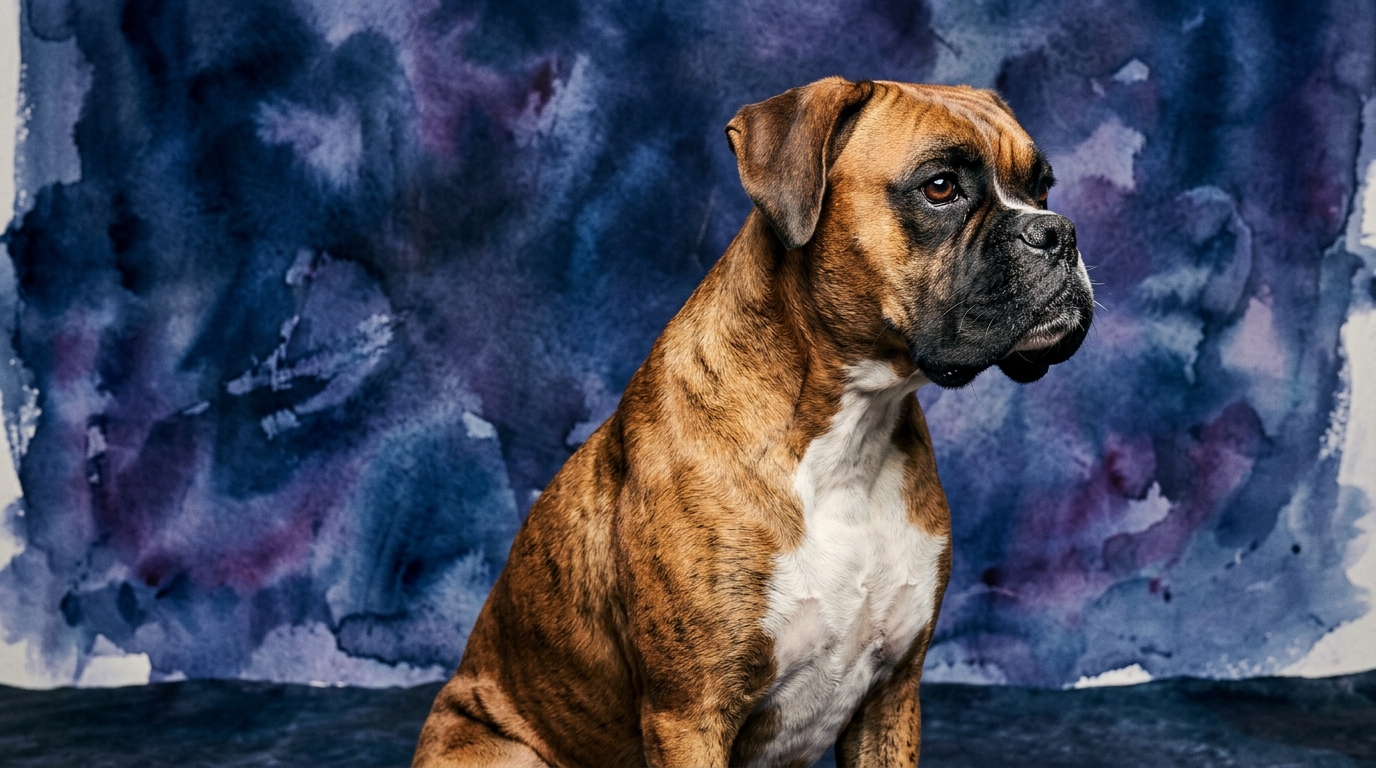
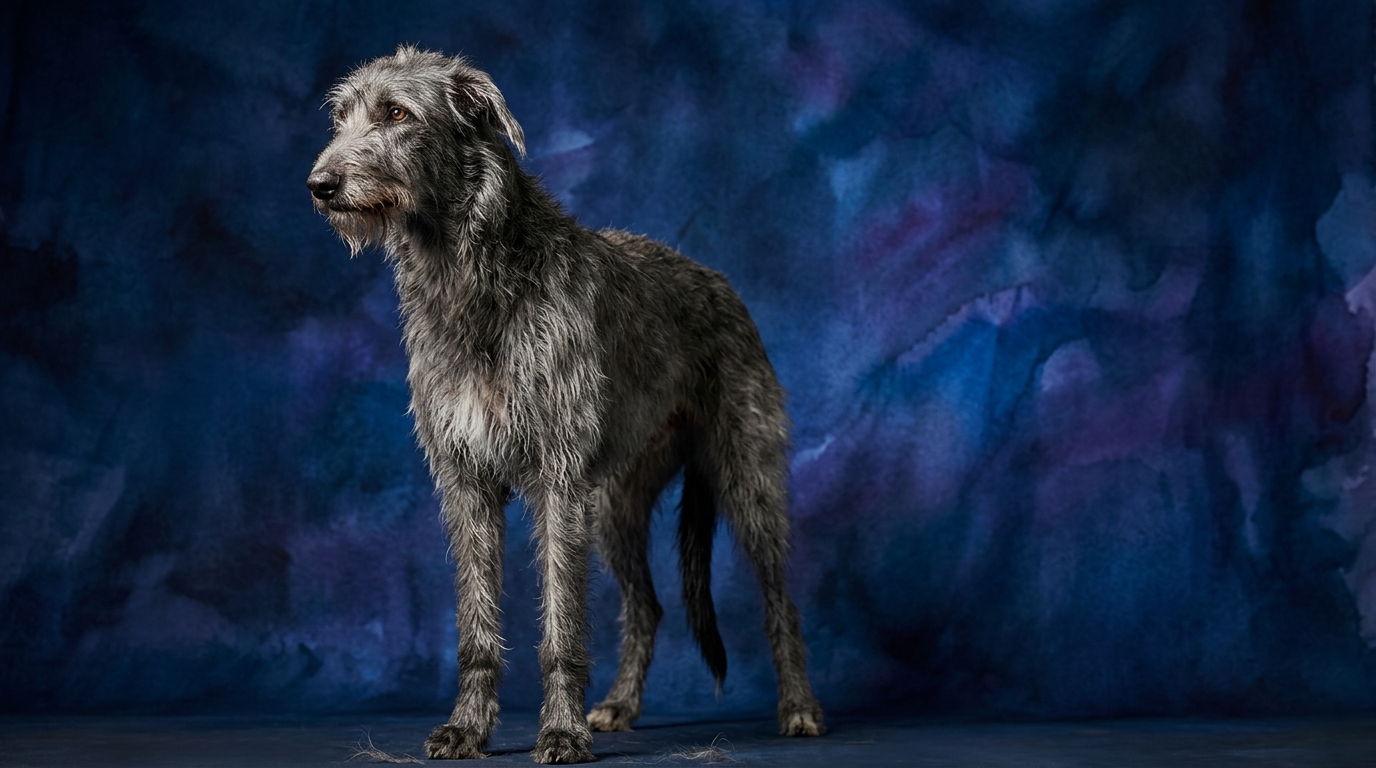
Side-by-Side IQ Profile: Boxer vs. Scottish Deerhound
**Boxer IQ Profile**
**Problem Solving (3/5):** Boxers tackle challenges with energetic, direct approaches, often using their paws or mouth in trial-and-error fashion. Their learning is hands-on and repetitive, showing earnest effort rather than intricate planning.
**Training Speed (3/5):** They learn new commands at a moderate pace. Their playful nature and eagerness to please can lead to delightful distractions, making consistent positive reinforcement key to solidifying understanding.
**Social Intelligence (5/5):** Boxers excel here, demonstrating an exceptional capacity to understand and respond to human emotions and social cues. They form deep, expressive bonds, actively participating in their family's emotional landscape with profound awareness.
**Instinctive Drive (4/5):** As working dogs, Boxers possess a strong drive for play, guarding, and companionship. This fuels their energetic pursuits and protective instincts, making them vigilant and always ready for interaction.
**Memory (3/5):** They have a solid, functional memory for routines, commands, and familiar people. Their recall is reliable for daily life and maintaining learned skills, contributing to their dependability once trained.
**Scottish Deerhound IQ Profile**
**Problem Solving (3/5):** Deerhounds approach problems with calm observation and independent thought, a legacy of their sighthound need for decisive action in the field. They figure things out, often on their own terms and timeline.
**Training Speed (3/5):** Learning at a moderate pace, their motivation stems from different sources than a Boxer. Their independent nature requires creative, varied approaches to maintain engagement, especially if tasks don't immediately appeal to their instincts.
**Social Intelligence (3/5):** Deerhounds are amiable and affectionate with family, but their social intelligence is more reserved and dignified. They observe and connect, often maintaining quiet composure without constant demands for interaction.
**Instinctive Drive (3/5):** Their primary drive is specialized: the pursuit of moving objects. This powerful instinct is context-specific; outside of chasing, their general activity is often relaxed. They lack the Boxer's broad working drive.
**Memory (3/5):** Deerhounds possess good working memory for commands, routines, people, and places. This contributes to their comfort in familiar environments and reliable day-to-day interactions.
Where the Boxer Wins Cognitively
The Boxer holds a distinct cognitive edge in social interaction and cooperative engagement. Their 5/5 social intelligence enables an unparalleled capacity to attune to human emotions and social cues, forming deep, expressive bonds. This translates to a companion exceptionally adept at reading subtle owner cues and participating in the family's emotional landscape with remarkable sensitivity. Furthermore, the Boxer's 4/5 instinctive drive, compared to the Deerhound's 3/5, fuels a broader spectrum of enthusiastic engagement. This inherent motivation for diverse tasks, play, and guarding makes them more consistently available for cooperative ventures and shared experiences beyond mere companionship.
Where the Scottish Deerhound Wins Cognitively
The Scottish Deerhound's cognitive strengths lie in a different mental processing, honed by independent hunting. Their 3/5 problem-solving manifests as calm, self-reliant assessment, excelling at rapidly processing visual information and making independent decisions in dynamic environments, a legacy of their sighthound role. This allows them to navigate novel situations with quiet confidence without constant human input. Their specialized 3/5 instinctive drive for visual prey detection signifies a profound, single-minded focus when activated. This cognitive specialization enables intense concentration on a moving target, demonstrating unique situational awareness crucial for their historical purpose.
Which is Easier to Train and Why
The Boxer generally offers a more straightforward training path, primarily due to their higher social intelligence and broader instinctive drive. Both breeds share a 3/5 training speed, but the Boxer's 5/5 social intelligence means they are inherently more inclined to seek human approval and connection. They are deeply motivated by positive feedback, making them more biddable and eager to comply. Their expressive nature allows trainers to adapt methods effectively. A Boxer’s desire to be a "part of the pack" often translates into a strong willingness to learn and conform. The Scottish Deerhound, with its 3/5 social intelligence and independent mindset, can be more challenging. Their motivation is less about pleasing humans and more about personal reward, requiring creative, patient approaches to make training engaging from their perspective.
Which Suits Active Owners vs. Relaxed Owners
For active owners seeking a versatile companion, the Boxer is generally more suitable. Their 4/5 instinctive drive translates into a robust need for diverse physical activity and mental engagement, making them enthusiastic partners for long walks, runs, or dog sports. Their high social intelligence means they thrive on shared experiences, ideal for owners who actively involve their dog in daily life and outdoor pursuits. They require consistent outlets for their energy and desire for companionship. The Scottish Deerhound, conversely, suits owners who appreciate a more relaxed yet still engaged companion. While they need powerful, short bursts of running, their overall energy indoors is typically lower. After a good run, Deerhounds are content to lounge gracefully, enjoying family presence without demanding constant attention.
The Verdict
Choose a Boxer if you seek an effusive, highly social companion eager for constant interaction, cooperative learning, and a variety of shared active experiences.
Choose a Scottish Deerhound if you appreciate a dignified, independent companion who thrives on intense, but brief, physical outlets and then settles into a calm, observant presence within the home.
🧠 Find Your Pet's IQ Score
Our Pet IQ Lab assessment covers 25+ tests across 5 cognitive dimensions — personalized to your breed.
Take the Full IQ Test →Frequently Asked Questions
Do Boxers and Scottish Deerhounds have similar memory capabilities?
Both breeds score 3/5 in memory, indicating functional recall for routines and learned behaviors. However, the Boxer's memory is often reinforced by social interaction, while the Deerhound's might be more focused on spatial awareness and tasks relevant to their independent nature.
How does their problem-solving differ despite both having a 3/5 score?
While rated 3/5, a Boxer's problem-solving often involves enthusiastic trial-and-error and seeking human assistance due to their social drive. A Scottish Deerhound tends to approach problems with more independent observation and self-reliance, leveraging their sighthound intuition.
Is one breed more adaptable to new environments than the other?
The Boxer's high social intelligence and general eagerness typically make them highly adaptable to new social situations and environments, particularly with their people present. The Scottish Deerhound, while calm, may take slightly longer to adjust due to their reserved nature and preference for familiar routines, though generally amiable once settled.