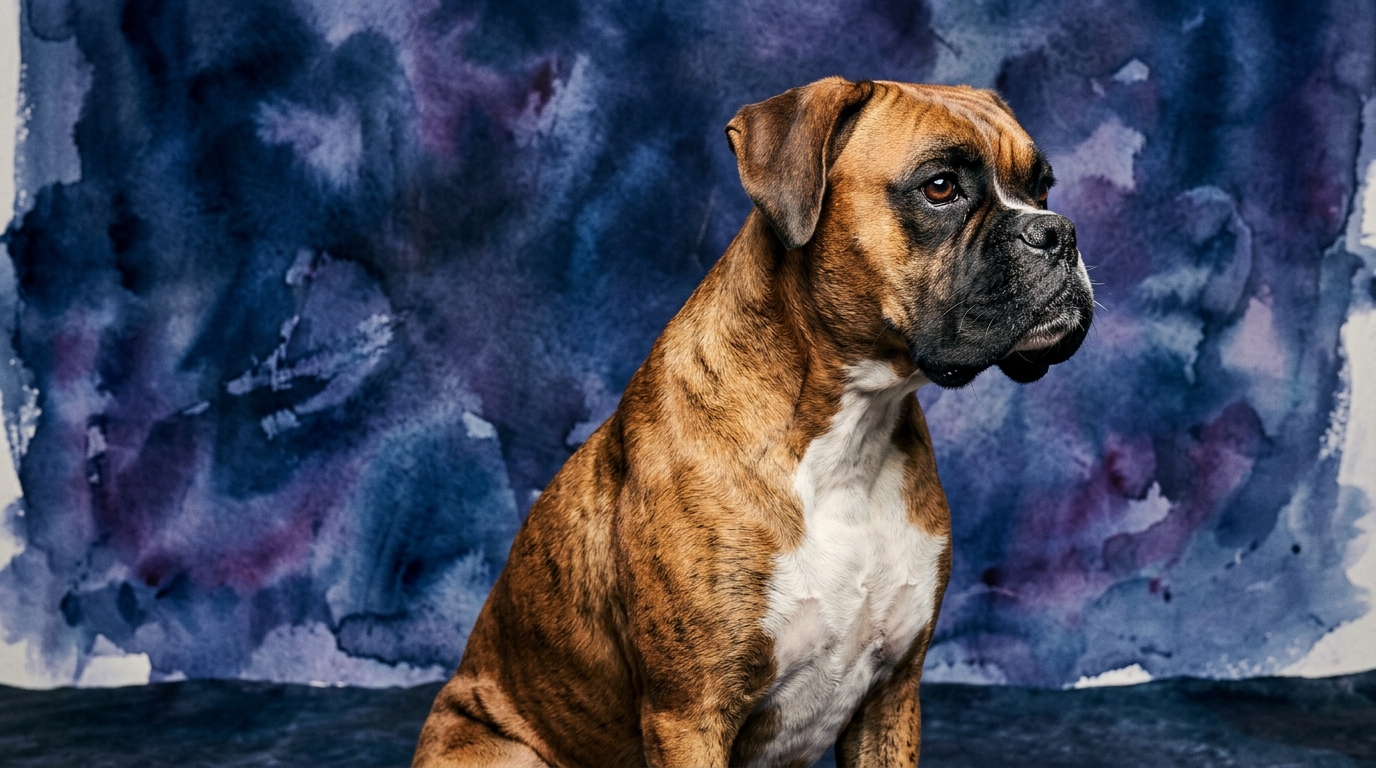
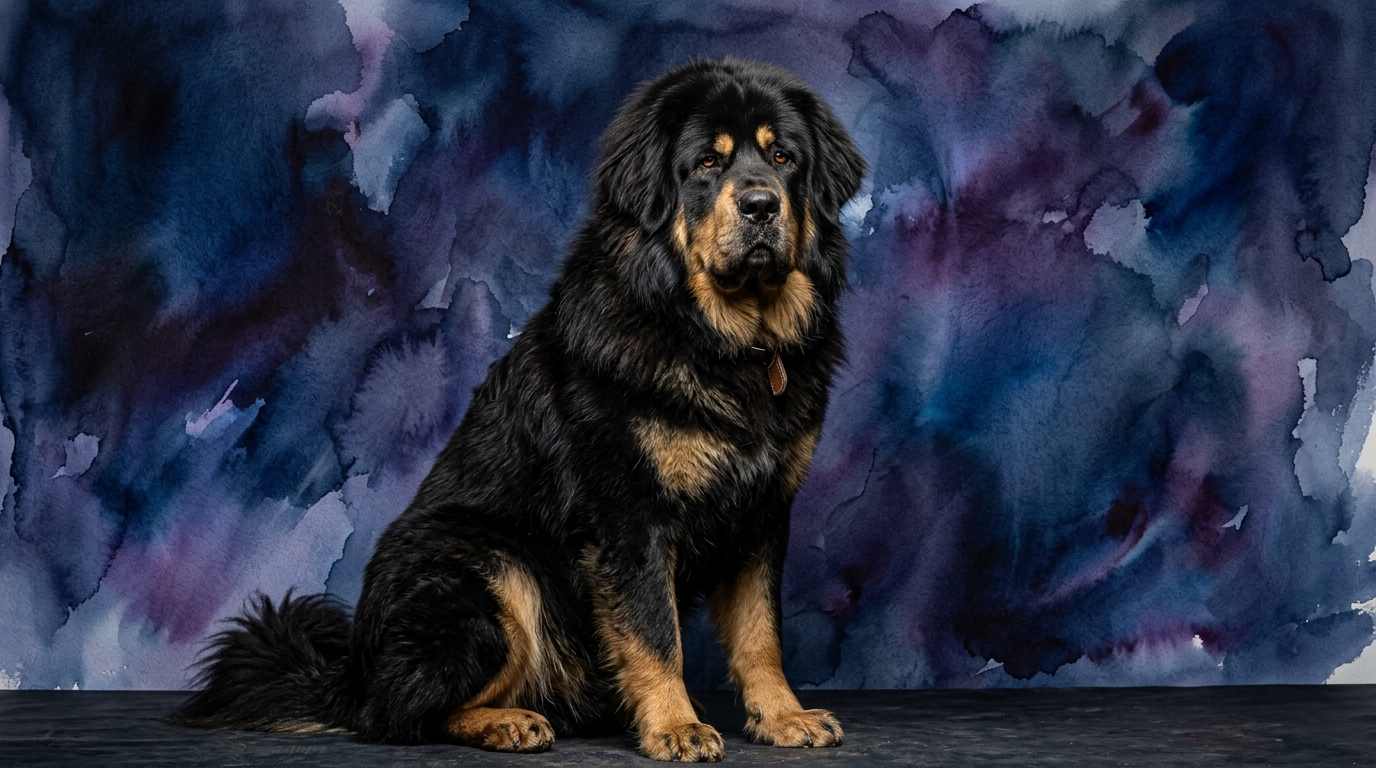
Side-by-Side IQ Profile: Boxer vs. Tibetan Mastiff
The Boxer, ranked #48 by Coren, demonstrates a balanced cognitive profile geared towards companionship and active engagement. Their Problem Solving is rated 3/5, reflecting an aptitude for navigating complex play scenarios and creatively figuring out how to access desired objects, often employing their paws and nose with playful determination. Training Speed is also 3/5; Boxers are generally eager to learn new commands and tricks, responding well to positive reinforcement, though their exuberant nature can sometimes manifest as a playful stubbornness requiring consistent direction. Social Intelligence shines at 5/5, indicating an exceptional attunement to human emotions and social cues, forming incredibly strong bonds and actively seeking interaction, making them highly responsive family companions. Their Instinctive Drive, at 4/5, encompasses strong protective instincts towards their family, coupled with a noticeable prey drive that translates into energetic play and chasing, a nod to their historical role as versatile working dogs. Memory stands at 3/5, allowing them to reliably retain learned commands, routines, and remember people and places, which contributes to their predictable behavior in familiar environments.
The Tibetan Mastiff, while not Coren-ranked, possesses a distinct cognitive makeup shaped by centuries of independent guarding. Their Problem Solving is rated 3/5, where they exhibit a calculated, often observational approach to challenges, preferring to assess situations thoroughly before acting, particularly in their guardianship duties. Training Speed is 3/5; they are capable of learning commands efficiently, but their inherent independence means they demand consistent, patient, and engaging training methods to maintain focus and compliance, often weighing the utility of a command. Social Intelligence is 3/5; they form profound bonds with their immediate family, yet their social circle is typically smaller and highly discerning. They are reserved, sometimes aloof, with strangers, prioritizing their guardian role over broad social engagement. Their Instinctive Drive, at 3/5, is characterized by a strong, inherent territorial guarding instinct, which is less about active pursuit and more about watchful deterrence and formidable presence. Memory is 3/5, crucial for their role as a steadfast protector, as they possess a good memory for their territory, established routines, and the individuals within their trusted inner circle.
Where the Boxer Wins Cognitively
The Boxer's cognitive strengths distinctly lie in their exceptional social intelligence and adaptability. Their 5/5 Social Intelligence score means they are unparalleled in their ability to read human emotions, intentions, and subtle cues, often anticipating needs or reacting empathetically to family members. This makes them incredibly flexible in varied social settings, quick to integrate into new routines, and adept at understanding human expectations beyond direct verbal commands. While both breeds share a 3/5 Problem Solving rating, a Boxer’s manifestation of this often involves more interactive and collaborative approaches; they are more likely to problem-solve by engaging their human companion, for instance, figuring out how to initiate a game or gain attention. Their 4/5 Instinctive Drive also translates into a more interactive and collaborative energy, fostering a desire for engaging play and joint activities that require a responsive partner, rather than solitary vigilance. This cognitive framework makes Boxers particularly adept at navigating the complexities of human family dynamics and thriving in roles that demand close, reciprocal interaction.
Where the Tibetan Mastiff Wins Cognitively
The Tibetan Mastiff's cognitive prowess centers on its formidable independent judgment and self-reliant environmental assessment, traits honed over centuries as solitary guardians. While their Social Intelligence is rated 3/5, this isn't a deficit but a specialization; they excel at discerning true threats from benign presences without needing constant human direction or validation. Their Problem Solving, also 3/5, is often manifested in a highly calculated, observational manner, where they methodically assess their territory for anomalies or potential intrusions, making decisions based on their own keen analysis rather than seeking human input. Their 3/5 Instinctive Drive is singularly focused on territorial defense, demanding a specific type of cognitive processing to identify, monitor, and manage perceived threats over expansive areas. This involves a deep understanding of their domain and an unwavering commitment to its protection. Furthermore, their 3/5 Memory is particularly robust for establishing and recalling territorial boundaries, routines, and the precise individuals considered 'safe' versus 'unsafe' within their domain, a critical component for their role as a steadfast, autonomous protector. This breed’s cognitive architecture is built for vigilance and decisive action in the absence of a direct handler.
Which is Easier to Train and Why
When considering ease of training, the Boxer generally presents a more straightforward experience due to their higher social intelligence and inherent desire for interaction. Their 5/5 Social Intelligence means they are naturally more attuned to human instruction and more eager to please, making them highly responsive to positive reinforcement methods. Boxers typically view training as a collaborative activity, enjoying the mental engagement and the bond it strengthens with their owner. Their playful nature, while sometimes leading to a brief “zoomies” distraction, generally contributes to an enthusiastic approach to learning. In contrast, the Tibetan Mastiff, with its 3/5 Social Intelligence and profound independence, requires a significantly different training paradigm. They were historically bred to make autonomous decisions in vast, remote territories, not to be biddable. Training a Tibetan Mastiff demands immense patience, unwavering consistency, and a deep understanding of their guardian mindset. They need to respect their trainer's leadership and perceive the value in a command, rather than simply obeying out of an inherent desire to please. Their independent problem-solving often means they will weigh a command against their own assessment of the situation, making training a continuous exercise in building trust and demonstrating consistent authority.
Matching Canine Cognition to Owner Lifestyles
The choice between a Boxer and a Tibetan Mastiff also hinges significantly on an owner's lifestyle and temperament. Boxers are undoubtedly better suited for active owners who relish an engaged, high-energy companion. Their substantial physical exercise requirements, coupled with a need for constant mental stimulation and interaction, mean they thrive in environments where they can participate in daily family activities, regular play sessions, and structured training. An owner who enjoys running, hiking, or dog sports will find a Boxer an enthusiastic partner, as their cognitive makeup and instinctive drives demand outlets for their energy and collaborative spirit. Conversely, the Tibetan Mastiff is not a breed for a “relaxed” owner in the sense of minimal engagement, but rather for an owner seeking a steadfast, independent guardian who understands the immense responsibility and nuanced management required. While they don't demand the same intensity of physical exercise as a Boxer, they require large, securely fenced spaces and owners capable of consistently managing their strong, independent territorial instincts. They are best suited for experienced owners who appreciate a formidable, calm presence, are prepared for a dog that makes its own decisions, and can provide firm, consistent leadership without expecting constant, eager biddability.
The Verdict
For an owner seeking an engaged, socially responsive companion who thrives on interaction and collaborative activities, and is eager to learn and participate actively in family life, the Boxer is an ideal choice.
For an experienced owner who values an independent, steadfast guardian with a profound sense of territory and family protection, capable of making autonomous decisions and requiring consistent, patient leadership, the Tibetan Mastiff is a fitting companion.
🧠 Find Your Pet's IQ Score
Our Pet IQ Lab assessment covers 25+ tests across 5 cognitive dimensions — personalized to your breed.
Take the Full IQ Test →Frequently Asked Questions
Are Boxers prone to separation anxiety due to their social intelligence?
Boxers can develop separation anxiety if not properly socialized and accustomed to alone time, as their strong social bonds mean they thrive on constant companionship. Consistent training, early exposure to short periods of solitude, and enrichment activities can help manage this potential issue.
Does a Tibetan Mastiff's lower social intelligence mean they can't bond with their family?
Not at all; Tibetan Mastiffs form extremely deep and loyal bonds with their immediate family, though their social circle is typically very selective and they remain reserved with strangers. Their loyalty is profound and unwavering, just expressed through steadfast protection rather than constant overt affection for all.
How does the "Instinctive Drive" rating impact daily life for these breeds?
A Boxer's 4/5 instinctive drive often translates into energetic play, a noticeable chase instinct, and protective family loyalty, requiring consistent outlets for this energy through structured exercise and mental games. A Tibetan Mastiff's 3/5 drive focuses more intensely on territorial guarding and vigilance, demanding secure fencing, careful socialization, and management of their protective nature to prevent unwanted encounters.