
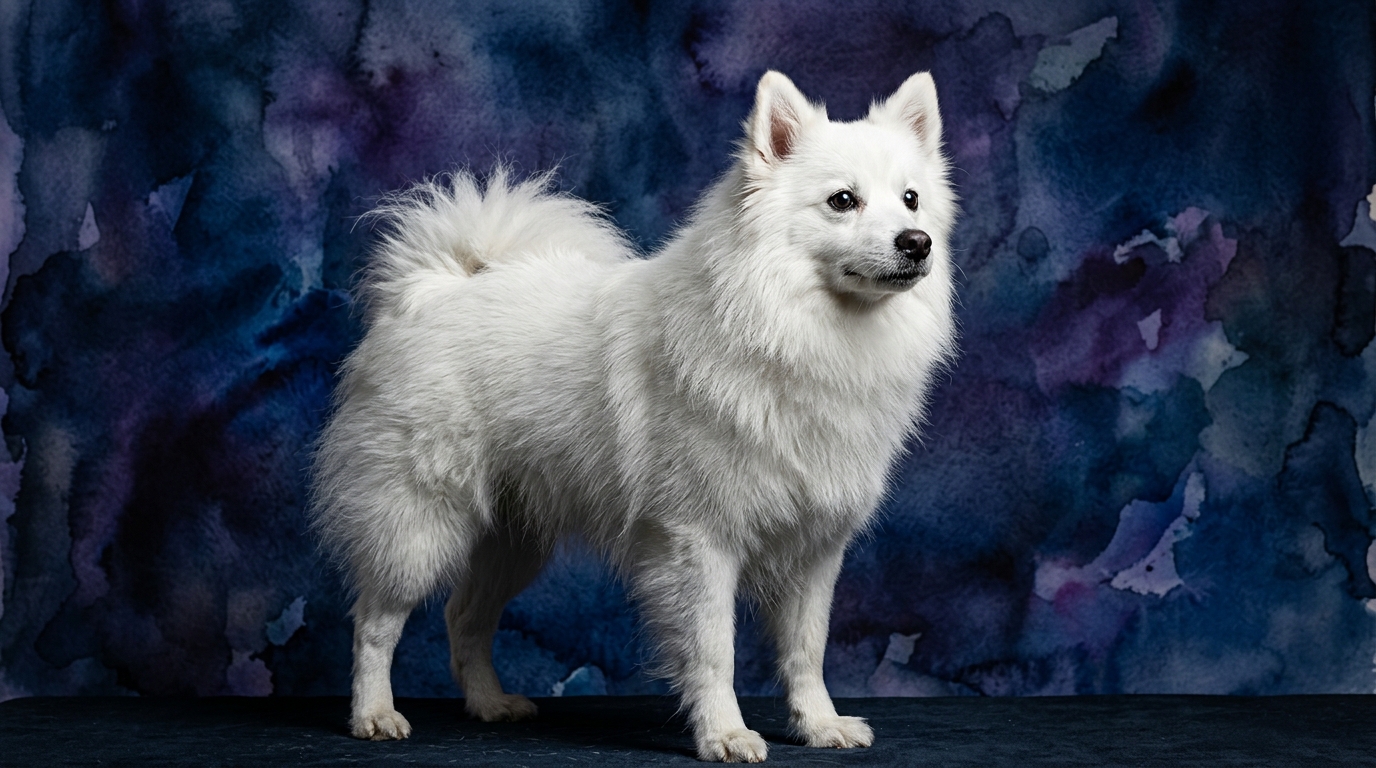
Side-by-Side IQ Profile: Boykin Spaniel vs American Eskimo Dog
The Cosmic Pet Pet IQ Lab utilizes a five-dimensional framework, rating canine intelligence on a scale of 1 to 5. Both the Boykin Spaniel and the American Eskimo Dog remarkably achieve a consistent 3/5 across all categories, suggesting a balanced and capable cognitive makeup. However, the *expression* of these scores is profoundly shaped by their breed groups and historical roles.
For **Problem Solving (3/5)**, this indicates a moderate capacity for navigating novel situations. For the Boykin Spaniel (Sporting), this translates to practical, cooperative problem-solving, like efficiently retrieving game in varied terrain or overcoming obstacles during a hunt, always aiming to assist their human partner. The American Eskimo Dog (Non-Sporting) also scores 3/5, but their problem-solving often manifests as independent reasoning—discerning household routines, figuring out how to access forbidden items, or getting attention, reflecting a more self-serving or environmental mastery approach.
Regarding **Training Speed (3/5)**, this score suggests these breeds are neither exceptionally quick nor slow to grasp new commands. The Boykin's 3/5 is often amplified by their desire to please and strong drive to work alongside their handler, learning efficiently when training aligns with their cooperative nature and retrieving instincts. For the American Eskimo Dog, a 3/5 in training speed is coupled with independence; while capable of learning quickly, they may require more engaging and varied approaches to maintain interest, sometimes prioritizing their own ideas over immediate compliance.
In terms of **Social Intelligence (3/5)**, this denotes a moderate ability to understand and respond to social cues. The Boykin Spaniel's 3/5 is deeply rooted in cooperative partnership; they are adept at reading handler cues for effective teamwork and exhibit strong family bonds, seeking harmonious integration. The American Eskimo Dog's 3/5 displays through keen observation of family emotions and routines, making them alert watchdogs. Their social interactions are discerning—reserved with strangers but deeply devoted and communicative with their chosen family, reflecting their companion and guardian heritage.
The **Instinctive Drive (3/5)** indicates a moderate level of innate behaviors. For the Boykin, this 3/5 is dominated by strong retrieving and hunting instincts, fueling enthusiasm for outdoor activities. Without outlets, this drive can manifest as restlessness. The American Eskimo Dog's 3/5 is characterized by alertness, vocalization, and a strong desire for companionship. Their 'Eskie bark' stems from their watchdog role, and their need for inclusion can lead to excessive barking or separation anxiety if not channeled.
Finally, **Memory (3/5)** suggests a moderate capacity for retaining information. The Boykin's 3/5 memory is critical for complex command sequences, marking game falls, and recalling training, reinforced by repetition in cooperative tasks. The American Eskimo Dog's 3/5 memory excels at remembering routines, people, and places, contributing to their security and ability to navigate their home. They retain training well, though their independent streak might influence their immediate compliance.
Where the Boykin Spaniel Wins Cognitively
While both breeds share identical scores, the Boykin Spaniel's cognitive strengths truly shine in scenarios demanding cooperative problem-solving and task-oriented application of their intellect. Their 3/5 in problem-solving is intrinsically linked to their Sporting heritage, meaning they excel at practical challenges that involve working *with* a human partner towards a shared objective. For instance, they demonstrate a superior ability to strategize the most efficient path through dense cover to retrieve an object, or to quickly learn and execute complex multi-step commands during field work. This isn't about raw independent thought, but rather an advanced capacity for applied intelligence within a team context. Furthermore, their social intelligence (3/5), while moderate, is particularly effective in fostering a seamless, intuitive working relationship with their handler, allowing them to anticipate cues and adapt their behavior in dynamic situations more readily than a breed less predisposed to partnership. Their memory (3/5) is particularly robust for recalling intricate sequences of commands and marking locations, which is invaluable in their traditional roles.
Where the American Eskimo Dog Wins Cognitively
The American Eskimo Dog, despite the identical 3/5 scores, demonstrates a distinct cognitive edge in areas requiring more independent thought and nuanced social observation within a domestic setting. Their problem-solving (3/5) often manifests as a cleverness in navigating their environment or outsmarting their owners, such as figuring out how to open a child-proof gate or independently solving complex puzzle toys. This reflects a cognitive style geared more towards self-directed solutions rather than collaborative task completion. Their social intelligence (3/5) is noteworthy for its observational depth; Eskies are often incredibly perceptive of human emotions and household dynamics, acting as astute family members who understand unspoken cues and subtle shifts in mood. This allows them to gauge situations and respond with appropriate alerts or comforting gestures, showcasing a different facet of social acumen. Their memory (3/5) is excellent for remembering routines and the idiosyncrasies of their human companions, contributing to their remarkable ability to integrate smoothly into family life while maintaining their independent spirit.
Which is Easier to Train and Why
Determining which breed is 'easier' to train is nuanced, as both hold a 3/5 in training speed, implying they are capable learners. However, their underlying motivations and instinctive drives create differing training experiences. The **Boykin Spaniel** is generally considered more straightforward to train for traditional obedience and task-specific roles. Their strong instinctive drive (3/5) for retrieving and their inherent desire to work cooperatively with a handler mean they are often eager to please and find satisfaction in successful task completion. They respond exceptionally well to positive reinforcement, especially when it involves retrieving or outdoor activities. Their training speed benefits from their cooperative nature, making them highly responsive to commands when engaged in a partnership.
The **American Eskimo Dog**, while equally capable of learning (3/5 training speed), often presents a different set of training considerations due to their independent problem-solving (3/5) and alert-oriented instinctive drive (3/5). They can be quick to pick up commands, but their independent streak means they might weigh whether to comply based on their current interest or perceived value of the reward. Their strong vocalization and watchfulness, stemming from their guardian heritage, require consistent early training to manage. Training an Eskie often demands more creativity, patience, and a strong emphasis on relationship-building to ensure their independent mind chooses to cooperate. While not 'harder' to train, they require a trainer who understands their capacity for independent thought and can make training a compelling and rewarding mental exercise.
Which Suits Active Owners vs. Moderately Active Owners
For **active owners**, the Boykin Spaniel is an exceptional match. Their 3/5 instinctive drive, heavily weighted towards physical activity, retrieving, and outdoor exploration, means they thrive when given ample opportunities for exercise and mental engagement in dynamic environments. They are tireless companions for hunting, hiking, swimming, and various dog sports like agility or dock diving, where their problem-solving (3/5) and memory (3/5) are constantly challenged. Owners who enjoy an outdoor lifestyle and seek a devoted, cooperative partner will find the Boykin’s intelligence perfectly suited to their needs. Their social intelligence (3/5) also makes them engaging family members who enjoy being at the center of activity.
For owners seeking a companion that fits a more **moderately active home environment**, the American Eskimo Dog can be a better fit, though 'moderately active' should not be mistaken for sedentary. While they possess a 3/5 instinctive drive, it's often expressed more through mental alertness, social interaction, and vocalization rather than constant physical exertion like a Boykin. They still require regular walks and mental stimulation, like puzzle toys or trick training, to prevent boredom. Their problem-solving (3/5) shines in figuring out home dynamics and engaging with mental challenges, making them suitable for owners who enjoy interactive play and training sessions that stimulate their minds. Their social intelligence (3/5) means they thrive on being part of the family, often content to observe and participate in household life, though they will certainly voice their opinions if they feel left out or detect something amiss. They are not couch potatoes but can be content with less intense physical demands than a Boykin, provided their minds are kept busy.
The Verdict
Opt for a Boykin Spaniel if you lead an active, outdoor-oriented lifestyle and desire a highly cooperative, devoted partner for hunting, retrieving, or challenging dog sports, appreciating their practical, task-focused intellect.
Select an American Eskimo Dog if you seek an alert, observant, and charming companion with an independent spirit, thriving in a home that offers consistent mental engagement, social inclusion, and appreciates their unique blend of loyalty and cleverness.
🧠 Find Your Pet's IQ Score
Our Pet IQ Lab assessment covers 25+ tests across 5 cognitive dimensions — personalized to your breed.
Take the Full IQ Test →Frequently Asked Questions
Do Boykin Spaniels make good family pets despite their hunting background?
Yes, Boykin Spaniels are generally affectionate and social within their family, forming strong bonds with children and other pets, though their energy and need for mental engagement mean they thrive in active households that provide outlets for their natural drives.
Are American Eskimo Dogs prone to barking?
Their instinctive drive (3/5) often includes a strong watchfulness and vocalization, making them excellent alert dogs for their families, but this trait does require consistent training and management from a young age to ensure it doesn't become excessive or nuisance barking.
How do these breeds perform in dog sports given their identical IQ scores?
Both breeds, despite their identical 3/5 scores, can excel in different dog sports; Boykins might shine in field trials, dock diving, or agility due to their cooperative nature and athleticism, while Eskies might enjoy rally obedience, trick training, or even nose work that engages their independent problem-solving skills.