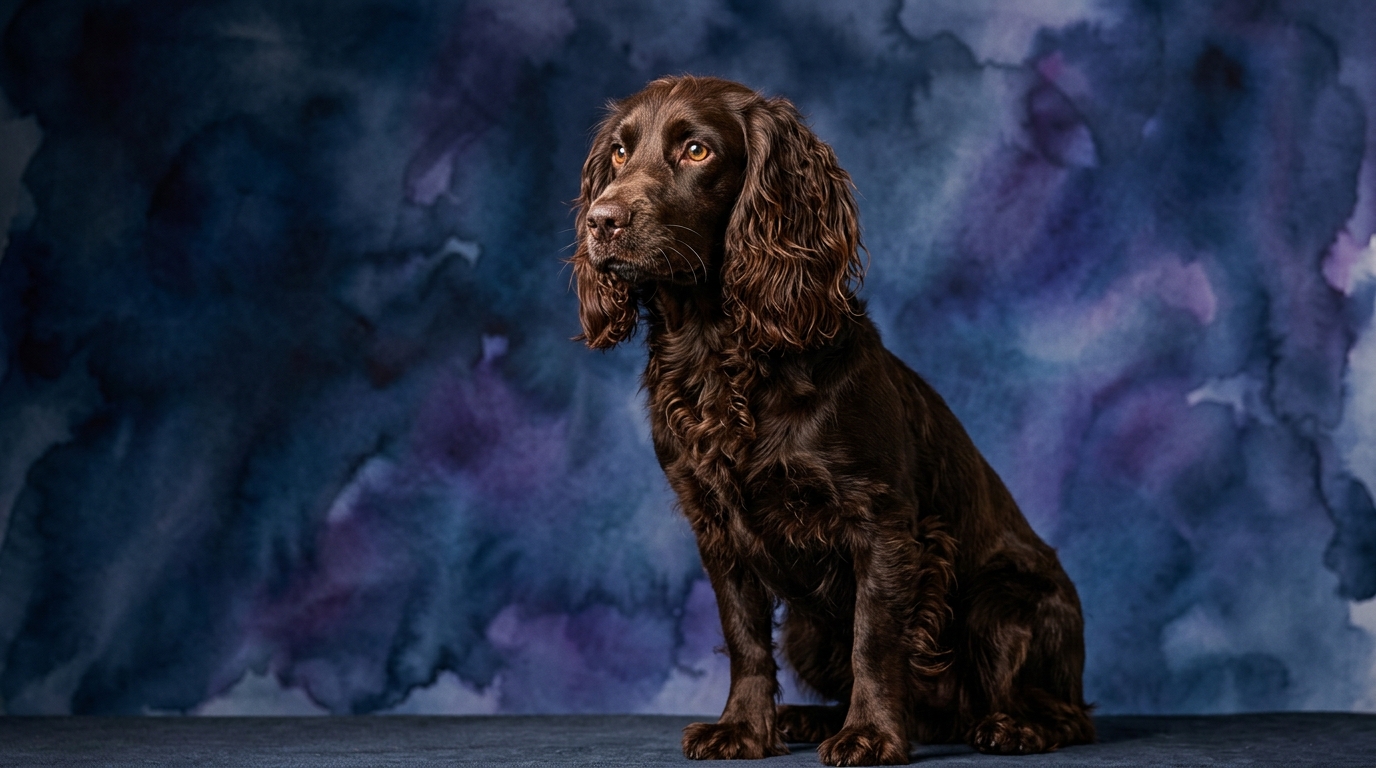
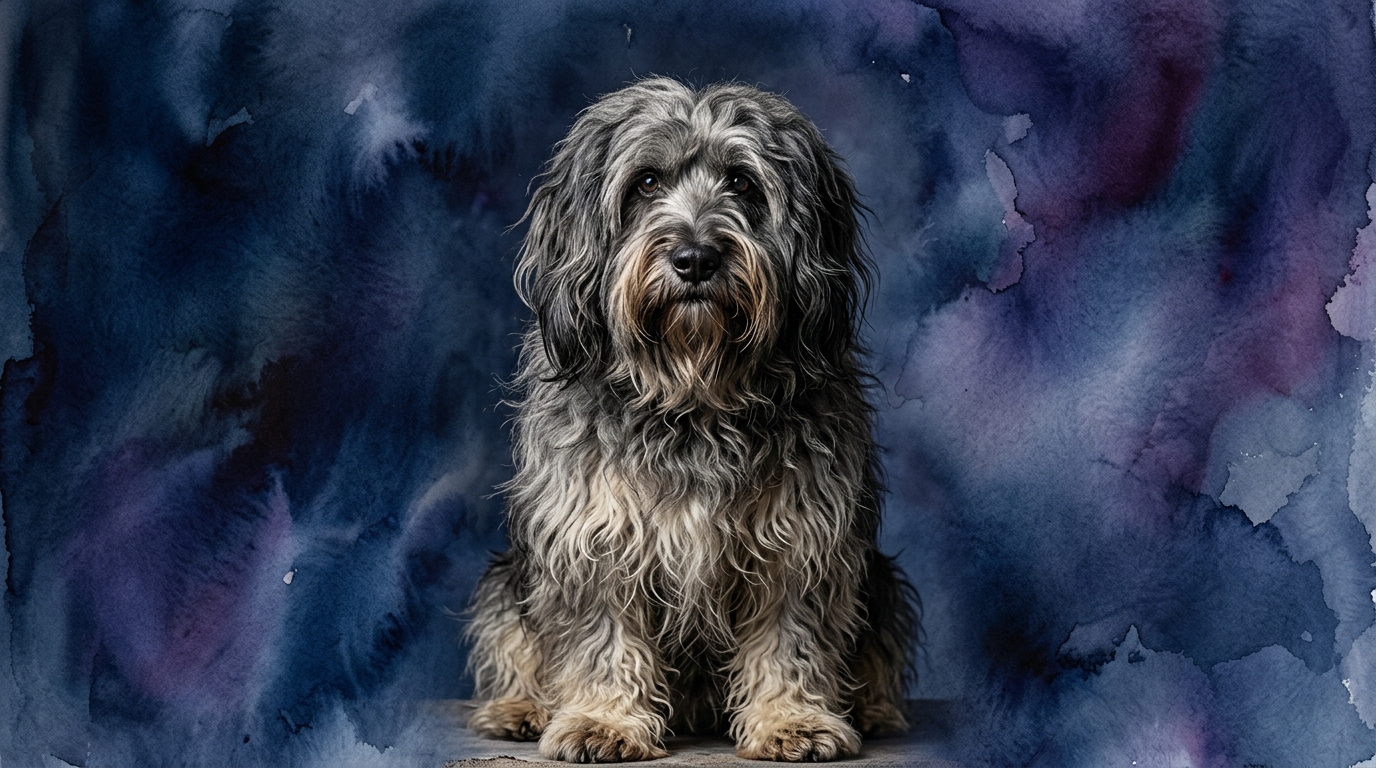
Side-by-Side IQ Profile: Boykin Spaniel vs. Polish Lowland Sheepdog
At The Cosmic Pet Pet IQ Lab, we assess canine intelligence across five critical dimensions, each scored on a scale of 1 to 5. Interestingly, both the Boykin Spaniel and the Polish Lowland Sheepdog exhibit a consistent score of 3/5 across the board, indicating a robust, practical level of cognitive function. However, the application and manifestation of these abilities differ significantly due to their distinct breed histories and purposes.
Problem Solving (3/5): A score of 3/5 in problem-solving suggests these breeds are capable of navigating moderately complex situations and finding solutions independently, though they may not always seek the most innovative or abstract pathways. For the Boykin Spaniel, this often translates to efficiently locating and retrieving game in varied environments, figuring out how to bypass obstacles to reach a target, or understanding subtle cues in a hunting scenario. Their problem-solving is typically task-oriented and driven by their sporting instincts. The Polish Lowland Sheepdog, with the same score, applies this acumen to managing livestock, strategically moving animals, identifying potential threats, or finding lost flock members. Their problem-solving tends to be more about observation, anticipation, and independent decision-making within a dynamic group setting.
Training Speed (3/5): A 3/5 in training speed indicates that both breeds learn new commands and routines at a moderate, steady pace. They are receptive to instruction but may require consistent repetition and clear communication to solidify new behaviors. The Boykin Spaniel's desire to please its handler and strong bond with its family often makes training a cooperative experience, particularly when tasks align with its retrieving nature. The Polish Lowland Sheepdog, while capable of learning, may exhibit an independent streak inherent to herding breeds, sometimes requiring more patience and varied motivational techniques to maintain engagement. Their learning is often reinforced by understanding the 'purpose' behind a command.
Social Intelligence (3/5): A score of 3/5 in social intelligence points to a good understanding of social cues and dynamics, both within their human family and with other animals. They can form strong bonds and interpret emotional states. The Boykin Spaniel typically displays its social intelligence through its affectionate nature, its eagerness to engage in interactive play, and its ability to work closely and cooperatively with its human partner in the field. They are often highly attuned to their family's moods and intentions. The Polish Lowland Sheepdog's social intelligence is often expressed through its protective instincts and its ability to 'manage' its family unit like a flock. They are deeply loyal and can be reserved with strangers, carefully assessing new social situations before engaging fully. They read their family's cues well, often anticipating needs or potential issues.
Instinctive Drive (3/5): This score reflects a moderate, yet potent, expression of innate breed-specific behaviors. For the Boykin Spaniel, the 3/5 instinctive drive manifests as a strong, often relentless, desire to retrieve, flush game, and work in water. This drive is a core part of their identity and provides significant motivation for activity and training. The Polish Lowland Sheepdog's 3/5 instinctive drive is rooted in its herding heritage, leading to a natural inclination to gather, control, and protect. This can manifest as gently 'herding' family members, other pets, or even children, and a watchful, territorial nature. Channeling this drive is crucial for both breeds.
Memory (3/5): A 3/5 in memory indicates a good capacity to recall learned commands, routines, and experiences over time. Both breeds can retain a significant amount of information. The Boykin Spaniel demonstrates this through consistent recall of hunting commands, the location of frequently visited places, and the patterns of daily routines. They remember lessons well, especially those associated with positive reinforcement. The Polish Lowland Sheepdog's memory serves its herding role by remembering territory boundaries, the specific behaviors of individual flock members (or family members), and complex sequences of tasks. They are particularly adept at recalling past interactions and routines, which contributes to their reliability.
Where the Boykin Spaniel Wins Cognitively
While their scores are identical, the Boykin Spaniel often excels in areas demanding cooperative intelligence and focused task execution within a partnership. Their problem-solving, though rated 3/5, is particularly effective when directed towards a shared goal, such as navigating dense cover to retrieve a downed bird or deciphering a handler's subtle hand signals. This breed's social intelligence shines in its capacity for deep, intuitive teamwork, making them highly responsive to human direction and emotions. Their instinctive drive, specifically for retrieving, provides a powerful and consistent motivational engine, making them exceptionally dedicated to tasks that align with this innate urge. This focused drive, combined with their memory for specific commands, allows them to master complex sequences of actions vital for their sporting roles, often with enthusiastic precision.
Where the Polish Lowland Sheepdog Wins Cognitively
The Polish Lowland Sheepdog's cognitive strengths, though also rated 3/5, lean towards independent strategic thinking and a nuanced understanding of social dynamics within a 'flock' context. Their problem-solving is often less about direct cooperation and more about autonomous assessment and intervention, such as deciding the best way to move a group of sheep or identifying a potential vulnerability in their territory. Their social intelligence is expressed through a strong protective instinct and an ability to 'read' the overall mood and movement of a group, whether livestock or family, and respond accordingly. The PLS's instinctive drive for herding, combined with their memory for routines and boundaries, makes them adept at maintaining order and safety, often without explicit instruction. They are particularly strong at retaining knowledge of their environment and the established rules within it, making them reliable guardians and managers.
Which is Easier to Train and Why
Considering both breeds score 3/5 in training speed, the 'easier' designation becomes a matter of training approach and owner expectation. The Boykin Spaniel, generally possessing a strong desire to please its handler and a highly cooperative nature, often responds well to positive reinforcement and consistent, engaging training sessions. Their eager-to-please temperament means they are typically motivated by praise, play, and food rewards, making the training process feel like a partnership. While they require consistency, their focus on their human partner helps streamline the learning process for tasks that align with their sporting drives.
The Polish Lowland Sheepdog, conversely, while equally capable of learning at a moderate pace, often brings a more independent and sometimes opinionated mindset to training. Their herding instincts can make them self-reliant decision-makers, which means they might question commands or attempt to find their own solutions rather than immediately complying. Training a PLS requires significant patience, consistency, and creative motivational strategies to keep them engaged. They thrive on understanding the 'why' behind a command and benefit from tasks that provide a sense of purpose or a 'job.' Owners might find the PLS requires a more nuanced approach, focusing on building respect and trust to channel their considerable intelligence effectively, rather than relying solely on eager compliance.
Which Suits Active Owners vs. Relaxed Owners
For active owners seeking a highly engaged partner for outdoor adventures, the Boykin Spaniel is an excellent match. Their 3/5 instinctive drive for retrieving and water work translates into a deep need for regular, vigorous physical exercise and mental stimulation that involves working alongside their human. They thrive on activities like hunting, dock diving, long hikes, and active family play. A Boykin's social intelligence makes them keen participants in family life, but their energy levels demand an owner who can consistently provide an outlet for their physical and mental needs, making them unsuitable for predominantly relaxed, sedentary lifestyles.
The Polish Lowland Sheepdog also requires an active owner, but their activity needs are slightly different. While they need regular physical exercise, their 3/5 instinctive drive for herding means they also crave mental engagement and a 'job' to do. This could involve herding activities, advanced obedience, agility, or even complex puzzle toys that challenge their problem-solving abilities. They are less about relentless physical output for its own sake and more about purposeful activity. A PLS will enjoy hikes and walks but will also benefit from opportunities to use their brain to manage or oversee. While not a 'relaxed' dog by any means, their activity might be more structured and mentally demanding, making them suitable for owners who enjoy engaging their dog in various forms of purposeful work beyond just physical exertion.
The Verdict: When to Choose Each Breed
The Verdict
Choose the Boykin Spaniel if you are an active, outdoors-oriented individual or family seeking a highly cooperative, enthusiastic companion for retrieving, hunting, or vigorous outdoor sports, valuing a strong partnership. Their eager-to-please nature and focused drives make them a joyful participant in shared activities.
Choose the Polish Lowland Sheepdog if you are an active owner who appreciates a dog with independent thought, a strong sense of purpose, and a desire for mental challenges beyond pure physical exertion. They thrive with patient, consistent training and a role that allows them to utilize their watchful, problem-solving, and protective instincts.
🧠 Find Your Pet's IQ Score
Our Pet IQ Lab assessment covers 25+ tests across 5 cognitive dimensions — personalized to your breed.
Take the Full IQ Test →Frequently Asked Questions
Do Boykin Spaniels need a lot of exercise?
Yes, Boykin Spaniels possess a strong instinctive drive for activity and require significant daily exercise. This includes vigorous play, long walks, runs, or opportunities for swimming and retrieving to keep them mentally and physically content.
Are Polish Lowland Sheepdogs good family pets?
Polish Lowland Sheepdogs can be excellent family pets, forming deep bonds and often displaying protective instincts towards their 'flock' (family members). They thrive in environments where they have a sense of purpose and consistent interaction, though they may be reserved with strangers.
Which breed is better for apartment living?
Neither breed is ideally suited for apartment living without a highly dedicated owner committed to providing extensive daily exercise and mental stimulation outside the home. Both Boykin Spaniels and Polish Lowland Sheepdogs require space and activity to prevent boredom and destructive behaviors.