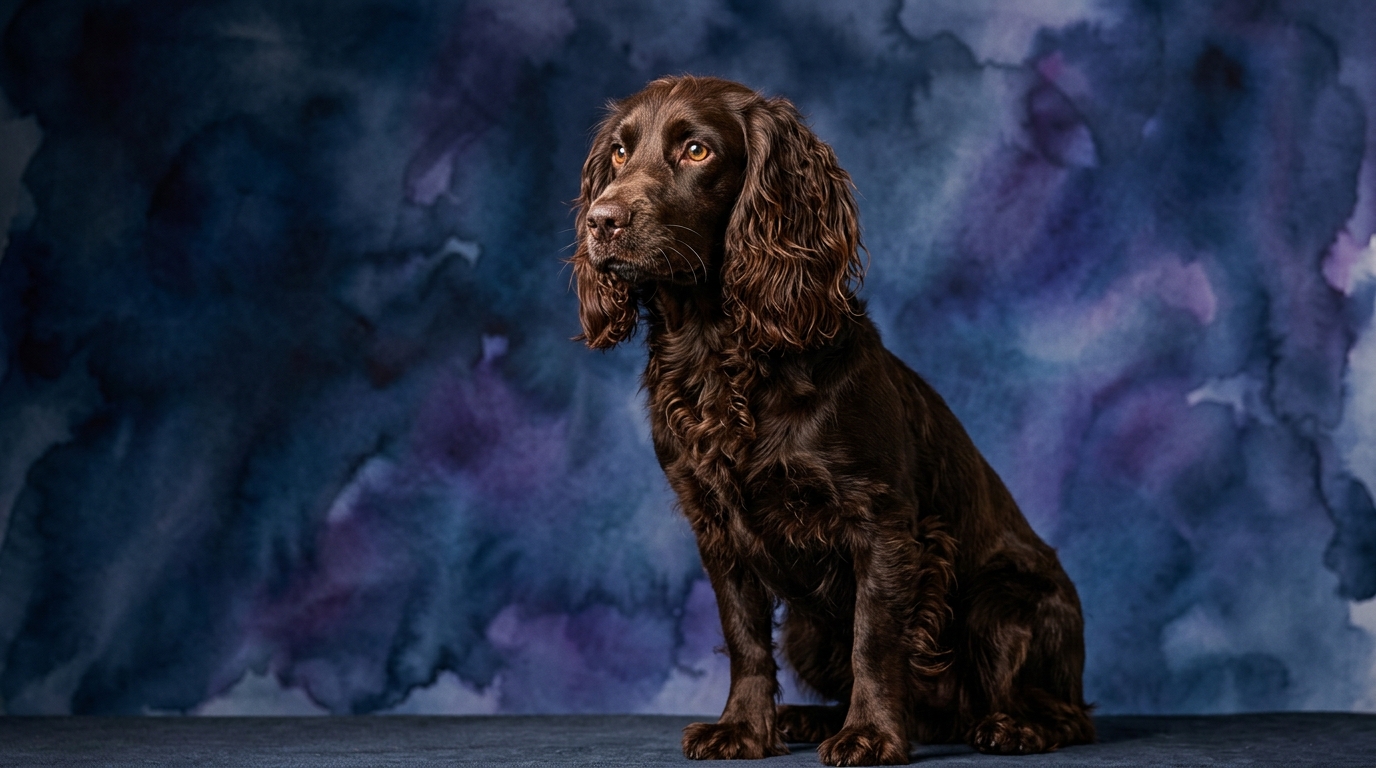
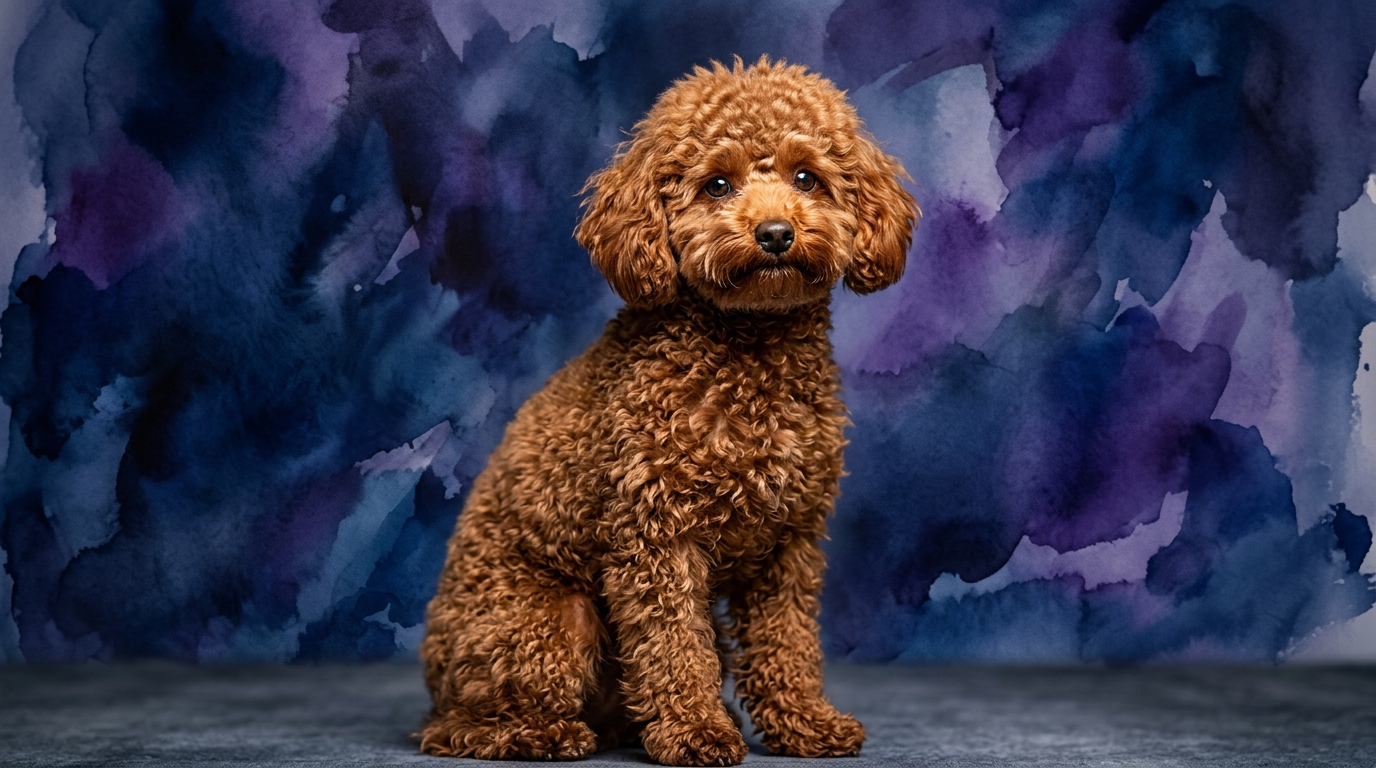
Side-by-Side IQ Profile: Boykin Spaniel vs. Toy Poodle
The Cosmic Pet Pet IQ Lab employs five key dimensions to evaluate canine intelligence, offering a nuanced view beyond a single ranking. For the Boykin Spaniel, a Sporting Group dog not ranked by Coren, its profile reflects a balanced, practical intellect. Its Problem Solving is rated 3/5, meaning it capably figures out tasks, particularly those related to its retrieving heritage, but might require some repetition for complex scenarios. Training Speed is also 3/5, indicating a moderate pace of learning new commands, responding well to consistent, positive reinforcement. Social Intelligence scores 3/5, showing an adequate understanding of human cues and strong family bonds, though perhaps not the instant adaptability of some breeds. Its Instinctive Drive is 3/5, a moderate but focused drive for retrieving and water work that is highly trainable. Finally, Memory is 3/5, retaining learned commands and routines reasonably well, though complex sequences might benefit from refreshers.
In contrast, the Toy Poodle, a Toy Group member and Coren rank #2, presents a striking cognitive profile. Its Problem Solving is an exceptional 5/5, demonstrating a remarkable ability to strategize, overcome obstacles, and devise novel solutions quickly, making them adept at intricate puzzle toys. Training Speed is also 5/5, as they absorb new information and commands with impressive swiftness, often grasping concepts in just a few repetitions. Social Intelligence stands at 3/5, as they are sensitive to human emotions and intentions, often mirroring their owner's mood, but their social 'reading' is distinct from a working breed's intuitive partnership. Instinctive Drive is 3/5; while not a traditional 'drive' breed in the hunting sense, they possess a strong innate desire for engagement and mental stimulation, translating to an eagerness to perform and learn tricks. Memory is a superior 5/5, recalling commands, routines, and even specific events over long periods, with learned skills rarely forgotten.
Where the Boykin Spaniel Wins Cognitively
While not scoring higher in raw IQ metrics, the Boykin Spaniel possesses a distinct cognitive advantage in its balanced, practical intelligence, deeply rooted in its heritage. Its 3/5 instinctive drive, though moderate, is purpose-built for sustained, repetitive tasks like flushing game and retrieving from water. This means they excel in scenarios requiring endurance and focused application on a single, goal-oriented task, rather than rapid-fire problem-solving. Their 3/5 social intelligence often manifests as unwavering loyalty and a profound desire to work *with* their handler in the field, fostering a deep, cooperative bond that differs from a Poodle's more independent, performance-oriented engagement. They demonstrate a steady, reliable application of their cognitive skills in environments where consistency, partnership, and a predictable work ethic are paramount.
Where the Toy Poodle Wins Cognitively
The Toy Poodle's IQ profile, with top scores of 5/5 in problem-solving, training speed, and memory, showcases a different kind of cognitive excellence. They shine in rapidly analyzing new situations and devising creative solutions, making them adept at navigating complex environments or figuring out intricate puzzle toys with minimal guidance. Their exceptional training speed means they can master a vast repertoire of commands and tricks in short order, often understanding a new concept after just one or two demonstrations. Furthermore, their superior memory ensures that once a skill is acquired, it is retained with impressive fidelity, allowing them to build upon a rich foundation of knowledge throughout their lives without frequent refreshers. This combination makes them highly adaptable, capable of sophisticated learning, and incredibly versatile in various mental challenges.
Which is Easier to Train and Why?
The Toy Poodle demonstrably offers an easier training experience due to its 5/5 training speed and memory. They grasp new commands with remarkable swiftness, often requiring only a couple of repetitions before solidifying the behavior. This rapid acquisition means less frustration for the trainer and a quicker progression through various skill levels, from basic obedience to complex trick sequences. Their superior memory ensures that once a command is learned, it sticks, reducing the need for constant refreshers and allowing for the seamless building of a diverse behavioral repertoire.
Conversely, the Boykin Spaniel's 3/5 training speed and memory suggest a more moderate learning curve. While certainly trainable and eager to please, they require more consistent repetition and patience to master new concepts. Their learning progresses steadily rather than explosively. For instance, teaching a Boykin a multi-step agility course might involve more breakdown and reinforcement of each segment compared to a Toy Poodle, which might string together sequences more intuitively after fewer trials. This difference isn't about willingness, but processing and retention speed, making the Poodle a quicker study for a broader range of commands.
Suited for Active vs. Relaxed Owners
For truly active owners seeking a canine partner for sustained outdoor adventures or field work, the Boykin Spaniel, with its moderate but focused instinctive drive (3/5), is an excellent match. They thrive on activities that engage their retrieving instincts and require stamina, such as long hikes, scent work, or water sports. Their balanced energy level ensures they can keep pace without being perpetually overstimulated, making them suitable for owners who enjoy consistent, purposeful activity and value a dog that enjoys a job to do.
Relaxed owners or those seeking a highly adaptable companion for a more varied lifestyle might find the Toy Poodle more fitting. While they possess an inner drive for mental engagement (3/5 instinctive drive often channeled into learning), their physical exercise needs can be met with shorter, more intense bursts of activity, coupled with significant mental stimulation through training and puzzle toys. Their smaller size also makes them more amenable to apartment living, provided their sharp minds are kept occupied. They enjoy being central to family activities but don't inherently demand the same type of extensive, physically demanding outdoor excursions as a Spaniel.
The Verdict
Choose the Boykin Spaniel if you seek a steadfast, cooperative partner for consistent outdoor activities, especially those involving retrieving or water work, and appreciate a balanced intelligence focused on practical application and loyalty.
Choose the Toy Poodle if you desire a highly adaptable, quick-witted companion who excels in rapid learning, complex problem-solving, and enjoys a diverse range of mental challenges, fitting seamlessly into various living situations.
🧠 Find Your Pet's IQ Score
Our Pet IQ Lab assessment covers 25+ tests across 5 cognitive dimensions — personalized to your breed.
Take the Full IQ Test →Frequently Asked Questions
Do Boykin Spaniels need a lot of exercise?
Yes, Boykin Spaniels are sporting dogs with a moderate energy level and instinctive drive. They benefit from daily vigorous exercise, including opportunities to run, swim, or engage in retrieving games to keep them physically and mentally content.
Are Toy Poodles good for first-time dog owners?
Toy Poodles can be excellent for first-time dog owners due to their exceptional trainability and eagerness to please. However, their high cognitive needs require owners committed to consistent mental stimulation and positive reinforcement to prevent boredom.
How do their grooming needs compare?
Boykin Spaniels have a medium-length, wavy coat that requires regular brushing to prevent mats and occasional trimming. Toy Poodles, with their dense, curly, non-shedding coat, demand professional grooming every 4-6 weeks and daily brushing to maintain their coat health and prevent tangles.