
Side-by-Side Cognitive Profiles: Briard vs. Irish Wolfhound
At The Cosmic Pet Pet IQ Lab, we assess canine intelligence across five key dimensions, providing a nuanced understanding beyond simple obedience. Let's examine how the Briard and Irish Wolfhound measure up.
The Briard, a Herding dog ranked #30 by Coren, demonstrates a robust cognitive toolkit. Their Problem Solving is rated 4/5, indicating a capacity for independent thought and an ability to navigate complex situations, often figuring out solutions without direct human intervention. Training Speed is also 4/5, reflecting their quick grasp of new commands and routines, thriving on mental engagement. Social Intelligence stands at 3/5; they are observant of their family's dynamics but can be reserved with outsiders. Instinctive Drive, at 3/5, is geared towards their herding heritage, manifesting as a desire to gather or 'manage' their household members or other pets. Finally, their Memory is strong at 4/5, allowing for excellent recall of learned behaviors and past experiences.
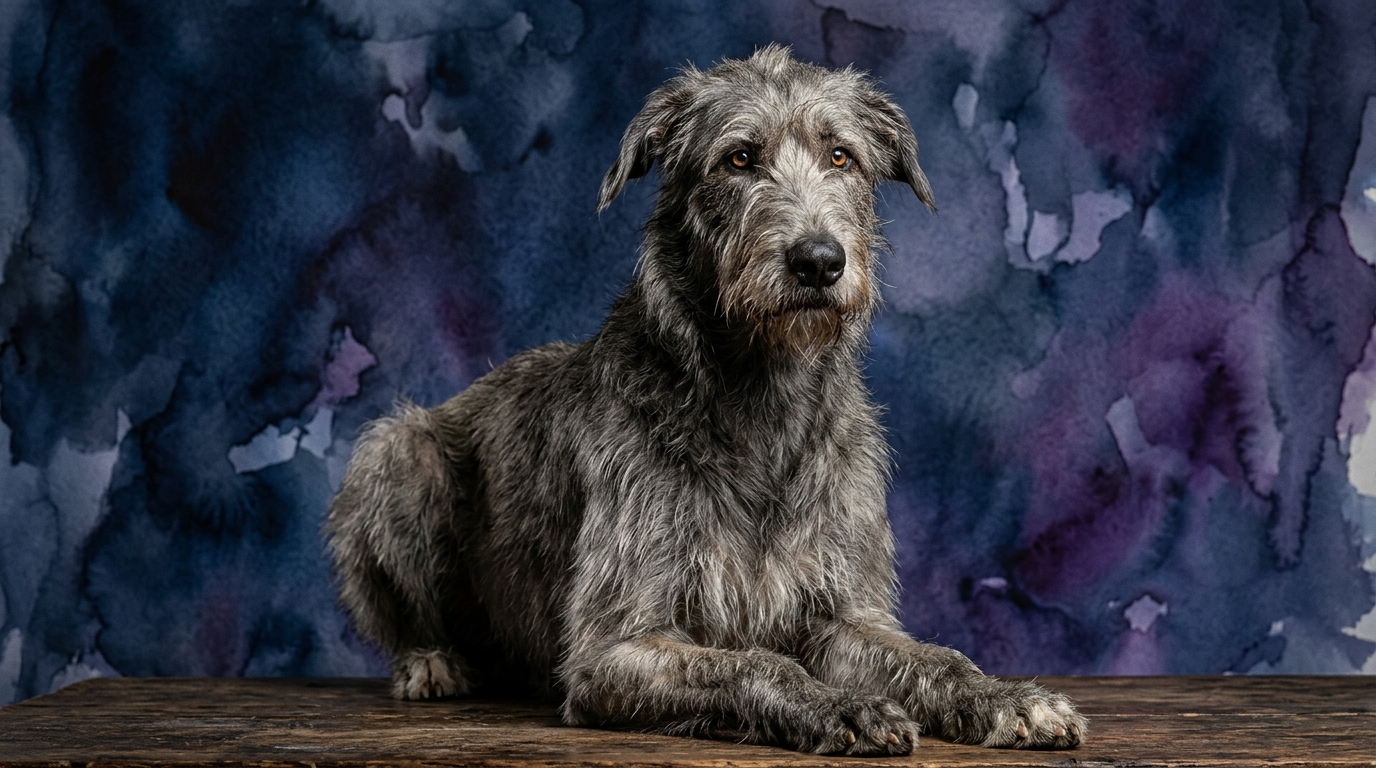
The Irish Wolfhound, a Hound breed not Coren-ranked, presents a different cognitive landscape. Their Problem Solving is 3/5, meaning they can tackle direct, practical problems but may not be as inclined towards abstract puzzles or novel challenges without a clear, immediate purpose. Training Speed is 3/5, suggesting a steady learning pace that benefits from patience and consistency rather than rapid-fire instruction. Social Intelligence is 3/5; they are gentle and perceptive within their trusted circle, generally composed and observing with strangers. Their Instinctive Drive is 3/5, primarily focused on their sighthound heritage – a keen, swift reaction to visual stimuli and movement. Memory is also 3/5, providing good retention of essential commands and routines, though perhaps not the detailed recall of complex sequences seen in the Briard.
Where the Briard Wins Cognitively
The Briard's cognitive strengths distinctly position them for roles requiring adaptive thinking and a proactive approach. Their superior Problem Solving score (4/5) translates into a dog that isn't just capable of learning, but actively seeks to understand and overcome environmental challenges. A Briard might independently figure out how to open a specific type of latch or devise a strategy to retrieve a toy stuck under furniture, showcasing a resourceful engagement with their surroundings. This isn't merely about following commands; it's about applying learned principles to novel situations.
Furthermore, their combined Training Speed (4/5) and Memory (4/5) create a highly effective learning machine. A Briard can assimilate multi-step commands and intricate routines with impressive efficiency, retaining this knowledge over long periods. Their instinctive drive, while rated 3/5, is channelled into purposeful action, making them exceptional candidates for advanced obedience, tracking, or other utility work where complex patterns and precise recall are paramount. They excel in environments where their cognitive abilities are consistently challenged and rewarded, demonstrating a profound capacity for intellectual partnership.
Where the Irish Wolfhound Wins Cognitively
While the Irish Wolfhound's problem-solving and training speed scores are a steady 3/5, their cognitive strengths shine in a different, equally valuable light. Their Social Intelligence, also 3/5, is characterized by a remarkable calm and observational capacity. An Irish Wolfhound might not be quick to 'solve' a puzzle toy, but they excel at discerning the emotional states of their human companions, offering quiet comfort or companionship without needing explicit instruction. This empathetic awareness is a sophisticated form of social cognition.
Their Instinctive Drive, a 3/5, is specifically oriented towards their sighthound heritage – a keen focus on movement and pursuit. This isn't about complex planning, but about instantaneous, precise reactions to visual stimuli in an open field. This singular focus, combined with their generally serene temperament, means they don't often 'overthink' situations, leading to a relaxed presence that can be a cognitive advantage in a busy household by reducing anxiety. Their memory (3/5) ensures they remember their place within the family structure and daily routines, contributing to their dignified and stable demeanor. They possess a quiet confidence that underscores their cognitive approach, less about active manipulation of their environment and more about harmonious integration.
Training Dynamics: Briard's Eagerness vs. Wolfhound's Steadiness
The Briard, with a training speed of 4/5 and problem-solving at 4/5, generally presents as the more straightforward student. Their cognitive architecture allows for quicker assimilation of new commands and a greater enjoyment of structured learning sessions. A Briard owner will likely find their dog not only picks up new tricks rapidly but also retains them effectively due to their 4/5 memory score, making advanced obedience or canine sports a natural fit. Their inherent desire to 'work' and please their person, stemming from their herding roots, translates into a dog eager for mental stimulation and direction, often initiating interaction to receive tasks.
This eagerness, however, can also manifest as a strong will or independent streak if not properly channeled, requiring a firm yet fair handler. Briards thrive on consistency and clear expectations, as their intelligence means they will quickly test boundaries if they perceive an opportunity. Their social intelligence (3/5) makes them attuned to their handler’s mood, which can be an asset in training, but also means they respond best to positive, engaging methods rather than harsh corrections.
The Irish Wolfhound, conversely, approaches training with a different cognitive rhythm. Their 3/5 training speed means they learn steadily, but often require more repetition and patience. Unlike the Briard's proactive problem-solving, the Wolfhound might take longer to grasp the 'why' behind a command, preferring clear, consistent directives. Their sighthound heritage means they can be easily distracted by visual stimuli in open environments, challenging focus during training sessions. While not 'stubborn,' their independence and selective hearing, typical of many hounds, mean that motivation must be strong and consistent.
Training an Irish Wolfhound is less about speed and more about building a collaborative relationship, where consistent, positive reinforcement fosters willingness rather than immediate cognitive mastery. Their 3/5 memory is reliable for core commands, but complex sequences may require more frequent refreshers. Success with a Wolfhound hinges on understanding their calm, sometimes aloof, nature and appreciating their willingness to cooperate rather than expecting rapid-fire obedience. Their social intelligence (3/5) means they respond well to a gentle, understanding approach, forming deep bonds based on mutual respect.
Lifestyle Suitability: Active Engagement vs. Dignified Calm
For owners who thrive on engagement and structured activity, the Briard aligns exceptionally well. Their robust cognitive profile and herding instincts demand consistent mental and physical outlets. A Briard will flourish with an owner who enjoys training, participates in dog sports like agility or obedience, or provides daily 'jobs' that tap into their problem-solving and memory capabilities. They are not content with mere companionship; they crave purpose and intellectual partnership, making them ideal for active families or individuals seeking a canine project. Their impressive stamina and desire to be involved mean they are excellent companions for long hikes or adventurous outings.
The Irish Wolfhound offers a different kind of companionship, suiting owners who appreciate a calm, dignified presence. While they need regular exercise – particularly space for powerful sprints in a secure area to satisfy their sighthound drive (3/5) – their indoor demeanor is typically serene. A Wolfhound owner isn't necessarily 'relaxed' in terms of avoiding exercise, but rather in their approach to daily routine and canine interaction. They are well-suited for individuals or families who value quiet companionship, gentle giants content to observe from the sofa after their exercise needs are met, rather than constantly seeking the next mental puzzle. Their social intelligence makes them excellent, unobtrusive family members, content with a steady, predictable rhythm to their days.
The Verdict
Choose a Briard if you seek an intellectually engaged companion eager for structured learning, problem-solving activities, and an active lifestyle that challenges their keen mind and herding drive.
Opt for an Irish Wolfhound if you desire a majestic, calm presence, valuing serene companionship and a dog whose quiet observance and gentle nature are their primary cognitive contributions.
🧠 Find Your Pet's IQ Score
Our Pet IQ Lab assessment covers 25+ tests across 5 cognitive dimensions — personalized to your breed.
Take the Full IQ Test →Frequently Asked Questions
Are Briards good family dogs?
Yes, Briards are often devoted to their families, exhibiting a protective yet gentle nature. Their social intelligence (3/5) means they bond strongly, though early socialization is key to manage their reservedness with strangers and ensure they integrate well into a bustling household.
Do Irish Wolfhounds need a lot of space?
While they are large, Irish Wolfhounds are surprisingly adaptable indoors, often being quite calm and quiet. However, they do require a securely fenced yard for their instinctive bursts of running (sighthound drive 3/5) and daily walks to maintain physical health and mental well-being.
How do the breeds' memory scores impact daily life?
The Briard's 4/5 memory means they recall complex routines and commands quickly, making them reliable for multi-step tasks and long-term retention. The Irish Wolfhound's 3/5 memory is solid for essential commands but might require more consistent refreshers for less frequently used instructions or intricate sequences.