
Side-by-Side Cognitive Profiles
The Briard, a Herding Group member with a Coren rank of 30, presents a compelling cognitive blueprint. Its Problem Solving score of 4/5 indicates a strong capacity for analyzing situations and devising solutions, often in the context of managing livestock or family dynamics. A Training Speed of 4/5 highlights its eagerness to learn and retain commands, making it a responsive pupil. Social Intelligence, at 3/5, suggests an awareness of human emotional states and cues, though with a characteristic independence. Its Instinctive Drive of 3/5 reflects a moderate but present herding impulse, which can be channeled productively, and a Memory score of 4/5 ensures it effectively learns from past experiences and retains complex routines.
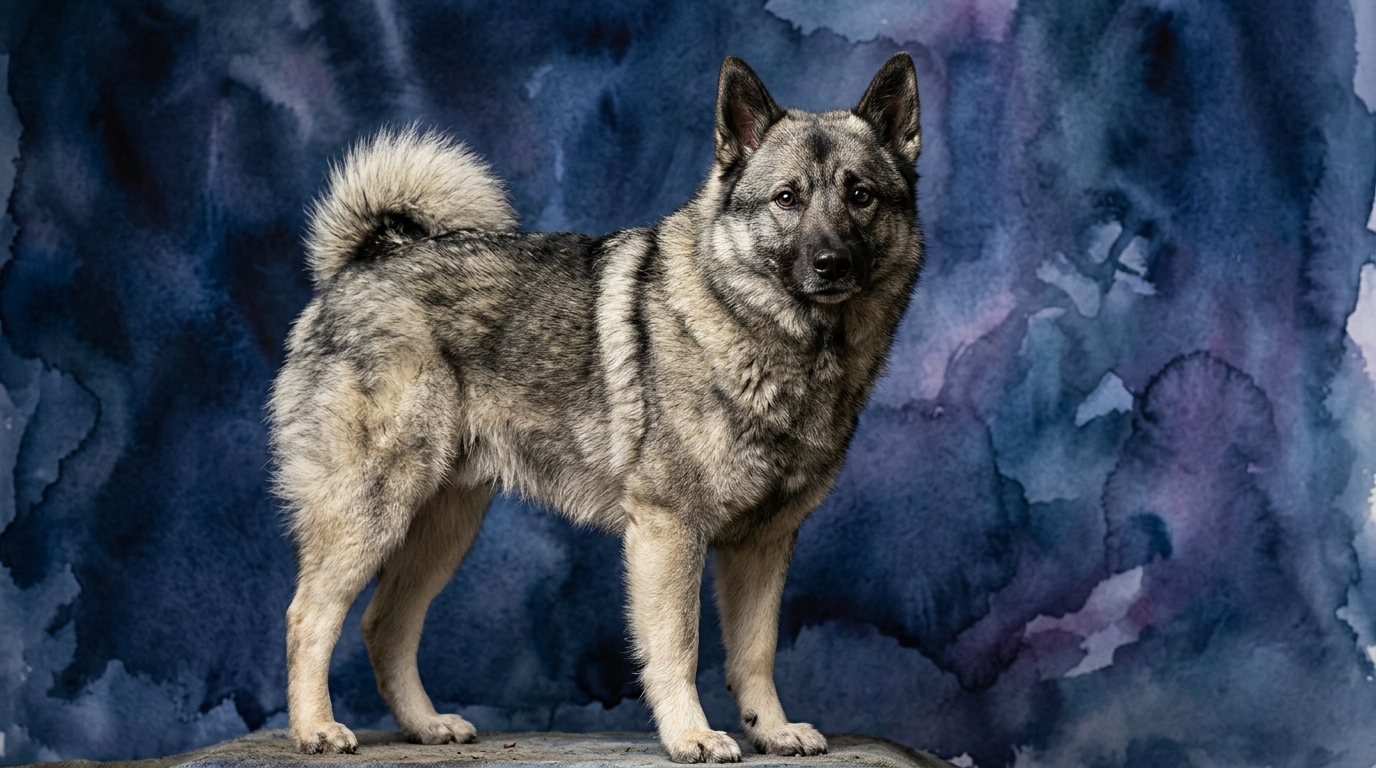
In contrast, the Norwegian Elkhound, a Hound Group member ranked 36 by Coren, demonstrates a different cognitive emphasis. Its Problem Solving at 4/5 manifests as resourceful ingenuity, particularly when tracking or navigating complex terrains, often independently. A Training Speed of 4/5 means it grasps new concepts quickly, but this rapid learning is often paired with an independent streak that can influence compliance. Social Intelligence, also 3/5, points to a deep bond with its immediate family while often maintaining a reserved demeanor with strangers. Its Instinctive Drive of 3/5 is primarily focused on scent work and prey drive, requiring careful management, and a Memory score of 4/5 ensures it remembers specific scents, routes, and learned patterns with precision.
Where the Briard Excels Cognitively
The Briard's cognitive strengths are deeply rooted in its pastoral heritage. Its 4/5 Problem Solving ability shines in scenarios requiring strategic oversight and adaptive responses, such as anticipating the movement of a flock or understanding complex multi-step commands. This breed often exhibits a proactive form of intelligence, processing environmental cues to make decisions that benefit its perceived 'flock' – be it sheep or family members. Their capacity for vigilance and protective behavior stems from this sophisticated situational awareness, allowing them to assess threats and react appropriately.
Furthermore, the Briard's combination of 4/5 Training Speed and 4/5 Memory makes it particularly adept at mastering intricate obedience routines and advanced dog sports. They thrive on having a 'job' and their cognitive wiring supports the retention of elaborate sequences, demonstrating a remarkable ability to recall specific actions and their associated cues even after extended periods. This focus on cooperative problem-solving and structured learning gives them an edge in tasks requiring sustained attention and a desire to work in partnership with their handler.
Where the Norwegian Elkhound Excels Cognitively
The Norwegian Elkhound's cognitive prowess is a testament to its ancient role as a hunting companion in harsh Nordic environments. Its 4/5 Problem Solving manifests as exceptional independence and resourcefulness, particularly in scent-driven tasks. An Elkhound is adept at making autonomous decisions in the field, navigating challenging terrain and persistent tracking without constant human direction. This breed's cognitive architecture is optimized for self-reliance, allowing it to interpret subtle environmental cues and formulate effective strategies for locating quarry, often miles away from its handler.
The Elkhound's 4/5 Memory, especially in relation to scent, is a standout cognitive strength. They possess an extraordinary ability to recall specific scent trails, even those that are faint or old, demonstrating a highly specialized form of retention crucial for their hunting function. While their 3/5 Instinctive Drive points to a strong prey drive, it is precisely this drive, coupled with their keen problem-solving and memory, that allows them to excel in pursuits requiring sustained focus on a singular objective. They are masters of independent investigation, relying on their internal compass and olfactory intelligence.
Training Dynamics: Briard vs. Norwegian Elkhound
When considering ease of training, the Briard generally presents a more straightforward path for the average owner. With a Training Speed of 4/5 and a strong desire to engage with its handler, the Briard typically responds well to positive reinforcement and consistent methods. Their herding background instills a cooperative spirit and a readiness to follow direction, making them eager participants in learning sessions. Behavioral differences include a tendency to be more 'biddable,' often looking to their human for guidance and approval, which streamlines the acquisition of new commands and good manners.
The Norwegian Elkhound, despite also scoring 4/5 in Training Speed, often requires a different approach. Their independent problem-solving nature and deeply ingrained hunting instincts mean that while they quickly grasp concepts, their motivation to comply can be more selective. Real behavioral differences include a stronger tendency to follow their nose rather than a command if an interesting scent presents itself, and a general inclination to assess the 'value' of a command before executing it. Training an Elkhound often feels like a negotiation, requiring patience, creativity, and highly motivating rewards to consistently channel their intelligence effectively.
Lifestyle Suitability: Active vs. Relaxed Owners
Neither the Briard nor the Norwegian Elkhound are suitable for truly relaxed owners, as both require significant engagement. The Briard, with its protective instincts and herding background, thrives with active owners who can provide consistent mental stimulation and a clear 'job.' They benefit from structured activities like obedience, agility, or even herding trials, and need ample physical exercise to prevent boredom and channel their considerable energy. Owners must be prepared to integrate their Briard into daily life, providing companionship and leadership to satisfy their social intelligence and drive.
The Norwegian Elkhound also demands an active lifestyle, but its needs are often geared towards endurance and independent exploration. Owners should be prepared for long walks, hikes, or runs, ideally in varied environments where their scenting abilities can be engaged. While they can be calm indoors after sufficient exercise, their innate drive for activity and exploration means they are not content with minimal physical output. They suit owners who appreciate a dog with a robust constitution and a desire for outdoor adventure, understanding that their independent spirit requires space and opportunity to roam safely.
The Verdict
Choose the Briard if you seek a vigilant, cooperative companion eager to work alongside you in structured activities and capable of complex learning, appreciating a dog that thrives on shared purpose and mental tasks.
Opt for the Norwegian Elkhound if you admire an independent, resourceful partner for outdoor adventures, valuing a dog with unparalleled scenting abilities and an enduring spirit that excels at autonomous problem-solving in natural environments.
🧠 Find Your Pet's IQ Score
Our Pet IQ Lab assessment covers 25+ tests across 5 cognitive dimensions — personalized to your breed.
Take the Full IQ Test →Frequently Asked Questions
Do Briards learn faster than Norwegian Elkhounds?
Both breeds score 4/5 in training speed, indicating they grasp new concepts quickly. However, the Briard's natural inclination to work cooperatively often translates to a more consistent and seemingly faster application of learned commands, while the Elkhound's independence may lead to selective obedience despite rapid understanding.
Which breed is better at problem-solving?
Both breeds score 4/5 in problem-solving, but their strengths differ. The Briard excels in strategic, cooperative problem-solving within a structured environment, often involving human direction. The Norwegian Elkhound shines in independent, intuitive problem-solving, particularly in scent-tracking and navigating complex outdoor situations on its own initiative.
How do their instinctive drives impact daily life?
The Briard's 3/5 instinctive drive is primarily herding, which can manifest as a desire to gather family members or other pets, requiring consistent channeling. The Norwegian Elkhound's 3/5 instinctive drive is largely prey-oriented and scent-driven, meaning they may follow interesting smells intently, necessitating secure leashes and fences.