
Side-by-Side Cognitive Profiles
To understand the unique mental fabric of the Briard and the Scottish Deerhound, we turn to The Cosmic Pet's Pet IQ Lab, which assesses canine cognition across five key dimensions. These scores offer a lens into their inherent capabilities and preferred modes of engagement, reflecting centuries of selective breeding for distinct purposes.
The **Briard**, a member of the Herding group, exhibits a cognitive profile that underscores its heritage as a watchful and capable livestock guardian and driver. Its Problem Solving score of 4/5 indicates a strong capacity for independent thought and strategic planning, often necessary for managing a flock. Training Speed, also at 4/5, suggests a breed eager to learn and quick to grasp new commands, reflecting their need to respond promptly to shepherd's instructions. Their Social Intelligence of 3/5 points to a discerning nature, forming deep bonds with their inner circle while maintaining a watchful distance with strangers. An Instinctive Drive of 3/5 highlights their inherent herding tendencies, which are moderate but present, influencing their interactions with family and other pets. Finally, a Memory score of 4/5 means they retain learned behaviors and experiences over extended periods, making consistent training highly effective and long-lasting.
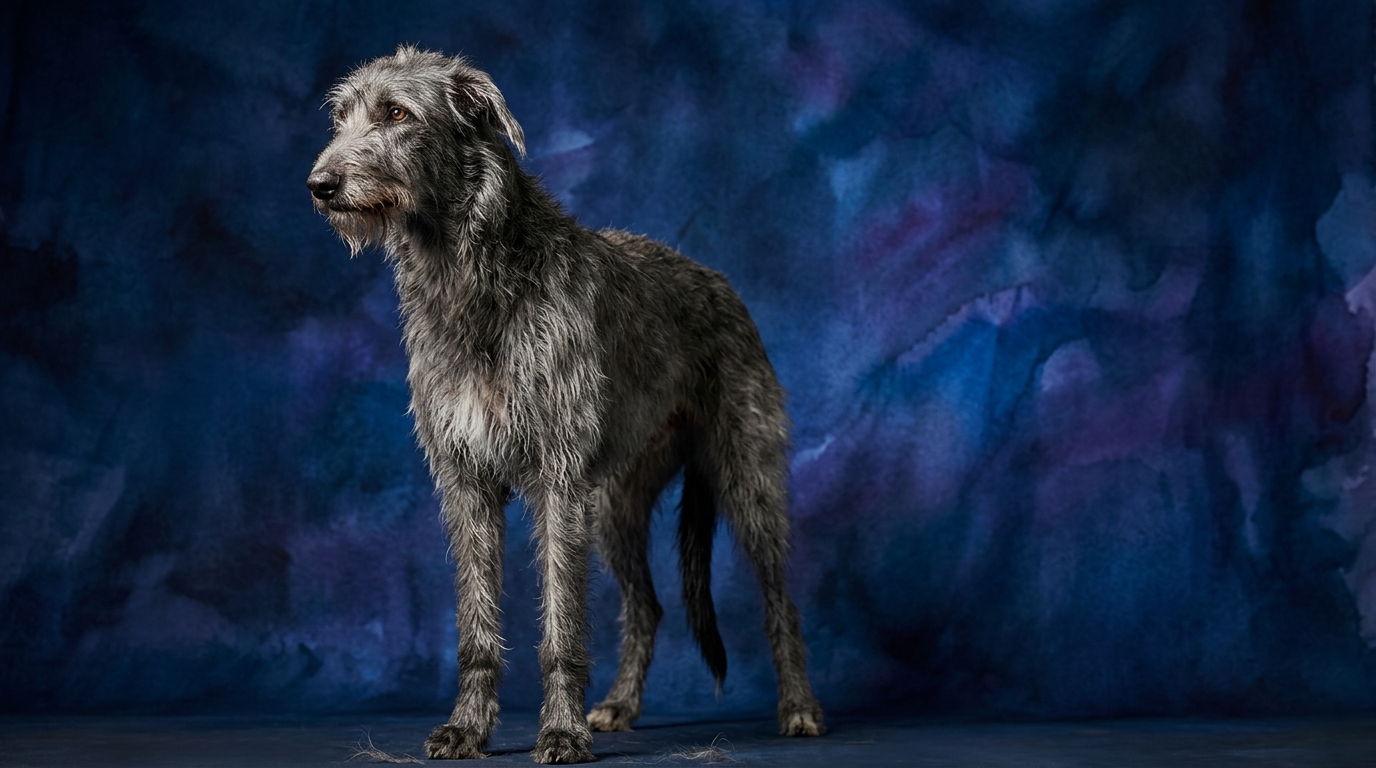
In contrast, the **Scottish Deerhound**, a majestic Sighthound, presents a different set of cognitive strengths, shaped by its role as a pursuit hunter of large game. While not ranked by Coren, its IQ scores provide valuable insight. Its Problem Solving at 3/5 indicates an ability to navigate straightforward challenges, particularly those related to visual tracking and chase, but perhaps less inclination for complex, abstract puzzles. Training Speed, also at 3/5, suggests a steady learning pace, though their independent sighthound nature means they might require more patience and motivation than a biddable herding dog. Their Social Intelligence, at 3/5, describes a gentle and affectionate companion within their family, often reserved or dignified with outsiders. An Instinctive Drive of 3/5 is primarily manifested as a potent prey drive, compelling them to chase moving objects, a fundamental aspect of their historical hunting role. Their Memory, at 3/5, is solid for routines and familiar environments, though complex sequences might need more repetition for full retention.
Where the Briard Excels Cognitively
The Briard's cognitive strengths shine particularly in areas demanding foresight, adaptability, and a close working partnership with humans. With a Problem Solving score of 4/5, compared to the Deerhound's 3/5, the Briard demonstrates a superior aptitude for navigating multi-step challenges and devising innovative solutions. This isn't just about figuring out how to open a gate; it extends to understanding sequences of commands, anticipating changes in their environment, and adapting their behavior accordingly. Their herding background instilled a need to think on their feet, making quick decisions to manage livestock, which translates into a general cognitive flexibility.
Furthermore, the Briard's Training Speed (4/5) and Memory (4/5) collectively position them as more receptive to formal instruction and capable of retaining intricate information over time. This means a Briard can master complex obedience routines, advanced agility courses, or even learn specific tasks like retrieving particular objects with greater efficiency. Their desire to engage and cooperate with their handler, a hallmark of many herding breeds, fuels this cognitive advantage, making them enthusiastic participants in learning endeavors. This combination of problem-solving prowess, rapid learning, and robust memory makes the Briard a compelling choice for owners seeking a canine partner for advanced training and intellectual engagement.
Where the Scottish Deerhound Excels Cognitively
While the Scottish Deerhound's general problem-solving and training scores might appear lower than the Briard's, their cognitive excellence lies in a highly specialized domain: the hunt. Their instinctive drive (3/5), while numerically similar, manifests as an exquisitely honed sighthound prey drive, which is a marvel of rapid visual processing, spatial awareness, and explosive decision-making. A Deerhound excels at identifying movement at vast distances, instantly assessing trajectory, and initiating a pursuit with incredible speed and grace. This isn't about solving an abstract puzzle; it's about real-time, high-stakes cognitive function in a dynamic, open environment.
Their strength lies in their ability to process visual information almost instantaneously, focusing intently on a moving target while filtering out extraneous details. This specific cognitive skill, honed over centuries for hunting deer, involves a sophisticated understanding of physics in motion – judging speed, distance, and potential escape routes. While a Briard might excel at manipulating objects, a Deerhound's mind is optimized for the chase, displaying unparalleled coordination and focus during a full-speed gallop. Their memory, while rated 3/5, is perfectly adequate for remembering the layout of a vast field or the scent trails of familiar quarry, demonstrating a different, but equally impressive, form of cognitive specialization.
Which is Easier to Train and Why
Based on The Cosmic Pet's IQ scores, the Briard (Training Speed 4/5) is generally easier to train than the Scottish Deerhound (Training Speed 3/5). This difference is deeply rooted in their historical purposes and inherent behavioral traits. Briards were bred to work in close collaboration with shepherds, requiring them to be highly attentive to human commands and signals. They possess a natural biddability and a strong desire to please, making them inherently more inclined to learn and follow instructions. Their higher memory score also means they retain lessons more effectively, leading to quicker mastery of complex tasks and better long-term recall.
The Scottish Deerhound, conversely, was bred for an independent hunting role where they needed to make swift decisions without constant human direction. This has fostered an independent spirit that, while endearing, can translate into a more discerning approach to training. They are not necessarily stubborn, but their primary motivation isn't always human appeasement; it's often tied to their innate drives, particularly their powerful prey drive. Training a Deerhound requires immense patience, consistency, and a deep understanding of positive reinforcement to make learning an engaging experience. Owners must contend with their strong instinct to chase, which can make off-leash recall particularly challenging in environments with tempting distractions, highlighting a significant real behavioral difference in training experience.
Suitability for Active vs. Relaxed Owners
Matching a dog's cognitive and physical needs to an owner's lifestyle is crucial for a harmonious relationship. The Briard, with its robust herding background, generally suits more active and engaged owners. Their intelligence demands consistent mental stimulation, and their physical capabilities require ample exercise. Owners who enjoy structured activities like obedience, agility, herding trials, or long, purposeful hikes will find a Briard to be an eager and capable partner. They thrive on having a 'job' and can become bored or exhibit undesirable behaviors if their cognitive and physical needs are not adequately met. A Briard owner should be prepared for a consistent commitment to training and daily interaction.
The Scottish Deerhound presents a unique blend of needs that can suit both active and more relaxed owners, albeit with specific considerations. While they require intense bursts of exercise—a full-speed gallop in a securely fenced area is essential to satisfy their sighthound instincts—they are surprisingly calm and relaxed indoors. They are not dogs that require constant, structured activity throughout the day. Relaxed owners can appreciate their dignified, quiet presence in the home, provided they can offer a safe, expansive space for their Deerhound to run freely and fulfill their natural urges several times a week. They are less suited for owners seeking a dog for continuous, highly structured activities, but rather one who balances explosive energy with serene repose.
The Verdict
Choose the Briard if you seek a canine partner for complex tasks, consistent training, and active engagement, valuing a strong working relationship and a dog eager to learn and participate.
Choose the Scottish Deerhound if you appreciate a calm, dignified companion who needs dedicated space for vigorous sprints, and an independent spirit that offers quiet affection rather than constant biddability.
🧠 Find Your Pet's IQ Score
Our Pet IQ Lab assessment covers 25+ tests across 5 cognitive dimensions — personalized to your breed.
Take the Full IQ Test →Frequently Asked Questions
Do Briards herd other pets or children?
Briards often exhibit their natural herding instincts towards family members or other pets. This can manifest as gentle nudging or circling, and while usually benign, it's important to channel this drive appropriately through training and activity to ensure harmonious interactions.
Are Scottish Deerhounds difficult to train due to their independence?
Scottish Deerhounds are trainable, but their independent sighthound nature means they respond best to positive, patient methods and understanding their motivations. They might not be as eager to please as some breeds, requiring owners to respect their innate drives and offer compelling reasons to cooperate.
Which breed is better for apartment living?
Neither breed is ideally suited for small apartment living without significant outdoor access. Briards require ample space for mental and physical activity to prevent boredom, while Scottish Deerhounds need a secure area to gallop regularly, despite being relatively calm indoors.