Unpacking Their Cognitive Blueprints: A Side-by-Side IQ Profile
At The Cosmic Pet Pet IQ Lab, we evaluate canine intelligence across five critical dimensions: problem solving, training speed, social intelligence, instinctive drive, and memory. Understanding these facets helps illuminate how each breed processes information and interacts with its world, providing a clearer picture beyond general impressions.
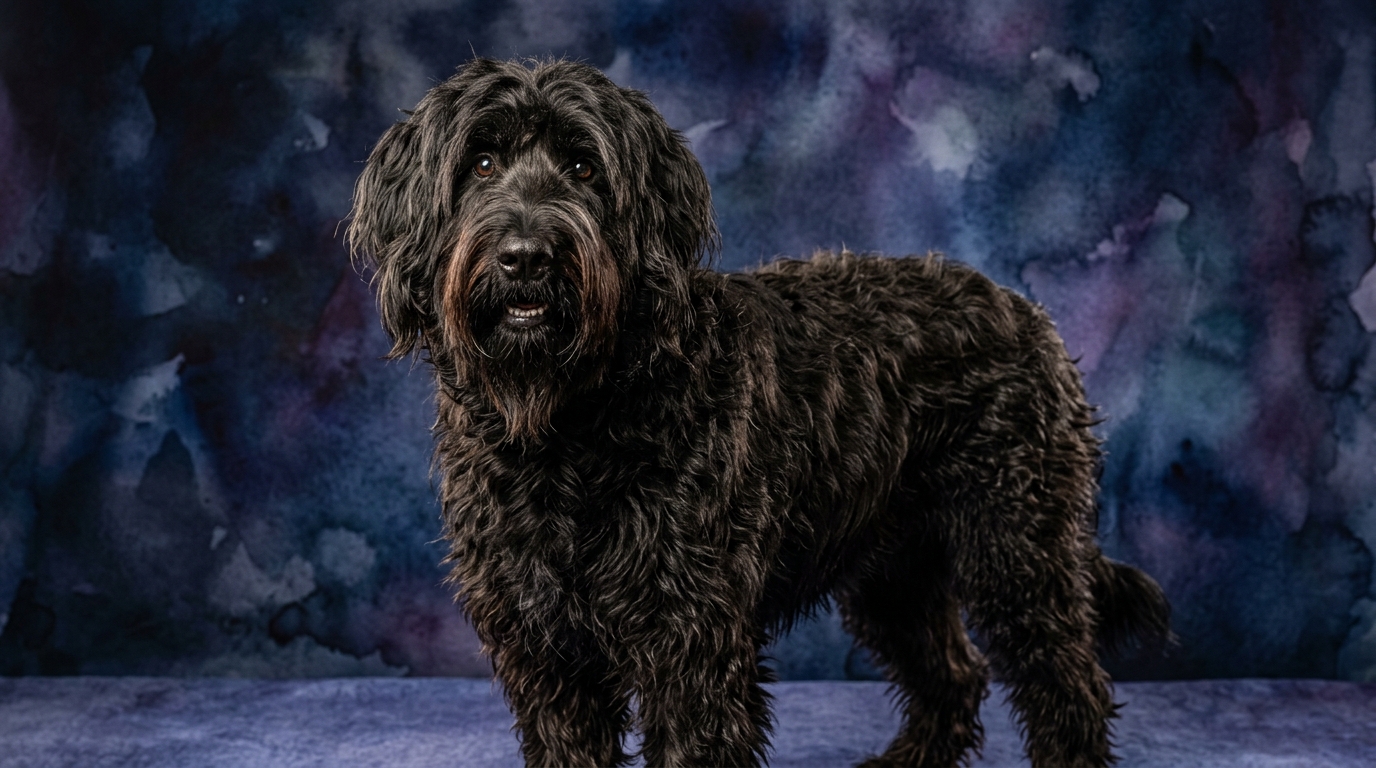
The Briard, a Herding group member Coren-ranked at #30, presents a robust cognitive profile. Its Problem Solving is rated 4/5, indicating an adeptness for complex tasks and strategic thinking. Training Speed also scores 4/5, suggesting a quick grasp of commands and an eagerness to learn. Social Intelligence is 3/5, reflecting responsiveness to human cues while being discerning. Its Instinctive Drive is 3/5, primarily focused on its herding impulse and protective nature. Memory stands at 4/5, signifying effective retention of learned behaviors and routines.
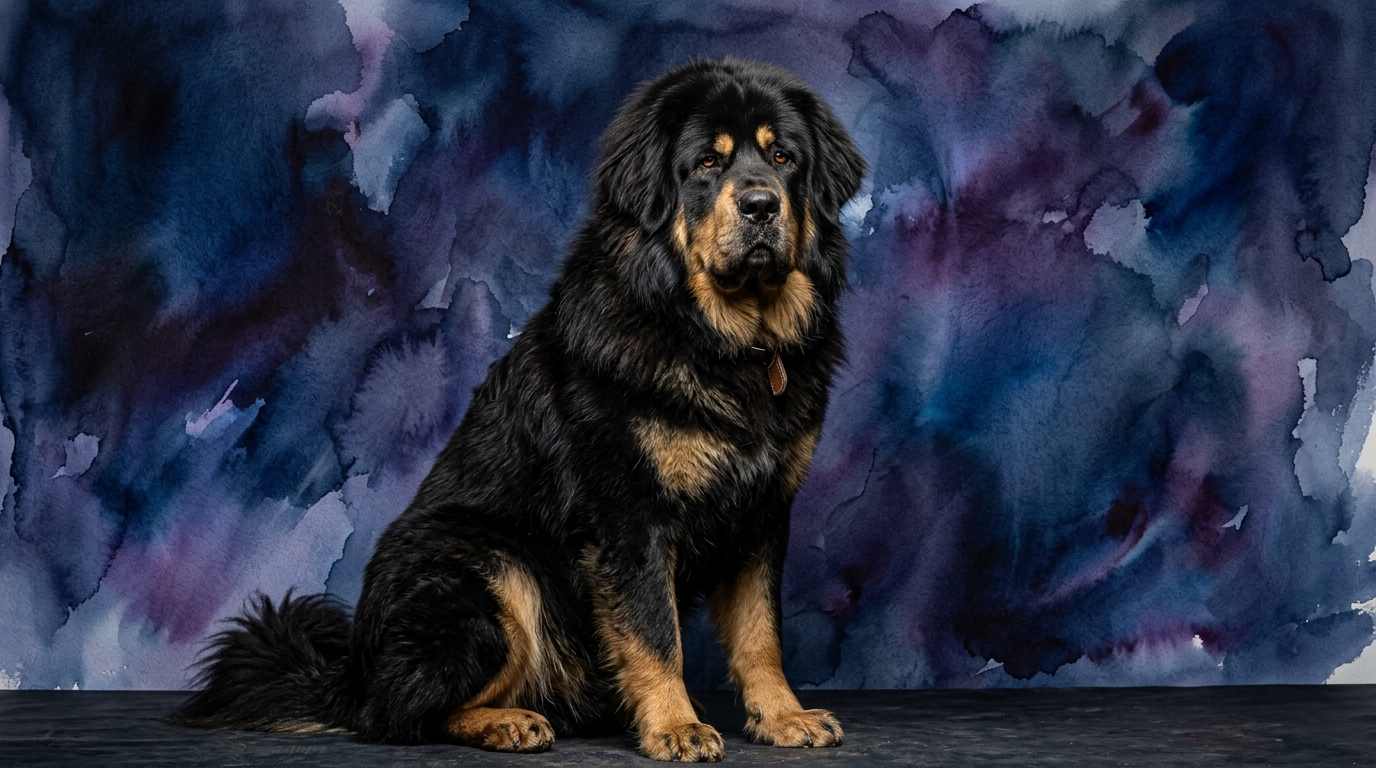
The Tibetan Mastiff, a Working group breed not Coren-ranked, possesses a cognitive makeup distinctly suited to its ancient role. Its Problem Solving is rated 3/5, demonstrating capability for independent decision-making, particularly in guarding scenarios. Training Speed is 3/5, indicating a moderate pace of learning, often tempered by an independent streak. Social Intelligence is 3/5, characterized by discerning loyalty and wariness of strangers. Its Instinctive Drive is 3/5, rooted in a profound territorial guarding instinct. Memory is 3/5, sufficient for remembering threats and safe individuals, though perhaps less focused on intricate detail than the Briard.
Where the Briard's Mind Shines Brightest
The Briard's cognitive edge lies significantly in its dynamic problem-solving and rapid learning capabilities. Its 4/5 Problem Solving score allows it to quickly assess and adapt to changing conditions, a crucial trait for a herding dog needing to anticipate flock movements and adjust its strategy on the fly. This cognitive agility extends beyond the pasture, enabling it to navigate new environments or understand complex sequences of actions with notable efficiency.
A significant advantage for the Briard is its 4/5 Training Speed, which indicates a dog that not only comprehends new commands quickly but often genuinely enjoys the process of engagement and mastery alongside its human. This translates to efficient acquisition of obedience commands, advanced skills, and even intricate tricks, making it a highly responsive and versatile partner in various activities. Its superior memory, also rated 4/5, complements this by ensuring a vast repertoire of learned behaviors and routines are retained effectively over time, leading to consistent performance.
The Tibetan Mastiff's Unique Cognitive Strengths
While its numerical scores might appear generally lower, the Tibetan Mastiff's cognitive profile is perfectly honed for its specialized role as a formidable guardian. Its 3/5 in Problem Solving manifests as exceptional independent decision-making when protecting its territory and family, often without direct human instruction. This isn't about solving an agility course puzzle, but rather the complex cognitive process of assessing a potential threat, determining its severity, and deciding the appropriate, often nuanced, response – a critical application of intelligence driven by its profound instinctive drive (3/5).
The Tibetan Mastiff's Social Intelligence (3/5) is characterized by a deep, discerning loyalty rather than broad amiability. It forms strong, lasting bonds with its inner circle, and its memory (3/5) is particularly effective in distinguishing between familiar, safe individuals and potential intruders or perceived threats. This specific application of memory and social intelligence allows it to be an exceptionally reliable, albeit independent, protector. Its moderate Training Speed (3/5) reflects its self-assured nature; while capable of learning, it often evaluates commands through the lens of its primary guarding purpose, requiring a different approach to motivation than a more biddable breed.
Training Dynamics: Responsiveness vs. Independence
The Briard, with its 4/5 Training Speed and strong desire to work collaboratively, generally presents a more straightforward and rewarding training experience for many owners. It thrives on positive reinforcement, clear communication, and consistent guidance, quickly understanding and executing commands. This inherent responsiveness stems directly from its herding heritage, where precise communication with a shepherd was paramount for effective flock management, making it an eager and engaged participant in learning new cues and behaviors.
In contrast, the Tibetan Mastiff's 3/5 Training Speed and inherent independence mean training requires significant patience, unwavering consistency, and a deep understanding of its guardian temperament. It often processes commands through the filter of its own judgment and perceived duties, rather than simply complying to please. While certainly capable of learning, its progress may be slower, and it is less likely to perform simply for praise or treats alone. Owners must build a foundation of trust and demonstrate clear, fair leadership, acknowledging its self-reliant and often questioning nature.
Matching Minds to Lifestyles: Active Engagement vs. Calm Vigilance
The Briard's cognitive profile aligns exceptionally well with active owners who enjoy engaging their dogs in a variety of activities. Its problem-solving prowess and training speed make it an excellent candidate for dog sports such as obedience, agility, rally, and herding trials, where its mental acuity and physical capabilities can be fully utilized. These dogs thrive on consistent mental stimulation and regular physical exercise, needing appropriate outlets for their intelligent minds and energetic bodies. An owner who provides varied enrichment and consistent training will find the Briard a fulfilling, responsive, and highly interactive companion.
The Tibetan Mastiff, while requiring regular exercise to maintain its health, is better suited for owners who appreciate a calmer, more independent companion whose primary 'work' is often one of watchful presence and protection. Its strong instinctive drive for guarding and its discerning social intelligence mean it is deeply committed to its family and territory, but it doesn't necessarily seek constant interactive engagement or high-energy play sessions. Owners who understand and respect this breed's self-possessed nature and can provide a secure environment where it can fulfill its guardian role will find a devoted, albeit often reserved and self-reliant, partner.
The Verdict
Choose a Briard if you seek an active, highly trainable companion eager for mental challenges and a collaborative partnership in various dog sports or activities. Its quick learning and strong memory make it a responsive and engaging family member for owners committed to consistent training and enrichment.
Choose a Tibetan Mastiff if you are an experienced owner seeking a majestic, independent guardian whose primary role is watchful protection and whose loyalty is profound, though often reserved. This breed suits those who appreciate a self-reliant companion and can provide a secure environment where its natural instincts can be appropriately managed.
🧠 Find Your Pet's IQ Score
Our Pet IQ Lab assessment covers 25+ tests across 5 cognitive dimensions — personalized to your breed.
Take the Full IQ Test →Frequently Asked Questions
Is the Briard good with children?
The Briard's social intelligence allows it to bond well with family, and with proper socialization from a young age, it can be a patient and protective companion for children, often displaying its herding instinct by gently 'managing' them in a playful manner.
How much exercise does a Tibetan Mastiff need?
While not needing the intense, high-impact exercise of some working breeds, the Tibetan Mastiff benefits from regular, moderate walks and a securely fenced yard where it can observe and patrol, satisfying its instinctive drive for territory without excessive exertion.
Can a Tibetan Mastiff live in an apartment?
Due to its substantial size, strong guarding instincts, and inherent need for space to observe and patrol its perceived territory, a Tibetan Mastiff is generally not well-suited for apartment living; a secure, spacious yard or rural property is typically preferred for its well-being.