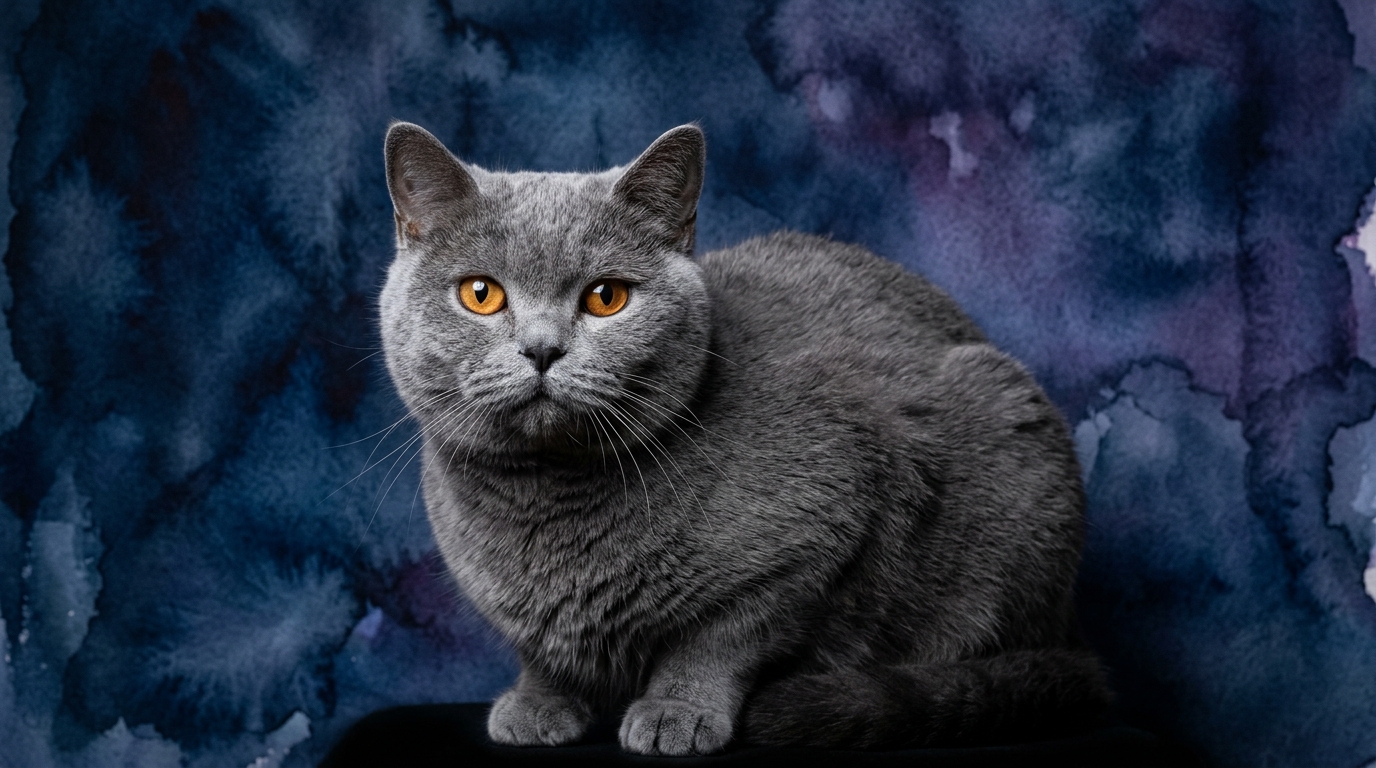
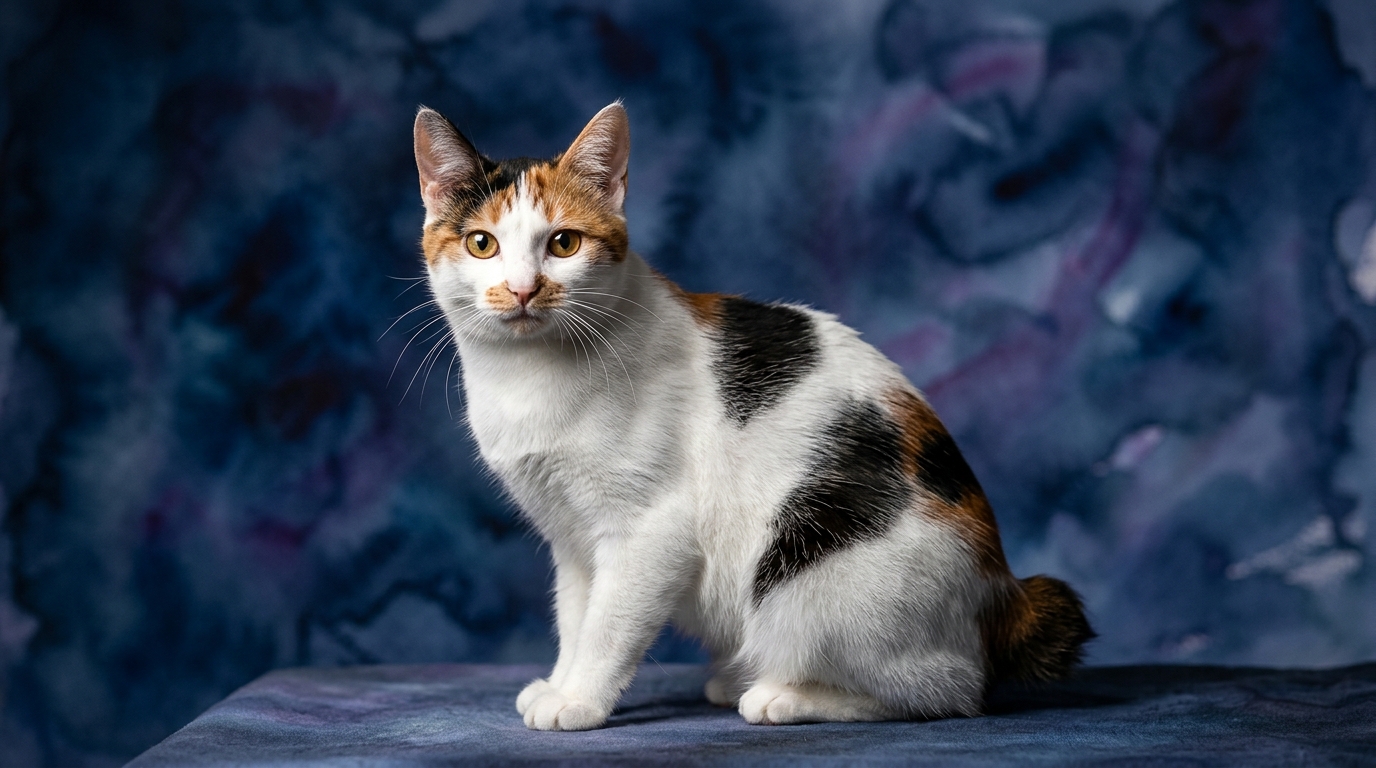
A Side-by-Side Look at Their Cognitive Profiles
The Cosmic Pet Pet IQ Lab assesses feline intelligence across five crucial dimensions, and both the British Shorthair and the Japanese Bobtail register a consistent 3/5 across the board. While these scores suggest a baseline of competence rather than exceptionality in any single area, the practical application of this intelligence often varies significantly between breeds, shaped by their inherent temperaments and evolutionary paths.
For Problem Solving (3/5), a British Shorthair typically approaches challenges with a methodical, observant patience. They might watch a puzzle toy for a while, considering options before attempting a solution, often succeeding through calm persistence rather than rapid experimentation. A Japanese Bobtail, conversely, usually tackles new puzzles with more energetic curiosity and hands-on engagement, perhaps trying various approaches more quickly, often finding success through playful, active interaction. Both breeds ultimately solve tasks of moderate complexity.
In Training Speed (3/5), the British Shorthair is capable of learning commands and routines, but their progress often hinges on consistent, calm reinforcement and a willingness to engage on their own terms. They absorb information at a steady pace, remembering what's expected but not always driven by a desire to perform. The Japanese Bobtail, with the same 3/5 score, often appears to learn quickly due to their enthusiastic participation and desire for interaction. They enjoy the process of learning tricks or responding to cues, making training sessions feel more dynamic and engaging, though the underlying rate of learning complex tasks remains standard.
Social Intelligence (3/5) in the British Shorthair is characterized by a perceptive understanding of household dynamics and human moods, though they often express this through quiet companionship and observant presence. They recognize familiar faces and routines, adapting well to their social environment without being overly demanding. The Japanese Bobtail, also at 3/5, is usually more overtly socially intelligent, actively seeking interaction and often initiating play or 'conversations.' They are highly attuned to their family's emotions and integrate seamlessly into social activities, often demonstrating a clear understanding of social cues and boundaries.
Regarding Instinctive Drive (3/5), the British Shorthair exhibits a moderate prey drive, enjoying interactive play that mimics hunting but without an obsessive focus. They are content with indoor living, finding satisfaction in chasing toys or batting at feathers occasionally. The Japanese Bobtail shares this 3/5 score but often manifests it with a more pronounced zest for interactive games. They frequently engage in activities like fetch or chasing laser pointers, channeling their natural hunting instincts into spirited play with their human companions.
Finally, Memory (3/5) for both breeds is robust enough for daily life. A British Shorthair will reliably remember routines, favored nap spots, and the people they encounter regularly, even after a period of absence. Similarly, a Japanese Bobtail retains information well, recalling learned tricks, preferred play patterns, and the locations of favored toys or perches, ensuring they navigate their environment and social interactions with ease.
Where the British Shorthair Shines Cognitively
While their IQ scores are identical, the British Shorthair's cognitive strengths often lie in their composed and observant nature. Their Problem Solving at 3/5, for instance, is marked by a patient, analytical approach. They excel at tasks requiring sustained focus and a methodical strategy, rather than quick, impulsive actions. This can make them particularly good at figuring out complex environmental changes or new routines through quiet observation and logical deduction over time. Their memory, also 3/5, often manifests as a strong recall for routines and the 'lay of the land,' making them masters of their established territory and predictable schedules.
Where the Japanese Bobtail Excels Cognitively
The Japanese Bobtail's cognitive advantages, despite matching scores, are typically rooted in their more interactive and playful disposition. Their Problem Solving, at 3/5, is often characterized by a more 'hands-on' and exploratory method. They might experiment with a new toy or puzzle with greater physical engagement and enthusiasm, often using their paws deftly. Their Social Intelligence (3/5) is a standout; they are often described as highly communicative and responsive to human interaction, making them adept at 'reading' their owners and responding with appropriate vocalizations or body language. This breed often appears to grasp social cues with remarkable clarity, fostering deep, reciprocal bonds.
Which Is Easier to Train, and Why?
Despite both breeds scoring 3/5 in Training Speed, many owners find the Japanese Bobtail to be seemingly easier to train. This isn't due to a superior learning capacity, but rather their inherent enthusiasm for interaction and play. Japanese Bobtails often enjoy the process of training, viewing it as a fun, bonding activity. Their Social Intelligence (3/5) means they are highly motivated by human praise and attention, making them more eager to engage in repeated drills and perform learned behaviors. They often pick up simple tricks like fetch or walking on a leash relatively smoothly because they are keen to participate.
The British Shorthair, while perfectly capable of learning at a 3/5 pace, tends to be more independent and less driven by the immediate gratification of owner interaction during training. They require a calm, consistent approach, and their cooperation often stems from understanding the routine rather than a strong desire to 'please.' They will learn, but their training sessions might be quieter and less overtly enthusiastic, requiring more patience from the trainer to maintain engagement.
Suitability for Active vs. Relaxed Owners
Given their distinct cognitive and temperamental manifestations, these breeds suit different owner lifestyles. The British Shorthair, with its composed demeanor and methodical approach to its environment, is generally an excellent fit for relaxed owners. They appreciate a calm, predictable home environment and are content with quiet companionship. Their moderate instinctive drive means they are happy with less intense play sessions and thrive in homes where they can observe and participate on their own terms, making them ideal for individuals or families seeking a dignified, independent companion.
The Japanese Bobtail, conversely, with its energetic curiosity and strong social drive, is well-suited for more active owners or families. They thrive on interaction, enjoying regular play sessions, puzzle toys, and direct engagement. Their pronounced social intelligence means they enjoy being involved in household activities and often seek out 'conversations' with their humans. Owners who enjoy teaching tricks, engaging in interactive games, and having a more participatory feline companion will find the Japanese Bobtail to be a wonderfully stimulating and responsive pet.
The Verdict: When to Choose Each Feline
The Verdict
Choose the British Shorthair if you appreciate a calm, observant companion who values routine and offers quiet, dignified affection, fitting seamlessly into a more relaxed household rhythm.
Opt for the Japanese Bobtail if you desire an interactive, playful cat who thrives on engagement, enjoys 'conversations,' and actively participates in household life, perfect for an energetic and attentive owner.
🧠 Find Your Pet's IQ Score
Our Pet IQ Lab assessment covers 25+ tests across 5 cognitive dimensions — personalized to your breed.
Take the Full IQ Test →Frequently Asked Questions
Do British Shorthairs enjoy interactive toys?
Yes, British Shorthairs enjoy interactive toys, especially those that engage their Problem Solving (3/5) through observation and methodical engagement. They appreciate toys that allow for independent play and a moderate level of challenge without being overly demanding.
Are Japanese Bobtails good with children?
Japanese Bobtails generally have good Social Intelligence (3/5) and a playful nature, making them suitable for families with children. Their desire for interaction means they often enjoy being part of family activities, provided interactions are respectful and positive.
How do these breeds adapt to new environments?
Both breeds adapt well to new environments due to their 3/5 Memory and Problem Solving skills. British Shorthairs might take a bit longer, observing their surroundings carefully before fully settling. Japanese Bobtails tend to explore new spaces with more immediate curiosity and playful investigation, adapting quickly through active engagement.