Side-by-Side Cognitive Profile: Bull Terrier vs. Miniature Pinscher
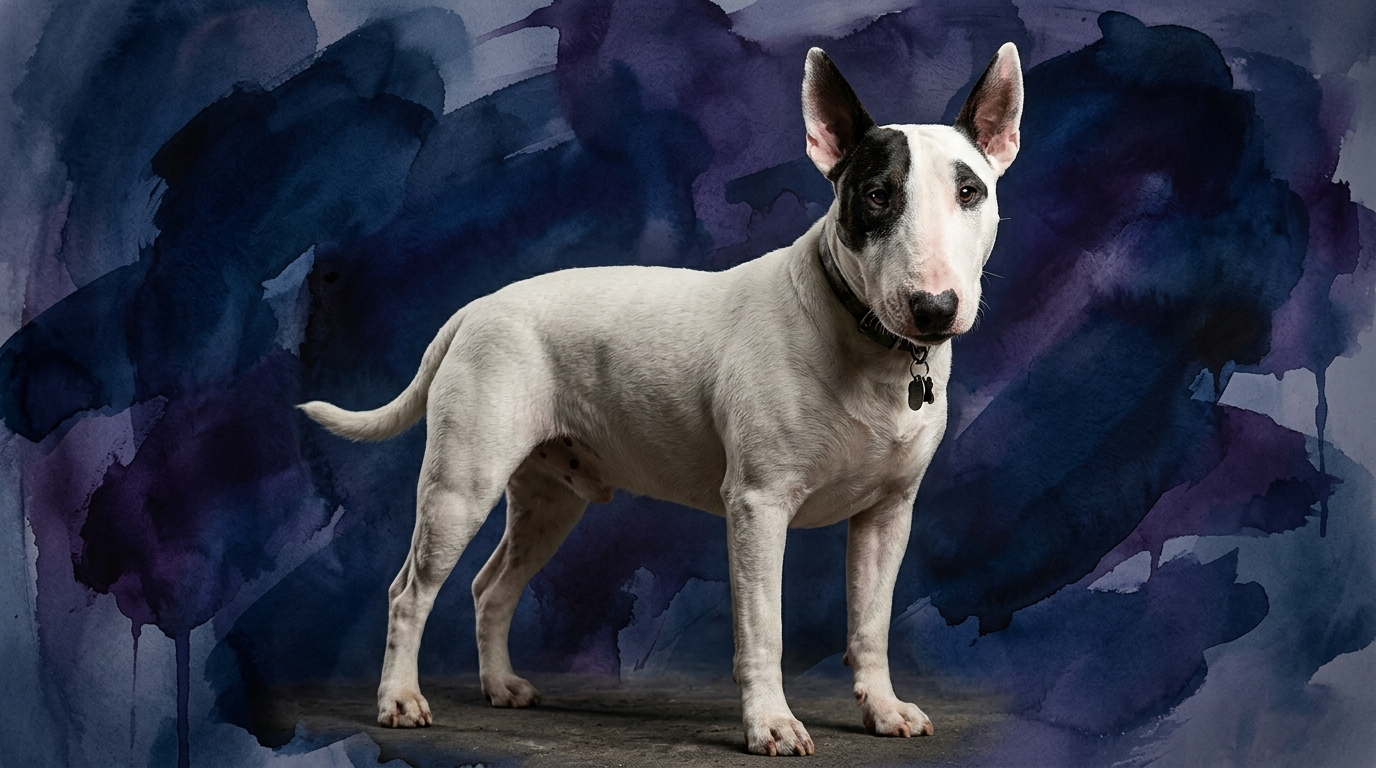
Delving into the Bull Terrier's cognitive landscape, their 3/5 score in Problem Solving indicates a practical, persistent approach to challenges, where they often rely on their physical tenacity and strength to methodically work through obstacles rather than abstract reasoning. Their Training Speed, also at 3/5, suggests they learn at an average pace, but their characteristic Terrier stubbornness means consistent, clear motivation and repetition are essential for compliance. Social Intelligence at 3/5 highlights their ability to form deep bonds with their immediate family and understand household dynamics, though their protective instincts often make them reserved or wary with strangers until trust is firmly established. An Instinctive Drive of 3/5 reflects a moderate but definite desire to chase, dig, and guard, rooted in their breed's heritage, necessitating appropriate outlets. Finally, their Memory score of 3/5 means they retain learned commands and routines effectively, especially when associated with positive experiences, contributing to their remarkable loyalty.
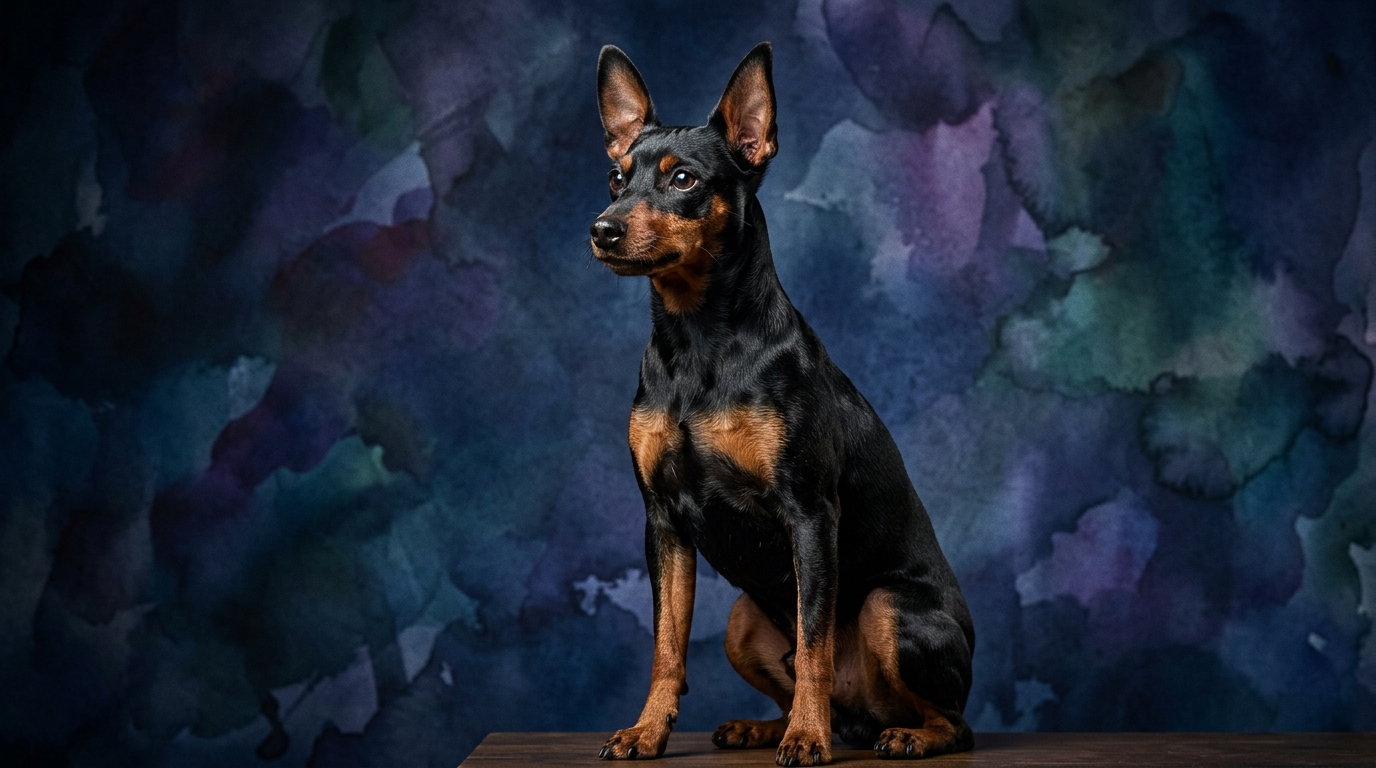
The Miniature Pinscher, despite its compact size, mirrors the Bull Terrier's 3/5 across all cognitive dimensions, yet their expression differs significantly. Their Problem Solving at 3/5 manifests as a clever, often opportunistic approach; they might use their agility or sharp senses to navigate their environment, perhaps figuring out how to squeeze under a gate or alert their owner to a perceived issue with an insistent bark. A Training Speed of 3/5 means they can pick up commands reasonably quickly, but their spirited nature and potential for distractibility demand engaging, short, and consistent sessions to hold their attention. Social Intelligence at 3/5 indicates a keen awareness of their human family’s moods and routines, often leveraging their alertness, though their 'big dog in a small body' confidence can sometimes lead to bossy behaviors if not properly guided. Their Instinctive Drive, also 3/5, translates to a strong prey drive for their size, often seen in vigorous chasing of small objects, and a pronounced alarm-barking tendency to protect their perceived territory. Lastly, a Memory score of 3/5 ensures they remember past interactions, commands, and routines, making them capable of learning intricate tricks and forming strong habits.
Where the Bull Terrier Shines Cognitively
Despite identical raw scores, the Bull Terrier's unique physical and temperamental makeup allows them to excel in specific cognitive applications. Their tenacity in problem-solving often outmatches smaller breeds when the solution requires sheer physical effort or unwavering persistence. For instance, a Bull Terrier might spend significantly longer trying to manipulate a puzzle toy using their powerful jaws and robust body until it yields a treat, where a less physically equipped dog might give up.
Their cognitive strength also lies in their focused determination. While not always quick to respond, once a Bull Terrier is engaged in a task or has decided on a course of action, their concentration can be remarkably singular. This steadfastness allows them to maintain attention on a goal, even amidst minor distractions, which can be a distinct advantage in specific training or problem-solving scenarios.
Furthermore, their social intelligence, while sometimes expressed as reservedness, enables a profound, unwavering loyalty. This manifests as a deep awareness of their family's well-being and a protective instinct, making them keenly perceptive of changes in their human's demeanor or the presence of perceived threats. Their understanding of their role within the family unit is robust, providing a sense of security.
Where the Miniature Pinscher Holds a Cognitive Edge
The Miniature Pinscher's cognitive strengths are intrinsically linked to their nimble physique and spirited demeanor. Their agility in problem-solving allows them to tackle challenges requiring quick, precise movements or navigating tight spaces. A Min Pin might cleverly squeeze through a narrow gap to retrieve a dropped item, a feat their larger counterparts would find impossible, demonstrating a unique spatial awareness.
Their heightened alertness and environmental awareness also give them a distinct cognitive advantage. Miniature Pinschers are often the first to notice subtle shifts in their surroundings, from a distant rustle to a new scent, thanks to their sharp senses and inherent 'watchdog' mentality. This translates into a quicker recognition and assessment of environmental changes, making them exceptionally perceptive companions.
In terms of social intelligence, the Miniature Pinscher often communicates its needs and desires with striking clarity through expressive body language and vocalizations. This overt communication style can make their social cues easier for owners to interpret and respond to, fostering a highly interactive and communicative bond. Their ability to convey their 'big dog' confidence in a small package is a testament to their social prowess.
Training Dynamics: Bull Terrier vs. Miniature Pinscher
With both breeds scoring 3/5 in Training Speed, neither is inherently 'easy' nor 'difficult' to train; rather, the challenges and approaches differ significantly. The Bull Terrier's training journey is often characterized by its independent streak and considerable physical strength. They are certainly capable of learning commands and routines, but their strong will means that successful training requires immense patience, unwavering consistency, and highly motivating positive reinforcement. Trainers must understand that a Bull Terrier's tenacity can be a double-edged sword: once they commit to an action, they are steadfast, but if they decide against it, overcoming their resolve demands skilled engagement rather than force. Early and thorough socialization is also paramount to channel their instinctive drives constructively.
Conversely, training a Miniature Pinscher, while also requiring consistency, presents challenges rooted in their high energy, potential for distractibility, and 'bossy' personality. They are quick to grasp concepts but can just as quickly become bored or test boundaries, often choosing to ignore a command if a more interesting stimulus (like a passing squirrel) captures their attention. Their keen senses mean that training environments need to be managed to minimize distractions. While their smaller size makes them physically easier to handle, their vocalizations and self-assured temperament necessitate firm, positive guidance and a variety of engaging training methods to maintain their focus and respect. Both breeds ultimately thrive with dedicated, consistent training, but the specific strategies employed will vary to match their distinct temperaments.
Lifestyle Match: Active Owners vs. Relaxed Owners
For owners with an active lifestyle, both the Bull Terrier and the Miniature Pinscher can be suitable companions, though their needs diverge in intensity and type. The Bull Terrier unequivocally thrives with active owners who can provide substantial physical exercise and consistent mental stimulation. Their robust build and moderate instinctive drive necessitate long, vigorous walks, interactive play sessions, and engaging activities like scent work or agility to prevent boredom and potential destructive behaviors. A truly relaxed or sedentary owner who isn't prepared to meet these demands will likely find themselves with a challenging and under-stimulated dog.
The Miniature Pinscher, despite its size, also requires an active approach from its owners, but with a different emphasis. They are not content to be mere lap dogs; their high energy and sharp minds demand daily walks, ample playtime, and opportunities for mental engagement to satisfy their spirited nature. While they might adapt to apartment living more easily due to their compact size, they still need dedicated outdoor activity and indoor games. A 'relaxed' owner who can still commit to structured daily exercise, interactive play, and consistent mental challenges will find the Min Pin a lively and engaging companion, bringing a concentrated burst of energy to their home.
The Verdict: When to Choose Each Breed
The Verdict
Choose the Bull Terrier if you are an owner seeking a robust, loyal, and uniquely characterful companion, prepared to invest in consistent training, socialization, and plenty of physical and mental engagement for a dog with a strong will and protective heart.
Opt for the Miniature Pinscher if you desire a confident, spirited, and alert companion in a compact package, who can provide firm yet positive training, ample mental stimulation, and appreciates a dog with a big personality and unwavering devotion.
🧠 Find Your Pet's IQ Score
Our Pet IQ Lab assessment covers 25+ tests across 5 cognitive dimensions — personalized to your breed.
Take the Full IQ Test →Frequently Asked Questions
Are Bull Terriers good with children?
Bull Terriers can be excellent family dogs with proper socialization and training from a young age, displaying loyalty and patience. Supervision is always recommended due to their strength and enthusiastic play style, ensuring respectful interactions from both dog and child.
Do Miniature Pinschers bark a lot?
Miniature Pinschers are known for being alert watchdogs and can bark frequently at perceived threats or new sounds, reflecting their strong instinctive drive. Consistent training and management can help moderate their vocalizations, but their natural inclination is to announce everything.
Which breed is more adaptable to apartment living?
Both breeds can adapt to apartment living if their exercise and mental stimulation needs are met daily. The Miniature Pinscher's smaller size might make apartment living slightly easier, but both require dedicated owners who will ensure they receive ample outdoor activity and indoor engagement to thrive.