Decoding Canine Cognition: Bull Terrier vs. Norwegian Elkhound IQ Profiles
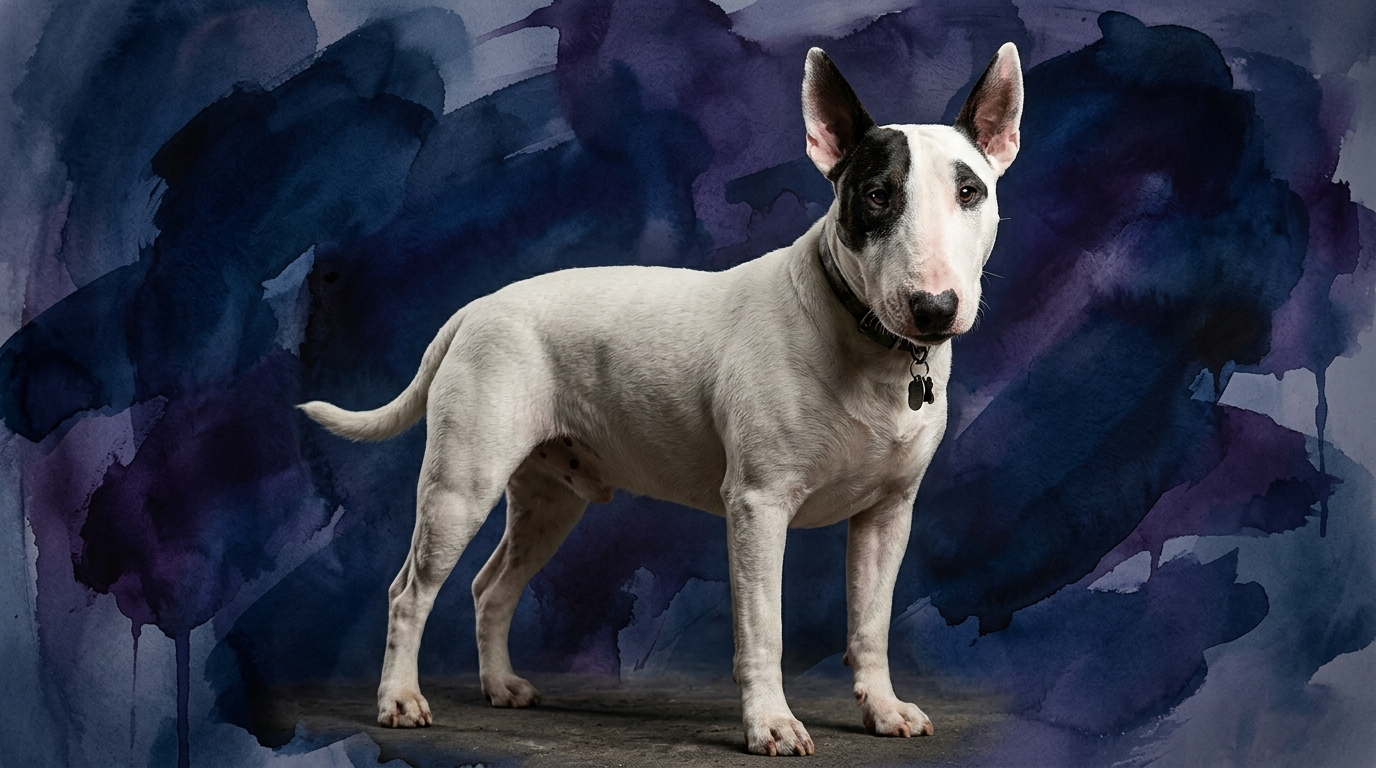
The Bull Terrier, ranking #66 on Stanley Coren's scale of working and obedience intelligence, presents a compelling cognitive profile marked by a balanced set of attributes. This breed's intelligence dimensions, as measured by The Cosmic Pet Pet IQ Lab, paint a picture of a dog that approaches challenges with a unique blend of determination and individual thought. Their scores across the board suggest a capable but often self-directed learner.
In problem-solving, the Bull Terrier scores 3/5, indicating a moderate ability to independently navigate novel situations; they can figure things out, but may take their own sweet time or approach. Training speed also sits at 3/5, meaning they learn new commands at a steady, deliberate pace, requiring consistency and patience from their human partners. Social intelligence, at 3/5, suggests they understand human cues moderately well, forming deep, often singular bonds. Their instinctive drive is also 3/5, reflecting a balanced level of inherent urges that are present but typically manageable. Finally, their memory, also 3/5, denotes a moderate retention of learned behaviors and past experiences.
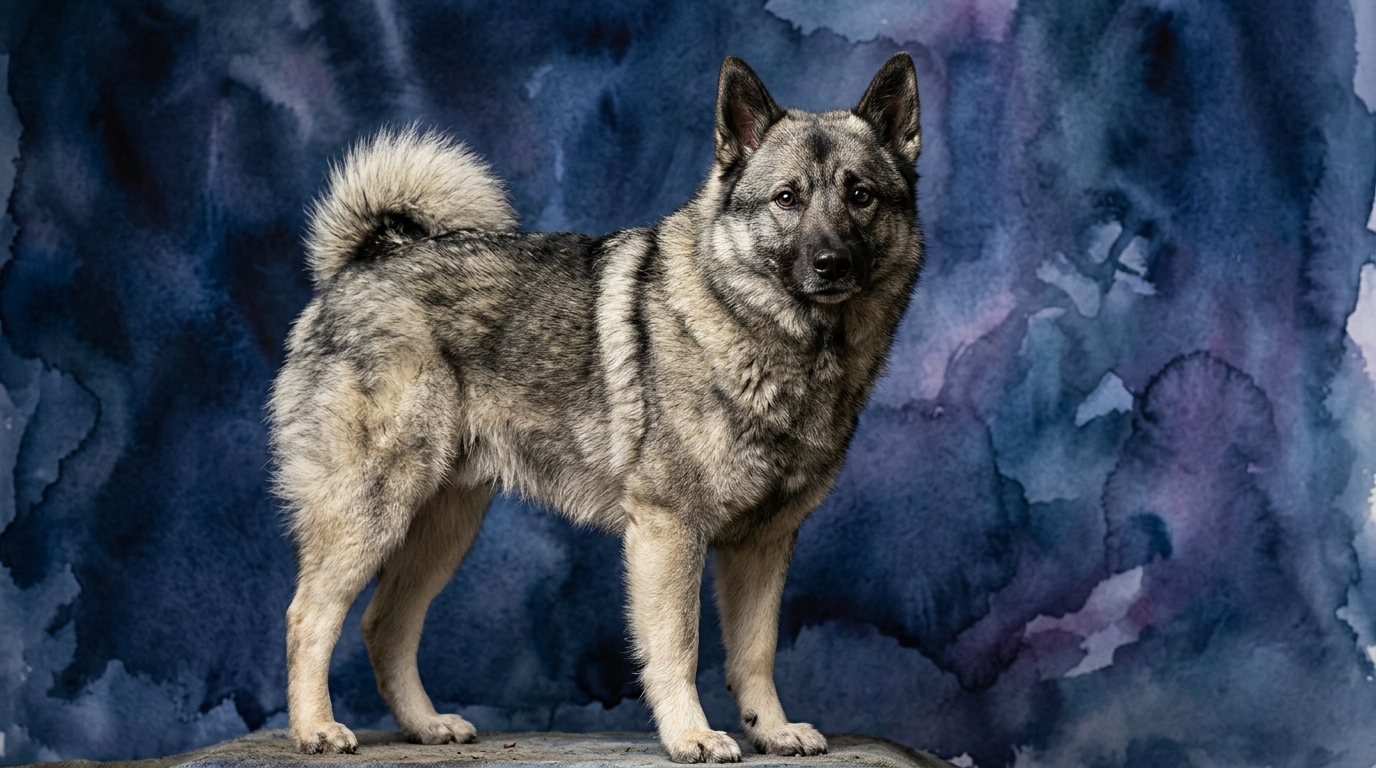
Shifting focus to the Norwegian Elkhound, this ancient hunting hound boasts a significantly higher Coren rank of #36, reflecting a more pronounced aptitude for obedience and working intelligence. Their IQ profile highlights a breed developed for independent thought and rapid learning in demanding environments, showcasing a different cognitive architecture compared to the Bull Terrier. Their scores often lean towards higher efficiency and responsiveness.
The Elkhound excels in problem-solving with a 4/5 score, demonstrating a strong capacity for independent reasoning and adapting to complex situations. Their training speed is also 4/5, indicating they grasp new commands and routines with impressive alacrity, making them generally quicker to train. Social intelligence mirrors the Bull Terrier at 3/5, meaning they are loyal and capable of understanding human social cues, though perhaps not overly expressive. Their instinctive drive is 3/5, a balanced score that acknowledges their hunting heritage without implying an overwhelming drive in everyday life. Crucially, their memory is 4/5, signifying a robust ability to recall learned information and experiences over extended periods, which is vital for consistent performance.
Bull Terrier's Distinct Cognitive Edge
While the Norwegian Elkhound often outscores the Bull Terrier in sheer speed and efficiency of learning, the Bull Terrier’s unique blend of cognitive attributes presents its own distinct advantages. Their 3/5 scores, particularly in problem-solving and instinctive drive, contribute to a tenacity that can be overlooked by pure metrics. A Bull Terrier, when engaged, often approaches a puzzle or a task with an unwavering focus and a distinctive, sometimes unconventional, method of resolution. They might not solve it the fastest, but their persistence is a cognitive strength.
This breed's moderate instinctive drive, combined with a 3/5 in social intelligence, often translates into a dog that forms incredibly deep, almost singular bonds with their primary caregivers. They can be incredibly attuned to the nuances of their chosen human, often anticipating needs or moods in a way that is less about broad social acumen and more about profound individual connection. Their problem-solving, while not the highest, is often paired with a creative stubbornness; they might find a novel, albeit not always optimal, solution through sheer will, which can be endearing and surprisingly effective in certain contexts. This specific cognitive makeup makes them masters of individualized engagement, thriving on personal interaction and unique challenges tailored to their singular focus.
Norwegian Elkhound's Cognitive Strengths Shine
The Norwegian Elkhound's cognitive profile showcases clear advantages, particularly in areas crucial for complex learning and independent work. Their 4/5 score in problem-solving is a significant asset, indicating a dog that is highly capable of assessing new situations and devising effective strategies without constant human direction. This trait was paramount in their historical role as a moose hunter, where they needed to track, corner, and hold game independently for hours in challenging terrain. This intrinsic ability translates into a dog that can quickly adapt to new environments, learn complex routines, and even anticipate consequences, making them highly versatile.
Furthermore, the Elkhound’s 4/5 in training speed and 4/5 in memory create a powerful combination for efficient learning and consistent performance. They typically grasp new commands and concepts with fewer repetitions than many other breeds, retaining that information for the long term. This means advanced obedience, agility, or even specialized scent work comes more naturally to them. Their robust memory ensures that once a behavior is learned, it is reliably recalled, providing a stable foundation for advanced training and a predictable companion. This cognitive package makes them exceptional partners for owners who enjoy engaging in structured activities and building upon a solid behavioral repertoire.
Training Dynamics: Elkhound's Responsiveness vs. Bull Terrier's Resolve
When considering ease of training, the Norwegian Elkhound generally presents a more straightforward path for most owners. Their 4/5 training speed means they pick up new commands and routines with relative quickness, often showing a keen desire to understand and comply. Coupled with their 4/5 memory, learned behaviors are retained effectively, leading to greater consistency and fewer instances of "forgetting" commands over time. Their problem-solving ability (4/5) also means they can often generalize learned behaviors to new contexts more readily, making them adaptable students.
In contrast, the Bull Terrier, with its 3/5 training speed and memory, requires a more patient, consistent, and creative approach. Their independent nature, a hallmark of many Terrier breeds, means they might question the necessity of a command or prefer to engage in their own chosen activity rather than following instructions immediately. This isn't a lack of capacity, but rather a preference for self-direction; they *can* learn, but they often need strong motivation, engaging methods, and a firm, fair leader to channel their intelligence effectively. Owners might perceive this as stubbornness, but it’s often a manifestation of their specific cognitive makeup and a preference for making their own decisions.
Matching Energy: Lifestyle Compatibility with Each Breed
The activity levels and cognitive engagement needs of these two breeds diverge significantly, making them suitable for different types of owners. The Norwegian Elkhound, with its historical role as a resilient hunting dog in harsh Scandinavian climates, thrives on consistent physical and mental stimulation. Their 4/5 problem-solving and memory, combined with a moderate instinctive drive, means they are happiest when given a "job" to do, whether it's long hikes, scent work, agility, or advanced obedience. They are best suited for active owners who enjoy spending considerable time outdoors, engaging in structured activities, and providing ample opportunities for mental exercise. A bored Elkhound can become a destructive or vocal Elkhound, channeling their cognitive prowess into undesirable behaviors.
The Bull Terrier, while certainly not a sedentary breed, generally has different activity requirements. Their 3/5 instinctive drive and problem-solving suggest they need regular exercise to stay fit and happy, but perhaps not the same sustained endurance or complex mental tasks as the Elkhound. They enjoy vigorous play, walks, and structured games, but can also be content to relax with their family after their needs are met. They are often described as having bursts of energy followed by periods of calm. This makes them a potentially better fit for owners who are active but might not be looking for an intense, all-day adventure partner, appreciating a dog that can transition from playful to cuddly with ease, provided their foundational exercise and mental engagement needs are met.
The Verdict
Choose the Bull Terrier if you are drawn to a dog with a singular personality, appreciate a unique approach to problem-solving, and are prepared to engage with a companion who offers profound loyalty and requires patient, consistent training tailored to their independent spirit.
Opt for the Norwegian Elkhound if you seek a responsive, quick-learning partner for active pursuits, value strong independent problem-solving skills, and are ready to provide consistent mental and physical challenges to satisfy their robust cognitive and physical drives.
🧠 Find Your Pet's IQ Score
Our Pet IQ Lab assessment covers 25+ tests across 5 cognitive dimensions — personalized to your breed.
Take the Full IQ Test →Frequently Asked Questions
Are Bull Terriers truly stubborn, or is it a misunderstanding of their intelligence?
Bull Terriers are often perceived as stubborn due to their independent problem-solving (3/5) and moderate training speed (3/5). This isn't a lack of capacity, but rather a preference for making their own decisions; they learn best with positive reinforcement, engaging methods, and a consistent, fair approach that respects their unique mindset.
Do Norwegian Elkhounds require extensive mental stimulation, beyond physical exercise?
Absolutely. With 4/5 in problem-solving and memory, Norwegian Elkhounds thrive on mental challenges that go beyond just physical activity. Activities like scent work, puzzle toys, advanced obedience, and learning new tricks are crucial to keep their sharp minds engaged and prevent boredom, channeling their natural intelligence constructively.
How do these breeds typically interact with strangers or other pets, considering their social intelligence scores?
Both breeds score 3/5 in social intelligence, implying they are capable of understanding social cues but may not be overtly demonstrative or universally friendly. Bull Terriers often form intense bonds with their family but can be reserved with strangers. Elkhounds are generally loyal to their pack and can be somewhat aloof with outsiders, requiring proper socialization to ensure polite interactions with other pets and people.