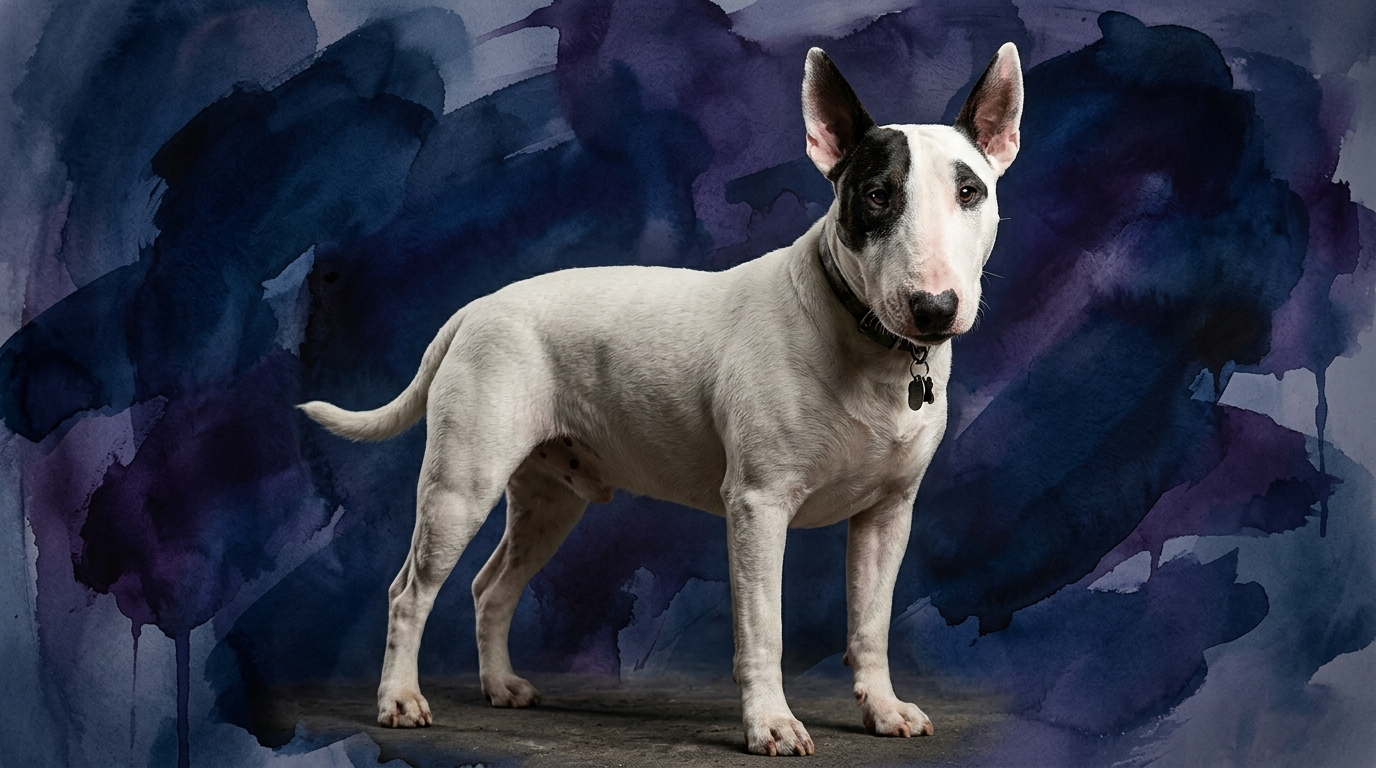
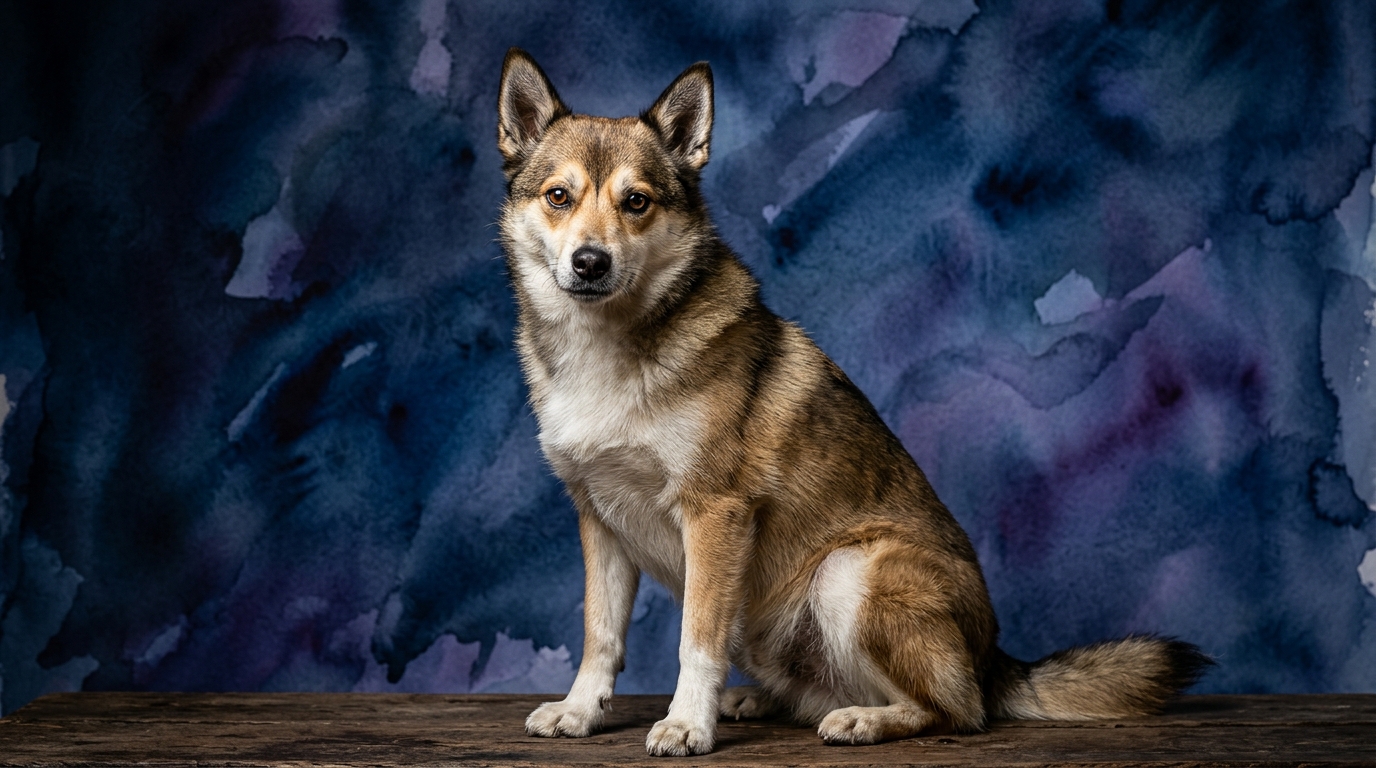
Side-by-Side IQ Profile: Bull Terrier vs. Norwegian Lundehund
In The Cosmic Pet Pet IQ Lab, both the Bull Terrier and the Norwegian Lundehund register identical scores across five key cognitive dimensions: Problem Solving (3/5), Training Speed (3/5), Social Intelligence (3/5), Instinctive Drive (3/5), and Memory (3/5). While these scores suggest a similar overall cognitive capacity, the manifestation of these traits within each breed’s unique context paints a far more detailed picture.
For the Bull Terrier, a 3/5 in Problem Solving indicates an ability to tackle challenges with a characteristic tenacity; they might not always find the quickest solution but will persist until they do, often employing a direct approach. Their Training Speed at 3/5 reflects a capacity for learning, yet it's often tempered by their independent and sometimes stubborn nature, requiring consistent, engaging methods. Social Intelligence at 3/5 means they are generally adept at reading human cues and forming strong bonds, though their interactions with other dogs can be selective. An Instinctive Drive of 3/5 points to their terrier heritage, manifesting as a robust prey drive and a determined pursuit of interests. Finally, their Memory at 3/5 suggests they retain learned commands and experiences effectively, forming lasting associations with both positive and negative encounters.
The Norwegian Lundehund, with identical 3/5 scores, expresses these traits through a distinctly different lens, shaped by their historical role as puffin hunters in challenging terrain. Their Problem Solving at 3/5 is characterized by adaptability and an innate ability to navigate complex physical environments, often employing unique bodily flexibility to overcome obstacles. Training Speed at 3/5 signifies they are capable learners, but their independent spirit and less human-centric drive mean training requires patience, creativity, and a strong understanding of their motivations. Social Intelligence at 3/5 indicates they form deep bonds with their immediate family, though they can be reserved or wary of strangers, reflecting their more ancient, less domesticated lineage. Their Instinctive Drive of 3/5 is profoundly tied to their hunting heritage, encompassing a keen sense of smell, agile movement, and a drive to explore and tunnel. Memory at 3/5 for the Lundehund is strong, particularly for spatial layouts and the intricacies of their environment, crucial for their original hunting tasks.
Where the Bull Terrier Wins Cognitively
The Bull Terrier’s cognitive strengths often lie in their unwavering focus and robust determination once a task or interest captures their attention. While their Problem Solving is rated 3/5, their particular brand of intelligence shines in situations demanding sustained effort and a direct, unyielding approach. They exhibit a remarkable single-mindedness, which, when channeled constructively, allows them to master complex routines or excel in dog sports that require precision and stamina. This persistence, often perceived as stubbornness, is a cognitive asset when the goal is clearly defined and consistent. For instance, a Bull Terrier tasked with retrieving a specific item will often disregard distractions until the objective is met, demonstrating a formidable ability to maintain cognitive engagement.
Furthermore, their memory, while rated 3/5, contributes significantly to their ability to learn and retain intricate sequences of commands or behaviors, particularly if reinforced positively and consistently. They develop strong associative memories, linking specific actions to outcomes with impressive clarity. This allows them to build upon learned experiences efficiently, making them reliable once a behavior is fully ingrained. Their social intelligence, at 3/5, allows them to quickly discern and respond to the emotional states of their human companions, often showing a protective and deeply empathetic understanding within their family unit, which can be a powerful motivator in their learning process.
Where the Norwegian Lundehund Wins Cognitively
The Norwegian Lundehund's cognitive advantages are deeply intertwined with their evolutionary history and unique physical adaptations, particularly in the realm of spatial reasoning and independent problem-solving. Their 3/5 Problem Solving score is illuminated by their innate capacity to navigate intricate, confined spaces—a skill honed for retrieving puffins from rocky crevices. This translates to an exceptional ability to assess and overcome environmental challenges, often using flexible joints and a keen exploratory drive to find novel solutions. They are less reliant on human direction for complex tasks, preferring to figure things out on their own, showcasing a distinct form of self-sufficient intelligence.
Their Instinctive Drive of 3/5 is a refined blend of curiosity and purpose, driving them to explore, tunnel, and investigate their surroundings with meticulous detail. This isn't just a physical drive; it's a cognitive process of constantly mapping and understanding their environment, making them exceptional at scent work or complex search games. The Lundehund’s social intelligence, while reserved, demonstrates a profound ability to form nuanced, independent bonds within their family, often communicating through subtle cues rather than overt displays. Their memory, at 3/5, is particularly strong for terrain, routes, and the location of hidden objects, making them excellent companions for off-leash adventures where recalling complex paths is crucial.
Which is Easier to Train and Why
Assessing which breed is 'easier' to train, given both score 3/5 in Training Speed, requires a look beyond the number to their inherent behavioral patterns. The Bull Terrier, despite its occasional stubbornness, often engages more directly with human interaction during training. Their drive to interact, even if it means testing boundaries, provides more immediate feedback loops for an owner. They respond well to clear, consistent, and firm leadership, coupled with positive reinforcement that leverages their playfulness and determination. If an owner can make training a compelling game or challenge, the Bull Terrier's robust memory and persistence will allow them to quickly internalize commands. The 'why' for a Bull Terrier is often about pleasing their person or achieving a desired reward, which is a relatively straightforward motivator.
The Norwegian Lundehund, conversely, presents a different training challenge. Their independence, stemming from a history of working alone, means they are less inherently driven to 'please' humans. Their 'why' for compliance needs to be internally compelling or directly beneficial to them, rather than solely focused on human approval. Training a Lundehund requires immense patience, creativity, and a deep understanding of their motivations. Repetitive drills can bore them quickly, and heavy-handed methods will often lead to a shutdown or increased stubbornness. Their exceptional problem-solving skills mean they might try to outsmart you, and their strong instinctive drive can easily divert their attention. While they can and do learn, the process is often slower, more nuanced, and demands an owner who can adapt their methods to the Lundehund's unique, self-reliant cognitive style. Therefore, for a typical owner, the Bull Terrier might be perceived as marginally easier to train because their engagement, even if challenging, is more direct and familiar.
Which Suits Active Owners vs. Relaxed Owners
Neither the Bull Terrier nor the Norwegian Lundehund are suitable for truly 'relaxed' owners who prefer minimal engagement. Both breeds possess a 3/5 Instinctive Drive and require significant mental and physical stimulation to thrive. However, the *type* of activity they prefer differs, making them suitable for different kinds of active owners.
The Bull Terrier, with its persistent nature and robust physique, thrives with owners who enjoy structured, vigorous activities. They excel in obedience, agility, earthdog trials, or even long, brisk walks and runs. Their cognitive strength lies in their ability to focus and persist, so owners who provide consistent training, engaging play sessions, and clear boundaries will find them incredibly rewarding companions. They need an owner who can channel their determination into productive outlets, preventing boredom-induced behaviors. An active owner who enjoys a canine partner for sports or consistent outdoor adventures will find the Bull Terrier a well-matched companion.
The Norwegian Lundehund, while also active, leans towards more exploratory and mentally stimulating forms of exercise. Their unique physical adaptations and problem-solving abilities make them excellent companions for owners who enjoy hiking, exploring new trails, or engaging in scent work and puzzle-solving games. They don't necessarily require high-impact, repetitive exercise, but rather varied environments that allow them to utilize their natural curiosity and agility. Owners who appreciate an independent explorer, are patient with training, and can provide opportunities for their dog to 'think' and navigate complex scenarios will find the Lundehund a fascinating and fulfilling partner. They are less suited for owners seeking a purely biddable, high-energy companion for repetitive tasks, but rather one that enjoys intellectual challenges and discovery.
The Verdict: When to Choose Each Breed
Deciding between a Bull Terrier and a Norwegian Lundehund hinges on understanding their unique cognitive expressions despite similar IQ scores. The Bull Terrier is an excellent choice for individuals or families who appreciate a dog with a strong, determined personality and are prepared to provide consistent, engaging training and ample outlets for their robust energy. They thrive with owners who can offer firm yet positive leadership, enjoy structured activities, and value a loyal, self-assured companion who will confidently engage with the world alongside them. Their directness in interaction and learning, while sometimes challenging, makes them a rewarding partner for experienced owners.
Conversely, the Norwegian Lundehund is best suited for owners who are drawn to a more independent, ancient breed with unique physical and mental capabilities. They require patient, creative training methods that respect their self-reliant nature and provide opportunities for exploration and problem-solving in varied environments. Owners who appreciate a dog that thinks for itself, enjoys nuanced social bonds, and has a deep-seated curiosity about its surroundings will find the Lundehund a fascinating and enriching companion. They are ideal for those who can provide a stimulating lifestyle that taps into their innate drive for discovery, rather than expecting immediate compliance or constant human-centric interaction.
The Verdict
Choose the Bull Terrier if you value a robust, persistent companion eager for structured engagement and can provide consistent, firm yet positive guidance to channel their determined spirit.
Opt for the Norwegian Lundehund if you appreciate an independent, curious explorer with unique physical and mental adaptations, and are prepared for patient, reward-based training that respects their self-reliant nature.
🧠 Find Your Pet's IQ Score
Our Pet IQ Lab assessment covers 25+ tests across 5 cognitive dimensions — personalized to your breed.
Take the Full IQ Test →Frequently Asked Questions
Do Bull Terriers and Norwegian Lundehunds respond well to positive reinforcement?
Yes, both breeds thrive on positive reinforcement, though the Bull Terrier's directness means clear rewards for desired behaviors are quickly understood, while the Lundehund benefits from patient, engaging methods that respect their independent spirit.
How does the 'instinctive drive' score of 3/5 manifest differently in each breed?
For the Bull Terrier, 3/5 instinctive drive often translates to a tenacious pursuit of a goal, whether it's a toy or a perceived challenge, showing a strong prey drive and determination. The Norwegian Lundehund's 3/5 drive is expressed through their innate need to explore, hunt small game, and utilize their unique physical capabilities for navigating complex, natural environments.
Are either of these breeds good for first-time dog owners?
Neither breed is typically recommended for first-time dog owners due to their strong personalities and specific training needs. Both the Bull Terrier's stubborn determination and the Norwegian Lundehund's independent, sometimes reserved nature require an experienced hand for optimal development and management.