
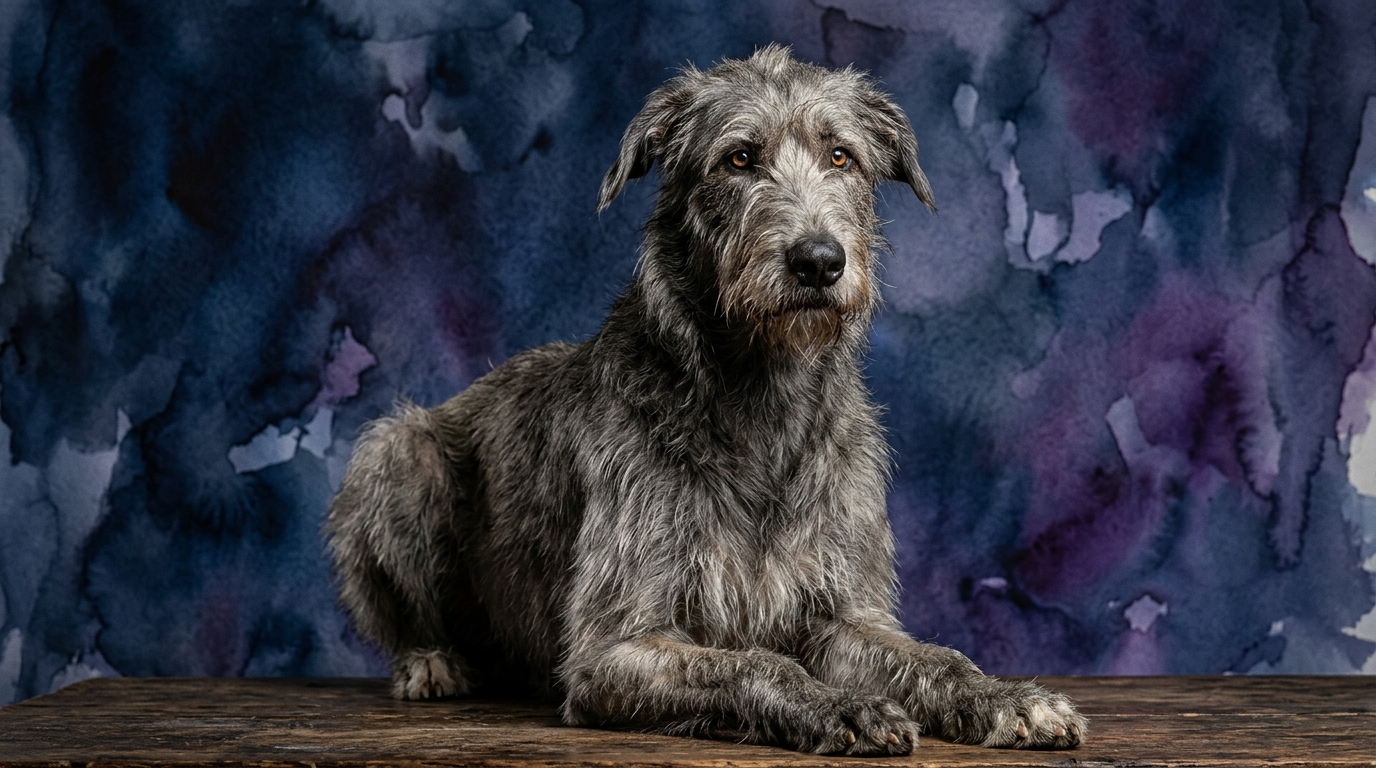
Side-by-Side Cognitive Profiles
At The Cosmic Pet Pet IQ Lab, we evaluate canine intelligence across five key dimensions, offering a nuanced understanding beyond simple obedience metrics. For the English Bulldog, ranked #77 by Coren, and the Irish Wolfhound, not specifically Coren-ranked, these dimensions paint distinct pictures of their cognitive landscapes.
The Bulldog scores 2/5 in Problem Solving, indicating they tend to favor established routines and familiar solutions over devising novel approaches to new challenges. Their Training Speed is also 2/5, suggesting a need for patience and repetition, as they may take longer to grasp new commands. However, the Bulldog truly shines in Social Intelligence at 4/5, demonstrating a profound capacity for understanding human emotions and cues, forming deep, intuitive bonds. Their Instinctive Drive is a moderate 3/5, often manifesting as a preference for comfort and companionship over intense activity. Memory, at 2/5, means they might require refreshers for less frequently reinforced lessons.
In contrast, the Irish Wolfhound presents a more balanced cognitive profile across the board. They achieve 3/5 in Problem Solving, showing a moderate ability to adapt and figure out simple environmental puzzles. Their Training Speed also stands at 3/5, meaning they generally pick up new concepts and commands with reasonable efficiency. Social Intelligence for the Wolfhound is 3/5; they are affectionate and connected to their families but perhaps less overtly attuned to subtle emotional shifts than the Bulldog. Instinctive Drive is 3/5, reflecting their sighthound heritage which, while present, is often tempered by their gentle nature. Finally, their Memory is 3/5, suggesting a more reliable retention of learned behaviors and past experiences compared to the Bulldog.
Where the English Bulldog Wins Cognitively
The English Bulldog’s undeniable cognitive strength lies in their exceptional Social Intelligence, scoring an impressive 4/5. This isn't about solving complex puzzles or executing intricate commands, but rather about their profound capacity for emotional connection and non-verbal communication within their family unit. A Bulldog might not figure out how to open a childproof gate, but they will be the first to sense a shift in your mood, offering comfort or companionship without needing explicit prompting. Their strong social awareness allows them to integrate seamlessly into family life, often acting as intuitive companions who understand routines and expectations through observation and empathy rather than explicit instruction.
This deep social attunement contributes significantly to their charm and makes them exceptionally comforting family members. They excel at being present, offering unwavering emotional support, and understanding the nuances of household dynamics. This high social intelligence means they are often incredibly well-adjusted family members who thrive on interaction and connection, making them superb companions for those who value a dog's emotional presence above all else.
Where the Irish Wolfhound Wins Cognitively
The Irish Wolfhound demonstrates a more robust cognitive flexibility, particularly in areas requiring active mental engagement. Their 3/5 in Problem Solving means they are more likely to independently figure out how to navigate a novel obstacle in their path, or to manipulate simple latches if sufficiently motivated. This moderate ability to reason through situations contrasts with the Bulldog’s preference for pre-established solutions and routines, suggesting a greater capacity for independent thought when faced with new challenges.
In terms of learning, the Wolfhound’s 3/5 Training Speed indicates they grasp new concepts with fewer repetitions, making foundational obedience work generally more efficient. They are quicker to connect actions with consequences and understand what is being asked of them. Coupled with a 3/5 Memory, they retain these lessons and past experiences more reliably, building a cumulative knowledge base that informs their future behavior and learning. This allows for a broader and more complex training repertoire over time, and a dog that remembers previous training sessions or interactions more consistently.
Training: Patience vs. Progress
When it comes to ease of training, the Irish Wolfhound generally presents a more straightforward prospect. Their 3/5 Training Speed and 3/5 Memory mean they tend to absorb and retain commands with reasonable efficiency. While their sheer size and independent hound nature necessitate consistent, early socialization and positive reinforcement, they are typically willing learners who can integrate new behaviors into their repertoire with fewer repetitions. Their moderate problem-solving skills also mean they can sometimes generalize learned behaviors to new situations, making training more adaptable.
English Bulldogs, with their 2/5 Training Speed and 2/5 Memory, often require a significantly greater degree of patience and repetition. They are not untrainable, but their learning curve is slower, and they can exhibit a charming obstinacy when faced with tasks they deem unnecessary or boring. Training a Bulldog often involves finding the right motivation, typically food or a favorite toy, and making learning feel like a comfortable, predictable routine rather than a demanding challenge. Owners must be prepared for a longer journey to achieve proficiency in commands, and understand that consistent reinforcement is key to preventing learned behaviors from fading. The Bulldog's Coren rank of #77, reflecting a lower working/obedience intelligence, aligns with this observation, indicating that while they are wonderful companions, their cognitive strengths lie elsewhere than rapid command acquisition.
Matching Canine Minds to Lifestyles
The distinct cognitive profiles of these two breeds naturally lend themselves to different owner lifestyles. For relaxed owners, the English Bulldog is an ideal match. Their lower problem-solving and training speed scores, combined with a naturally less physically demanding constitution, mean they thrive on companionship and routine. They are content with shorter, leisurely strolls and ample time for napping and social interaction. Owners who appreciate a dog's profound emotional presence and don't require a partner for complex obedience or high-energy activities will find a perfect match in the Bulldog. Their strong social intelligence makes them excellent, undemanding family companions who are deeply attuned to their human counterparts.
Conversely, the Irish Wolfhound, despite its gentle giant demeanor, suits owners prepared for a more engaged commitment. Their moderate scores across problem-solving, training speed, and memory, coupled with their large size and history as sighthounds, mean they benefit significantly from consistent, structured exercise and mental enrichment. While not requiring constant, high-intensity activity, they do need opportunities for long, brisk walks or securely fenced runs to stretch their long legs and satisfy their instincts. Owners who enjoy incorporating their dog into daily activities, offering varied training sessions, and providing thoughtful mental stimulation will find the Irish Wolfhound a rewarding partner. They suit owners who are prepared for a dog that needs more than just a couch to occupy its considerable mind and body.
The Verdict
If you seek an emotionally astute, low-key companion who excels at social bonding and thrives on predictable routines, requiring minimal complex training, the English Bulldog is an excellent choice.
Opt for the Irish Wolfhound if you desire a gentle giant with a moderate capacity for learning and problem-solving, who benefits from consistent, engaging training and moderate, structured exercise.
🧠 Find Your Pet's IQ Score
Our Pet IQ Lab assessment covers 25+ tests across 5 cognitive dimensions — personalized to your breed.
Take the Full IQ Test →Frequently Asked Questions
Are Bulldogs difficult to train?
Bulldogs can require more patience and repetition due to their 2/5 training speed and memory. They respond best to positive reinforcement and making training feel like a comfortable part of their routine, rather than a demanding task, often with food rewards.
Do Irish Wolfhounds need a lot of mental stimulation?
Yes, while not hyperactive, their 3/5 in problem-solving and memory means they benefit from consistent training, puzzle toys, and varied experiences to keep their minds engaged. This prevents boredom and promotes well-adjusted behavior for this large breed.
Which breed is more affectionate?
Both breeds form strong bonds with their families, but the Bulldog's 4/5 social intelligence suggests a heightened capacity for emotional attunement and overtly expressive affection. Irish Wolfhounds are also deeply devoted but may express it with a bit more reserved dignity, though still very loving.