
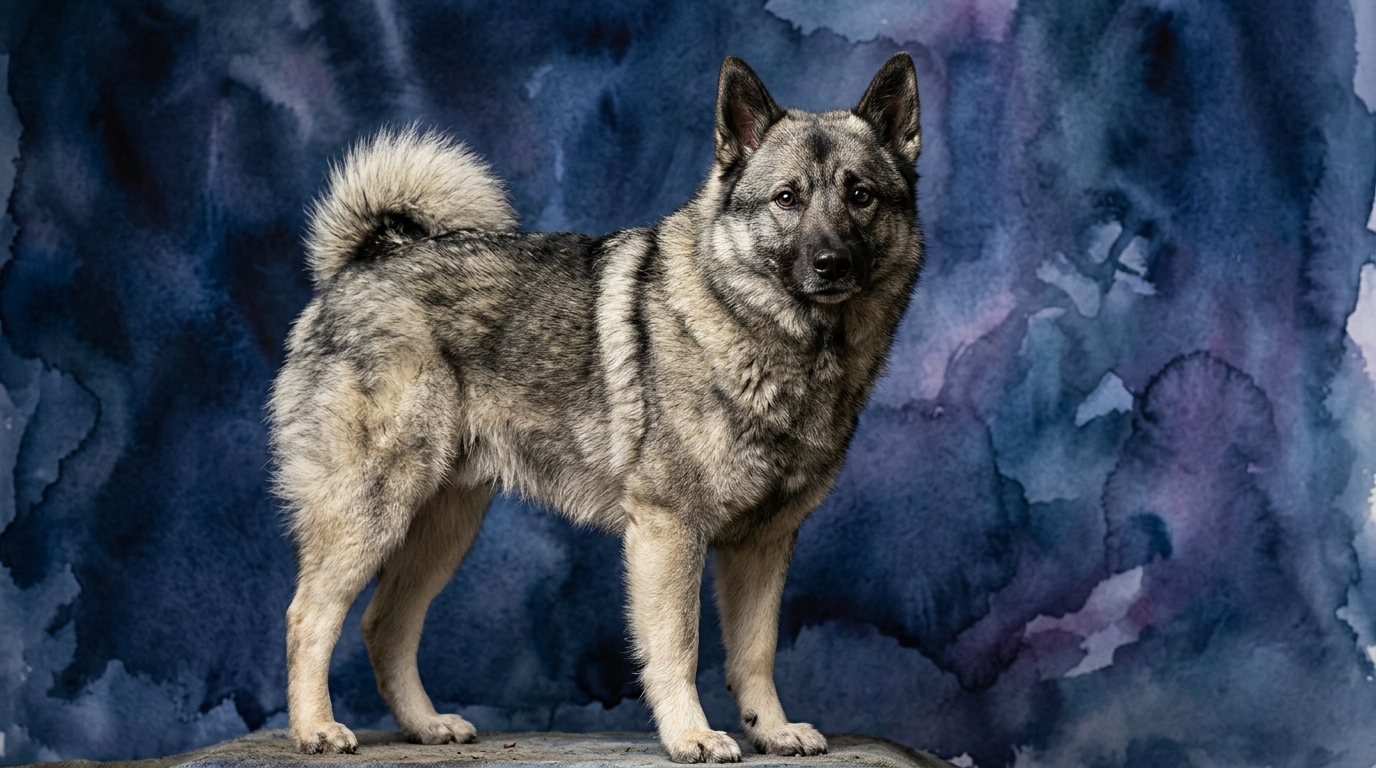
Side-by-Side IQ Profile: Bulldog vs. Elkhound
To truly understand the cognitive landscape of the English Bulldog and Norwegian Elkhound, The Cosmic Pet Pet IQ Lab employs five key dimensions, each revealing a unique facet of their mental makeup. Let's break down how each breed performs across these specific measures.
**English Bulldog Intelligence Profile:**
**Problem Solving (2/5):** The English Bulldog typically approaches new challenges with a steady, often deliberate pace, preferring familiar routines over intricate puzzles. They may not spontaneously devise complex solutions to novel situations, often relying on learned patterns or human guidance. Their strength lies not in analytical prowess but in their calm acceptance and adaptability within established environments. They tend to stick to what they know works, rather than experimenting with new methods to overcome obstacles.
**Training Speed (2/5):** Training a Bulldog requires patience and consistent, positive reinforcement. They are not known for rapid assimilation of multiple commands or complex sequences. Repetition is key, as is understanding their motivation, which often centers around comfort and food rewards rather than an inherent eagerness to please in the traditional sense. Progress is steady but deliberate, requiring commitment from their owner.
**Social Intelligence (4/5):** Here, the Bulldog truly shines. They possess a remarkable capacity to read human emotions, offering comfort and companionship with an almost intuitive understanding. Their strong bond with family members and their generally placid demeanor make them exceptional at integrating into human social structures, often anticipating needs through subtle cues. They are deeply empathetic companions.
**Instinctive Drive (3/5):** While their ancestral roots hint at working roles, the modern English Bulldog exhibits a moderate instinctive drive. They are not typically driven by strong prey instincts or an intense urge to herd or guard. Their innate behaviors are more aligned with seeking comfort, companionship, and a secure environment, though they can display protective tendencies towards their loved ones, particularly children.
**Memory (2/5):** Bulldogs tend to remember simple commands and routines, especially those associated with positive experiences. However, retaining a vast repertoire of complex tasks or intricate sequences may require ongoing reinforcement. They benefit from consistent schedules and clear, repetitive cues to solidify their learning, making consistency paramount for long-term retention.
**Norwegian Elkhound Intelligence Profile:**
**Problem Solving (4/5):** The Norwegian Elkhound demonstrates a robust capacity for independent problem-solving. This breed is adept at figuring out how to achieve objectives, whether it's navigating a tricky path, strategizing to access a coveted toy, or finding creative ways to overcome barriers. Their intelligence in this domain is a testament to their history as resilient hunting companions, often working autonomously in challenging environments.
**Training Speed (4/5):** Elkhounds typically learn new commands and tasks with impressive speed, often grasping concepts quickly after just a few repetitions. They respond well to varied training methods and enjoy mental stimulation, making them responsive students. Their eagerness to engage in learning activities makes them a rewarding breed for those who enjoy active participation in their dog's development.
**Social Intelligence (3/5):** While forming strong bonds with their families, the Elkhound's social intelligence often manifests as a confident independence rather than overt empathy. They are good at integrating into a family unit but may not display the same level of emotional mirroring or constant attention-seeking as some other breeds. They appreciate clear communication and fair leadership, but value their own space.
**Instinctive Drive (3/5):** With a heritage rooted in tracking and barking at moose, the Elkhound possesses a moderate but distinct instinctive drive. This includes a strong vocalization tendency and an independent spirit that can lead them to follow their nose for extended periods. While not overly aggressive, their historical role means they are alert and can be persistent when pursuing an interest or a scent.
**Memory (4/5):** Elkhounds excel in memory, retaining a wide range of commands, learned behaviors, and experiences over time. This strong recall contributes significantly to their training responsiveness and their ability to navigate complex environments based on past knowledge. They are less likely to 'forget' what they've learned, making long-term training effective and reliable.
Where the English Bulldog Wins Cognitively
The English Bulldog's cognitive strengths distinctly lie in its profound social intelligence. With a remarkable 4/5 rating, they possess an innate ability to perceive and respond to human emotions, making them unparalleled companions for emotional support and comfort. This isn't merely about affection; it's a deep, often quiet, understanding of their human family's moods and needs, often expressed through gentle presence rather than boisterous overtures. Their lower instinctive drive and moderate problem-solving needs mean they are content to be close, observing and absorbing the emotional landscape of their home. This makes them exceptional at forming stable, emotionally resonant bonds, often acting as intuitive anchors within a household, providing a calming and empathetic presence without demanding constant mental engagement or complex interactions.
Where the Norwegian Elkhound Wins Cognitively
Conversely, the Norwegian Elkhound demonstrates superior cognitive abilities in areas demanding mental agility and independent thought. Their 4/5 ratings in problem-solving, training speed, and memory highlight a breed built for action and intellect. Elkhounds excel at figuring out challenging scenarios, whether it’s navigating an obstacle course or devising a way to reach a coveted treat. This capacity for independent reasoning, coupled with their quick learning and excellent recall, means they absorb new information rapidly and retain it effectively. Their historical role as hunting dogs required them to make decisions autonomously and remember intricate routes, traits that translate into a canine companion eager for mental challenges and capable of mastering complex tasks with impressive efficiency.
Which is Easier to Train, and Why?
When evaluating ease of training, the Norwegian Elkhound generally presents a more straightforward experience due to its higher scores in training speed and memory. An Elkhound's keen intellect means they grasp new commands quickly, often enjoying the mental stimulation that training provides. They are often eager to engage, making sessions productive and rewarding. Their strong memory ensures that once a concept is learned, it is retained for the long term, reducing the need for constant re-teaching. Their independence, while a strength, does mean they respond best to training that makes sense to them and respects their agency, rather than rote obedience.
In contrast, the English Bulldog, with a training speed of 2/5 and memory of 2/5, requires a significantly more patient and consistent approach. What is sometimes perceived as 'stubbornness' in a Bulldog is often a combination of lower inherent motivation for complex tasks and a slower processing speed for new information. They thrive on positive reinforcement, short, engaging sessions, and clear, repetitive cues, learning best when tasks are broken down into simple, achievable steps. While they can learn a wide range of commands, the process demands more dedication and understanding of their unique pace and motivators, which are often comfort and food rather than a strong desire to please through intricate obedience. Their placid nature, however, means they are rarely overtly defiant, just slow to comply or grasp new concepts.
Suitability for Active vs. Relaxed Owners
The distinction in cognitive profiles between these two breeds clearly delineates their suitability for different lifestyles. The Norwegian Elkhound, with its high problem-solving capacity and quick training speed, thrives with active owners who can provide consistent mental and physical stimulation. This breed requires regular engagement in activities like hiking, agility, puzzle toys, or advanced obedience training to prevent boredom and potential destructive behaviors. Their independent nature, coupled with their intelligence, means they need outlets for their minds, making them an ideal match for individuals or families who enjoy an adventurous, mentally stimulating routine and can integrate their dog into these activities.
On the other hand, the English Bulldog, characterized by its lower problem-solving and training speed, is an excellent fit for more relaxed owners. While they still require moderate daily exercise for their physical health, their mental demands are significantly less intense. They are generally content with a comfortable home environment, predictable routines, and ample opportunities for companionship and affection. They don't crave complex mental challenges or prolonged, vigorous activity, making them perfect for those seeking a devoted, calm presence that doesn't require extensive training regimens or constant engagement in high-energy pursuits. Their social intelligence means they are deeply fulfilled by simply being a part of the family's daily life.
The Verdict
Choose the English Bulldog if you prioritize an emotionally attuned, calm companion who excels at social bonding and thrives in a relaxed, predictable home environment, appreciating comfort over complex mental challenges.
Opt for the Norwegian Elkhound if you are an active owner seeking a quick-learning, independent, and mentally agile partner eager to engage in diverse activities and master new skills.
🧠 Find Your Pet's IQ Score
Our Pet IQ Lab assessment covers 25+ tests across 5 cognitive dimensions — personalized to your breed.
Take the Full IQ Test →Frequently Asked Questions
Is the English Bulldog genuinely 'stubborn' or is there a cognitive explanation?
What appears as stubbornness in an English Bulldog is more accurately described as a combination of a lower intrinsic drive for complex tasks and a slower processing speed for new information. They learn best with patience, positive reinforcement, and clear, repetitive commands, rather than being inherently defiant, making consistency crucial for their training success.
Does an Elkhound's independent nature make them difficult to live with?
An Elkhound's independence, a legacy of their working heritage, means they are capable of making their own decisions, which can sometimes be perceived as willful. However, with consistent training, clear boundaries, and sufficient mental and physical engagement, this independence translates into a confident and capable companion rather than a difficult one, often making them highly adaptable.
How important is social intelligence in a family dog like the Bulldog?
Social intelligence is incredibly important for a family dog, especially for breeds like the Bulldog. Their high rating indicates a deep capacity to understand and respond to human emotions, fostering strong, empathetic bonds and providing comfort and stability within the household, making them excellent, intuitive companions who can often anticipate family needs.