
Side-by-Side Cognitive Profiles: A Deeper Look
The Cosmic Pet Pet IQ Lab evaluates canine intelligence across five critical dimensions: Problem Solving, Training Speed, Social Intelligence, Instinctive Drive, and Memory. Analyzing these metrics for the English Bulldog and Tibetan Spaniel provides a nuanced understanding beyond simple anecdotes.
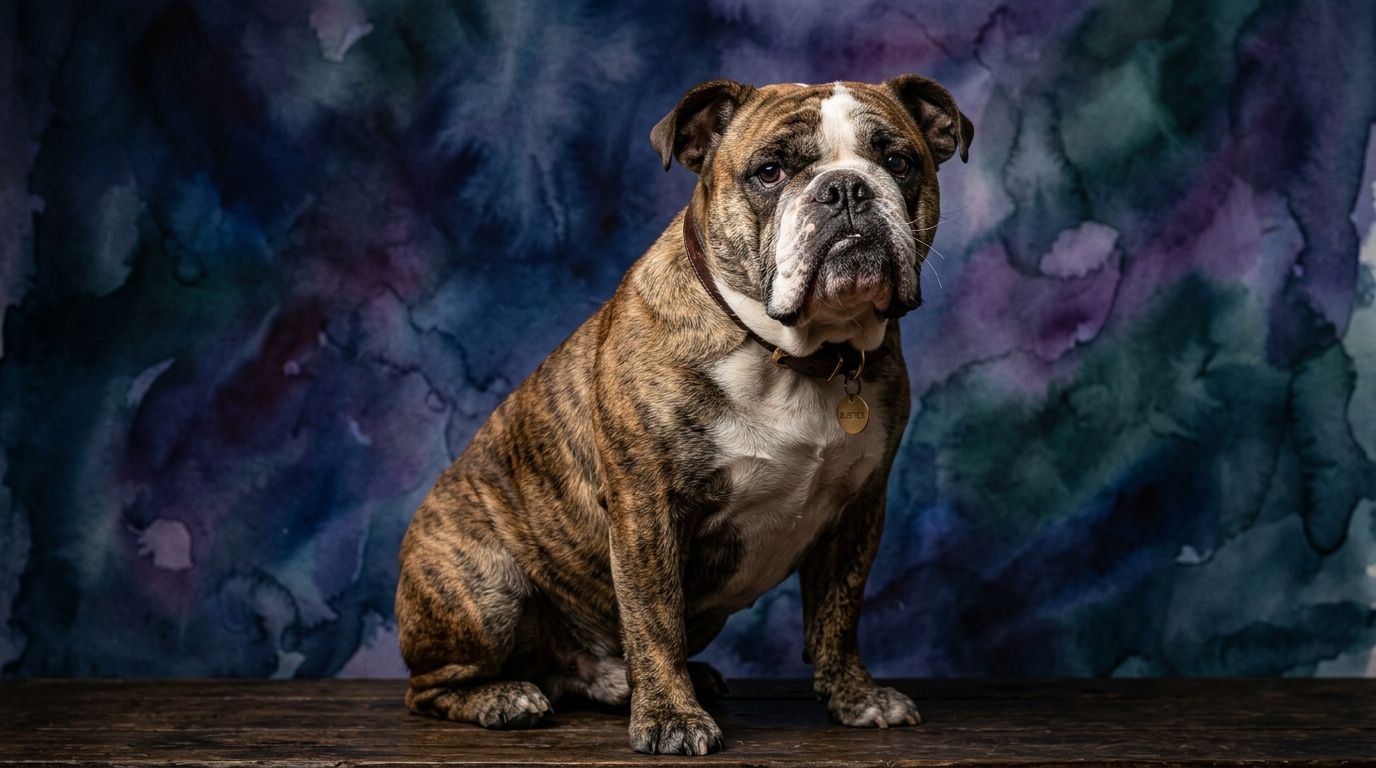
The English Bulldog, Coren-ranked at #77, presents a distinct cognitive blueprint. Their Problem Solving is rated at 2/5, indicating they are less inclined to independently strategize or figure out novel puzzles, often preferring established routines or human assistance. Training Speed also scores 2/5, suggesting that acquiring new commands or behaviors requires considerable patience, repetition, and a highly motivating environment. However, their Social Intelligence shines at 4/5, demonstrating a profound capacity to understand and respond to human emotions and social cues, forming deep, intuitive bonds. Instinctive Drive is moderate at 3/5, meaning they possess a baseline level of inherent motivation without being overly driven by primal urges like hunting or herding. Their Memory, at 2/5, implies that learned information may require frequent reinforcement to remain consistent and accessible.
The Tibetan Spaniel, though not Coren-ranked, offers a more balanced cognitive profile across the board. Their Problem Solving ability is rated 3/5, showing a moderate capacity for cleverness and navigating minor environmental challenges independently. Training Speed also sits at 3/5, suggesting they learn new commands and routines at a reasonable pace, provided the instruction is clear and consistent. Social Intelligence for the Tibetan Spaniel is 3/5, indicating they are adept at forming connections and understanding social dynamics, though perhaps with a more independent streak than the Bulldog. Their Instinctive Drive is 3/5, reflecting their historical role as companion and watchdog, possessing an alert awareness without being overly demanding. Memory is also rated 3/5, allowing them to retain learned behaviors and experiences adequately over time.
Where the English Bulldog Cognitively Excels
The English Bulldog's standout cognitive strength lies unequivocally in their Social Intelligence, scoring an impressive 4/5. This isn't merely about being affectionate; it represents a profound capacity for emotional attunement. Bulldogs often seem to anticipate their owner's moods, offering a comforting nudge or simply resting their head on a lap during moments of stress, demonstrating an almost empathic understanding. This high social IQ makes them exceptional emotional anchors, thriving in environments where close companionship and intuitive communication are paramount. Their ability to read subtle human cues and respond with appropriate, often comforting, gestures fosters a remarkably deep and often unspoken bond, making them highly attuned family members who excel in personal connection.
This elevated social awareness means that while they may not be quick to master complex obedience routines, their understanding of social dynamics and relational comfort is sophisticated. They excel in situations where emotional support and companionship are prioritized over task-oriented performance. For an owner seeking a dog with an unparalleled ability to connect on an emotional level and offer intuitive comfort, the English Bulldog's cognitive design is particularly well-suited, making them masters of relational intelligence.
Where the Tibetan Spaniel Cognitively Wins
The Tibetan Spaniel's cognitive strengths emerge from its more balanced and versatile profile, particularly its higher scores in Problem Solving, Training Speed, and Memory compared to the Bulldog. With a Problem Solving score of 3/5, a Tibetan Spaniel is more likely to exhibit ingenuity in navigating everyday challenges. This might manifest as figuring out how to retrieve a toy stuck under furniture using a paw or nose, or cleverly finding a way to access a favorite spot, demonstrating a proactive approach to minor obstacles that a Bulldog (2/5) might simply wait for human intervention to resolve. This moderate problem-solving capacity suggests an adaptable mind capable of independent thought.
Their Training Speed, also at 3/5, means they generally grasp new commands and routines more readily than the Bulldog. This translates to potentially less repetition and a quicker progression through basic obedience or trick training. Coupled with a 3/5 Memory score, the Tibetan Spaniel tends to retain learned behaviors more effectively, requiring fewer refreshers to maintain a polished skill set. This combination of moderate problem-solving, learning speed, and memory equips the Tibetan Spaniel with a more robust and adaptable cognitive toolkit for navigating new situations, learning new skills, and retaining information over time, making them generally more responsive to structured learning environments and novel experiences.
Training Dynamics: Patience vs. Progress
When it comes to ease of training, the Tibetan Spaniel generally presents a more straightforward path. Their Training Speed of 3/5, combined with a 3/5 in Problem Solving and Memory, means they are typically more receptive to learning new commands and retaining them. They appreciate clear, consistent instructions and positive reinforcement, often showing a keenness to engage in learning activities. While they possess an independent streak rooted in their historical role as watchdogs, they are generally motivated by praise and treats, allowing for effective progression through obedience and trick training. Their ability to moderately problem-solve also helps them understand the context of commands and adapt to varying situations.
The English Bulldog, with its 2/5 Training Speed and 2/5 Memory, requires a significantly different approach to training. This isn't a reflection of a lack of understanding, but rather a preference for comfort, a slower processing speed, and sometimes a stubborn nature. Training a Bulldog demands immense patience, unwavering consistency, and highly motivating rewards. Short, fun, and positive sessions are crucial, as they can quickly lose interest if pushed too hard or if the training becomes repetitive without adequate breaks. While they deeply desire to please their owners (thanks to their high social intelligence), the execution of complex or rapid-fire commands can be a genuine cognitive challenge for them. Owners must manage expectations and celebrate small victories, understanding that their cognitive strengths lie elsewhere than in rapid obedience acquisition.
Lifestyle Match: Relaxed Companionship vs. Engaged Activity
For owners seeking a relaxed companion, the English Bulldog is often an ideal match. Their lower Problem Solving and Training Speed, coupled with a moderate Instinctive Drive, means they are typically content with a more sedentary lifestyle. They are not built for strenuous activity and prefer lounging with their people. Their exceptional Social Intelligence (4/5) makes them perfect couch companions who thrive on close, low-exertion interaction and emotional bonding. They are less prone to destructive behaviors born of boredom if their social needs are met, making them suitable for individuals or families with a slower pace of life, or those living in apartments where extensive outdoor activity is not a daily option.
Conversely, the Tibetan Spaniel suits moderately active owners who enjoy engaging with their dogs mentally and physically. While not requiring extreme athleticism, their balanced 3/5 scores in Problem Solving, Training Speed, and Memory mean they benefit greatly from mental stimulation and regular, moderate physical activity. They enjoy learning new tricks, participating in dog sports like beginner-level agility or rally, or accompanying owners on longer, exploratory walks. Their historical role as alert watchdogs also imbues them with a keen awareness and curiosity that benefits from consistent engagement and opportunities to observe and 'patrol.' Owners who appreciate a clever, adaptable dog that enjoys moderate activity and learning will find the Tibetan Spaniel a rewarding companion.
The Verdict
Choose the English Bulldog if you prioritize an exceptionally affectionate, emotionally intuitive companion who thrives on close physical presence and requires a more relaxed pace of life and training.
Choose the Tibetan Spaniel if you appreciate a more independent, clever companion capable of moderate learning and problem-solving, and who can provide consistent, engaging training and moderate activity.
🧠 Find Your Pet's IQ Score
Our Pet IQ Lab assessment covers 25+ tests across 5 cognitive dimensions — personalized to your breed.
Take the Full IQ Test →Frequently Asked Questions
Are English Bulldogs difficult to train?
While not 'difficult' in the sense of being defiant, their Training Speed (2/5) and Memory (2/5) mean English Bulldogs require significant patience, consistency, and highly motivating rewards. They learn at a slower pace and benefit most from short, positive training sessions that keep them engaged and comfortable.
Do Tibetan Spaniels need a lot of exercise?
Tibetan Spaniels have a moderate Instinctive Drive (3/5) and benefit from regular, moderate exercise. Daily walks, engaging playtime, and mental challenges are usually sufficient to keep them happy, stimulated, and prevent boredom-related behaviors, aligning with their balanced cognitive profile.
Which breed is better with children?
Both breeds can be good with children, though their approaches differ. English Bulldogs (Social Intelligence 4/5) are often incredibly gentle, patient, and tolerant due to their high emotional awareness. Tibetan Spaniels (Social Intelligence 3/5) are generally amiable and playful but might prefer slightly older, more respectful children due to their more independent and watchful nature.