
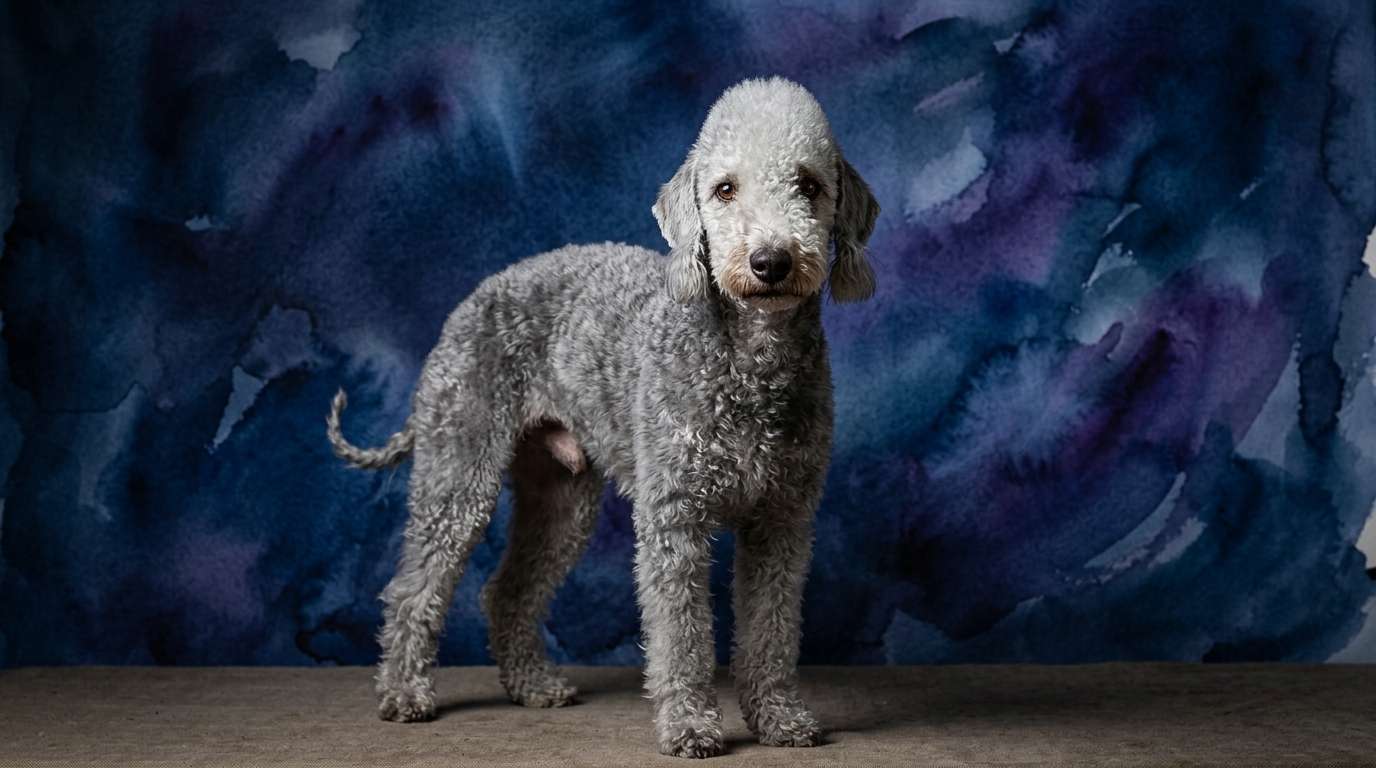
Side-by-Side Cognitive Profile: Interpreting Identical Scores
At first glance, the Cosmic Pet Pet IQ Lab scores for both the Bullmastiff and the Bedlington Terrier present an intriguing uniformity: each breed registers a 3/5 across all five cognitive dimensions. However, these identical numerical values manifest in profoundly different ways, colored by their breed history, physical attributes, and innate temperaments. A 3/5 for a massive guardian dog means something distinct from a 3/5 for an agile vermin hunter.
For **Problem Solving (3/5)**, the Bullmastiff's score reflects a deliberate, methodical approach. Their problem-solving often involves assessing situations related to their territory or family, making calculated decisions that prioritize protection or maintaining established order. They aren't quick to innovate but are competent at working through familiar challenges. The Bedlington Terrier's 3/5 in problem-solving, conversely, speaks to a different kind of ingenuity. It's about navigating complex environments, outsmarting small prey, or finding creative, often persistent, ways to achieve their objectives, leveraging their agility and keen senses.
Regarding **Training Speed (3/5)**, the Bullmastiff learns at a moderate but steady pace. They absorb commands with consistent reinforcement, often seeking to understand the 'why' behind an instruction, driven by their desire to integrate into their family unit. Their responses are often thoughtful rather than instantaneous. The Bedlington Terrier, while also scoring 3/5, can grasp concepts quickly, yet their independent terrier spirit means their willingness to perform might fluctuate. Training success with a Bedlington often hinges on making the process engaging and fun to counteract potential stubbornness.
The **Social Intelligence (3/5)** of a Bullmastiff is deeply rooted in their family-centric nature. They display a nuanced understanding of their human companions' emotions and the social dynamics within their home, often exhibiting protective empathy. Their social circle is typically tight-knit, and they excel at reading familiar individuals, though they can be reserved with strangers. The Bedlington Terrier's 3/5 social intelligence manifests as charming engagement with their human family, understanding how to elicit attention and affection. They might be more outwardly expressive, using their social acumen to integrate playfully, sometimes testing boundaries.
**Instinctive Drive (3/5)** in the Bullmastiff is unequivocally tied to their guardian heritage. It's a profound protective instinct for their family and territory, requiring minimal prompting. They possess a natural discernment for perceived threats and a powerful, deterrent presence. This drive isn't about chasing but about standing firm. The Bedlington Terrier's 3/5 instinctive drive is quintessentially terrier: an intense urge to chase, dig, and investigate, stemming from their historical role as vermin hunters. This drive is persistent, making them highly focused on small, moving targets and often dictating their self-directed activities.
Finally, **Memory (3/5)** for the Bullmastiff means they retain routines, commands, and experiences effectively, particularly those connected to their family and home environment. They remember who belongs and who doesn't, and past training lessons contribute to their reliability. The Bedlington Terrier's 3/5 memory implies they recall learned behaviors, specific locations, and social interactions with ease. They remember training cues, but also past opportunities for self-directed exploration or successful 'hunts,' influencing their future actions and adaptability.
Where the Bullmastiff's Cognition Shines
The Bullmastiff's cognitive strengths lie in their deliberate, protective reasoning and their understanding of established routines. Their ability to assess and respond to perceived threats with calm, measured judgment is a hallmark of their intellect. They excel at discerning subtle cues within their familiar environment and reacting with a composed, authoritative presence rather than impulsive action. This breed's understanding of 'their people' and territory allows them to act as steadfast, reliable guardians, making their cognitive contributions invaluable in a family setting. Their Coren ranking of #69 further reflects their capacity for working and obedience intelligence, underscoring their ability to learn and apply commands within a structured context, especially when it aligns with their protective instincts.
Where the Bedlington Terrier's Cognition Excels
The Bedlington Terrier's cognitive edge is found in their quick wit, adaptability in novel situations, and their independent problem-solving, often fueled by their keen senses and prey drive. They demonstrate a remarkable capacity for agile, opportunistic thinking, particularly when it involves navigating obstacles, outmaneuvering small creatures, or finding creative solutions to reach a desired object. Their cognitive approach is less about deliberate guardianship and more about persistent, sometimes mischievous, pursuit of self-directed goals. This breed's ability to learn quickly but then choose when and how to apply that knowledge showcases a form of cognitive flexibility, even if it occasionally presents a challenge to their human companions.
Training Dynamics: Bullmastiff vs. Bedlington Terrier
When it comes to ease of training, the Bullmastiff generally presents a more straightforward experience for consistent obedience. Their 3/5 training speed, coupled with a powerful desire to please their family and a less distractible nature compared to a terrier, makes them receptive to calm, confident leadership. They thrive on stability and routine, responding well to positive reinforcement and understanding the expectations set for them. Given their substantial size, early and consistent training is a practical necessity, and they tend to comply once they grasp the desired behavior, valuing harmony within their home.
The Bedlington Terrier, despite also scoring 3/5 in training speed, can be more challenging due to their strong instinctive drive and independent terrier spirit. While they learn quickly, they might test boundaries or become bored with repetitive drills, requiring a more engaging approach. Training a Bedlington demands creativity, patience, and the ability to channel their natural prey drive into constructive activities. Their focus can be easily diverted by interesting smells, movements, or the allure of an independent 'mission,' meaning handlers must work harder to maintain their attention and commitment to the task at hand.
Matching Breeds to Lifestyles: Active vs. Relaxed Owners
The **Bullmastiff** is well-suited for owners who appreciate a calm, watchful presence and a moderately active lifestyle. While they are large, their exercise needs are generally manageable, requiring regular but not intense daily walks and opportunities for mental engagement through companionship and a defined role within the family. They thrive in environments with clear routines and an owner who values a steadfast, deliberate companion whose mental stimulation comes from being an integral part of the household and fulfilling their natural guardian instincts.
The **Bedlington Terrier**, conversely, is an ideal match for active owners who relish engaging with a lively, curious, and spirited dog. They require consistent physical and mental stimulation to prevent boredom and to channel their strong terrier instincts constructively. Owners should be prepared for daily walks, varied play sessions, and potentially dog sports like agility or earthdog trials that tap into their natural drives. This breed's cognitive engagement thrives on variety, challenge, and opportunities for independent exploration, making them a vibrant partner for a dynamic lifestyle.
The Verdict
Opt for a Bullmastiff if you seek a steadfast, protective companion who thrives on routine and a strong, deliberate bond with their human family, offering a calm and watchful presence.
Select a Bedlington Terrier if you desire an agile, spirited partner for an active lifestyle, who enjoys engaging in varied activities and possesses a charming, independent wit.
🧠 Find Your Pet's IQ Score
Our Pet IQ Lab assessment covers 25+ tests across 5 cognitive dimensions — personalized to your breed.
Take the Full IQ Test →Frequently Asked Questions
Do Bullmastiffs or Bedlington Terriers adapt well to apartment living?
Bullmastiffs can adapt to apartment living if they receive adequate daily walks and mental engagement, as their indoor demeanor is often calm and they value quiet companionship. Bedlington Terriers, while smaller, require significant exercise and mental stimulation, making apartment life feasible only if their considerable energy needs are consistently met with outdoor activities and engaging play.
Are either of these breeds good with children?
Bullmastiffs are generally patient and protective with children in their own family, often displaying a gentle giant demeanor, though supervision is always advised due to their sheer size. Bedlington Terriers can be playful and affectionate with children, but their sensitive nature and strong terrier instincts mean interactions should be managed, especially with very young or boisterous kids, to ensure harmonious relationships.
How do their grooming needs compare?
Bullmastiffs have short, low-maintenance coats that require minimal grooming, primarily regular brushing to remove loose hair and maintain skin health. Bedlington Terriers possess a unique, woolly, non-shedding coat that necessitates professional grooming every 6-8 weeks, along with consistent brushing at home, to prevent matting and preserve their distinctive lamb-like appearance.